This article contains affiliate links; if you click such a link and make a purchase, we may earn a commission.
The Best Sunscreens, According To DermatologistsJL
“Hearst Magazines and AOL may earn commission or revenue on some items through these links.”
I’ve written extensively about sunscreen since 2019, most recently in our guide to SPF facts, powder sunscreen, and how one dermatologist uses it as a dry shampoo hack. But if you’re looking for a one-and-done power list of the best sunscreens of 2026, this is it.
So why am I low-key obsessed with wearing sunscreen? Allow dermatologist Gary Goldenberg, MD, to explain. “Daily sunscreen use is important for two main reasons: Skin cancer prevention and anti-aging,” he says. And the data backs him up. An Australian study tracked the skin of people who wore daily sunscreen regardless of weather and activities versus those who only wore SPF on sunny days or when they’re outdoors. The study evaluated their skin texture (microtopography) to evaluate aging and found that people who applied sunscreen daily aged significantly better than those who wore SPF occasionally. BRB, time to hit auto-subscribe on these Amazon sunscreens.
Best Sunscreens of 2026
And sunscreen’s benefits don’t stop there. Sun damage accumulates from daily activities like driving and sitting in front of a window, says dermatologist Hadley King, MD. As spring blooms, and Memorial Day is several weeks away, it’s time to double down on sunscreen. Here’s how to buy SPF like a dermatologist and beauty editor.
What To ConsiderBroad Spectrum
Ultraviolet radiation from the sun falls into two categories: ultraviolet A (UVA) and ultraviolet B (UVB). UVA rays cause signs of aging, such as hyperpigmentation, lines, and wrinkles. Meanwhile, UVB rays can cause more serious damage, including sunburn and skin cancer. Your safest bet is to only use broad-spectrum sunscreens to help protect against UVA and UVB rays.
SPF Type: Mineral vs. Chemical Blockers
Next, choose either a mineral or a chemical sunscreen. Here’s more insight to help you determine between the two formulations.
Mineral Sunscreen aka Physical Sunscreens
Active ingredients are zinc oxide and titanium dioxide. Tinted mineral sunscreens contain iron oxides, which can help reduce hyperpigmentation.
How do mineral sunscreens work? They create a physical barrier that reflects and scatters UV rays away from the skin’s surface, says dermatologist Divya Shokeen, MD.
Cons: Mineral sunscreens are more likely to leave behind a cast on melanin-rich complexions.
Chemical Sunscreen
Active ingredients are avobenzone, homosalate, octisalate, and octocrylene.
How do they work? “Chemical filters absorb the sun’s rays, deflecting their damage by turning them into heat,” says Dr. Shokeen.
Pros: They are acne-safe and tend to be easier to rub in and for the skin to absorb, says dermatologist Sheila Farhang, MD. They’re also less likely to leave behind an ashy finish on Brown and Black skin.
Cons: They can irritate sensitive skin and require a 15-20 minute waiting period before being effective against sun exposure.
TL;DR
They both have benefits and limitations, but ultimately, the best one is the sunscreen you’ll actually use and reapply. As for me? Well, I like both types. However, I typically use mineral sunscreen on my face, so I can head outside immediately after work instead of lingering for the approximately 15-minute waiting period associated with chemical sunscreens.
Key Ingredients
Broad-spectrum coverage, sunscreen type, and SPF coverage are the big three considerations. But another factor worth emphasizing is other non-active skincare ingredients that will help bolster your complexion. Dermatologist Elyse Love, MD, is a big fan of niacinamide to calm the skin and improve its tone and texture. Also, look for ingredients that support your skin type and goals. For example, if you want to brighten your complexion, you’ll look for a sunscreen with vitamin C. If you have dry skin, seek out hydrating ingredients like hyaluronic acid.
How We Chose
When we initially published this story in May 2019, it was a gallery featuring a handful of sunscreens. Nearly seven years later, we’ve seriously upgraded our product vetting process.
For starters, we polled dermatologists about the actual sunscreens they use IRL and recommend to patients. The doctors answered a series of questions about the efficacy, application, and real-world testing experience that helped inform their suggestions.
Next, evaluate the hundreds of sunscreens in the Women’s Health beauty closet.
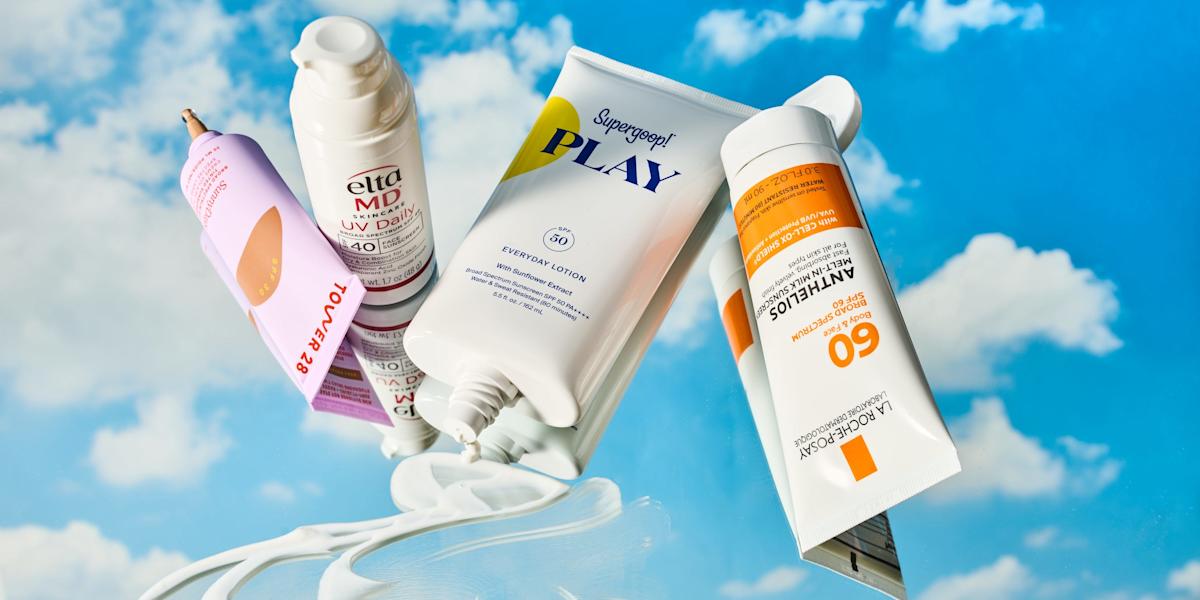
I also polled Women’s Health and Men’s Health editors about their ride or die sunscreens. Our team varies across age, skin type, complexion, budget, and lifestyle. For example, fitness editor Cori Ritchey, C.S.C.S., is a certified strength and condition coach and group fitness instructor. She has a no-frills approach to beauty and wants a simple sunscreen that delivers results which she found in La Roche-Posay.
Clear sunscreens were carefully evaluated. Our team asked ourselves if the clear sunscreens squeezed out clear or were they white or creamy and then blended out without a trace? Associate Health & Fitness Editor Addison Aloian and editorial assistant Katie Mogg found success with Supergoop!
Tinted sunscreens were also inspected because I know first hand what it’s like to try and find your best color match only for it to look ruddy or cool in natural sunlight. With 17 flexible shades, Tower28 delivers the most inclusive range among the sunscreens we vetted. The hues vary in depth and undertone, and offer light-to-medium coverage.
Whether you have oily, dry, or combination skin, there’s something on our list for you. Meet our team’s all-time favorite sunscreens that we’ll continue to rely on throughout 2026.
Meet the Experts
Gary Goldenberg, MD, is a board-certified dermatologist and founder of Goldenberg Dermatology in New York City.
Mona Gohara, MD, is a board-certified dermatologist and Women’s Health advisor.
Elyse Love, MD, is a board-certified dermatologist at GlamDerm in New York City.
Sheila Farhang, MD, is a board-certified dermatologist, double-fellowship trained cosmetic surgeon, and reconstructive Mohs micrographic surgeon based in Tucson, AZ.
Marnie Nussman, MD, FAAD, is a board-certified dermatologist specializing in non-invasive aesthetic rejuvenation in New York City.
How do I pick the best sunscreen for my skin type?
You’ll want to keep an eye out for certain key phrases on the label. Dealing with sensitive skin? Dermatologist Marnie Nussbaum, MD, recommends fragrance-free and hypoallergenic formulas. She also prefers mineral sunscreens made with zinc oxide or titanium dioxide for sensitive skin because they’re less likely to cause irritation. Acne happens to the best of us, but your best path forward is to use an oil-free and non-comedogenic sunscreen that won’t congest your pores.
More Editor-Tested Beauty Products
Red Light Therapy for Lips| Best Hand Cream | Best At Home Laser Hair Removal | Best Red Light Therapy Tools | Best LED Face Mask | Best Moisturizer For Mature Skin | Best Wrinkle Cream | Best At Home Waxing Kit | Best Body Wash For Women | Best Moisturizer For Mature Skin | Best Hair Brush | Best Microcurrent Device
You Might Also Like