 7 min read
If you’ve been thinking about shifting toward a more plant-forward way of eating, you may have come across the Daniel Fast.
It’s a short-term eating pattern that emphasizes whole, minimally processed plant foods such as fruits, vegetables, legumes, and whole grains. Traditionally, it’s followed as a spiritual practice focused on reflection and growth, though many people today interpret it more as a structured, plant-based diet as a way to reset or take a break from more processed foods.
Proponents say they experience benefits ranging from improved energy to better digestion, enhanced mental focus, and weight management. Others speculate that something with the word “fast” in the name could be restrictive and wonder whether it’s a proven, balanced approach to eating.
So, what does the Daniel Fast actually involve, and is it a healthy choice for you?
Before you try it, here’s what to know about how the Daniel Fast works, what it suggests you eat, and around what elements nutrition experts say you should exercise caution.
What’s the history of the Daniel Fast?
“The Daniel Fast is a type of spiritual fast modeled after Daniel’s eating pattern in a passage from the book of Daniel in the Old Testament of the Bible,” says Alyssa Pike, R.D., senior nutrition communications manager at the International Food Information Council (IFIC). According to scripture, when the prophet Daniel was captured by a Babylonian king, he rejected the rich, indulgent food and wine offered to him; instead, he requested meals high in vegetables, fruit, and water as a demonstration of his faith in God. The Bible details that Daniel physically and intellectually grew from this decision—after 10 days, he appeared stronger and more nourished than others who had indulged in the royal’s food supply.
Modeled after those details, the modern-day Daniel Fast is a plant-based eating plan that emphasizes fruits, vegetables, beans, whole grains, and water—and eliminates animal products, caffeine, alcohol, and other staples.
The Daniel Fast is a partial fast, which means that eating isn’t entirely restricted, explains Pike. Instead, certain food groups are welcomed in almost any quantity, and others are not. Typically, the Daniel Fast lasts three weeks, or 21 days, though shorter 10-day versions exist which are promoted more so for beginners. Others follow a longer, 40-day fast inspired by the biblical story of Daniel, who ate only vegetables and drank water as a spiritual practice, while still others try a one-week version.
What do people eat during the Daniel Fast?
The Daniel Fast has a specific list of recommended foods, based on those that Daniel ate in the Bible. Specifically, there are two Biblical passages that lay the foundation for this eating plan. Daniel 1:12 says, “Please test your servants for ten days, and let us be given vegetables to eat and water to drink.” Daniel 10:3 adds, “I ate no pleasant food, neither meat nor wine came into my mouth, nor did I anoint myself at all, for three whole weeks.”
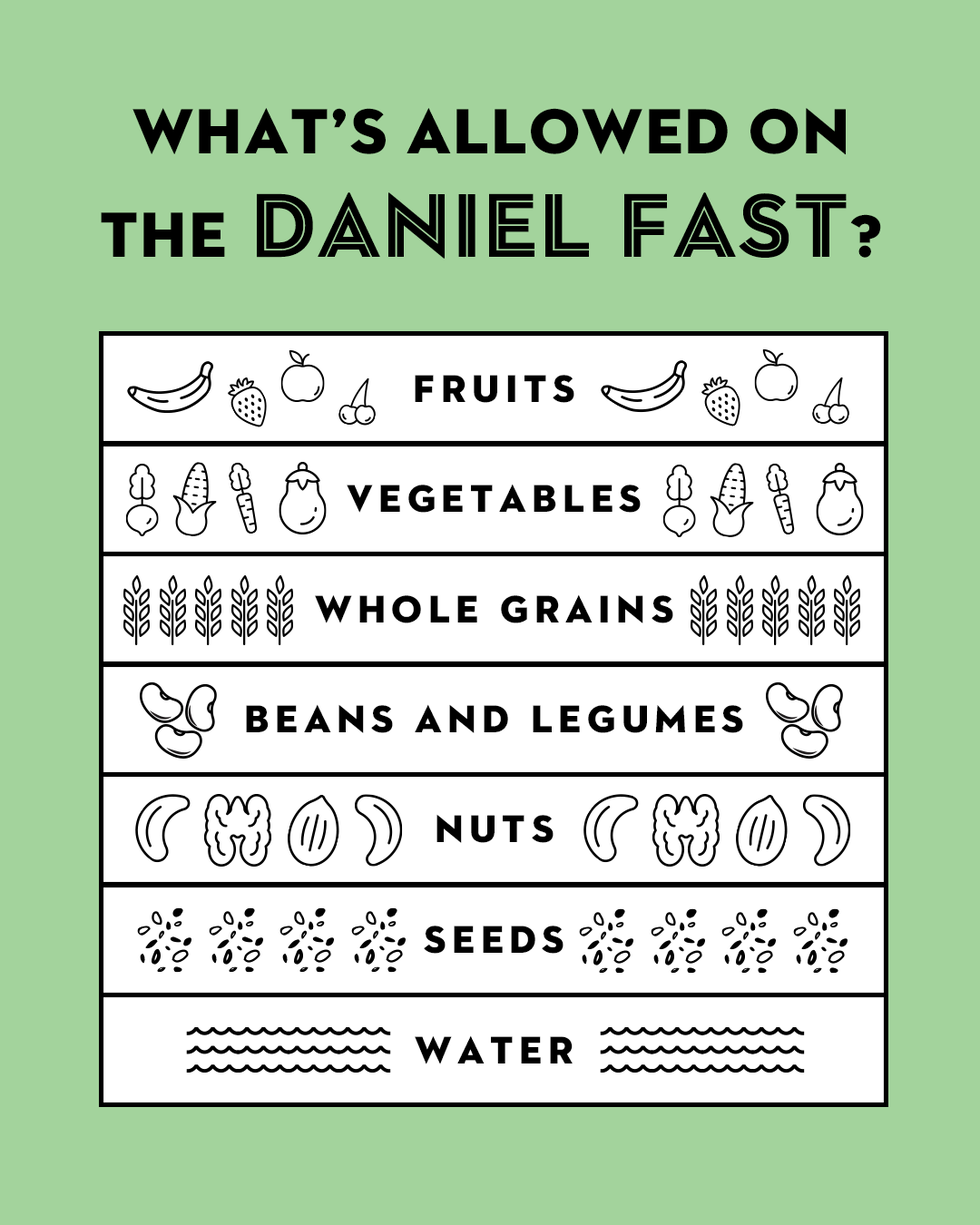
Here’s what to eat on the Daniel Fast, according to Pike:
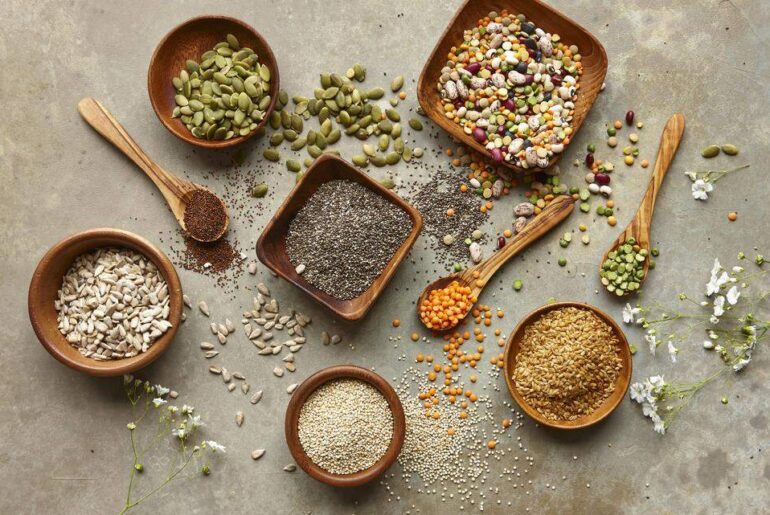
Fruits: Apples, bananas, grapes, oranges, watermelon, etc. (All forms of fruits are fair, including fresh, frozen, dried, juiced, and canned.)Vegetables: Broccoli, carrots, green beans, mushrooms, onions, spinach, tomatoes, etc. (All forms of vegetables are available, including fresh, frozen, dried, juiced, and canned.)Whole grains: Barley, brown rice, buckwheat, bulgur, millet, oats, rye, whole wheat, wild rice, etc.Beans and legumes: Black beans, black-eyed peas, chickpeas (garbanzo beans), kidney beans, lentils, pinto beans, etc.Nuts: Almonds, Brazil nuts, cashews, nut butters, peanuts, pistachios, walnuts, etc.Seeds: Pepitas (pumpkin seeds), poppy seeds, chia seeds, sesame seeds, sunflower seeds, etc.Water: Plain tap, distilled, filtered, sparkling, spring, and mineral water
Although water is the only beverage mentioned in the Daniel 1:12, some people choose to include decaffeinated herbal teas and 100% fruit juice while taking part in this fast.
Laura Formisano
What foods are prohibited on the Daniel Fast?
Restricted foods on the traditional Daniel Fast include:
Meat: Beef, poultry, fish and other seafoodCooked eggs: Any kind; scrambled, fried, etc.Dairy: Milk, cheese, cream, yogurt, etc.Added sugars: Artificial sweeteners and other sugar substitutes, brown sugar, cane juice, corn syrup, honey, molasses, raw sugar, etc. Leavening agents and leavened bread: Any products using yeastRefined grains: White flour, white rice, etc.Solid fats: Butter, margarine, lard, etc.Fried foods: French fries, potato chips, etc.Beverages other than water: Alcohol, coffee, energy drinks, soda, other caffeinated drinks, etc.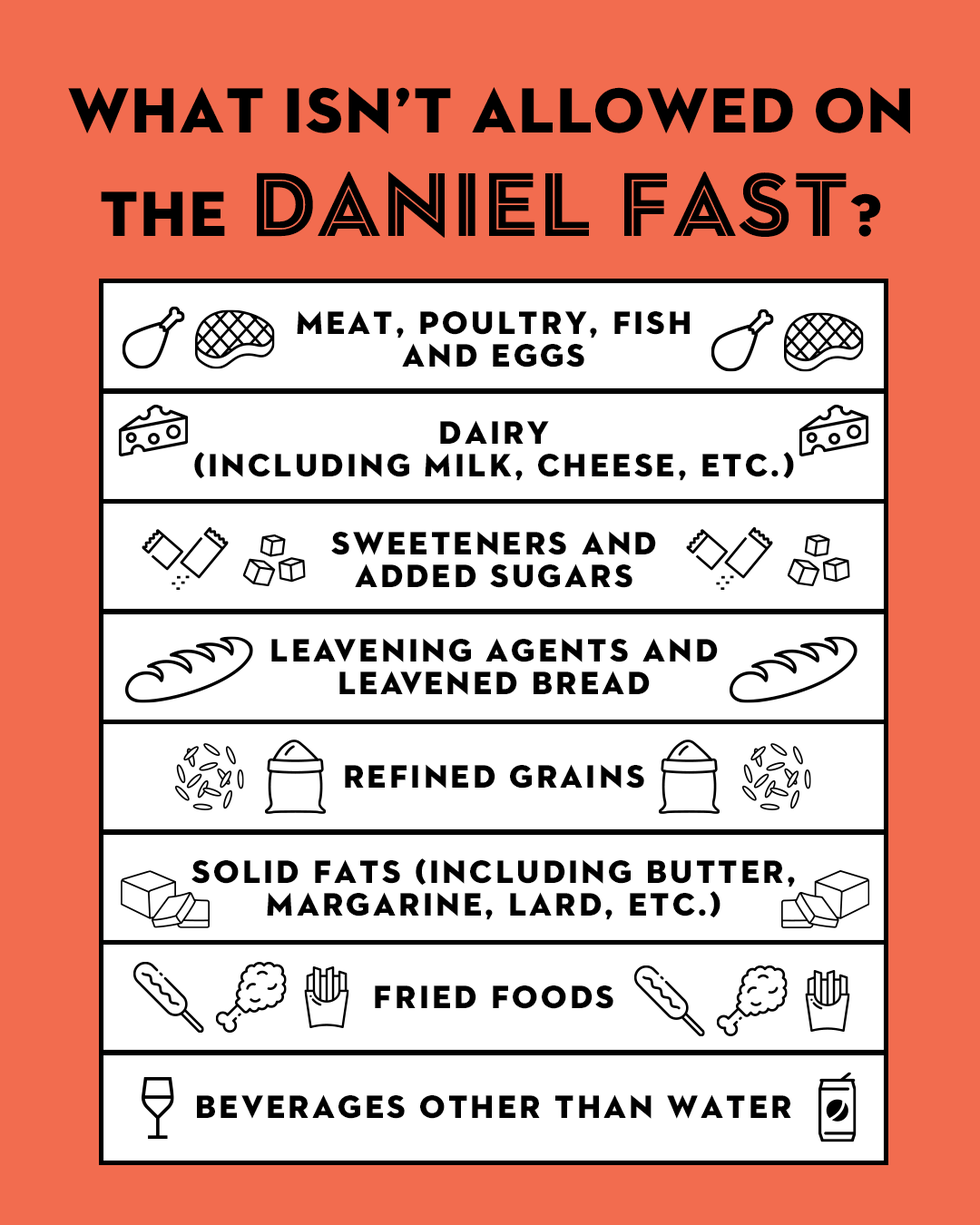
Laura Formisano
How many times a day do you eat on a Daniel Fast?
The Daniel Fast doesn’t limit how many meals you choose to eat or how frequently you eat throughout the day—just as long as you don’t reach for restricted ingredients.
In terms of the length of the diet, there are no strict guidelines there, either. Most people follow the diet for 21 days, says New York City-based registered dietitian Amy Fischer, MS, RD, CDN—though some people choose to follow it for 10 days, as the Book of Daniel mentions both 10 days and 21 days that the prophet fasted.
Is the Daniel Fast actually healthy for you?
Before considering any potential benefits, it’s important to consider that the focus of the Daniel Fast, as a spiritual fast, is not to necessarily improve one’s health, but rather to invest in one’s faith, stresses Pike.
That said, it’s hard to know what kind of metabolic or nutrition impacts the Daniel Fast will have on an individual, especially as the eating plan doesn’t restrict the amount of food that can be eaten, she adds. “People often feel lethargic while fasting and any weight loss that comes is short-lived and restored when eating normally again,” explains Pike.
Related Story
Since the Daniel Fast includes restricting entire food groups, there are also some potential concerns with getting sufficient nutrients, according to Fischer. “Any time you are eliminating a food group or groups—in this case, all animal products, including eggs and dairy products—you run the risk of missing out on certain nutrients, vitamins and minerals,” she notes. Vitamin B12, calcium, vitamin D, iron and omega 3 fatty acids are the most likely to suffer deficits when following the Daniel Fast, adds Fischer.
However, following a plant-first approach such as with the Daniel Fast can offer health benefits—including a lower risk of heart disease—when meals include enough protein, vegetables, fruits, whole grains, and healthy fats. “If the Daniel Fast encourages more plant-based eating and a focus on non-starchy vegetables, whole grains, and plant proteins, it could support a healthier lifestyle even after the fast ends,” Fischer says.
Indeed, numerous studies have shown that plant-based diets are generally associated with a plethora of health benefits, including a lower risk of heart disease. In fact, one 2010 study found that following the Daniel Fast specifically for three weeks began to lower risk factors for metabolic and cardiovascular disease, such as high cholesterol, in both men and women—though it was a very small study, with only 43 participants.
The Daniel Fast may naturally increase your intake of high-fiber foods such as fruits, vegetables, legumes, whole grains, and seeds. Fiber supports healthy digestion, helps you feel full, and can promote stable blood sugar and heart health. For anyone not used to a high-fiber diet, though, the sudden increase can sometimes cause bloating or gas, so it’s helpful to increase fiber gradually, and drink plenty of water as you adjust.
Sample One-Day Daniel Fast Meal Plan
To give a practical example of how the Daniel Fast day might look in practice, here’s a sample one-day meal plan that comes in just under 2,000 calories. It’s designed to be balanced, plant-based, and rich in whole foods, though portions can be adjusted to meet your individual needs.
Breakfast: Tofu Veggie Scramble + Fruit
For the tofu scramble:
1 cup firm tofu, crumbled1 cup spinach½ cup bell peppers, chopped
Side of fruit:
Morning Snack: Berry Pea Protein Smoothie1½ cups unsweetened almond milk1 scoop pea protein powder (~20 g protein)¾ cup frozen berries1 tbsp chia seedsLunch: Lentil & Quinoa Salad¾ cups cooked lentils¾ cup cooked quinoa1¼ cups mixed vegetables (broccoli, carrots, zucchini)1½ tsp olive oil1 tsp lemon juiceAfternoon Snack: Hummus with Veggies½ cup hummus1 cup sliced cucumber1 cup celery sticks1 cup carrot sticksDinner: Edamame & Sweet Potato Stir-Fry1 cups shelled edamame, cooked1 medium-large sweet potato1¼ cups broccoli¾ cup bell peppers1½ tsp olive oilThe bottom line
There are possible health benefits to following the Daniel Fast, including the potential for a lower risk of cardiovascular disease provided that the plant-based way of eating is continued after the fasting period—a 21-day or 40-day diet in isolation isn’t going to make meaningful or long-lasting changes to your health.
However, there are several important factors you should consider before determining whether the Daniel Fast is right for you. Before starting any new dietary regimen, it’s always best to speak with a healthcare provider first, advises Fischer.
“As with any extreme diet, you should take caution with changes you are making or adopting,” she says. “Not only are you potentially giving up important nutrients, but it can also be a shock to your system. One concern with this ‘fast’ is the speed of the transition in the dietary adjustments that you are making.”
There may be some faith-based factors to consider, as well. “Choosing to engage in a spiritual fast is a very personal decision, and those in faith communities typically make the decision through prayer and with a spiritual mentor,” says Pike.

Stefani (she/her) is a registered dietitian, a NASM-certified personal trainer and the director of the Good Housekeeping Institute Nutrition and Fitness Lab, where she oversees all nutrition and fitness-related content, testing and evaluation. She holds a master’s degree in clinical nutrition from New York University, as well as advanced certifications as a Women’s Fitness Specialist and a Behavior Change Specialist. Stefani is dedicated to providing readers with evidence-based content to encourage informed food choices and healthy living. She is an avid CrossFitter and a passionate home cook who loves spending time with her big fit Greek family.