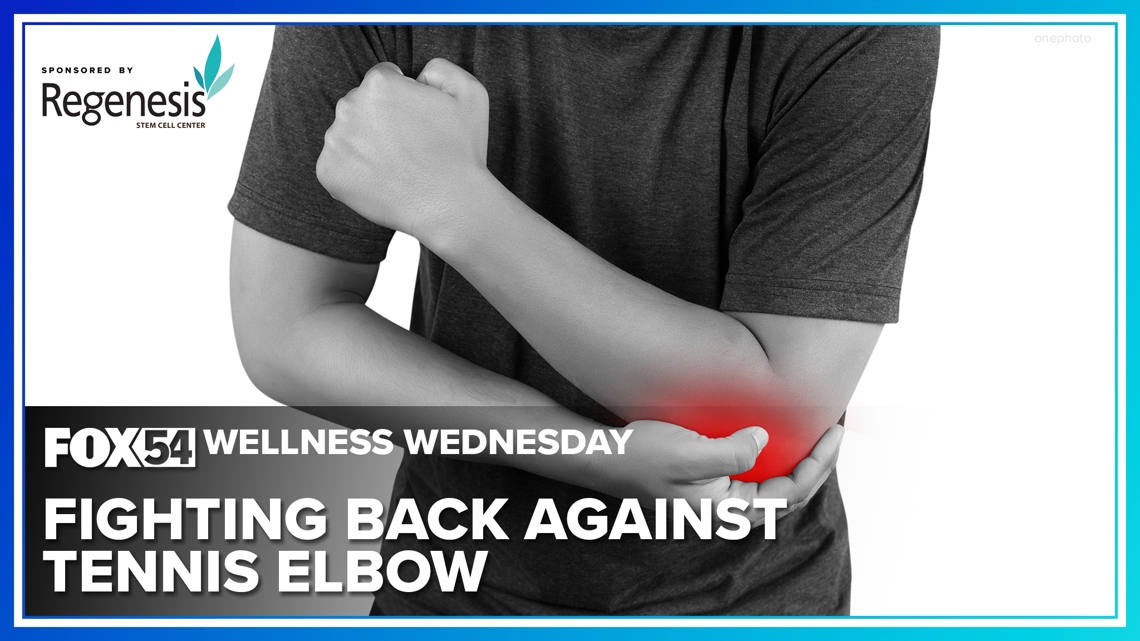
Outdoor sports enthusiasts risk overuse injuries like tennis elbow. Doctors highlight persistent elbow pain as a key sign and recommend treatments like PRP therapy.
HUNTSVILLE, Ala. — Spring is prime time for outdoor sports like tennis, pickleball, and golf, but increased activity on the court or course can come with a cost.
For some players, more time swinging a racket or club leads to lateral epicondylitis, commonly known as tennis elbow, an overuse injury that causes persistent pain along the outer elbow.
How do you know if you have it?
Doctors say the signs are hard to miss.
“When these injuries arise, you’ll notice them every time you bump your elbow — it hurts. It’s just constant pain,” said Dr. Charles Lee of Regenesis.
Dr. Stan Davis of The Orthopedic Center said patients typically arrive after weeks of discomfort with no relief in sight.
“When they come in, they’ve had this elbow pain for several weeks, and it’s just not getting better. They’ve tried medicine. They’ve tried ice,” Davis said. “Usually, what’s causing it is an overstrain of the tendon where it attaches to the bone.”
Both physicians say identifying tennis elbow doesn’t take long.
“The history of being maybe an overachiever in their sport, where they play all the time, that’s an overuse injury,” Davis said. “Where their pain is located, what sport it is that typically tells me what the problem is. It doesn’t take but a second to put a finger on where their pain would originate from.”
What are the treatment options?
Lee uses platelet-rich plasma, or PRP, therapy to help patients recover.
“What we’re doing is dumping growth factors into those tissues,” Lee said. “Platelets are full of growth factors. Their normal function is to form a blood clot if you’re injured, but they also deliver a whole host of growth factors into the tissue because it needs to heal. So what we do is harvest a large amount of platelets out of your bloodstream.”
Lee said the results have been strong.
Davis supports PRP but emphasizes that physical therapy is essential to preventing reinjury.
“It’s something you can learn when you go to the therapist, because this is something that may come back periodically if you continue the same activity,” Davis said. “If you learn how to stretch those tendons and maintain strength and balance, then you can maybe avoid having to see somebody in the future.”