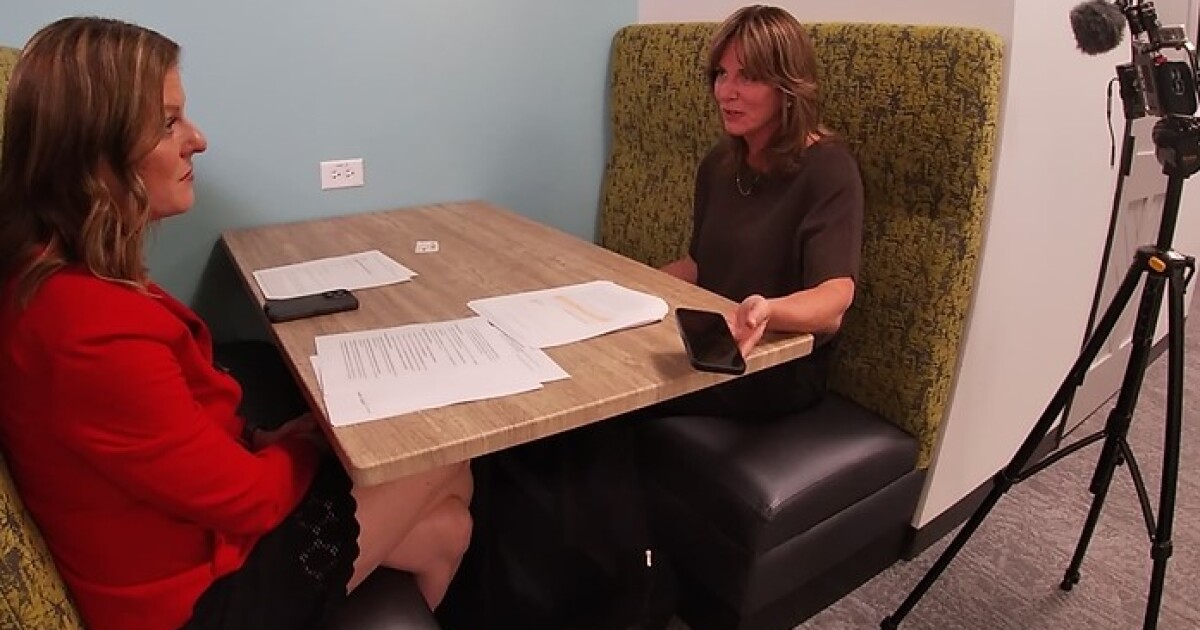
AURORA — Liz Moskow went to the University of Colorado Anschutz medical campus for what she was told would be “nothing burger” surgery — a stapedectomy to restore hearing in her left ear.
“I was told it’s easy to heal from and I will have great hearing,” Moskow said.
▶️ WATCH: Denver7’s Jaclyn Allen explores how hospital immunity can impact patients’ rights
Patient protections: How hospital immunity changes your legal rights in Colorado
She and her husband, Ari Kaufman, said the surgeon told them there were no complications.
“He said it was a textbook surgery, went great, no problems, no complications,” Kaufman said.
But before her first follow‑up visit, Moskow reviewed her operative notes and discovered something concerning.
“The first prosthesis fell into the hypotympanum, and I could not retrieve it,” the note read.
Moskow said the microscopic device — made of nickel, which she is allergic to — was not initially disclosed and was left in her ear.
“Something happened at surgery that affected my inner ear, and now I have complications,” Moskow said.
By the time audiology testing confirmed permanent inner ear damage, she said, she had missed the short filing deadline under Colorado’s Governmental Immunity Act, known as CGIA.
The statute shortens the deadline to file a notice of claim to 182 days and caps damages at $505,000 per person.
Under the law, CU Anschutz and Denver Health, along with dozens of off‑campus clinics operating under their licenses, are covered.
Adam Fox, deputy director of the Colorado Consumer Health Initiative, said Moskow’s case shows how protections change based on where patients get care.
“There were multiple ways that I think this went wrong,” Fox said. “If something does happen, you are left without the same kind of protections and recourse if you seek care on that campus.”
Medical malpractice attorney Marc Johnson, who is not Moskow’s lawyer, said the law creates two systems of justice depending on where patients are treated.
CGIA, he said, can apply to dozens of off‑campus facilities far from the main hospitals if they operate under their license.
He offered the example of birth injury cases with millions of dollars in lifetime care needs, but recovery capped at $505,000. In serious malpractice cases, he said, litigation costs can exceed the cap, making cases financially unfeasible for attorneys to pursue.
“The Colorado Governmental Immunity Act creates two different classes of potential plaintiffs,” Johnson said. “One who got medical care at a public institution has only 182 days to bring their claim and a cap on their damages of $424,000 or $505,000. The person who goes to the private institution has two years to bring their claim and no cap on potential recoverable economic damages.”
Colorado Hospitals and Clinics Protected by the Governmental Immunity Act
License of UCHA (Anschutz) & Off-Campus Locations
CU Sports Medicine, 2000 S. Colorado Boulevard, Suite 4500, Denver
CU Sports Physical Therapy and Rehab, 2000 S. Colorado Boulevard, Suite 1000, Denver
UCHealth Cancer Center Highlands Ranch, 1500 Park Central Drive, Suite G004, Highlands Ranch
UCHealth Central Park Medical Center, 3055 Roslyn St. Suites 110, 120, 200, 220, 270, Denver
UCHealth Cherry Creek Medical Center Laboratory, 100 Cook St. Suite 200, Denver
UCHealth Lone Tree Medical Center, 9548 Park Meadows Drive, Lone Tree
UCHealth Primary Care- Family & Internal Medicine, 9540 Park Meadows Drive, Lone Tree
UCHealth Sue Anschutz Rodgers Eye Center Lodo, 1435 Wazee St. Suite 101, Denver
UCHealth Sue Anschutz-Rodgers Eye Center Colorado Center, 2000 S. Colorado Boulevard Suite 100, Denver
UCHealth Sue Anschutz-Rodgers Eye Center Lone Tree, 9552 Park Meadows Drive, Suite 100, Lone Tree
University Family Medicine- AF Williams, 3055 Roslyn Street, Unit 100, Denver
University Family Medicine- Westminster, 7403 Church Ranch Boulevard, Unit 107, Westminster
University Medicine- Internal Medicine & Specialty Care, 8111 E. Lowry Boulevard, Suite 120, Denver
University of Colorado Hospital at Boulder, 5495 Arapahoe Avenue, Boulder
University of Colorado Hospital Imaging, 2000 S. Colorado Boulevard, Colorado Center Suite 1200, Denver
University of Colorado Hospital Infusion and Radiation Oncology at Cherry Creek Medical Center, 100 Cook Street, Suites 102 & 204, Denver
University of Colorado Hospital Lone Tree Breast Center, 9544 Park Meadows Drive, Suite 100, Lone Tree
University of Colorado Hospital Visage Center, 9544 Park Meadows Drive, Suite 100, Lone Tree
License of Denver Health & Off-Campus Locations
Child Advocacy Clinic at DCAC, 2125 Federal Boulevard, Denver
Denver Health Primary Care at MHCD, 4455 E. 12th Avenue, Denver
Denver SAFE Center, 405 S Platte River Drive, Denver
Eastside Family Health Center, 501 28th St., Denver
Federico F. Pena Family Health Center, 1339 S. Federal Boulevard, Denver
LaCasa Quigg Newton Family Health Center, 4545 Navajo St., Denver
Lowry Family Health Center, 1001 Yosemite St., Denver
Montbello Family Health Center, 12600 Albrook Drive, Denver
Park Hill Family Health Center, 4995 E. 33rd Avenue, Denver
Rose Andom Health Center, 1330 Fox St., Denver
Sloan’s Lake Primary Care Center, 4007 W. Colfax Avenue, Denver
Westside Family Health Center, 1100 Federal Boulevard, Denver
Westwood Family Health Center, 4320 W. Alaska Place, Denver
Johnson says the cap and short deadline make many cases impossible to pursue.
“One of the most unfortunate aspects of the Colorado Governmental Immunity Act is that cases are not pursued or are dismissed on a technicality, even when they’re valid, appropriate and winnable medical malpractice cases,” he said.
CU Anschutz declined to discuss Moskow’s care, citing privacy laws.
“The law doesn’t prevent patients from filing — instead, it lays out rules for claims against all government entities,” CU media relations said in a statement, adding that patients are informed about CGIA through consent forms.
Moskow said the doctor repeatedly told her recovery takes time, so she missed the 182-day filing deadline. In addition, no attorneys would take her case because the damage cap means litigation costs would be higher than the damages.
“At this point, the biggest recourse would be to prevent other patients from coming up against this same situation,” she said.

Denver7
Got a tip? Send it to the Denver7 Investigates team
Use the form below to send us a comment or story idea you’d like the Denver7 Investigates team to check out. You can also email investigates@Denver7.com or call our newsroom at 303-832-0200.