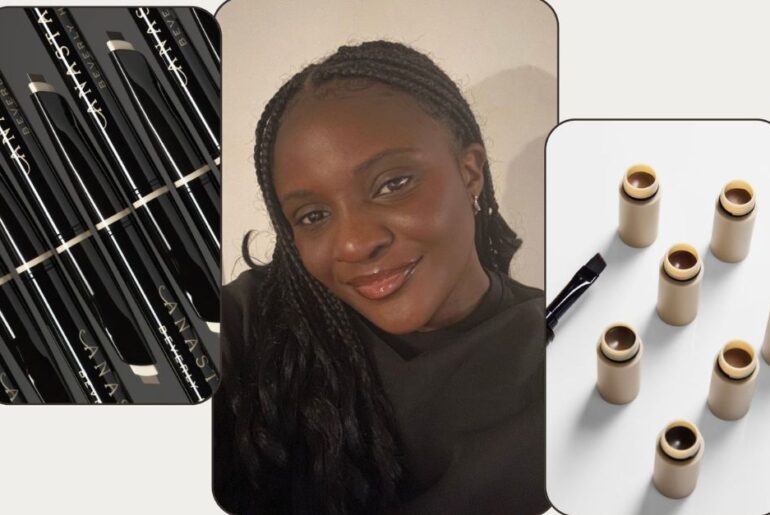
Alaffia founder Olowo-n’djo Tchala built a $40 million fair trade beauty brand rooted in West African cooperatives — and now he’s expanding in the most community-focused way.
Growing up in Kaboli, a farming village in rural Togo, Olowo-n’djo Tchala watched the women around him — his mother, relatives, and neighbors — handcraft shea butter and black soap using methods passed down across generations. It was specialized knowledge, skilled labor, and cultural inheritance distilled into a daily practice. But when that same knowledge appeared in personal care products sold globally, the women who had built and maintained that supply chain saw nothing in return.
“I saw ingredients from Africa being used in global products with no return to the communities who grew and harvested them,” Tchala told Ethos over email. “That contradiction was something I could not ignore.” When he arrived in the United States and studied at UC Davis, the contradiction only sharpened. “The question was never ‘how do I build a beauty brand?’” he says. “It was ‘how do I build a bridge that carries value in both directions?’ The products were the vehicle. The mission was always the people.”
Tchala also arrived with a model of leadership shaped long before any boardroom. One of nine children, he left school in the sixth grade to work the family farm in Kaboli. His mother, he said, shaped everything that followed. “Late at night, she would take food from our own home to share with travelers stranded on the road,” he explained. “Sometimes we would go without as a result. She taught me that there is always someone in greater need and that true leadership means showing up for others before yourself.”
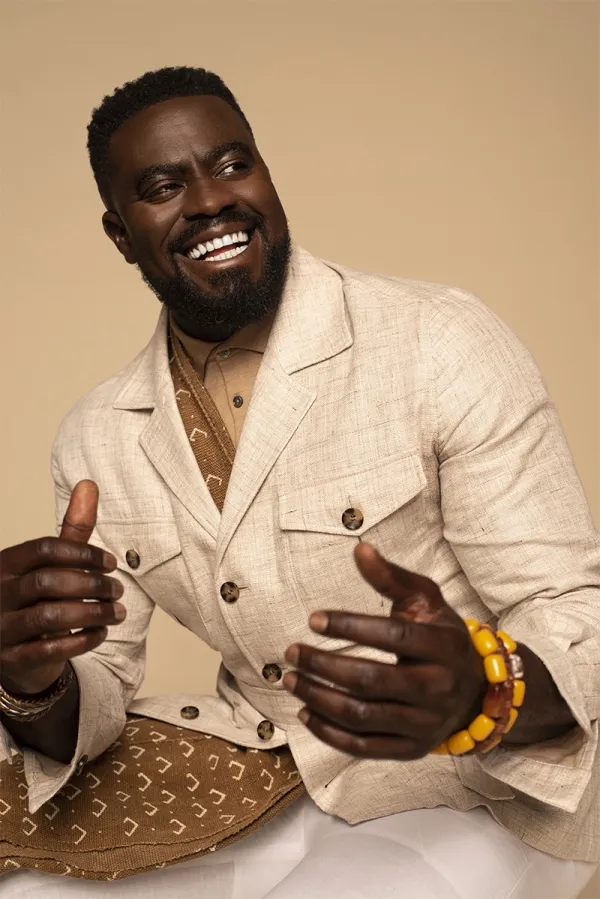 Olowo-n’djo Tchala
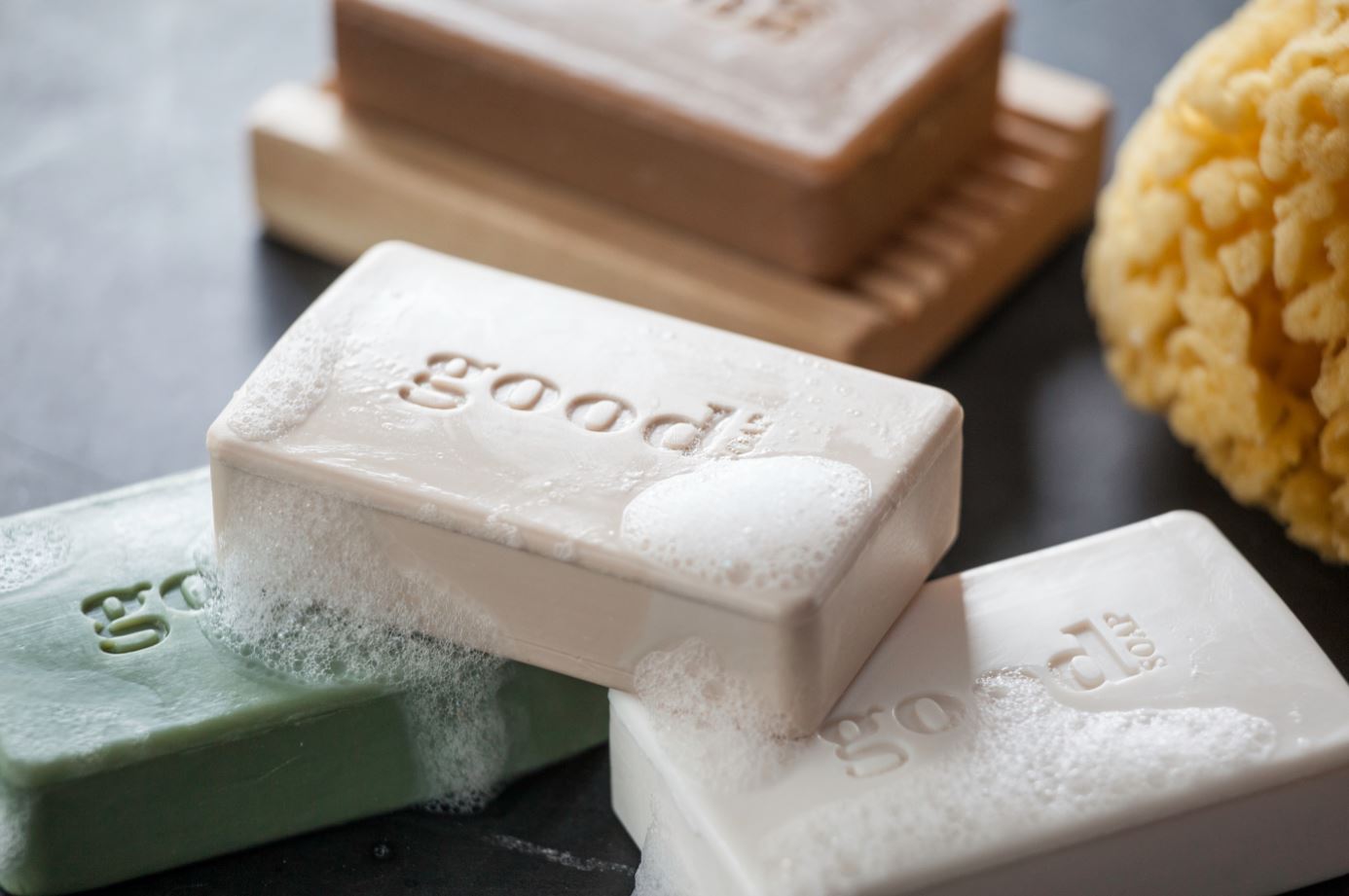
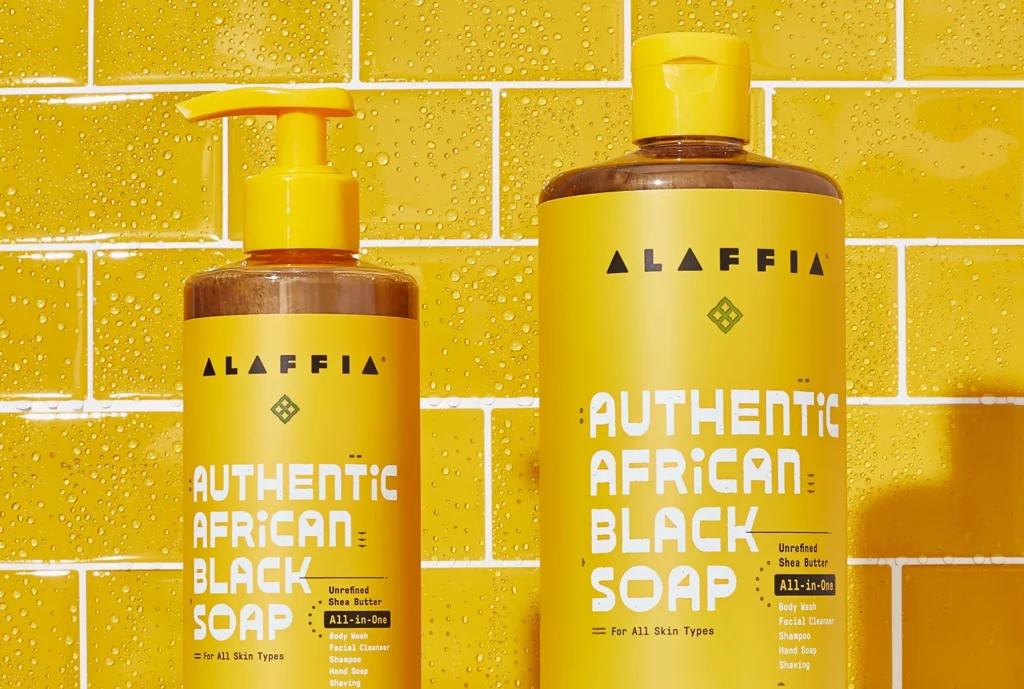
Alaffia, co-founded with Peace Corps volunteer Prairie Rose Hyde in 2004, was the answer to everything he’d witnessed. Built on a student loan, the certified fair trade body care brand grew over two decades into a $40 million national institution best known for its Good bar soaps now sold in more than 4,000 retail stores, including Whole Foods, Wegmans, Erewhon, and Sprouts, and online through Thrive Market, Walmart.com, Target.com, and Amazon (and featured in the Ethos Spring Box).
Now, the brand is opening a community investment round on Wefunder, inviting customers and the general public to own a stake. The round, which closes April 30, 2026, has already attracted $1 million in angel investment, including backing from Walter Robb, former co-CEO of Whole Foods Market, and David Bronner, CEO of Dr. Bronner’s Magic Soap. It follows Tchala’s reacquisition of Alaffia last June through Ayéya Inc., the company he founded after a misalignment with investors in 2022. Since his return as CEO, Alaffia has posted three times year-over-year growth and projects $24 million in revenue for 2026.
Ayéya, the sister brand Tchala built during his years away from Alaffia, was also born out of a question he couldn’t stop asking himself. “What happens to the women in the cooperatives if I give up? What happens to the families who built their livelihoods around this work?” he says. Focused on vertical integration and the supply chain infrastructure that makes ethical sourcing real at scale, Ayéya operates alongside Alaffia rather than beside it. “Ayéya was not a pivot or a rebranding exercise,” Tchala says. “It was an act of commitment. A decision that the mission was larger than any single company, any single setback, any single chapter in the story.”
Fighting for the shelf
When Tchala launched Alaffia, he began building cooperative infrastructure in Togo — one of the world’s poorest nations, ranked tenth poorest by the IMF, with roughly half of its population living below the national poverty line — navigating international trade logistics, pursuing certifications, and working to shift consumer perception in a market with almost no frame of reference for what he was doing. “People did not immediately trust that a product made in West Africa, by African women, could be premium,” he says. “There was an assumption — sometimes unconscious, sometimes explicit — that quality required Western manufacturing. We were pushing against that every single day.”
Getting onto retail shelves meant reframing fair trade entirely: not a charity story, but a quality story, a supply chain story, a values story. That took years of “patient relationship-building and an unwillingness to compromise what we stood for just to fit the mold others expected,” Tchala explains. Traditional African black soap — made from plantain ash, palm kernel oil, and shea butter through methods refined across generations — became both a signature product and a proof of concept. “African black soap is not a formula someone invented in a laboratory,” he says. “The women who make it have a relationship with the ingredients. It is embodied knowledge. It lives in their hands as much as their minds.”
Transparency is a no-compromise — it’s built-in, Tchala says — for every product in the Alaffia family, which includes liquid and bar soaps, bath bombs, and hair care products. “We work with cooperatives we know. We have relationships with the women who harvest, who process, who craft. We are not buying ingredients from a broker who buys from another broker. We are vertically integrated by design, because that is the only way to actually know what you are claiming to know.”
What happens when women control their income
The cooperatives Alaffia has established in Togo and Ghana now employ more than 10,000 women collectors and 750 cooperative members who handcraft its indigenous ingredients. The brand has impacted more than 250,000 lives across West Africa through education, maternal health support, and clean water access — funding 5,597 births and donating more than 10,800 bicycles to students.
The most honest measure of that impact isn’t always tidy. Rising divorce rates in some cooperative communities, Tchala says, are evidence of genuine empowerment — not a troubling data point, but a truthful one. “For me, it tells a deeper truth: that when a woman no longer needs to stay in a situation out of financial necessity, she has a choice,” he added. “And choice is the beginning of freedom. Economic empowerment does not just change what women can buy. It changes what they are willing to accept and what they are no longer willing to endure.”
The Wefunder round extends that logic to Alaffia’s own consumer base, turning loyal buyers into stakeholders. “Business, when it is done with integrity, can build something that regenerates itself,” Tchala says. “It is not charity. It is alignment. And when businesses align their success with the well-being of the communities they touch, they become something far more powerful than any NGO or government program working alone.”
The responsibility, Tchala says, is enormous, and he emphasizes that is largely unmet across the industry. “When a beauty brand sources an ingredient from West Africa, or Southeast Asia, or Latin America, it is participating in an economic relationship with communities that have historically been on the losing end of such relationships,” he says. “That history does not disappear because a product has a clean label and an ethical marketing campaign.”
The responsibility begins with “honesty about that history” and a commitment to not repeat it,” he says. “That means fair wages, not charity-level payments dressed up as generosity. It means not owning the supply chain in a way that strips communities of agency. It means asking: who profits? Who decides? Who reinvests? If the answers to those questions all point back to Western headquarters, something is wrong. Business is not charity, but it must be accountable. When your profit depends on the labor and knowledge of communities in the Global South, you have a responsibility to ensure that your growth is genuinely shared.”
Related on Ethos: