By: Monica Smith | April 08, 2026 | 9 min. read |
Summary
A new single‑cell technology reveals what immune cells are actually doing, not just what their genes suggest.
CIPHER‑seq captures immune responses with greater accuracy and timing by measuring RNA and proteins simultaneously.
The approach offers a clearer view of cytokine signaling, a critical driver of cancer and immune behavior.
Our immune system is constantly making decisions. Immune cells sense danger, send signals, call for backup and sometimes attack. Scientists have long studied these decisions by reading RNA. But RNA doesn’t always tell the full story.
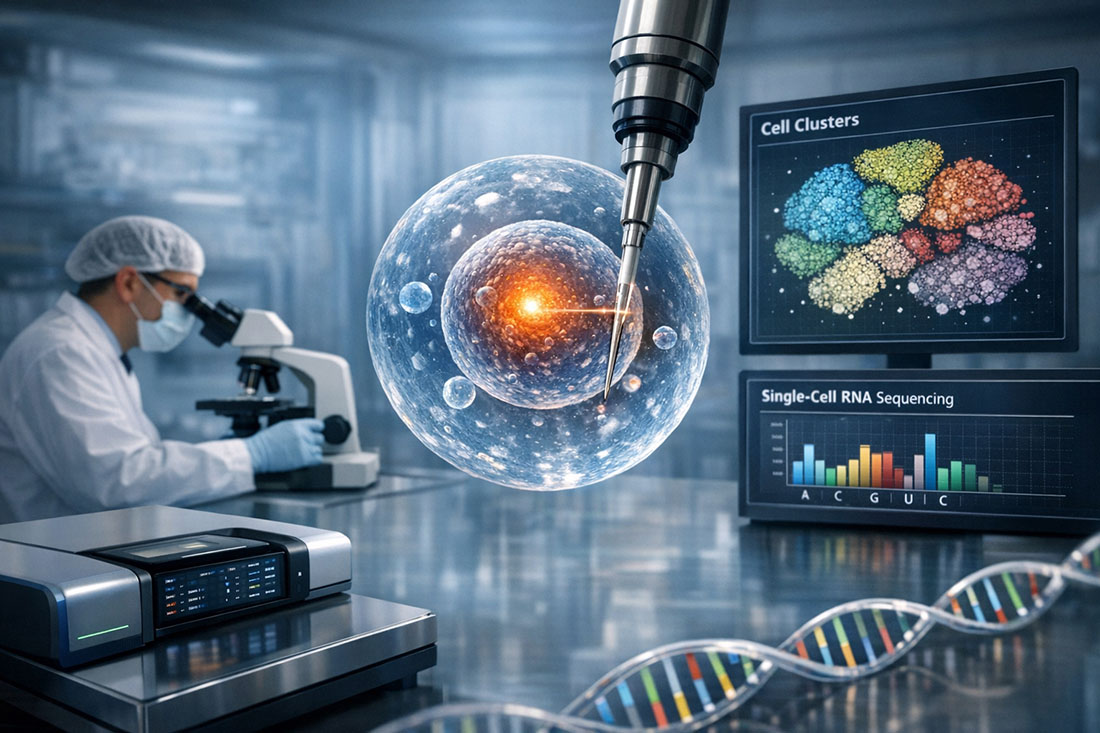
At Sylvester Comprehensive Cancer Center, part of the University of Miami Miller School of Medicine, researchers have developed a way to see what immune cells are actually doing, not just what they intend to do. A new technology called CIPHER-seq lets scientists simultaneously measure both RNA and proteins within the same individual immune cell, offering a clearer picture of how immune responses work.
The study was led by a multidisciplinary team based at Sylvester and the Miller School, with collaborators from the University of California, San Francisco, and the Helen Diller Family Comprehensive Cancer Center. The work brings together expertise in cancer biology, hematology, immunology, genomics, flow cytometry and molecular biology and is detailed in Scientific Reports.
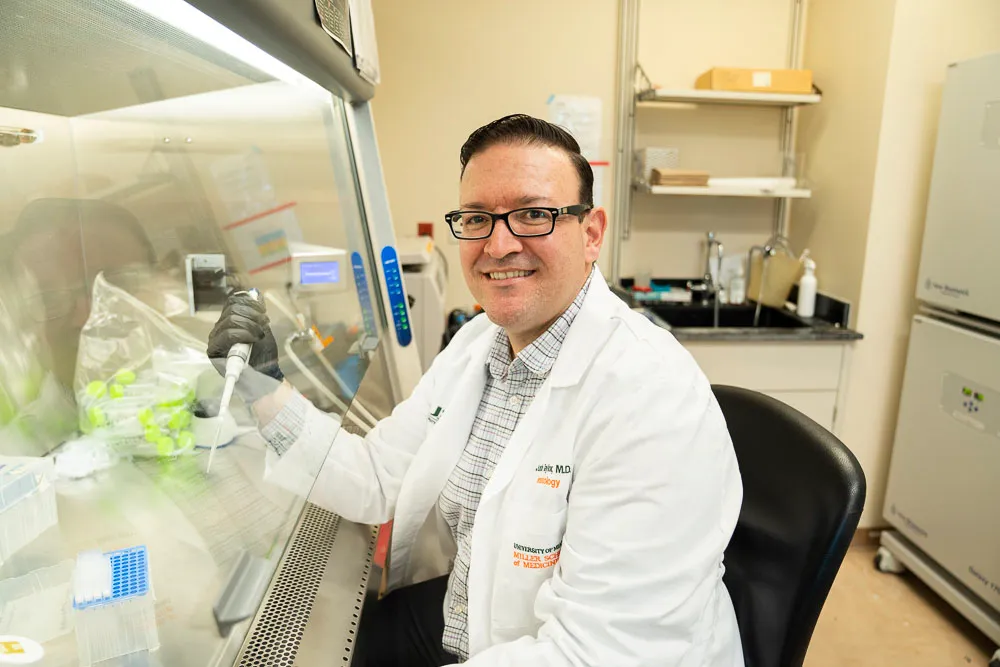 Dr. Justin Taylor
“RNA gives us clues about where a cell is headed,” said Justin Taylor, M.D., Sylvester researcher, co-senior author of the study and associate professor of hematology at the Miller School. “Proteins show us where it actually arrives, and this clearer picture could help scientists design better immunotherapies and help clinicians predict which patients are most likely to benefit from them.”
Why RNA Alone Can Be Misleading
Single‑cell RNA sequencing has transformed biomedical research. It allows scientists to study thousands of immune cells at once and see which genes are turned on or off. But RNA is only a set of instructions. Proteins are the molecules that carry out those instructions.
That gap becomes especially important when scientists study cytokines. These small but powerful proteins that immune cells use to communicate help control inflammation, direct immune attacks and shape how tumors grow or shrink. Yet RNA levels for cytokines often do not correlate with the amount of protein a cell actually produces.
 Dr. Emiliano Cocco
“In immune cells, RNA and protein don’t always rise and fall together,” said co-senior author Emiliano Cocco, Ph.D., a Miller School assistant professor of biochemistry and molecular biology.
That mismatch isn’t an error. It’s biology. RNA can appear quickly and disappear just as fast, while proteins take time to build up and may linger longer. Studying RNA alone can miss this timing, Dr. Cocco added.
A Technology Built to Measure RNA and Proteins Together
CIPHER‑seq — short for Cytokine Intracellular Protein High‑throughput Expression with RNA sequencing — was built to close that gap. The method allows researchers to gently preserve cells, enabling them to measure multiple layers of information at once.
From a single immune cell, CIPHER‑seq captures:
• RNA from across the genome
• Proteins on the cell surface
• Proteins inside the cell
• Cytokines trapped inside before they are released
This creates a fuller, more reliable snapshot of immune activity.
The platform helps us move beyond inference and toward understanding how immune responses truly unfold, one cell at a time.
Dr. Justin Taylor
The platform helps us move beyond inference and toward understanding how immune responses truly unfold, one cell at a time.
Dr. Justin Taylor
Avoiding Stress That Skews Results
One challenge with studying cells is that the process itself can stress them. Some existing methods damage cells during preparation, triggering artificial stress responses that distort results.
When the research team compared CIPHER‑seq with standard approaches, they found that CIPHER‑seq caused far less cellular stress. Cells processed with other methods showed signs of damage, especially in their mitochondria—the cell’s energy centers. Those stress signals can interfere with accurate measurements, making it harder to distinguish true immune behavior from technical artifacts.
“We wanted a method that lets cells stay as close as possible to their natural state,” said Dr. Taylor, a member of Sylvester’s Translational and Clinical Oncology Program and The Pap Corps Endowed Professor in Leukemia.
Watching Immune Responses Unfold
To test the platform, researchers activated immune cells and tracked their responses. CIPHER-seq clearly captured increases in key cytokines, including interferon‑gamma and tumor necrosis factor. These signaling pathways play important roles in immune defense and cancer biology.
Just as importantly, the technology showed when these signals appeared.
Using a computational approach that orders cells along a timeline of activation, researchers found that RNA signals rose first, followed shortly by protein levels. The delay was small, but consistent.
“It’s like seeing the plan before the action,” said first author Avni Bhalgat, Ph.D. “Cytokines help determine whether immune cells attack cancer, ignore it or even help tumors grow. Understanding how and when immune cells produce these signals is critical.”
When both RNA and protein are measured simultaneously, CIPHER-seq allows researchers to track immune responses step by step, rather than relying on a single layer of data, Dr. Taylor explained. This provides a stronger foundation for studying cancer, inflammation and treatment resistance.
“The platform helps us move beyond inference and toward understanding how immune responses truly unfold, one cell at a time,” Dr. Taylor said.
More from Sylvester Comprehensive Cancer Center
Tags: cancer research, Division of Hematology, Dr. Emiliano Cocco, Dr. Justin Taylor, Gene sequencing, hematology, immune system, Leukemia, Sylvester Comprehensive Cancer Center, technology