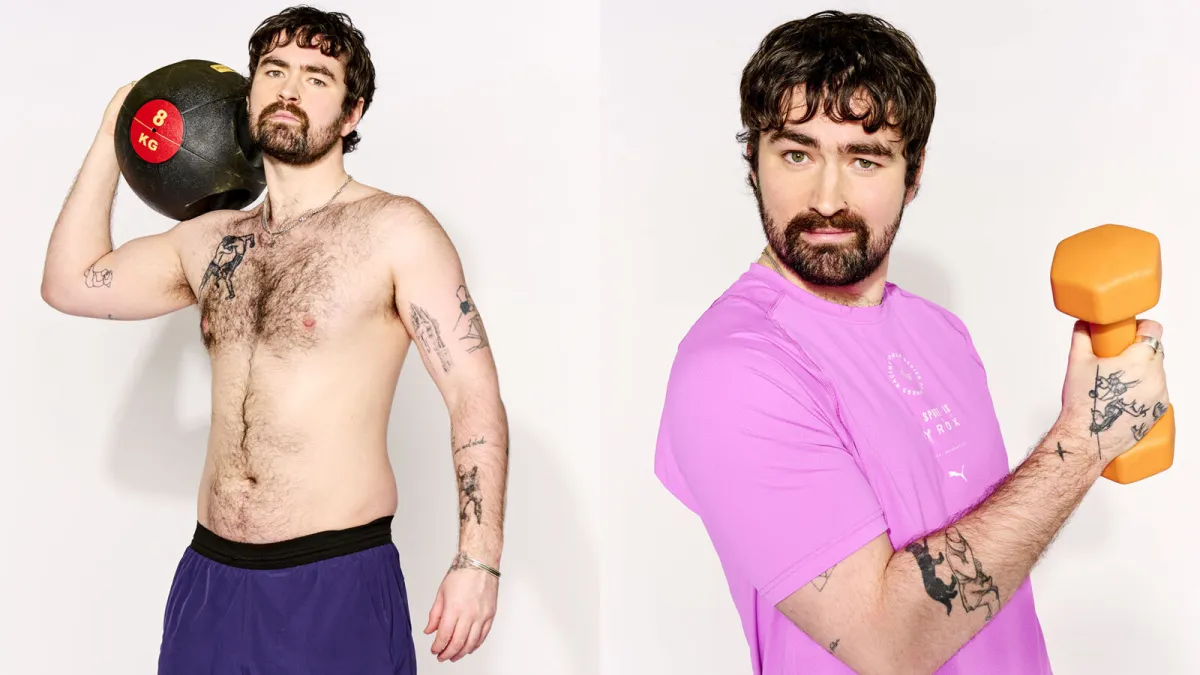
Hyrox is a global indoor fitness competition — a CrossFit-style assault course — and part of a boom drawing Gen Z from the club to the gym. Originating in Hamburg, Germany, in 2017, Hyrox soon claimed to be the fastest-growing fitness sport in the world, and its largest mass participation fitness race.
Hyrox training clubs proliferate in gyms across British cities — though are concentrated in the South East — and abroad, with more than 80 races around the world in 2025. This month sees competitions in Wuhan, Bologna, Sao Paolo and more, and an anticipated 1.3 million will take part this year. Combining eight workout stations, with 8 x 1km runs between them, the brutal, nonstop circuit tests both strength and endurance under fatigue.
On the difficulty scale, it’s deemed to be harder than a half-marathon. Unlike a half-marathon, however, you don’t actually go anywhere. The name is a combination of “hybrid” and “rock star”, because people who do it are hybrid athletes and also rock stars. And it is, apparently, compulsory to document the entire thing on social media.
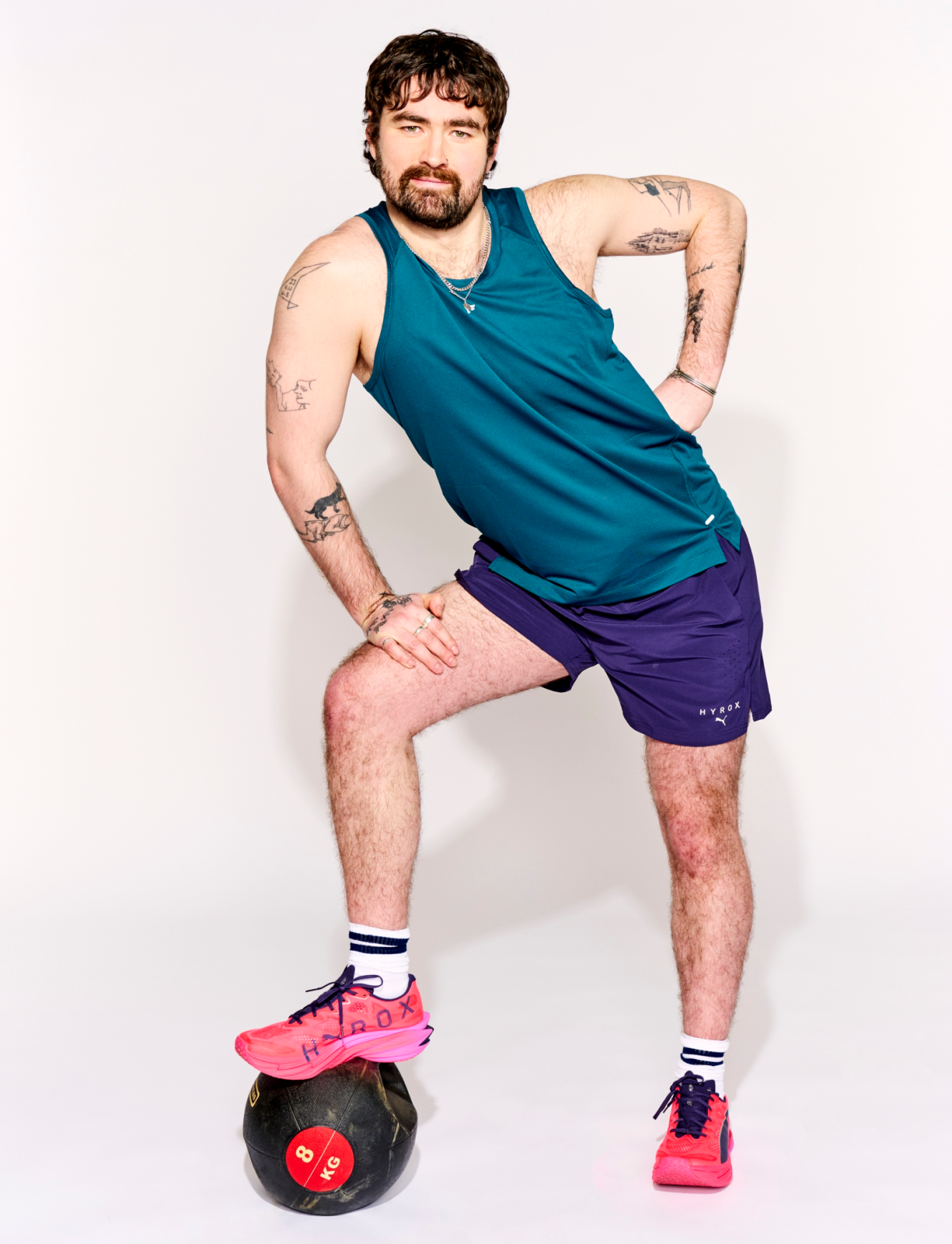 One Hyrox addict tells me she only dates men stronger than herTim Jobling for The Times Magazine
At 28, I find Hyrox annoying and the cult-like devotion it inspires among so many of my peers disappointing. My own weekly salvation is a pub chess club in east London. But over the past two years, something has shifted: 3st of new fat has arrived from somewhere. So I bought an outrageously expensive gym membership (£129 a month). And now, for reasons I don’t entirely understand, I’ve decided to sign up for a Hyrox competition in London, to infiltrate the zeitgeist, and maybe get absolutely shredded along the way.
Week one
My Hyrox journey begins, as everything does now, with ChatGPT. The bespoke training plan is full of words I don’t understand, but I can’t face asking a trainer to decode it.
I start my programme the morning after a night at the pub. On the rowing machine — a key part of the Hyrox circuit — I watch my gut compress. Then I run at an incline, which feels awful. On the sled push and pull, my instinct is to haul with my arms, but a busybody gymgoer warns this will “blow your back out early in a race”.
There’s the SkiErg, simulating a sport I’ve never attempted. Weighted lunges, carrying a sandbag on my shoulders. A farmer’s carry — hauling heavy kettlebells for 200 metres. Rowing, burpees and “wall balls”, which involve squatting and throwing a medicine ball at a wall 100 times. Each station is broken up by that 1km run. It’s a ridiculous, frantic circuit of suffering.
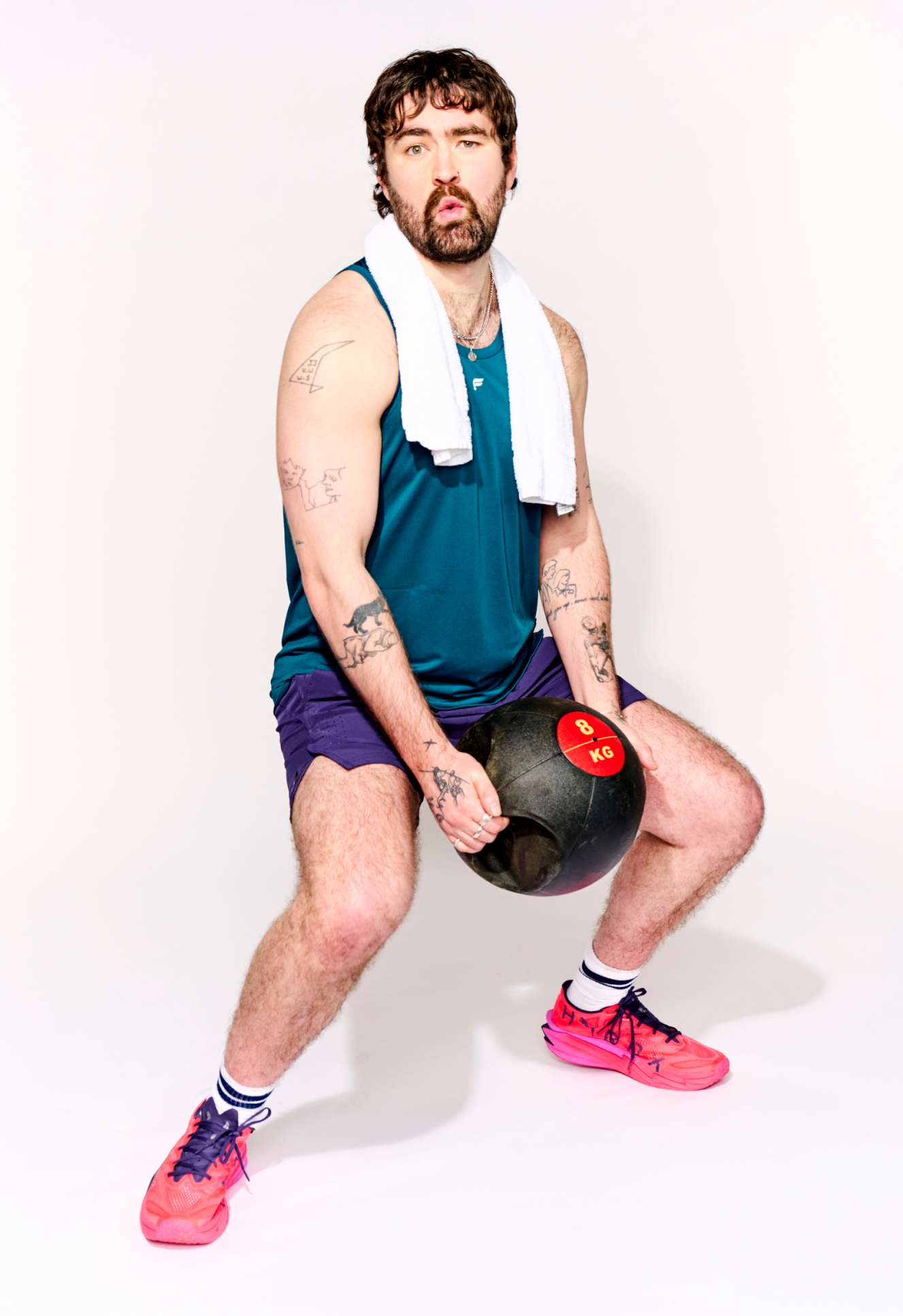 Preparing for “wall balls”, which involve squatting and throwing a medicine ball at a wall 100 timestim jobling for the times magazine
When I tell people about my Hyrox challenge, everyone asks the same thing — what if I enjoy it? I find this offensive. I have, after all, read Middlemarch. On my day off, I play about 50 games of online chess, drink a bottle of wine and watch lots of football.
Week two
My first Hyrox class happens at my local gym after work. A sylph-like trainer stands atop the stairs and directs us through stretches. We squat in a circle. It all feels so intimate. I don’t like the moaning. I don’t like looking people in the eye as we see how low we can go.
We start pushing sleds. We throw medicine balls at the wall. People shout things like, “Keep pushing,” and, “Last minute, go, go, go.” I wonder if I should shout something like, “Has it come to this?”
I have a very Protestant approach to exercise: solitary, joyless, vaguely penitential. No witnesses and definitely no absolution. Headphones in, The Rest Is History on. Hyrox, by contrast, is pure Catholicism — all pomp, ceremony and collective suffering.
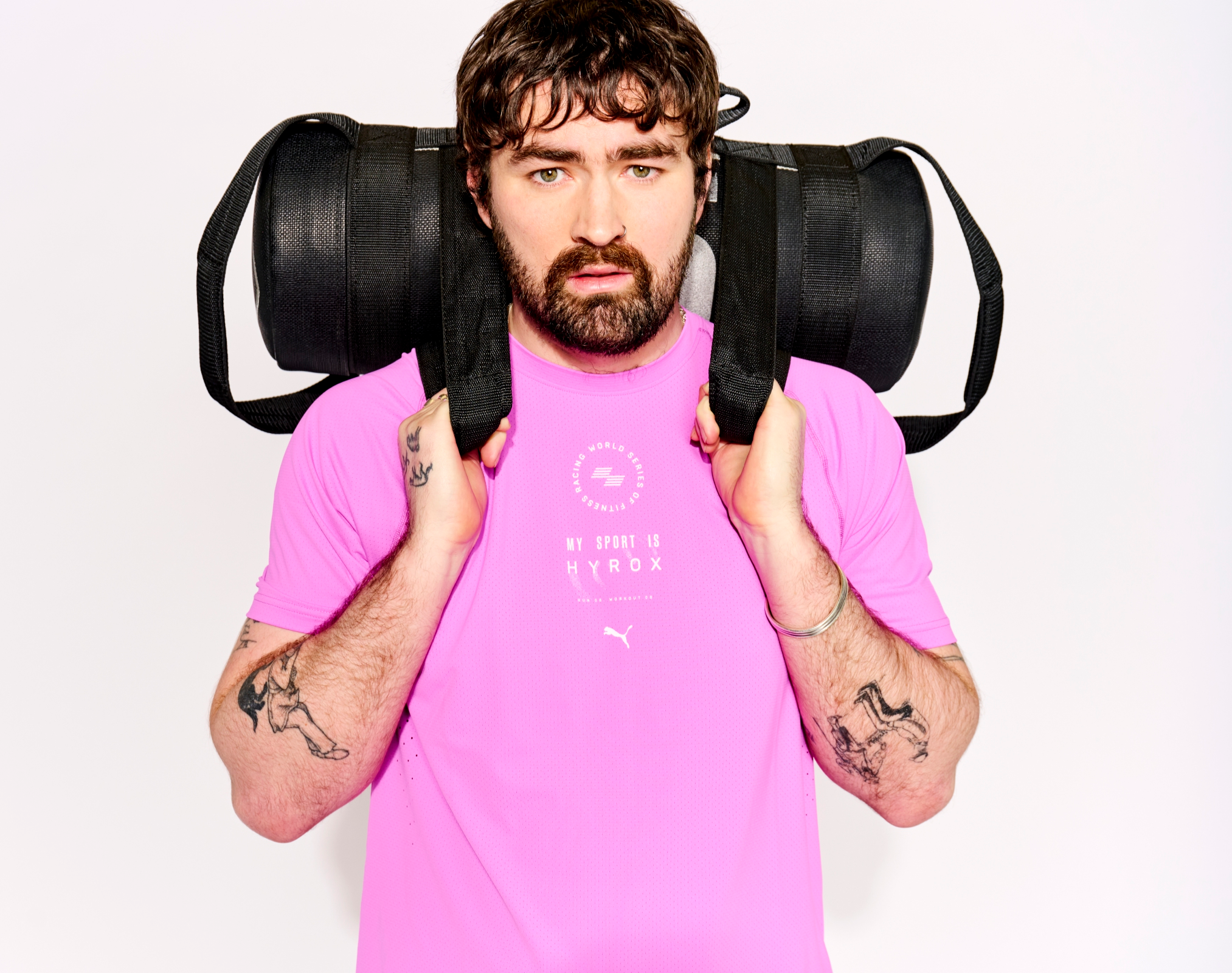 I have a very Protestant approach to exercise: solitary, joyless, vaguely penitentialtim jobling for the times magazine
Week three
If an hour on the treadmill sounds bad, the sauna after a Hyrox session is worse. People talk loudly about day trading. I overhear lists of things they won’t eat. I listen to months-long fitness plans, debates about mixed martial arts styles and the best bars in Dubai. I listen to men make promises to each other.
The thread running through all of it is an obsession with self-optimisation. My generation has come of age in a culture that treats the self as a commodity to be upgraded and refined. Sleep, especially, has become an arena for optimisation. “Boost REM.” “Wake up recharged.” I see an advert for mouth tape promising to stop your “soul operating on low-battery mode”.
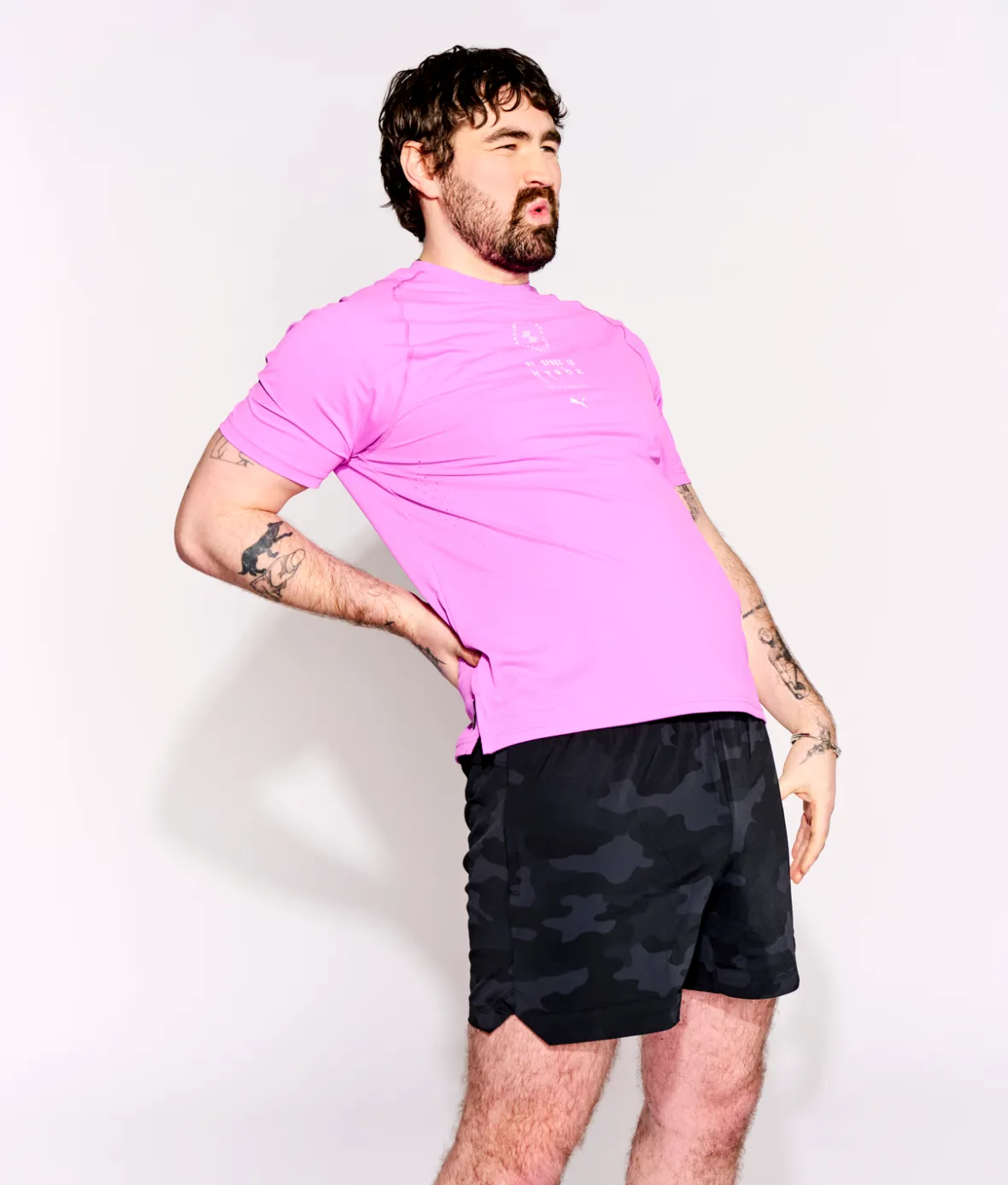 Disaster strikes: I have slipped a disc in my backtim jobling for the times magazine
Week four
Disaster strikes. I have slipped a disc in my back. Surely I’m about 20 years too young for a slipped disc. This doesn’t bode well, for Hyrox or the rest of my life. The worst thing is, it wasn’t anything to do with exercising. I sat on a bar stool wrongly.
I spend two weeks over Christmas horizontal, dosing myself with anti-inflammatories and co-codamol, contending with total structural failure. Basic tasks are beyond me. I have three months to get off the sofa and back on the horse.
Week five
It’s mid-January and I’m hunched and hobbling around a physio’s office. I tell him I’ve got a Hyrox coming up and he grimaces while knocking tiny needles into my skin.
Over the next week I do my little exercises on hard floors. I do the child’s pose and then something called the cat cow. I try to do a weightless hip thrust, but my back buckles. In two months’ time I am supposed to be pulling and pushing a weighted sled for 50 metres. At the moment, I can’t even sneeze.
I’m thoroughly disappointed. I’d rather hoped I could turn up undertrained and still be better than the people who’ve made it their entire personality.
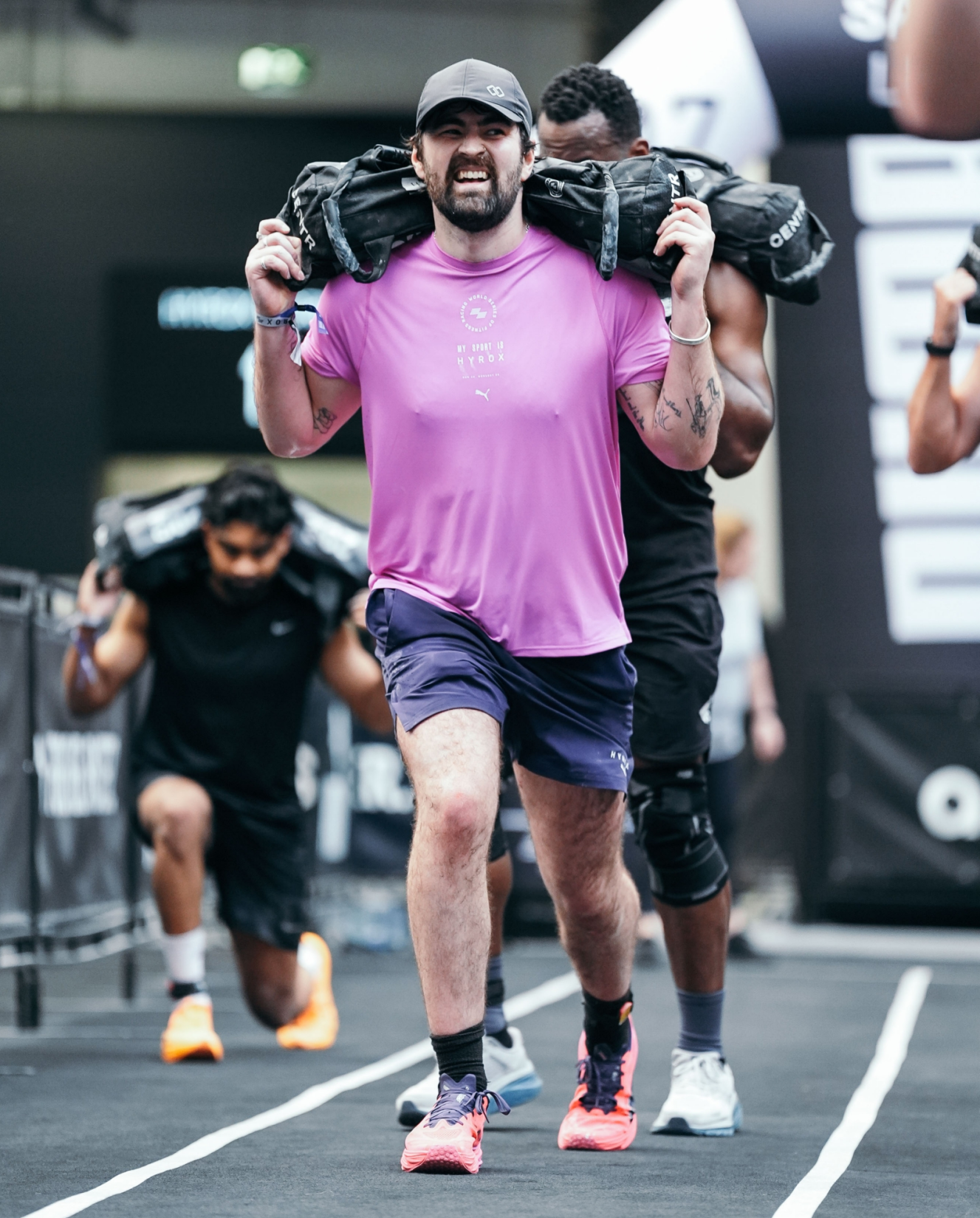 Dawtrey doing weighted lunges during his Hyrox race at London OlympiaHYROX
Week seven
We’re back, baby. I am training again, heavier than ever. I feel this weight most acutely running, when time metastasises like a cruel trick. Minutes feel like oceans.
The clearest evidence of my new lifestyle isn’t physical or spiritual or anaerobic, but algorithmic. Gone are AI cats working at McDonald’s, Arsenal goals, tattoos and Sydney Sweeney. Now topless men scream tips at me about “maximising my output” — what I’m doing wrong and how to fix it — while promising unprecedented physical and cerebral gains. I watch videos called Get Ready with Me. I watch people talk about T-shirts. I am filled with profound sadness.
Week nine
Everyone says the best thing about Hyrox is the community, so it’s probably about time I go to a Sunday meet-up. I am on my way to a Hyrox class in Battersea called Sunday Service, run by a collective called the Weekend Project. The club defines itself as a “movement and lifestyle community” that “aims to curate a global space for like-minded connection through goods and IRL experiences”. I translate that as meaning, do you want to make friends while running and jumping? Also, you can buy merchandise.
My companions today are Sophie and Dayna, two jocular Kiwi sisters. Sophie is a Hyrox “beast” and Dayna knows that her main role is to take pictures for Sophie’s Instagram. As I’m waiting for them outside the converted railway arches, a man stamps my wrist with the words “Stay connected” and tells me about the importance of community. The phrase “Nothing great is imagined alone” is plastered across their social media channels.
We’re about to start and Dayna and Sophie have the giggles. “Who brought Unc?” Sophie says. I’m 28, but sure.
I’ll spare you the details of the next hour. Basically, it was shit. When the session ends everyone breaks out into one, collective cheer. People I haven’t met come and pat me on my sweaty back. All the women in the class are given roses to mark International Women’s Day.
It’s a ritual to go for coffee after. People chat about fitness and social media numbers in the cold. They tell me how their social circles revolve around these kinds of clubs. Sophie tells me she would only date someone who’s stronger than her.
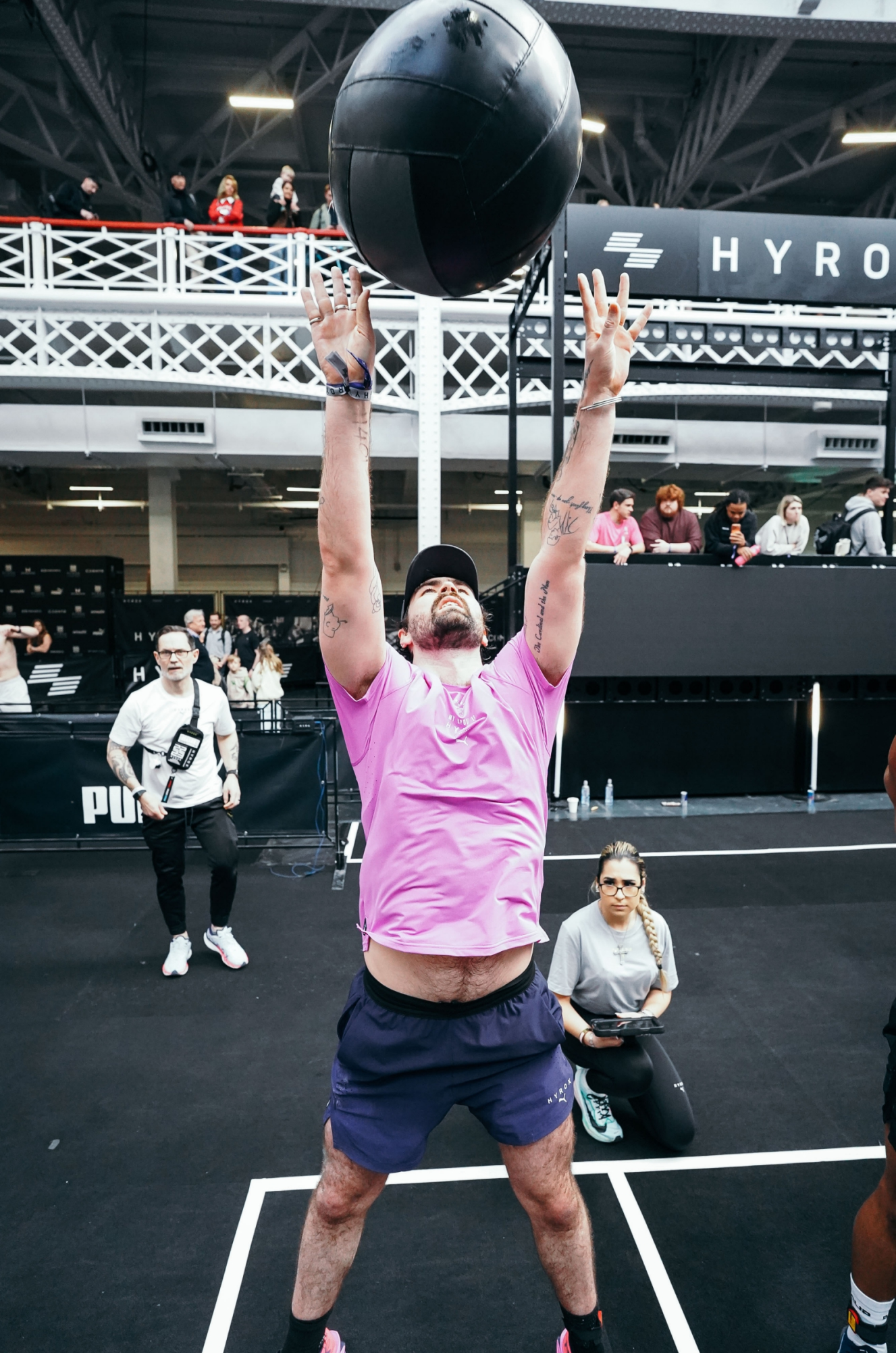 The wall balls challengeHYROX
Week twelve
I’m on my way to have my body “tested by science”. It’s deep inside a Gymbox: neon panels, thudding bass. Two Swiss people discuss lactate thresholds and cortisol spikes. All I hear is, “Continue until failure.”
I pass rows of side rooms full of classes. An effusive ultramarathon runner tells me there are “no wrong answers”. I suspect vomiting on the treadmill after ten seconds would constitute a wrong answer, but I nod.
At the end, after running until failure and getting my ears pricked, the results are conclusive: I produce too much lactate too early — in other words, I’m still unfit.
Which is weird, because I do feel fitter. Six months ago, I could barely run for 15 minutes without collapsing. I’ve lost about 13lb and my sleep is better. So, to be told I’m subpar is disheartening, because it feels like I have committed a huge amount of time to exercising over the last two months. Admittedly, I haven’t cut out drinking or rubbish food and my training probably hasn’t been intense enough, but I feel like I should be in better shape.
Race day
Inside Olympia in London, it’s a festival. Rivers of lightly clad people pulse through makeshift walkways. An MC shouts. Pyrotechnics flare. There’s a Puma shop, a temporary tattoo parlour and a nail salon. I feel a bit sick.
The first runs and the SkiErg feel manageable, but this is where that ends, because it’s time to push sled. Short, choppy steps. Sweat dripping onto the sled like blood from a burst vein. A wave of nausea. On the track I realise I’m more exhausted than I’ve ever been in my life — and I’m still near the start. My knees burn on the artificial grass. My shoulders and back jolt with every rep.
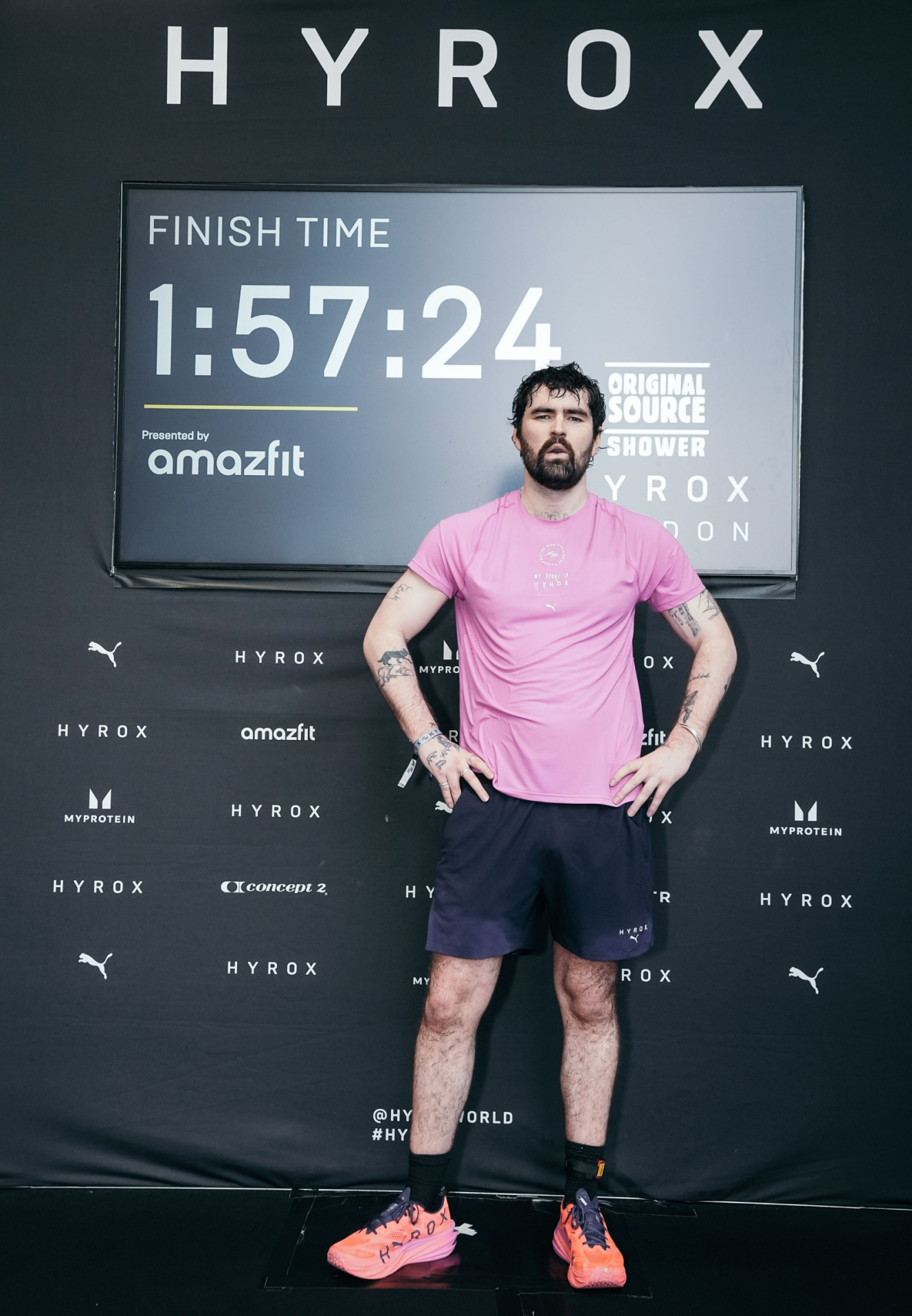 Dawtrey at the finishing lineHYROX
Run, row, run, then the farmer’s carry. A few strides into the sandbag lunges and everything goes weird. I can’t lift my head; the 20kg bag grinds into my neck. My legs are gone. I drop the bag and incur a 15-second penalty. Drop it again and I’m disqualified, which feels unnecessarily draconian when you think about the stakes. I fold into the barrier, hyperventilating, trying not to be sick.
The next run is unreal. My legs don’t work. It takes ten minutes to drag myself through the final kilometre. Then, 100 wall balls. I run into the pen, gallows-esque with its platform and looming frames, and have no idea how I’m going to finish. Friends in the crowd call my name. I wish they would leave. This is a physical and spiritual brutalisation.
Then everything changes. I can feel my consciousness as a physical thing. It’s all-out tunnel vision. I am the sum of my pain. I keep failing reps for not squatting low enough so the judge puts a box beneath me. At this point, you enter a strange, parasocial relationship with the judge. You are at your most fragile and someone you don’t know watches you with a clipboard, ready to make it worse. I look at mine and say with my eyes I can’t and she says with her words you can. I ask her for water, and she says that there is no water. But ultimately, she is right and I can. And I did.
At the finish line there’s no relief. I collapse into a chair and let my body feel foreign. My leg spasms. I can’t hear out of one ear. I see my friend smiling, then not smiling when he realises that I’m ruined. Sophie — who started 30 minutes after me and finished 30 minutes before — says something kind, but it barely registers. Someone walks past in a T-shirt: “This life is not for everyone”.
People ask if I feel good. I don’t. I did something difficult and horrible in front of a lot of people and found it unbearable. I was bad at it. I feel flat. I have a few pints and go home. I have no appetite and I don’t sleep. It all feels like a hallucination.
A few days later, I tell Sophie how I ignored medical advice to cancel the event because I really wanted to write this. She says I sound like a true hybrid rock star.
Grooming: Lucie Pemberton using Erborian