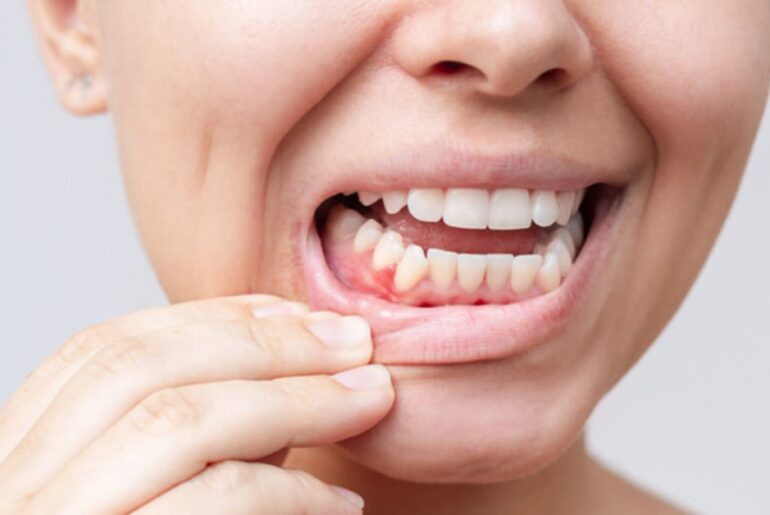
As we age, we can begin to notice wrinkling and thinner, thirstier, more sensitive skin. This is because our aging bodies can experience a slower immune system response due to our usually protective immune T-cells no longer working well or simply becoming exhausted. Our aging skin is then more prone to chronic inflammation or ‘inflamm-aging’ making it easier for bacteria from our microbiome to begin to invade our frail skin’s surface leading to higher risk of infections.
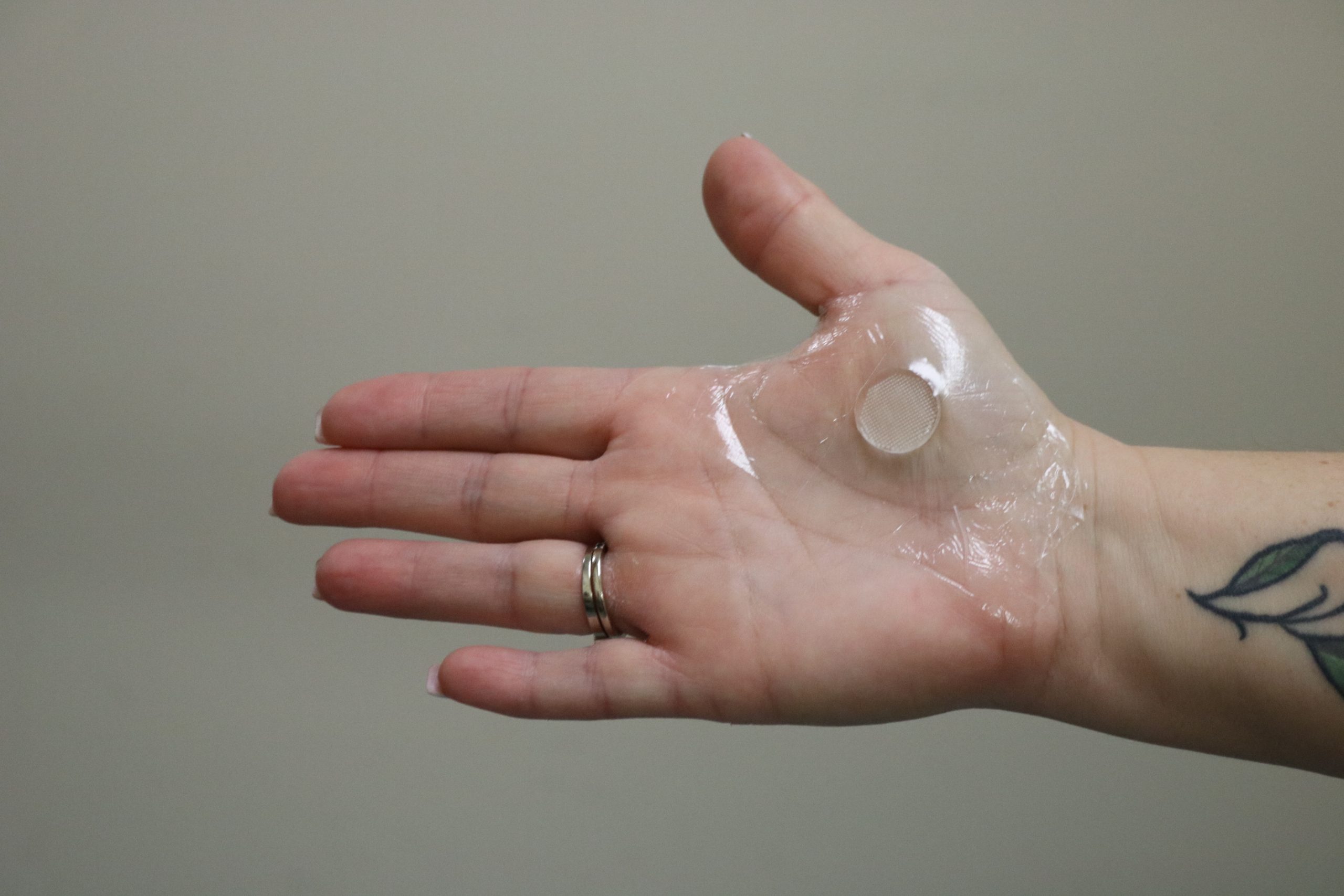 The first bandage-like micropatch technology being tested at UConn Center on Aging (UConn Photo/Lauren Woods).
To learn more about aging and our immunity, an innovative clinical study at UConn Center on Aging is underway testing the effectiveness of placing novel, tiny micro skin patches to capture the skin’s surface microbiome bacteria and also immune cells a little deeper in the skin in both young and older adults.
“For the first time we can sample a person’s immune cells through this skin micropatch. This is a very exciting breakthrough – and it’s very cool!” shares Dr. Sasan Jalili, assistant professor at The Jackson Laboratory and the Department of Immunology at UConn School of Medicine, both located on the UConn Health campus in Farmington. “This opens the door to a new way of monitoring immune responses that’s practical, painless, and clinically feasible.”
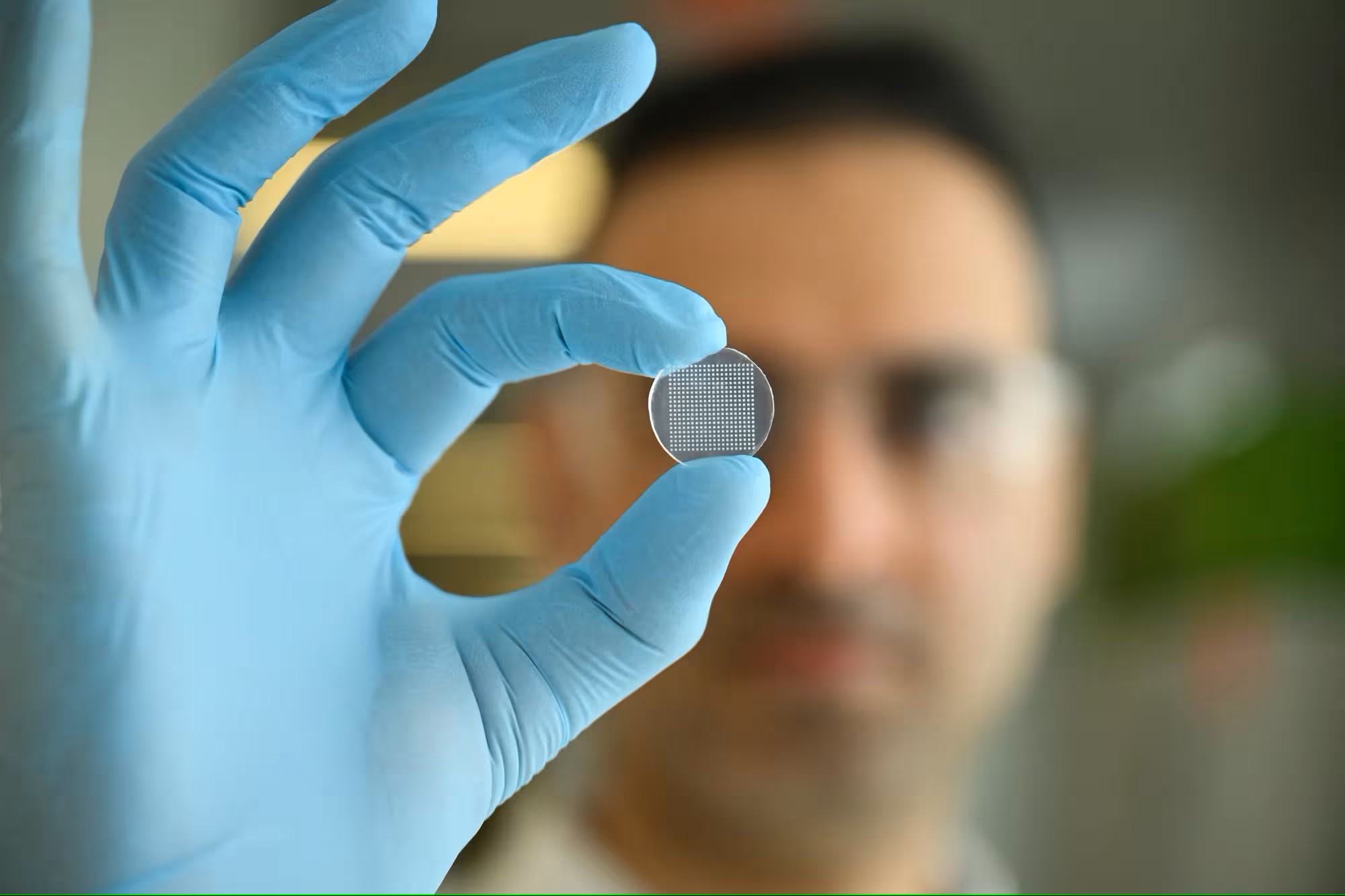 Holding the novel, skin micropatch technology is Dr. Sasan Jalili, assistant professor at The Jackson Laboratory and the Department of Immunology at UConn School of Medicine (Photo by JAX).
The collaborative clinical study called “Skin Immunity as a Function of Frailty, Aging, and Skin Microbiome Composition” is testing the small skin micropatch technology on willing study participants at UConn Center on Aging.
This first bandage-like micropatch technology was developed by researchers at The Jackson Laboratory (JAX), in collaboration with the Massachusetts Institute of Technology (MIT). Initially developed during Jalili’s postdoctoral training at MIT, the platform was further refined, optimized, and advanced from mouse models toward clinical application at JAX through collaborations with the University of Massachusetts Chan Medical School (UMass Chan).
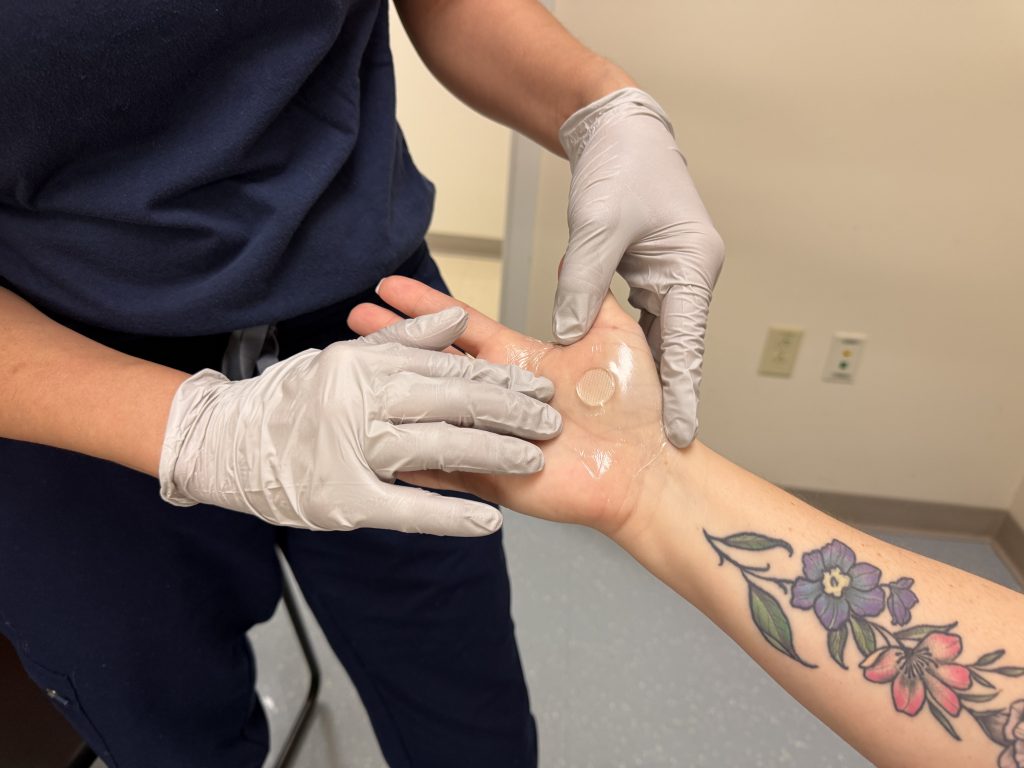 The new skin patch has tiny projections on it that gently access the deeper, upper layers of the skin to capture immune cell samples without any bleeding or pain (UConn Photo/Lauren Woods).
The NIH-funded research is a collaborative effort. The clinical study research being carried out at UConn Center on Aging is one subaward of the large National Institutes of Aging (NIA) grant awarded to overall principal investigator Julia Oh, Ph.D., of Duke University, who is formerly of The Jackson Laboratory. UConn Center on Aging’s Julie Robison, Ph.D. is serving as principal investigator for the subaward testing the micropatch in clinical study and overseeing the participant recruitment and data collection, while JAX’s own subaward principal investigator Jalili is performing the clinical study’s data analysis.
The clinical study work is building on Jalili’s new research findings published on March 2, 2026, in the journal Nature Biomedical Engineering where he, as lead study author, introduces the novel micropatch technology and shows how it works to monitor the immune system’s T-cells directly through the human skin in just hours or a day.
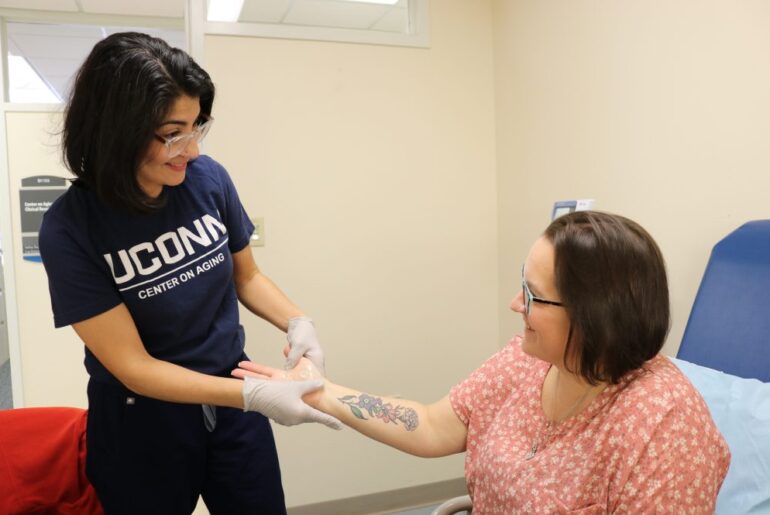
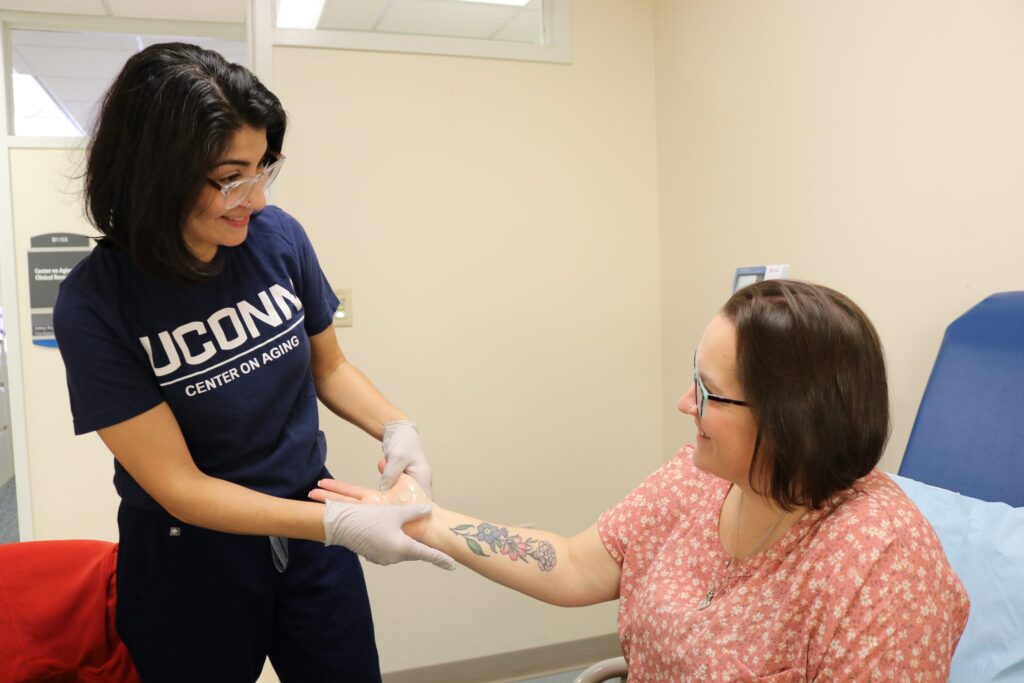
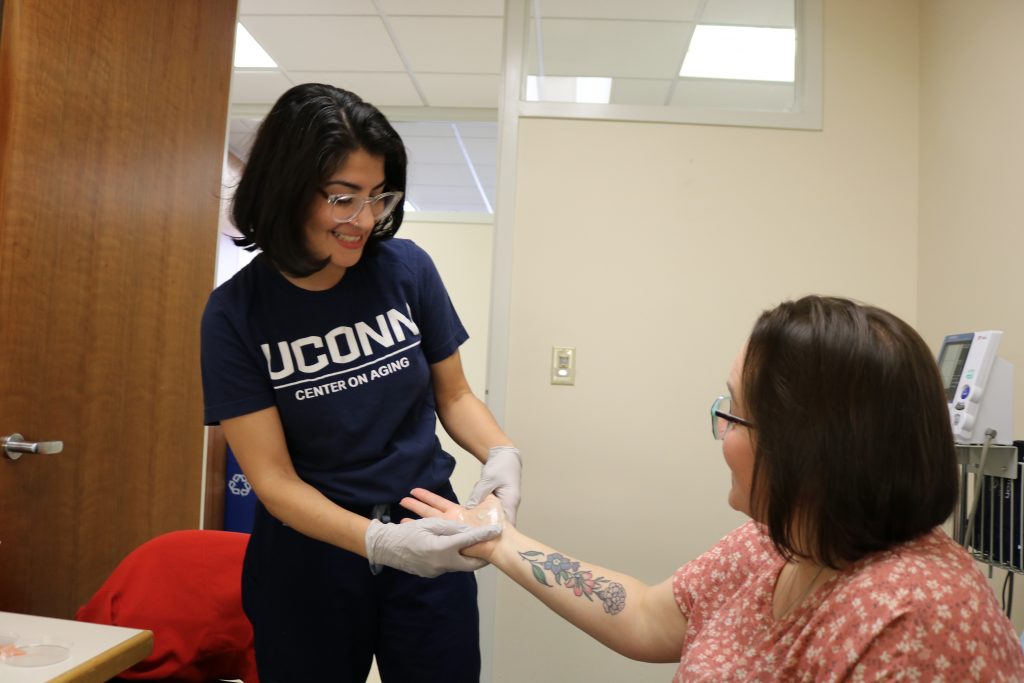 UConn Center on Aging study coordinator Alba Santiago placing the tiny skin patch (UConn Photo/Lauren Woods)
The new skin patch, which feels similar to a piece of Velcro, has tiny projections on it that are able to gently access the deeper, upper layers of the skin to capture immune cell samples without any bleeding or pain. The patch and its projectors are made of FDA-approved materials of polymer with a seaweed-derived hydrogel coating.
To test the micropatches’ effectiveness, researchers are placing them in seven different locations of each study participant’s body for monitoring for 24 hours before removal. They are placed on the toes, areas of the face, back, torso and palm of the hand. The adjustable patches can be easily cut to various sizes, and typically are just the size of a nickel or a dime.
“Our clinical study participants are finding that these skin patches are very tiny, non-invasive, and easy to apply and remove,” says Robison of UConn Center on Aging. “For older patients’ skin this is really important, as it can become more challenging to draw blood from veins as we age, and also it takes longer for frail skin to heal after a biopsy.”
“This skin patch is enabling us to quickly get greater understanding of immune events that are happening inside the human body,” says Jalili. “Imagine if in the future we can get rapid, point-of- care diagnostics of diseases or infections less invasively through a simple skin patch, instead of blood draws or biopsies, especially for frail older adults or even hesitant-to-care children– it would be incredible. Perhaps, even one day the skin patches could be used for remote sampling of patients at home, and they can simply return their samples by mail. This could help us also garner even larger patient populations to study and to advance research.”
Jalili is a Pepper Center Scholar awardee of the UConn Center on Aging, where he is further building upon this research by studying senescence cell and other aging biomarkers in the skin and blood.
The new clinical study also builds on past findings published by Oh, Robison and the UConn Center on Aging in the journal Nature in 2021 that compared the microbiomes of young and older adults, finding that our microbiomes shift and become very different as people get older.
“Different microbiomes are found on the skin of frail, older adults, that pose their immune systems greater risk,” says Robison.
The research team hopes the clinical study results will help them better understand the relationship between skin microbiomes and the immune system in older adults, and lead to the discovery of new therapies that will promote greater healthy aging of skin.
“We know that frailty experienced by older adults plays a pivotal role in our immunity as we age,” says Robison. “We are now focused on learning more about the skin’s microbiome and immune cells to see if there is any correlation.”
Robison concludes, “The skin may really be our largest window of opportunity to better understand our body’s immune response as we grow older.”
This clinical study is being conducted by Julie Robison, Ph.D. of the UConn Center on Aging, along with its Director Dr. George Kuchel, and medical director of Senior Health at UConn Health Dr. Patrick Coll as well as former JAX colleague Julia Oh, Ph.D. now at Duke University, and Sasan Jalili, Ph.D, and Karolina Palucka, MD, Ph.D. from The Jackson Laboratory.
Those interested in participating in the micropatch clinical study need to be either age 20-40 years or 60 years and older – and there are some excluding factors. For more information and to enroll in the current clinical study cohort, please see the study flyer and contact the UConn Center on Aging study coordinators: Alba Siharath Santiago (860)679-3675, santiago@uchc.edu or Sarah Driscoll (860)679-6237, sdriscoll@uchc.edu. Note, if the study enrollment reaches capacity this spring, you will be added to the waiting list for follow-up this summer.