MANSFIELD — Healthy food is key to a healthy life. But when patients can’t access fresh food due to cost or transportation barriers, a doctor’s recommendation to eat right doesn’t do much good.
That’s why Third Street Family Health Services is taking its nutrition advice a step further.
Through its food pharmacy program, Third Street provides boxes of healthy food to patients experiencing food insecurity.
“Food insecurity is an often overlooked piece of healthcare,” said Alex Goff, vice president of business development at Third Street. “We believe our responsibility extends beyond the exam room. We’re here to care for the whole person.”
Third Street launched its food pharmacy program last year with a grant from the Richland County Women’s Foundation. Employees delivered the boxes every other week to 10 families, impacting a total of 47 individuals.
After the first year, Goff said he wanted to expand the program — but a series of staffing changes left him as the sole delivery driver. Adding more to his delivery route didn’t seem like a feasible idea. Neither did asking families to pick up their food boxes.
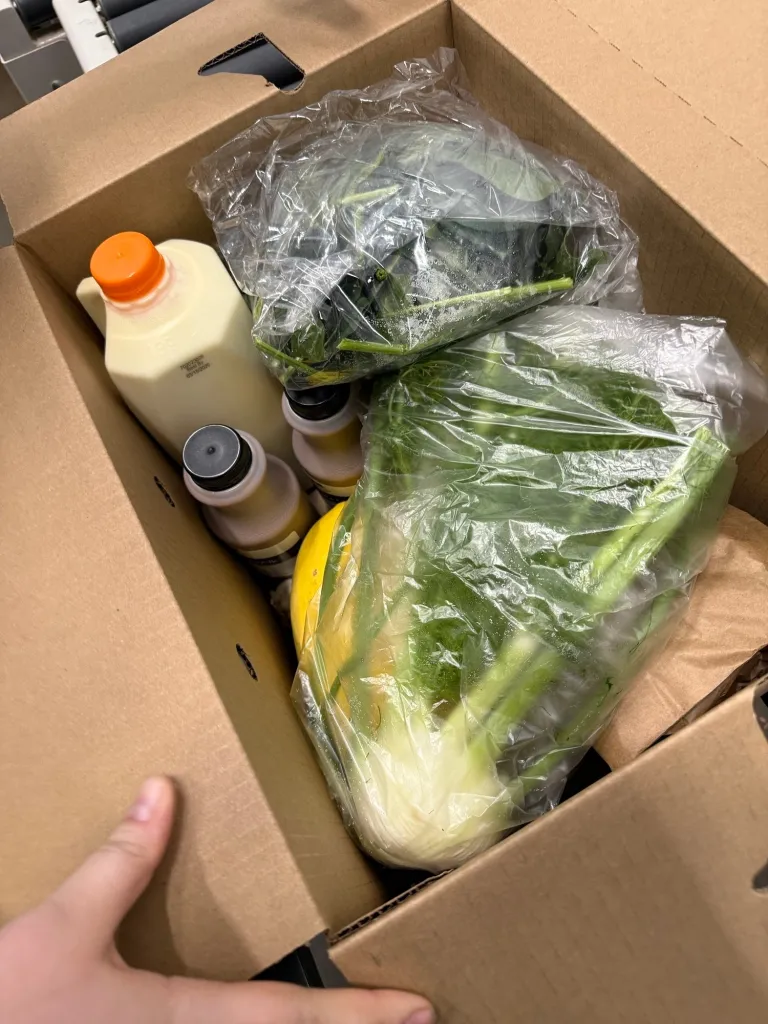 A sample box shows what a family might receive from the Third Street Family Health Services food pharmacy.
“Many of our patients face daily challenges above and beyond food issues. They’re also dealing with transportation barriers and housing insecurity,” Goff said.
Third Street partners with Mount Vernon-based organization for food boxes and distribution
So Goff contacted Yellowbird Foodshed, an organization in Mount Vernon that partners with more than 100 growers and producers across Ohio to distribute fresh, local food.
“We started with a purpose of trying to get our small food growers direct to consumer,” said Benji Ballmer, co-founder of Yellowbird Foodshed. “Everything is seasonal with us because we buy almost all Ohio grown.”
Now, Yellowbird Foodshed creates custom boxes based on household size and delivers them on behalf of Third Street. Yellowbird’s connections with a wide market of producers means food boxes now offer more than just produce.
Depending on the week, families may receive items like meat, eggs, cheese and coffee in addition to fruits and vegetables.
Goff and Ballmer said one thing they try to prioritize foods that can easily be prepared at home.
“Just because you or I have access to a microwave, a stove, all those types of things, the population we’re serving, they may not always have those items,” Goff said.
Ballmer also includes recipe cards when possible to provide food recipients with some culinary inspiration.
He’s well aware that preparing a tasty plate of vegetables is a skill many people aren’t taught.
“I grew up a fast-food kid. My mom handed me a $20 at the beginning of the week (for lunch), he said. “I didn’t know how to make a salad or how to prep root vegetables or anything like that.”
Nutrition and food prep education is a common component of food pharmacy programs, which are becoming more common in healthcare settings.
While the investigation of food pharmacy effectiveness as a treatment method is limited, a trio of researchers in Oregon expressed optimism in a 2021 paper, ‘The food pharmacy: Theory, implementation, and opportunities.’
“If widely implemented in effective ways, food pharmacies have the potential to reduce rates and complications of chronic diseases by increasing access to, knowledge about, and consumption of fruits and vegetables as well as other beneficial health behaviors,” they wrote.
Program focused on families with new, expectant mothers
With limited funds available, Third Street restricts the program to new or expectant mothers and their households.
Providers at Cornerstone OBGYN ask a series of questions designed to identify patients who might be struggling to access healthy food and make referrals for the program.
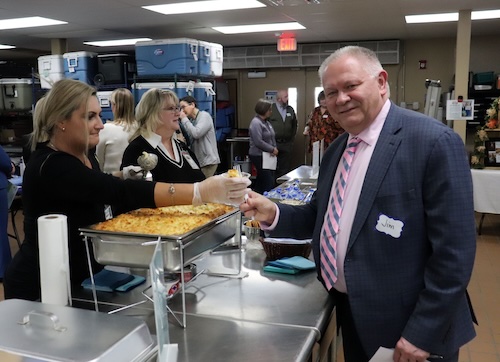
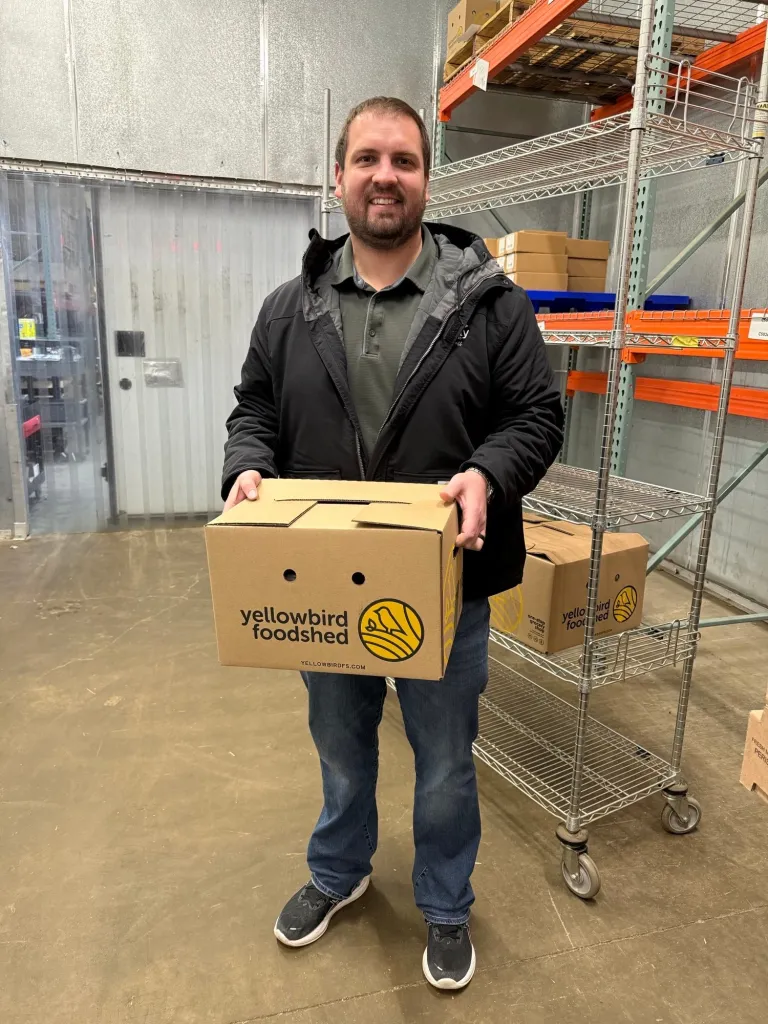 Alex Goff, vice president of business development for Third Street Family Health Services, visits Yellowbird Foodshed.
“For mothers, a lack of proper nutrition can directly contribute to low birth weight,” Goff said. “Low birth weight is linked with higher infant mortality, developmental delays and increased risk of chronic diseases like diabetes and heart disease later in life.”
Goff said the partnership with Yellowbird Foodshed has allowed Third Street to nearly double the number of people impacted by the food pharmacy — but he still wishes they could serve more.
“We’re always exploring — How do we expand this? Are there other funding opportunities we can tap into to?” Goff said. “I could probably do this for several hundred families if money were no object.”
The U.S. Census Bureau estimates that almost one in five Richland County children live below the poverty line.
Meanwhile, Ballmer said Yellowbird has the capacity to take on more deliveries.
“I’d love to be delivering to 100 families a week,” he said. “This is the food and the nutrient density we want to have in everybody’s pantry, regardless of income or access.”