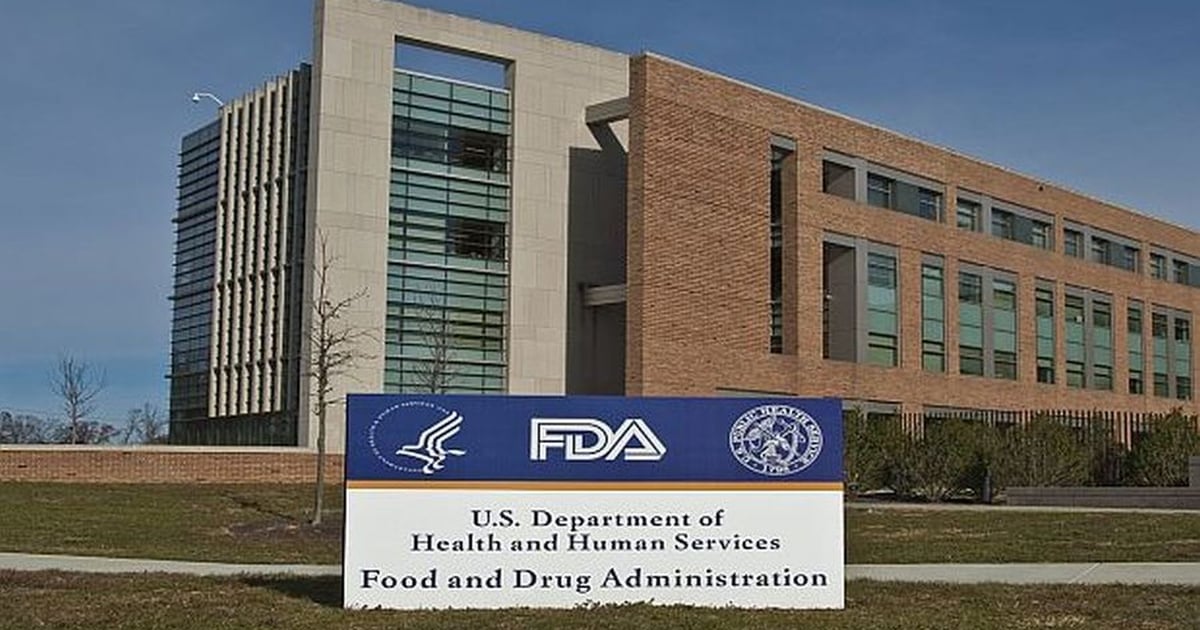
FDA official Kyle Diamantas said the MAHA, or Make America Healthy Again, movement has provided a push for change that has made it easier to look at the agency’s mission with fresh eyes. He made his statements during a meeting on Wednesday hosted by the Natural Products Association (NPA).
Diamantas, a 38-year-old Florida lawyer with ties to President Trump who was named FDA’s deputy commissioner for human foods last year, was appearing on a fireside chat hosted by NPA president and CEO Daniel Fabricant, Ph.D.
“We are taking a fresh look at how we can better serve consumers and how we can better protect food safety,” Diamantas told listeners.
“The momentum of the MAHA movement has really supported us and has made it easier for us. That momentum is really supporting change,” he said.
Diamantas was appointed to his role in 2025 after the previous deputy commissioner, Jim Jones, quit in protest over the firing of 89 FDA staffers, an action he described as “indiscriminate.” Those layoffs were just the tip of the iceberg — during 2025, as many as 3,500 FDA staffers were laid off, though some have been rehired.
Diamantas did allude to the agency’s reduced resources in his comments yesterday but did not refer to the Trump administration’s role in downsizing the agency. To be fair, regardless of which administration has been in power, many FDA staffers over the years have cited the mismatch between the agency’s resources and the tasks assigned to it.
“One of the challenges is the resources we have to do our work. We are responsible for 80% of the U.S. food supply. We are doing that on a budget half the size of the Dallas School District,” he said.
Diamantas said he is keeping the central tenets of the MAHA movement in mind as he works to craft the agency’s priorities.
“We are really rooted in tackling the chronic disease epidemic in this country,” he said.
Supplement-specific actions
Diamantas said “modernization” of how the agency regulates dietary supplements is a top item on the agenda. That modernization would include clarification of the NDI (new dietary ingredient) process. That process, while still functioning, has been the subject of debate ever since the first NDI Draft Guidance was issued in 2010. A revised guidance was issued in 2016, but never finalized, and many fundamental questions about the process remain.
The NDI question has assumed greater importance now that the Trump administration has moved to end the self-affirmed GRAS (generally recognized as safe) pathway to market. This presumably would mean that ingredient developers will file many more NDI notifications in the coming years. (However, Elaine Watson of Agfunder News reported today that there is significant pushback in the move to end the self-affirmed GRAS program.)
“The supplement industry has grown tremendously not just in size but in scope and scale and our regulatory system has not kept up,” Diamantas said. “We want to help manufacturers understand their responsibility more clearly.”
Another way in which the agency can be modernized is in its use of new technology, and in embracing additional third-party data streams, Diamantas said.
Using AI tools could help the agency prioritize which facilities to inspect with the limited man hours available, he said. And giving more credence to the results of third-party facility audits and making better use of that data could help as well, he added.
The road ahead
The Trump administration has been known for its abrupt decision-making. But Diamantas cautioned listeners to remember that change comes slowly at large agencies.
“Every place I’ve worked there has been a ‘we’ve always done it that way’ mentality. FDA is no different,” Diamantas said.
One thing that could help drive change more quickly at FDA is pressure from state regulators. Some states have restricted sales of some supplements to minors because of a purported link to eating disorders. And new testing requirements for some supplements are starting to appear at the state level, too.
“There is no doubt that there has been an increasing wave of state action. They have viewed their work as filling a void in federal regulatory action,” Diamantas said.
“We are working to step up to address those voids that have compelled the states to act. Governors have straight up told me that they have done this to compel FDA to act and to do its work,” he said.
But Diamantas said that agency is not seeking change for the sake of change. The principle of right-sizing the regulatory sphere will guide the process.
“We really want to hear from you all as to what are the requirements that create unnecessary cost and that don’t really impact human health. We want to know how we can reduce costs and burdens and still protect human health,” he concluded.