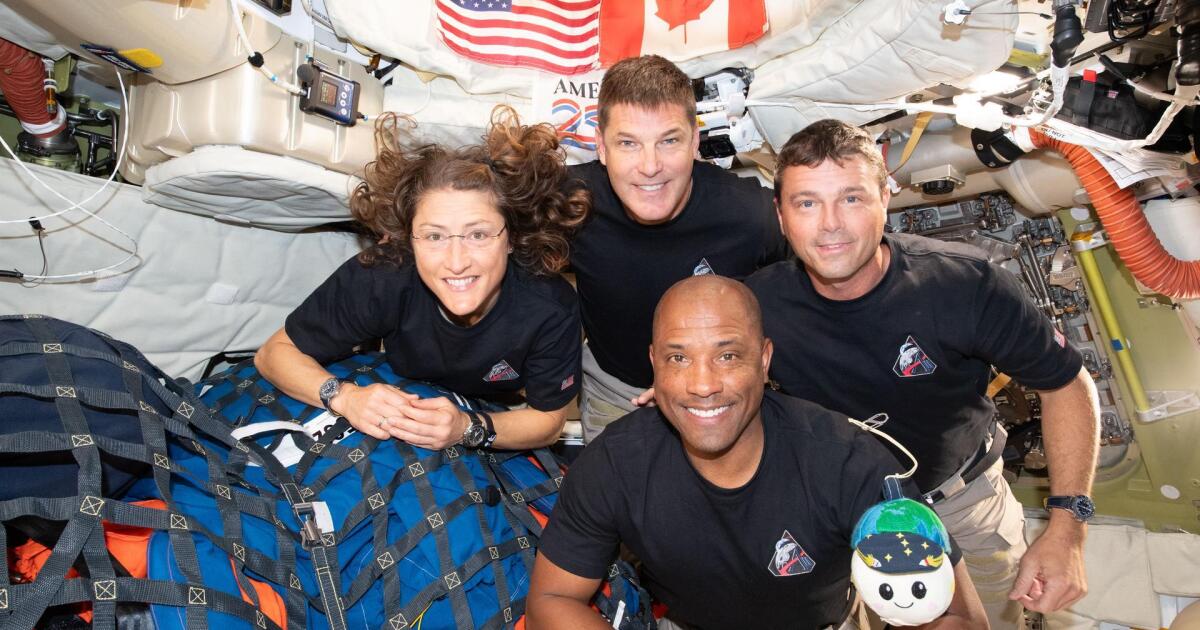
Even a few days away from Earth can significantly alter the human body. Without the constant pull of gravity on the skeleton, muscle and bone can quickly atrophy. To combat this immediate physical decline, the four astronauts aboard Orion on the Artemis II mission are using a specially designed machine known as the flywheel.
In a video blog posted before the crew launched, Canadian astronaut Jeremy Hansen compares the flywheel to a rowing machine. “Like a cardiovascular workout where you row at a lower resistance and a fast pace,” Hansen explains as he demonstrates the flywheel’s functionality. Astronauts strap their feet onto a small platform and pull on a handle connected to a cable. Pulling spins a flywheel. It works like a yo-yo, according to NASA — astronauts get as much resistance as they put into it.
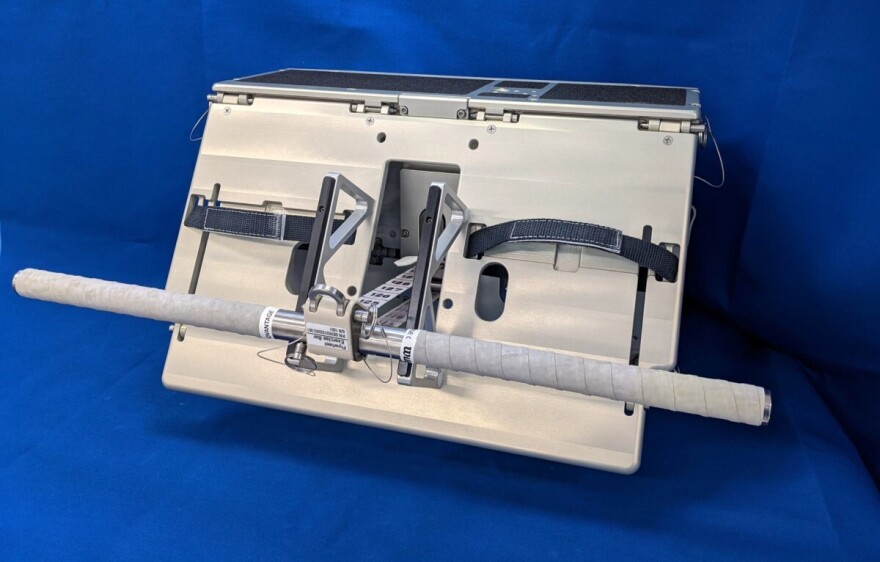
The Artemis II crew exercises on Orion using a flywheel, a simple cable-based device for aerobic and resistance workouts.
The flywheel is small, not unlike an extra large shoebox. Working in Orion’s tight quarters — only 316 cubic feet , about the size of a smallish bedroom — engineers had to design this device to perform with utmost efficiency, so that it can both provide a cardiovascular workout and resistance exercises up to 400 pounds. Astronauts can use it to do weightlifting moves like squats, deadlifts and curls.
Before the astronauts, there were the pillownauts
The flywheel has been years in the making. Jessica Scott, an exercise physiologist at Memorial Sloan Kettering Cancer Center, worked on early prototypes for NASA, anticipating that astronauts would be vulnerable to rapid muscle atrophy without physical exertion.
Scott compares ten days in space to ten days in bed. Atrophying for that amount of time, says Scott, “You would feel very weak and your muscles start to lose size very quickly.” The heart, she stresses, is especially vulnerable with this decline in strength.
When recruiting people to study these early flywheel prototypes, says Scott, researchers looked for 30 subjects willing to lie in bed for 70 days. She and her colleagues weren’t sure they would be easy to recruit.
Turns out, people were eager to spend hours a day reclining in the name of science.
“We had over 10,000 people apply for 30 positions,” says Scott.
They called themselves the “pillownauts.”
Researchers divided these participants into different groups. Some stayed in bed all day. Some of them broke their bed rest in order to work out on a more traditional suite of exercise equipment, and some of them used the flywheel. The goal was not to improve fitness, but to prevent declines.
The flywheel, says Scott, delivered the results researchers were hoping.
“What was really exciting was that the small device could prevent the declines, the same amount that a full gym could do,” she says.
Other missions — like those aboard the International Space Station — have full suites of exercise equipment. The flywheel has not yet been tested for longer durations, but Scott says she’s hopeful it could also provide fitness for astronauts in longer periods of gravity deprivation.
Not everyone’s an astronaut, but everyone ages
Even for people who are not planning on orbiting the moon — this research has important implications, says Thomas Lang, a radiologist who studies bone and muscle loss and has worked with NASA on exercise science for previous missions.
“You start childhood and then as you grow your bone density and mass reach a peak,” says Lang, “in your late twenties or early thirties.”
Those who are lucky to live to old age, he says, will experience hormonal changes that lead to bone loss over time. For women, that escalates sharply in menopause. “That’s a big whopping decline,” says Lang.
Men’s decline may not be as dramatic, says Lang, but they are also vulnerable, especially as they live into their 70s and 80s.
NASA researcher Jessica Scott is also hopeful this work could have broader applications for the general public. Few of us will travel to space, but many of us can relate to dealing with time and space constraints when it comes to exercise, says Scott.
“One day we could all be having our own flywheel,” she says — something small enough to fit under a desk at work, or in the corner of an office.
After his first 30-minute aerobic session with the device, astronaut Reid Wiseman said he was happy to report that in addition to providing a good workout, he was pleased the flywheel didn’t drive his roommates too crazy. No one had to wear ear plugs to block out the sound.
“ It is a really good piece of gear and we can actually get a nice workout,” says Wiseman. “I look forward to the next time I get to try a resistance workout.”
Copyright 2026 NPR