New research has found that living with others might be altering the gut bacteria, helping digestion, immunity, and overall health in communities and households.
Previous studies hinted at the phenomenon of sharing bacteria between spouses and long-term cohabitants, who have more similar gut microbiomes than strangers, even with differing diets.
The new study in Molecular Ecology provides clear evidence of social closeness, not just the environment, driving gut bacteria exchanges.
Natural lab setting
The research team examined the Seychelles warbler songbird on Cousin Island in the Seychelles.
Study researcher Dr. Chuen Zhang Lee, from the School of Biological Sciences, explains: “To uncover how gut bacteria spread between social partners, we meticulously collected the birds’ poo over several years. We gathered hundreds of samples from birds with known social roles — breeding pairs, helpers, and non‑helpers living in the same group and in different groups.”

“This allowed us to compare the gut bacteria of birds that interacted closely at the nest versus those that did not. We studied their anaerobic gut bacteria, which thrive without oxygen. And it gave us a rare insight into how social bonds can drive the transmission of gut microbes.”
The birds on the island carry colored leg rings, enabling researchers to track their behavior, health, and genetics over several years.
Senior researcher and professor David Richardson, from the School of Biological Sciences, adds: “Cousin Island is small and isolated, and the warblers never leave it. This offers scientists an exceptional opportunity to study lifelong biological processes in the wild.”
These conditions, in a natural setting, create conditions that are similar to a laboratory population.
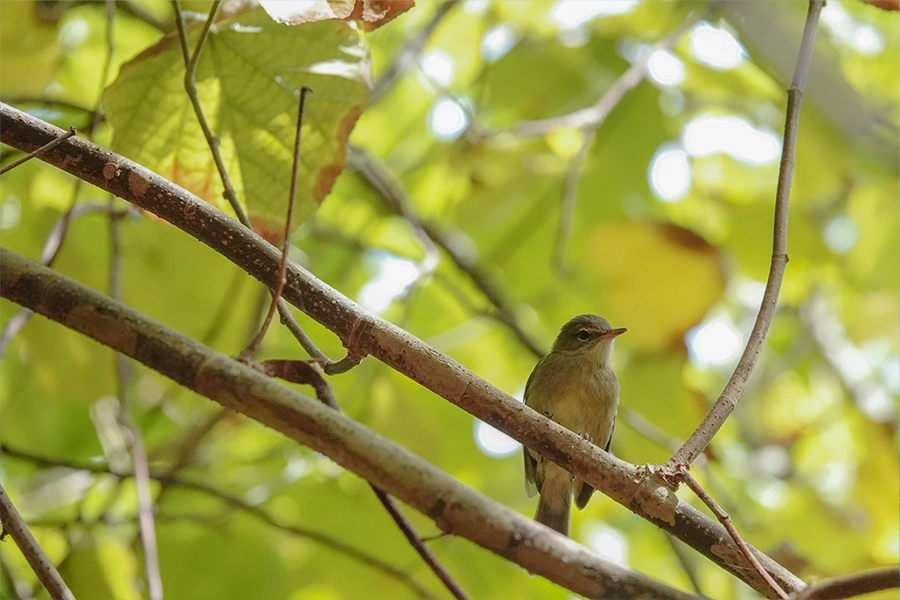 Seychelles warblers share more of their gut bacteria with the birds they spend the most time with.“It gives us the best of both worlds,” says Richardson. “We can study animals living natural lives, with natural diets and gut bacteria, while still being able to collect detailed data from known individuals.”
Sharing gut microbiota
The researchers say that their observational study might shine a light on what might be happening in human homes.
“We found that the more social you are with another individual, the more you share similar anaerobic gut bacteria,” says Lee. “Birds who spent a lot of time together at the nest — breeding couples and their devoted helpers — shared a lot of this type of gut bacteria, which can only spread through direct, close contact.”
“These anaerobic microbes can’t survive in the open air, so they don’t drift around in the environment. Instead, they move between individuals through intimate interactions and shared nests.”
Lee adds that living with a partner, housemate, or family and daily interactions of hugging, kissing, and sharing food preparation spaces encourage gut microbe exchanges.
“Anaerobic bacteria are some of the most important for digestion, immunity, and overall health. Once inside the gut, they thrive in oxygen‑free conditions and often form stable, long‑term colonies. That means the people you live with might subtly shape the microscopic ecosystem inside you.”
“Translated into human terms, this means that cozy nights in, shared washing-up duties, and even sitting close on the sofa may bring your microbiomes quietly closer together. Sharing beneficial anaerobic bacteria could strengthen immunity and improve digestive health across a household,” he concludes.
In related news, a recent rat study found that the environment, specifically genetic interactions between social companions, is an essential factor in shaping the gut microbiome. Although the role and importance of diet have been widely studied, these findings shed light on the lesser-known impact of genetics on bacterial composition and, indirectly, on each other
The researcher told us that a personalized nutrition approach can be expanded to include the genotypes of social partners.