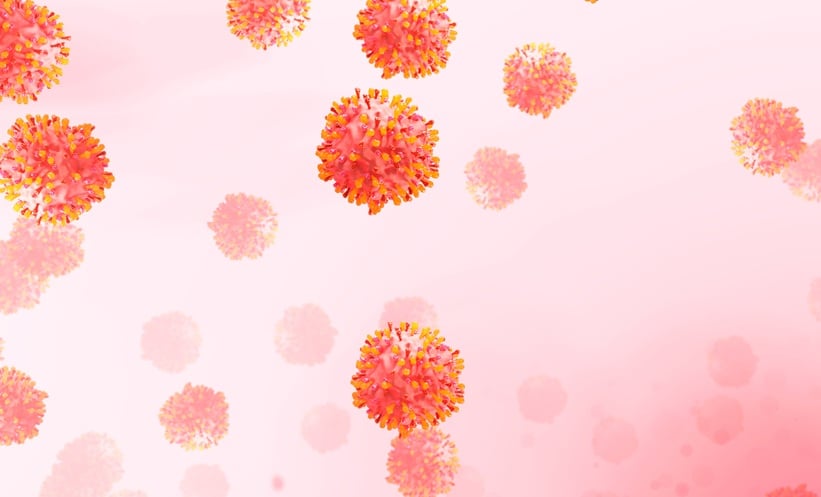
PEOPLE with RSV infection may only be highly infectious for around five days, according to new research mapping the virus’s behaviour inside the body.
New Insights into RSV Infection
Respiratory syncytial virus (RSV) is a leading cause of respiratory illness, particularly affecting older adults and vulnerable populations, and understanding its transmission dynamics is key to improving control measures.
In a study of 225 adults experimentally infected with RSV, researchers used detailed clinical, viral, and immune data alongside mathematical modelling to better understand how the virus spreads and clears. The findings provide one of the most detailed timelines to date of RSV infection and immune response.
Short Infectious Period, Longer Viral Detection
The analysis showed that infectious virus becomes detectable around three days after exposure and is typically cleared by day eight. This creates a median infectious window of approximately five days.
However, viral RNA, commonly detected in diagnostic tests, persisted significantly longer, with a median clearance time of 12 days. This gap highlights an important clinical distinction: patients may continue to test positive even after they are no longer infectious.
Immune Response Plays a Key Role
The study identified both innate and adaptive immune responses as critical in controlling infection. Early innate immunity helps protect uninfected cells and limits viral production. Meanwhile, adaptive responses, including both antibody and non-antibody mechanisms, drive clearance of infected cells.
Notably, non-antibody immune responses increased the rate at which infected cells were cleared by up to seven-fold. In contrast, removing antibody-mediated responses delayed viral clearance by around 3.5 days, underlining their importance in resolving infection.
Symptoms Linked to Transmission Risk
Researchers also found a strong relationship between symptoms and infectiousness. Around 35% of individuals experienced minimal symptoms, yet they contributed only about 5% of total infectious viral shedding. This suggests that individuals with more pronounced symptoms may play a greater role in transmission.
Implications for Practice and Public Health
These findings could help refine isolation guidance, testing strategies, and infection control policies. For clinicians, understanding the difference between infectious virus and detectable viral RNA may improve interpretation of test results and decisions about patient management.
Overall, the study provides important insights into RSV infection, supporting more targeted approaches to diagnosis, isolation, and prevention at both individual and population levels.
Reference
Schumer C et al. Viral dynamics of the respiratory syncytial virus during experimental human challenge: insights for transmission and protection. J Infect Dis. 2026; DOI:10.1093/infdis/jiag206.
Featured image: TuMeggy on Adobe Stock