On a windswept afternoon on Mexico’s Caribbean coast, I’m standing with arms outstretched on a stone platform beside the sea. A woman circles slowly, swirling a smoking chalice of fragrant copal resin as waves crash onto the shore just feet away from me. Incantations are offered to the four elements of air, water, earth and fire as we turn to face their cardinal directions. A drum beats. A conch shell sounds. Prayers are chanted to Father Sky, Mother Earth and the world in between.
This elaborate ceremony is a prelude to a temazcal, a purification and healing ritual practised by indigenous cultures in Mexico for centuries. Sometimes crudely described in English as a “sweat lodge”, the temazcal is far more than a sauna. Traditionally built from stone, mud or cement, it is conceived as a womb: a dark, enclosed space where participants reconnect with the earth and emerge renewed.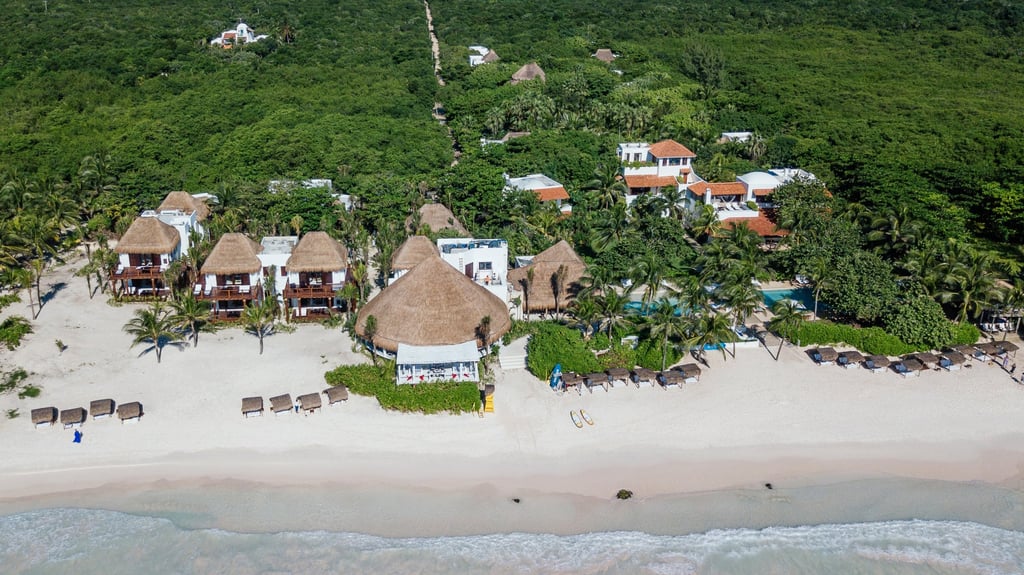 Hotel Esencia, on Mexico’s Riviera Maya. Photo: Handout
As wellness tourism surges globally, Mexico stands apart for the depth and distinctiveness of its offerings. Many of the country’s most sought-after experiences are grounded in ancient Mesoamerican traditions – practices shaped by close observation of nature, the seasons and cycles, and for many Mexicans, still woven into modern life.
Perhaps the best known of these is the temazcal, practised by cultures including the Maya and Mexica (often referred to as Aztec), and now offered at select luxury resorts across the country. This one takes place at Maroma, a Belmond Hotel, on the Riviera Maya, a stretch of coast on the northeast of the Yucatán Peninsula. After opening prayers, the ceremony moves inside. While most temazcales are dome or igloo-shaped, the one here is fashioned into a pyramid, echoing the region’s ancient temples. Hot volcanic stones are shovelled by an águila de fuego or “fire eagle” – an attendant or guardian – into the centre, before the low door is closed and covered with a thick blanket, sealing out the light.
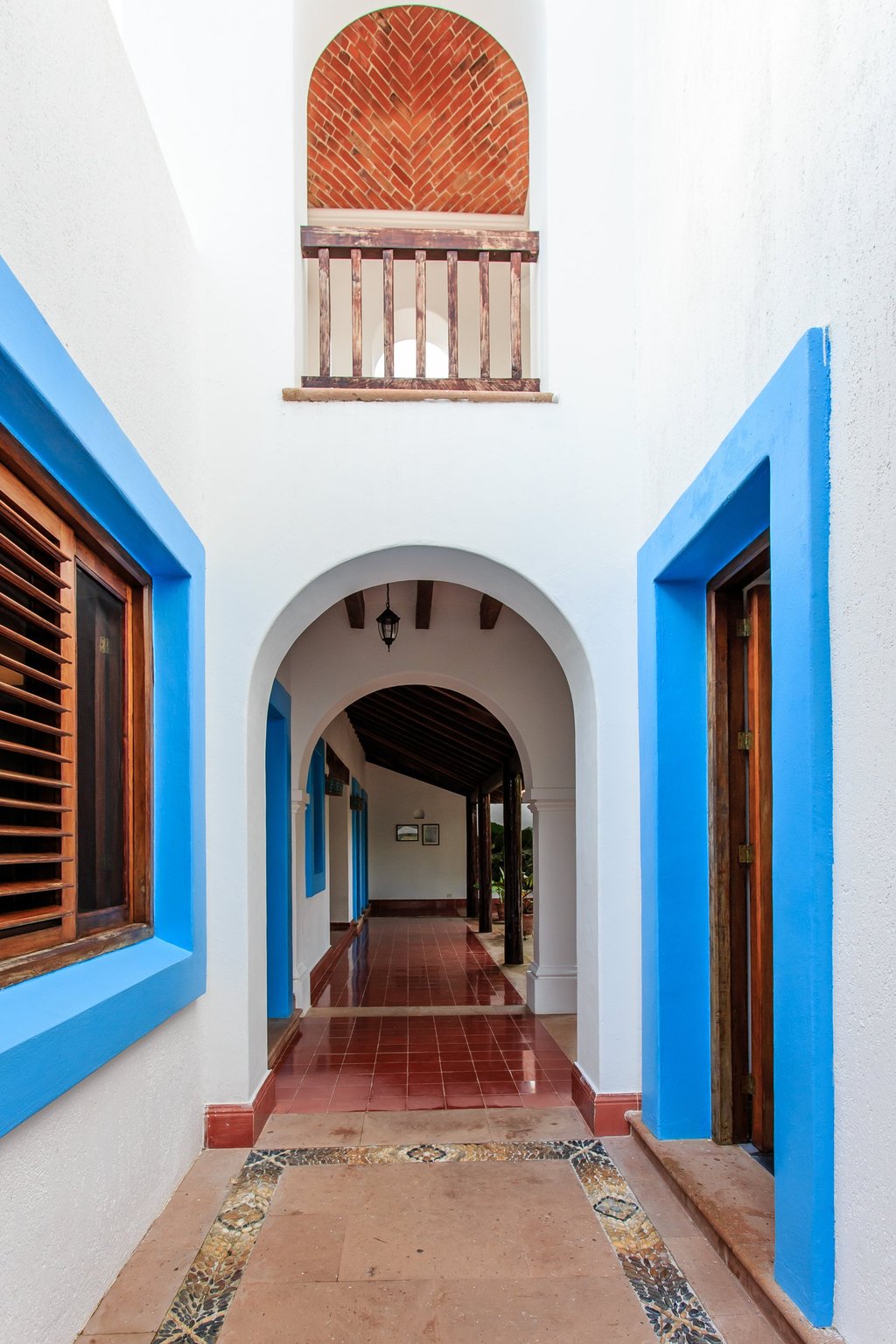 Hotel Esencia, Mexico. Photo: Handout
In the darkness, my spiritual guide pours water infused with medicinal herbs onto the sizzling stones, releasing waves of scented steam. Songs and prayers guide the ceremony through four stages, each one hotter than the last.
Between phases, the door is briefly opened to let in air and light before more stones are added. The experience is intense, but carefully moderated. At Maroma, first-timers are eased in gently, because extreme heat and prolonged darkness can overwhelm even seasoned participants.
The ceremony ends with a dash into the sea, a shock of cool water that seals the ritual. The effect is cleansing and energising, grounding rather than euphoric, in a ceremony that prioritises balance over endurance.
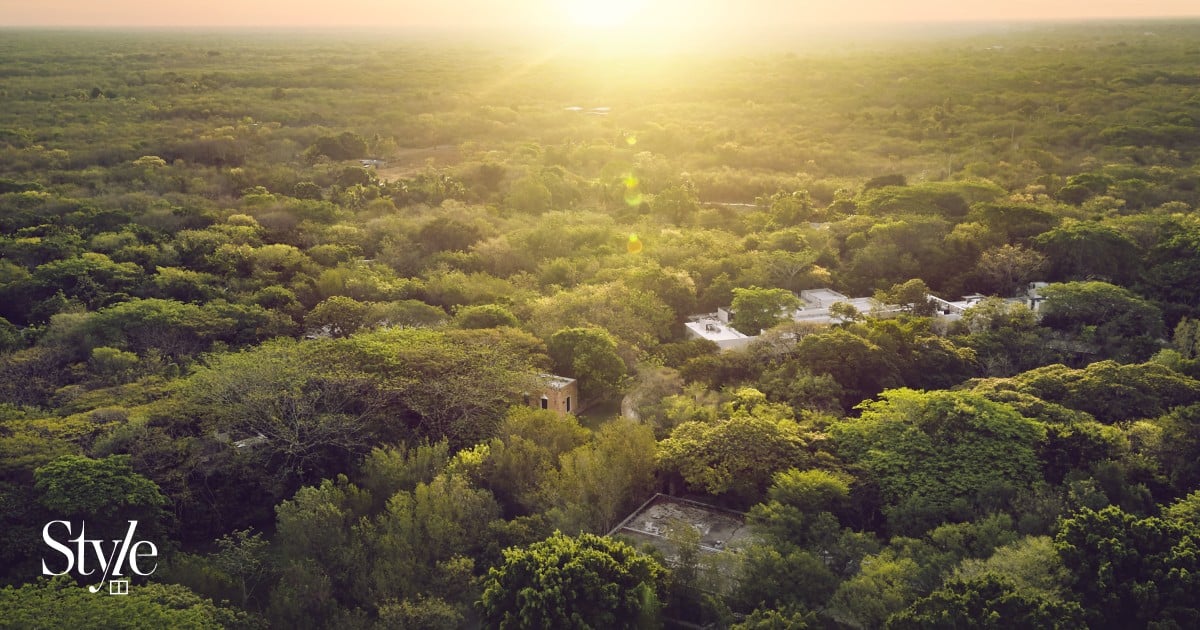
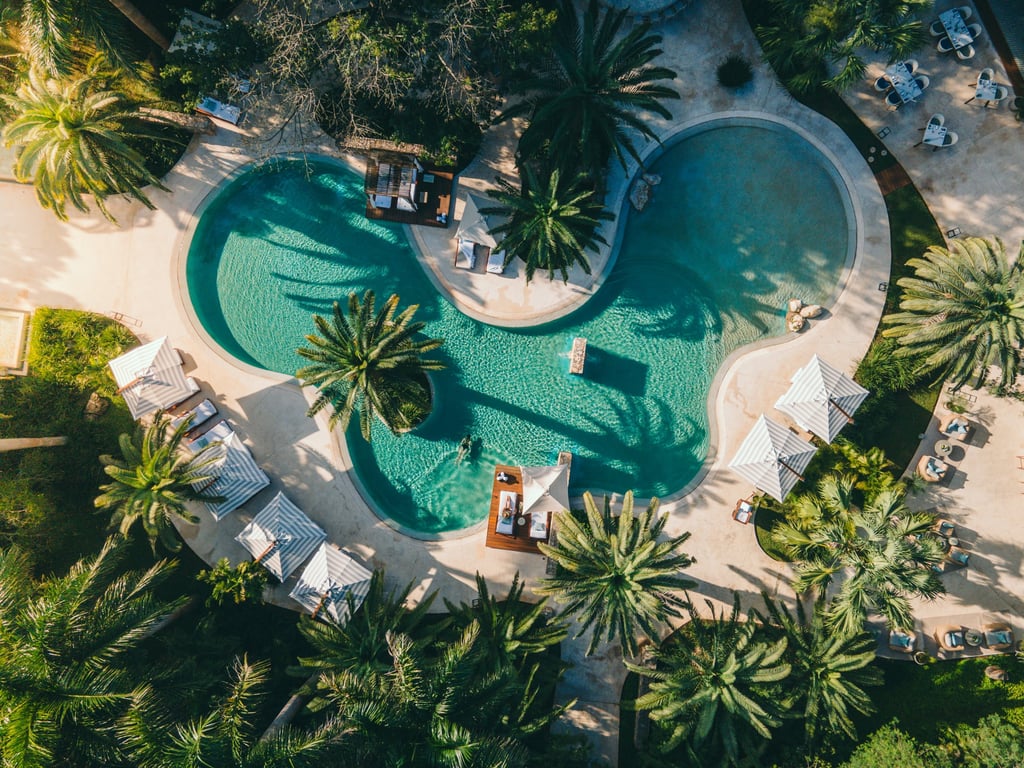 The pool at Chablé Yucatán. Photo: Handout
A week earlier, I had planned to try a temazcal at Chablé Yucatán, a wellness-focused retreat built around a former hacienda deep in the jungle. But my timing coincided with Hanal Pixán (“Food for the Souls”), the Maya Day of the Dead. During the three-day festival honouring ancestors and deceased loved ones, temazcales are traditionally paused out of respect for the heightened spiritual presence.