Published April 8, 2026 10:37PM
Money-saving tips for the sport of triathlon
The temptation to constantly upgrade gear, buy premium nutrition, and sign up for every race can make triathlon an unexpectedly expensive sport. But garage sales and resale sites offer plenty of evidence that much of that pricey equipment we purchase doesn’t quite deliver on its promises – or simply isn’t needed in the first place.
To help you spend smarter, we gathered insights from some of triathlon’s most knowledgeable social media insiders. They shared their hard-earned lessons on how to avoid unnecessary spending and keep more money in your pockets.
How to save money on triathlon nutrition and fueling
Fuel with everyday foods
Pop-Tarts as jersey-pocket fuel? It’s a yes from us. Though optimized sports nutrition can be a nice thing to have, it isn’t the only choice for triathlon fueling.
“You don’t need to buy expensive nutrition,” says Carolyn Carter, also known as LA Triathlete. You can literally just eat regular snacks during workouts, and they’re just as effective. Some great options are any type of gummy candy, Pop-Tarts, and Rice Krispies treats.”
Aspiring pro triathlete Kaitlin Carew opts for to-go applesauce and fruit bars as part of her nutrition: “They are just as carb-dense as gels, but half the cost!”
Influencer Noel Mulkey shares the same sentiment: “Sports nutrition is incredibly expensive – and half the time you don’t even need it.”
Mulkey opts for candy while training, like Nerd Clusters, or simple pantry staples like rice cakes.
Daniel William also uses candy for training, saying he learned from his father to use jelly candies to get 60 grams of easy-to-digest carbs for about a dollar. But he also emphasizes he does this to save money in training, while splurging for expensive gels to use for race rehearsals and the race itself.
If you want to go the extra step, consider these DIY energy gel recipes to take on the go.
Buy nutrition in bulk
Cameron Carone advocates for going the bulk route when it comes to race fuel. “Sometimes stores up-charge for buying individual gels instead of the full case.”
Carone’s advice is solid across the board when buying drink mixes, electrolytes, or chews. There are even brands like Formula369 offering bulk purchase discounts. Furthermore, consider making your own sports drink in bulk each week to save even further.
How to save money on triathlon gear and equipment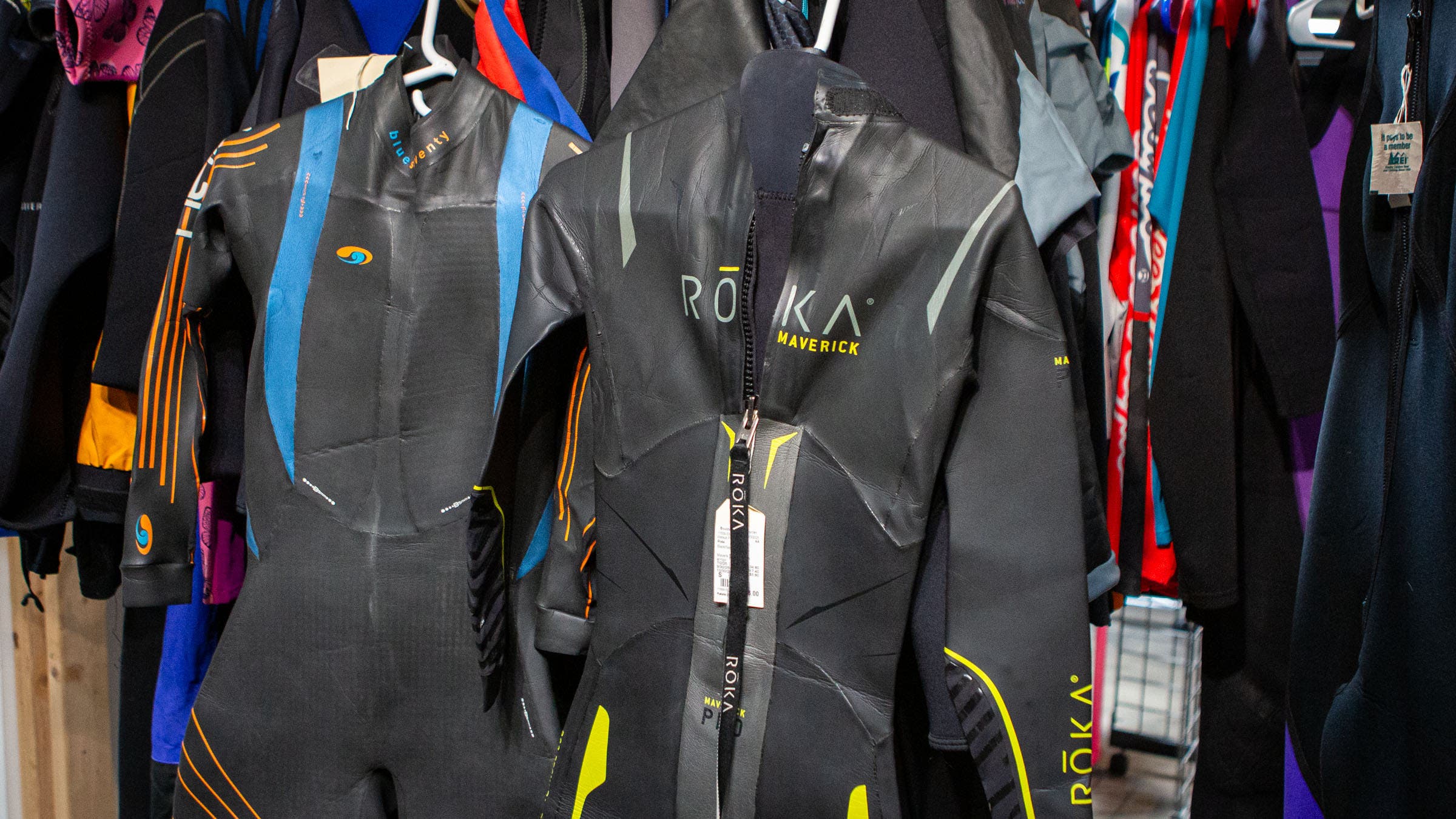 Buying used gear is one way to save money on the sport of triathlon, according to social media influencers. (Photo: Brad Kaminski/Triathlete)
Shop where you live
Kaitlin Carew leans into local stores to not only support them but to build a relationship that works both ways.
“I’ve had a handful of local shops I frequently buy gear from, and they give me a small discount since I’m a consistent customer,” she says. “I also trust that they are there to help me succeed and keep my gear in tip-top shape.”
Buy used gear
“Buying gear second-hand doesn’t always mean it’s bad gear,” Mulkey says. “Utilizing Facebook Marketplace, or a similar platform, can be a game-changer for getting a bike or other more expensive items. There are a lot of quality items available. It’s just important to know what you’re looking for.”
He continues by sharing something many of us have seen firsthand in races: top-of-the-line equipment doesn’t guarantee being fast. “There are people out there finishing Ironmans hours faster on aluminum bikes than people on top-of-the-line carbon bikes. It is important when shopping to keep that in mind.”
Carter, a former pro triathlete, echoes Mulkey’s sentiment. “You can find great bikes online, or even sometimes bike shops sell used ones as well. You don’t need the newest and best bikes to be competitive. I raced on a crappy $1,000 road bike for the first three years of racing. I didn’t own a TT bike until I had been racing for five years!”
Buy last year’s model
In a similar vein, what’s latest isn’t always the greatest, especially for your budget.
“When newer shoe models come out, stores/brands will start to discount their previous year’s model!” Carone says.
Megan Newton agrees: “Buy last season’s gear. Triathlon brands and shoe companies drop new colors and models constantly. The ‘old’ version is usually just as good – and heavily discounted.”
Carter shares her personal recent experience with this: “I loved the Hoka Mach 5. And when they launched the Mach 6, I continued to buy the Mach 5 for as long as I could because everyone sold them at a huge discount since the newer model was out,” she says. “I’m on the Mach 6s now. The Mach 7 is coming out soon, so I just got a pair of the 6s for under $100.”
These deals are usually hiding in plain sight – think clearance sections, outlet pages, the Triathlete Deals Page, or by simply searching for the previous version of a model. If you like the look of the Nike Pegasus 42, for example, try tracking down the 41 at a discount.
Sell what you upgrade
Triathlon resale groups are strong. Your old gear still has value and can help others get into the sport for a lower cost.
“When triathletes get better, they upgrade equipment and typically sell their old stuff,” Mulkey says. “Their old stuff isn’t normally bad, it’s perfect for people just getting into the sport!”
Facebook Marketplace or groups, Craigslist, OfferUp, and Buycycle are all great options here. If you’re looking to donate to a cause, consider Trithrift.com, whose mission is to reduce the barrier of entry to racing a triathlon and even offers several grants for first-time triathletes each year.
Learn basic bike maintenance
“Changing tires/sealant, cleaning your drivetrain, adjusting brakes, taping your bars: YouTube plus a $30 tool kit can save hundreds a year in shop visits,” Newton says.
For a quick guide on exactly how hard each of these maintenance items is, plus how much it will cost to do each of them, see our full bike maintenance guide here. And for an in-depth breakdown of why the costs of fixing bikes are the way they are, read our primer on triathlon bike maintenance.
Find good-enough gear alternatives
Sometimes, more affordable options can get you 90% of the benefits at a fraction of the cost. William shares an alternative to one of the priciest performance-boosting options available: the disc wheel.
“For between £200–£250 ($260-$330) full price, the EZgains EZdisc can convert your wheel to a disc wheel, saving huge amounts of time through the aerodynamic benefits of having a fully enclosed rear wheel,” he says. “Disc wheels can cost multiple thousand pounds new, so to have a solution that’s so cost-effective and accessible is brilliant.”
How to save money on triathlon races and travel
Race locally
The upside of supporting your local race goes far beyond saving money. You’re supporting your local community, being environmentally conscious, building real connections with other participants, and creating an experience that’s rooted in the race itself – not just the destination. Because at the end of the day, if you spend a ton to travel for a race, and you don’t end up enjoying it, that’s a tough one to justify.
With that said, if you do plan to travel and have a destination or bucket-list race in mind, make sure to follow our race-cation guide and don’t overpay for bike fees.
Volunteer for race discounts
“Some races offer credits or discounted entries if you volunteer at another event. It’s not only a great way to save but a fun way to give back to the sport.”
A great example of this is California Triathlon’s “VOGO” program – short for: Volunteer One, Get One. As they put it, “the days of volunteering for just a T-shirt and a bagel are over.” Instead, you can earn a free race entry simply by volunteering at one of their events.
It’s a smart way to stay involved in the sport and cheer on others while cutting down on costs – and a reminder that sometimes the best perks come from giving your time, not your money.
The most important way to save money in triathlon: Focus on the fundamentals
Ultimately, the most powerful way to save money in triathlon is to shift your focus back to the foundation. As Rylee Jade emphasizes, saving money over time means prioritizing what truly matters when newer, flashier options steal the spotlight: “Less focus on fancy recovery tools, more focus on sleep and nutrition.”
When you stop prioritizing expensive upgrades and gadgets, you realize that cutting costs doesn’t mean sacrificing performance. By making smart, fundamental choices – whether it’s fueling with everyday foods, buying gear secondhand or discounted, racing locally, or mastering basic maintenance – you can keep more money in your pockets and enjoy your time in triathlon.