
Key Takeaways:
Rave culture is being reframed as a wellness practice.Festivals and nightlife are evolving to meet the needs of sober-curious, health-conscious audiences.The next frontier of wellness is social and experiential.
For decades, the rave was synonymous with excess: sleepless nights, pulsing basslines, and hedonistic escapism. But now, a cultural shift is emerging at the intersection of nightlife and well-being. Across festivals, wellness spaces, and social media, a new movement is reframing the dance floor as a site for emotional release, community, and even longevity.
Long before cold plunges and sobriety bars entered the festival circuit, the rave was already operating as a form of collective therapy. What’s changing now is not the presence of wellness within rave culture, but the way it is being formalized and designed. Where early nightclub attempts at “wellness” amounted to little more than the occasional massage chair tucked into a dim corner, today’s experiences are far more intentional. The modern rave is increasingly being positioned as a pathway towards health.
At its core, the rise of wellness raves taps into a growing cultural appetite for experiences that merge physical movement, emotional expression, and community connection. That shift reflects a broader transformation across the wellness economy. According to the Global Wellness Institute (GWI), the global wellness market is currently valued at $6.8 trillion and projected to reach $9.8 trillion by 2029. More and more spaces are being created that join rave culture with wellness practices.
Beth McGroarty, Vice President of Research and Forecasting for GWI, told BeautyMatter that the post-pandemic landscape fundamentally changed how wellness is experienced, with all forms of social wellness having “exploded” since lockdowns were lifted. “Wellness once centered on a sea of self-care products and digital solutions, but the pandemic revealed social connection as the missing cornerstone of health.”
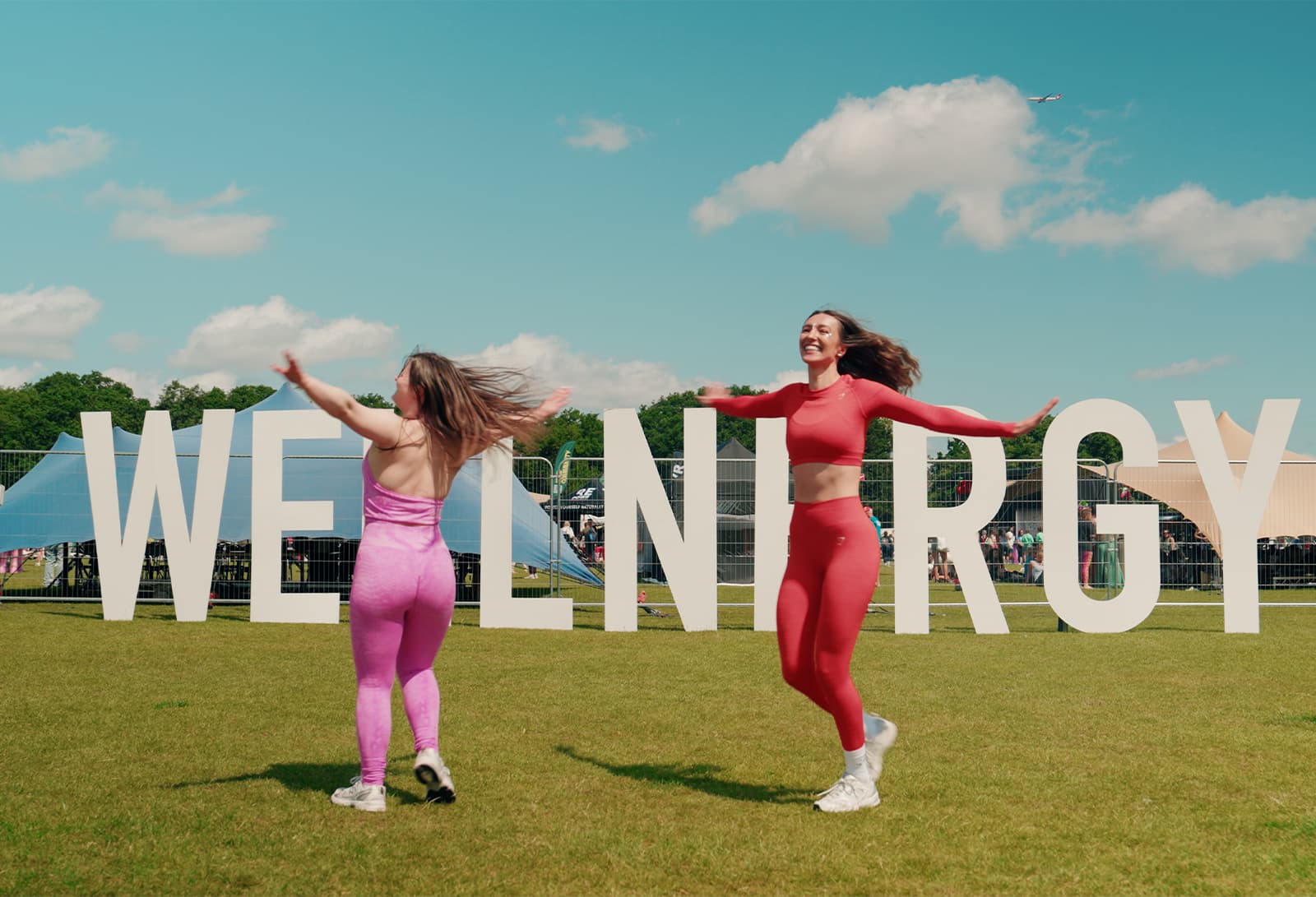
“People no longer want passive wellness,” said the team behind London’s Wellnergy Festival, which has seen participation double year on year since its launch. “They don’t just want to sit and listen—they want to participate, feel, move, and connect.”
Within the wellness industry, experiential formats are replacing more traditional lecture-style programming. Music-led workouts, breathwork accompanied by DJs, and collective dance experiences are becoming increasingly common at wellness festivals.
“There’s something incredibly powerful about collective energy,” the Wellnergy team explained to BeautyMatter in an email. “Whether it’s a sunrise workout, breathwork session, or a DJ set, music can lower inhibitions, heighten emotion, and create a connection between strangers.”
Traditionally, that euphoric sense of unity belonged to nightlife culture. Today, however, younger audiences are reshaping those experiences, blending elements of nightlife with wellness-focused environments that prioritize connection, movement, and well-being.
The Science of the Rave
Emerging research suggests the appeal of raving may be rooted in deeper biological benefits. Dance (central to rave culture) functions as an aerobic activity that supports cardiovascular health, coordination, and overall fitness. Prolonged dancing elevates heart rate in a way comparable to traditional exercise, while the sensory intensity of music and lighting stimulates multiple regions of the brain involved in auditory processing and sensory interrogation.
Neuroscientists have long studied the effects of rhythm and movement on brain plasticity. Immersive musical environments can stimulate areas such as the superior temporal sulcus and posterior parietal cortex, supporting cognitive flexibility and emotional resilience.
Equally significant is the psychological impact of collective experience. Studies of subcultures show how participation in shared communities can strengthen identity. In an era defined by digital isolation, a space that builds self-worth becomes increasingly valuable.
Psychologist Brian Sutton-Smith observed that “The opposite of play is not work—it’s depression.” Within rave culture, that spirit of play manifests as music, dance, and sensory immersion, offering a temporary but powerful escape from everyday stress. For many attendees, the experience resembles a form of moving meditation. The repetitive rhythms of electronic music can induce a trancelike flow state, allowing participants to become fully immersed in the present moment. This flow state is a concept central to mindfulness practices.
Hedonism equals Healthspan
The evolution of rave culture is connected to the emergence of events explicitly designed around well-being. One of the most notable examples is Longevity Rave, founded by scientist-turned-DJ Tina Woods. Launched in London 2024, the event blends nightlife with biohacking principles, reframing dance floors from Miami to Ibiza into tools for long-term health.
“We are facing a real cultural shift,” Woods explained. She believes this is because “people are more disconnected than ever—hiding behind screens and dating apps, drinking less alcohol, and craving real energy and serendipity again.”
Longevity Rave was created to preserve the emotional intensity of nightlife while removing its destructive elements. “It keeps the magic of clubs—music, movement, shared energy—while reimagining nightlife as something that actively supports well-being rather than excess,” Woods said.
At the center of the concept is JoyScore, an experimental metric designed by former professor and architect Bob Singhal to quantify how joy, synchrony, connection, and emotional uplift influence long-term health outcomes. “The science is unequivocal: human connection is one of the strongest predictors of longevity,” Woods explained. “JoyScore allows us to measure what happens when people gather together—connection, recovery, emotional uplift—and show that these experiences are fundamental to health.”
Rather than measuring only traditional biomarkers, the concept reframes healthspan around how life feels. “In a Longevity Rave, healthspan shows up as recovery rather than depletion,” Woods said. “Energy that carries into the next day, not something you need to repair.”
McGroarty sees wellness raves as an evolving cultural moment. “They represent a long-term shift in how younger consumers define social connection, partying, and nightlife.”
For Gen Z, the generation raised online, collective experiences hold particular appeal. “After lives dominated by screens and social media, younger generations are seeking more intense, emotional, and inclusive forms of social wellness,” she added. “These gatherings respond to economic stress, digital overload, and social fragmentation by prioritizing human connection, collective energy, and emotional release.”