
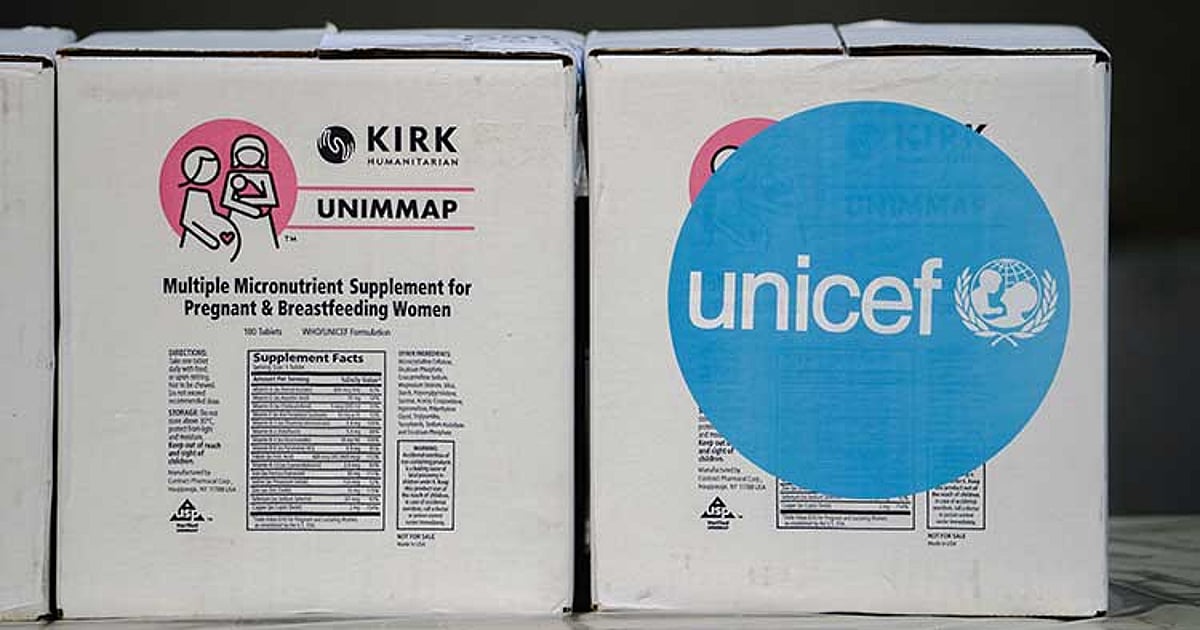
THE National Government, through the Department of Health, the National Nutrition Council, and Unicef, has launched a new partnership under the Unicef-led Child Nutrition Fund (CNF) to provide P756.2 million (USD 13.2 million) in catalytic financing to complement the country’s ongoing commitment to expand high-impact nutrition interventions nationwide, including in the Bangsamoro Autonomous Region in Muslim Mindanao (Barmm).
The CNF supports the government’s efforts to reduce stunting and wasting through a catalytic financing model that links domestic public resources with global funding and drives greater public investment in nutrition.
These investments help make essential nutrition services more accessible for mothers and young children, especially during the first 1,000 days, while strengthening the systems needed to sustain and expand results.
These combined investments aim to reach more than 8.4 million children under 5, and 1.2 million pregnant women, who will benefit from better access to quality care in health facilities and communities and stronger protection during the first 1,000 days of a child’s life.
“Investing in nutrition is one of the most powerful ways to improve every child’s survival, learning, and long-term well-being—benefits that extend far beyond childhood. Through the Child Nutrition Fund, we are helping more families access the right support at the right time, especially during the first 1,000 days,” said Unicef Philippines Representative Kyungsun Kim.
Undernutrition remains one of the most urgent challenges for children in the Philippines. One in four children under the age of five is stunted, and more than half a million are wasted.
The situation is most severe in Barmm, where more children are affected by undernutrition and at risk of its long-term consequences on their growth, learning and development.
This partnership will help strengthen service delivery across communities, alongside the systems that support it, including supplies and the use of nutrition data for better targeting and follow-through.
Addressing undernutrition starts when children are in their mother’s wombs, and upon and after they are born. Nearly one in five women are nutritionally at risk, while 21.7 percent of those pregnant suffer from iron deficiency anemia, a condition where the blood lacks enough iron to carry oxygen efficiently, which can affect a mother’s health and a baby’s growth.
Through this partnership, which also complements World Bank financing, the Philippines will expand access to maternal nutrition services, including multiple micronutrient supplements for pregnant women, and strengthen government systems to deliver sustainable, high-quality nutrition programmes that help every child survive, thrive, and reach their full potential.
“In Barmm, where the burden of undernutrition is highest, strengthening nutrition services for mothers and young children remains a priority, particularly in harder-to-reach communities. This partnership with Unicef and the Child Nutrition Fund will strengthen the delivery of essential nutrition interventions and support children’s growth and development. It is also an investment in Barmm’s future — when children are well-nourished, they are more likely to stay healthy, learn well, and contribute to their communities and the local economy,” said Dr. Kadil M. Sinolinding Jr., minister of Health, Barmm.
Unicef is working with the government and partners to accelerate progress on maternal and child nutrition, and reach every child and their families, including those in the most vulnerable communities. (PR)