
By Chris Walker
This article was originally published by Truthout
The bill would make it easier to remove US presidents from office for reasons related to physical or mental health.
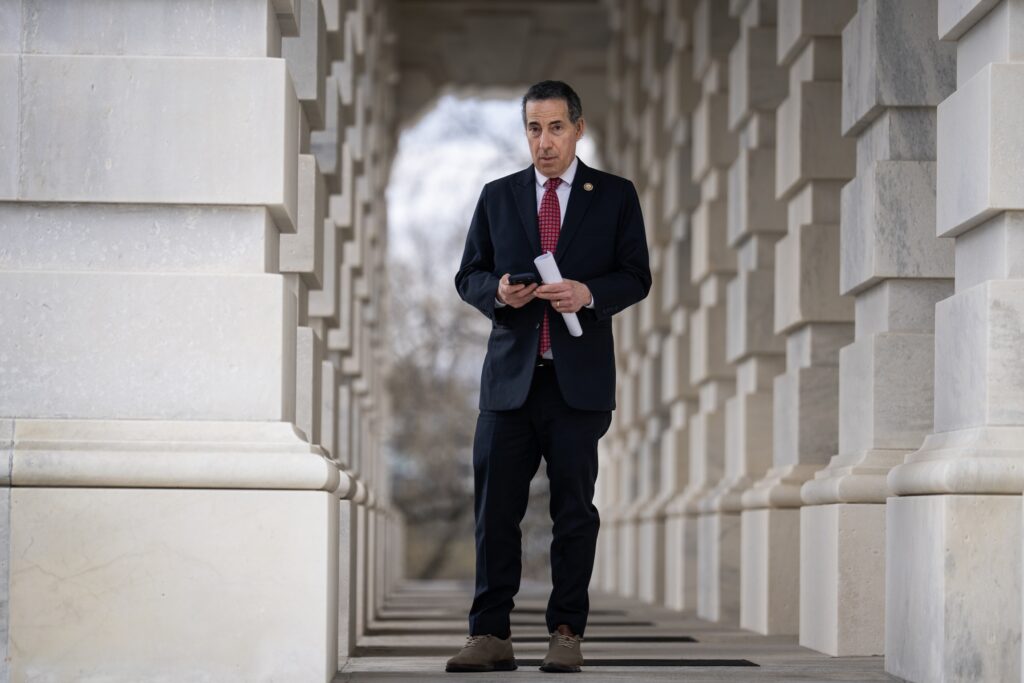
Congressman Jamie Raskin (D-Maryland) has introduced new legislation that would make it easier to invoke a little-known constitutional provision to remove the president of the United States, if it is determined that they can no longer function in the role for reasons related to their physical or mental health.
The 25th Amendment to the Constitution deals with presidential succession. Section 4 of the amendment allows for the removal of the president under certain conditions.
Whenever the Vice President and a majority of either the principal officers of the executive departments or of such other body as Congress may by law provide, transmit to the President pro tempore of the Senate and the Speaker of the House of Representatives their written declaration that the President is unable to discharge the powers and duties of his office, the Vice President shall immediately assume the powers and duties of the office as Acting President.
Currently, the only method of determining if a president “is unable to discharge the powers and duties of his office” is through the first part of that clause — through the vice president and half of the president’s own cabinet concurring — as Congress has not yet, by law, provided an alternative means.
Raskin’s bill would change that by creating a commission on health to determine the fitness of a president whenever its members (selected in a bipartisan fashion by the majority and minority leaders of both houses of Congress) believe that such a determination is necessary.
The other method for removing the president would still exist, but if Raskin’s bill passed into law, it would provide for another venue to temporarily remove a president from power.
“The Constitution explicitly vests Congress with the authority to create a body that will guarantee the successful continuity of government by responding to presidential incapacity to discharge the powers and duties of office,” Raskin said in a press release announcing his bill this week. “We have a solemn duty to play our defined role under the 25th Amendment by setting up this body to act alongside the Vice President and the Cabinet.”
Raskin added that the commission “should have been set up by Congress when the 25th Amendment was added to the Constitution in 1967,” and specifically cited President Donald Trump’s questionable cognitive status for why it was needed now.
Public trust in Donald Trump’s ability to meet the duties of his office has dropped to unprecedented lows as he threatens to destroy entire civilizations, unleashes chaos in the Middle East while violating Congressional war powers, aggressively insults the Pope of the Catholic Church and sends out artistic renderings online likening himself to Jesus Christ. We are at a dangerous precipice, and it is now a matter of national security for Congress to fulfill its responsibilities under the 25th Amendment to protect the American people from an increasingly volatile and unstable situation.
The bill currently has the support of at least 50 members of Congress, all of whom are Democrats. Its likelihood of passage is almost zero, however, given that Republicans control both the House of Representatives and the Senate. Even if Republicans get on board with the bill, it could be vetoed by Trump himself.
Still, the debate on the topic is not likely to go away anytime soon, and it’s possible the bill could become a significant part of the 2026 midterms, as polling demonstrates that many, if not most, Americans are supportive of efforts to remove Trump from power.
There is no major poll that asks voters yet how they feel about the 25th Amendment. However, a Free Speech for People poll published last week shows that a majority of Americans back the idea of impeaching Trump, with 51 percent saying they’re supportive of the idea and only 40 percent opposed.
Meanwhile, an Economist/YouGov poll published on Tuesday finds that most Americans are also wary of Trump’s current mental and physical state. Fifty percent of respondents in that poll said they believe Trump is suffering from significant or modest decline, while another 20 percent were unsure. Just 32 percent say they don’t believe Trump is facing such difficulties.
The poll also found that 51 percent of Americans believe Trump is suffering from physical decline, while 27 percent disagree and 21 percent are unsure.
This article was originally published by Truthout and is licensed under Creative Commons (CC BY-NC-ND 4.0). Please maintain all links and credits in accordance with our republishing guidelines.