
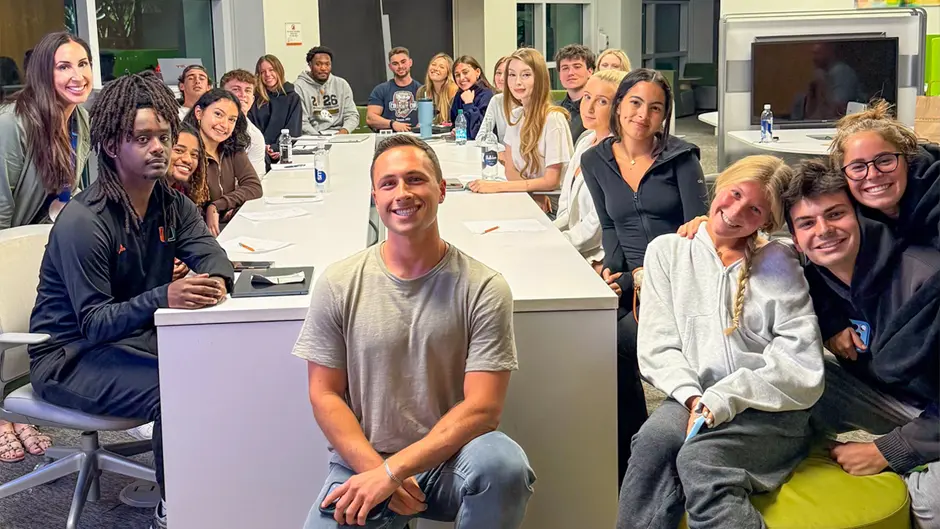
Every food choice you’ve made has been influenced in one way or another, whether through a TikTok trend or a commercial you viewed while growing up. A new course at the University of Miami School of Communication debuted this semester that studies the relationship between nutrition and communication.
The course is taught by lecturer Rhonda Trust, who holds a Ph.D. in communication with an emphasis on health communication from the University of Connecticut. Currently, she is completing her Master of Science in nutrition and dietetics, which, combined with 1,000 hours of internships, will make her eligible to sit for the exam to become a licensed registered dietitian.
“I see a clear intersection between communication and nutrition,” said Trust. “Everything about nutrition really stems from communication. Whether it’s driving down the street and you see a sign for McDonald’s or on TV, you see a commercial for cereal or some kind of food product. There’s so much that we’ve been exposed to since childhood regarding food choices.”
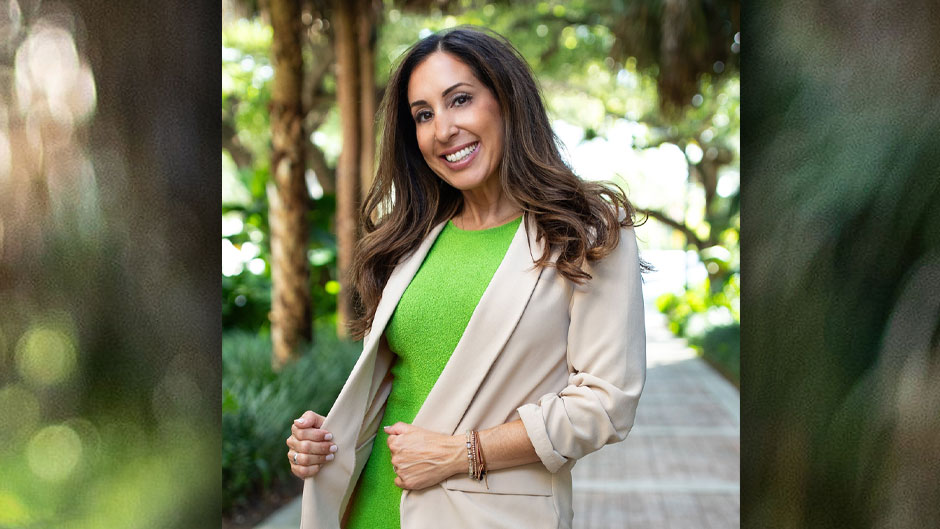
Rhonda Trust, lecturer at the School of Communication
With the help of guest speakers, the course is helping students become nutritionally literate by teaching them how to craft health messages and how to critically analyze nutrition messaging. The course is open to both undergraduate and graduate students across all areas of study.
“Hearing directly from professionals and learning which credentials are important to have in the field makes everything feel more applicable and shows how communication really shapes people’s health decisions in real life,” said Antonio Gambino, a junior taking the class and majoring in communications and public relations.
There are similar courses offered at institutions including Tufts University and Cornell University, but they are offered within nutrition schools. This is the first nutrition and communication course in the United States offered within a communication school.
Trust felt that the course offering came at a relevant time, with new dietary guidelines introduced in January by the Department of Health and Human Services and the Department of Agriculture that prioritize proteins, healthy fats, and produce.
Much misinformation surrounding nutrition exists today, whether from uncredentialed social media influencers or nutrition trends, including apple cider vinegar diets and matcha, that lack scientific backing.
“I think there’s a lot of misconceptions around the way certain drinks and foods are packaged to present themselves as good for you and healthy, even the way energy drinks are packaged, like, zero sugar and tons of vitamins, but it has a whole bunch of other things in there that aren’t necessarily good for your body,” Trust said.
At the end of the course, Trust hopes students are able to apply what they learn to their personal lives.
“It’s not just learning random nutrition facts; it’s actually teaching me how to understand and navigate all the health information we see every day, especially on social media,” Gambino said. “I’ve started to think more critically about what I consume, both in terms of content and actual food.”