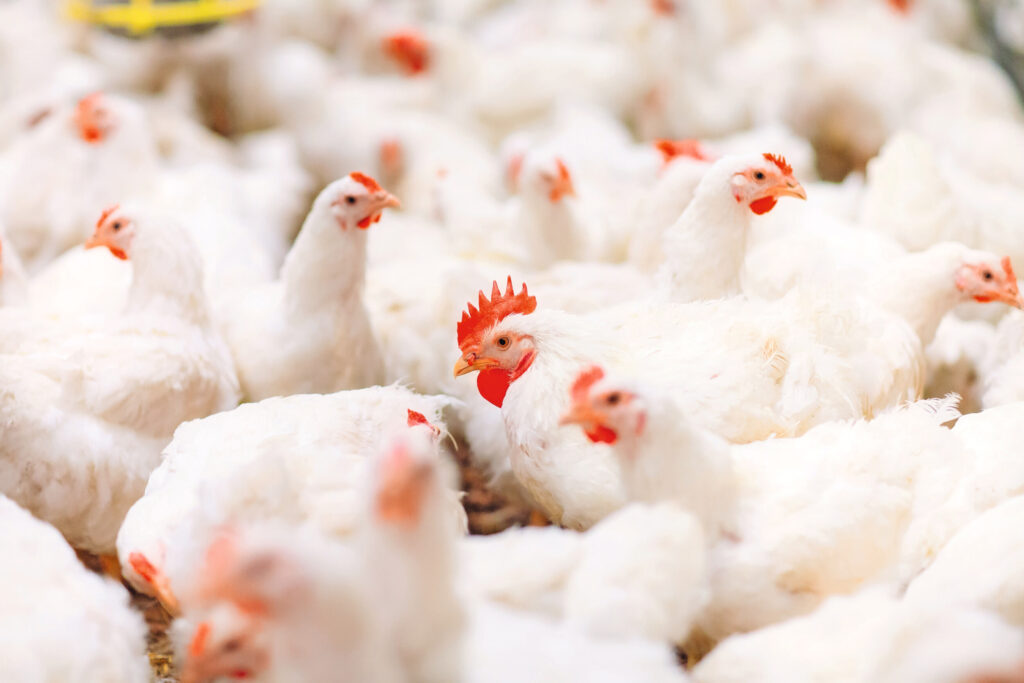
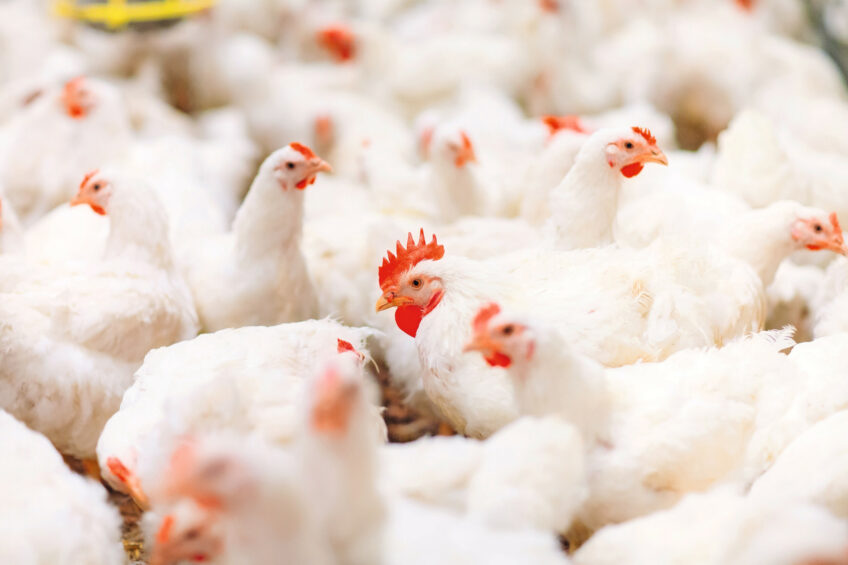
 For producers practicing separate‑sex rearing, ADM’s Xtract 6930 helps maintain feed efficiency and carcass quality across different diet densities while supporting flock resilience and uniformity. Photo: ADM
Modern poultry production increasingly focuses on precision feeding, ensuring that nutrient levels are matched to the growth potential of each bird. One of the most effective approaches is sex‑separated rearing, which allows nutritionists to adapt diets for males and females according to their specific growth rates and nutrient requirements. This practice reduces variability and improves feed efficiency, but responses to diet can still vary depending on how well birds utilise nutrients.
In this context, phytogenic feed additives – plant‑derived bioactive compounds – are gaining interest for their ability to support digestion and nutrient absorption.
Xtract 6930, a microencapsulated blend of standardised phytogenic compounds developed by ADM, is designed to enhance nutrient utilisation. Recent ADM research explored how this additive performs in broilers reared under different sex and diet combinations, providing new insights into how phytogenics can strengthen precision nutrition programs.
Study design: exploring sex-diet interactions
A controlled trial was conducted using 1,152 Ross broilers raised under separate‑sex and mixed‑sex conditions. Two diet formulations were compared: a standard diet, representative of conventional commercial nutrient density, and a female diet, formulated with about 5% lower digestible amino acids and 50 kcal/kg less metabolisable energy compared with the standard diet.
Half of the pens in each group received Xtract 6930 at 100 ppm, while the remaining pens served as control groups. Performance was monitored through body weight, feed intake, body weight gain, and feed conversion ratio at several stages (days 9, 27, 34, and 42). On day 43, selected birds were processed to assess carcass characteristics, including breast andtenderloin yields.
Performance outcomes: consistent improvements
Supplementation with the phytogenic additive supported consistent performance and carcass quality when data was pooled across sexes and diet types. Birds receiving the additive showed numerically greater hot carcass weight (+27.1 g) and breast weight (+15 g), along with a significant increase in tenderloin yield (+3.3 %; p = 0.03). These improvements indicate that the additive enhanced nutrient utilisation and muscle deposition, contributing to better carcass value at processing.
Overall, the results confirm that phytogenic compounds can enhance feed efficiency and carcass quality – key drivers of profitability in modern broiler operations. While this data suggest that birds were able to make more efficient use of available nutrients when the additive was included, the direction and magnitude of response differed across sexes and diet types.
Tenderloin yield: a valuable advantage
Carcass evaluation revealed that the additive improved the yield of high‑value cuts. The tenderloin (pectoralis minor), a premium portion of the breast complex, showed a clear increase in weight in supplemented birds (Figure 1). This effect was most pronounced in females receiving the female diet, where nutrient density was lower. The additive appeared to support more efficient protein deposition and muscle development even under reduced nutrient supply.
Males on the standard diet exhibited also a trend for higher tenderloin weights, though the magnitude of response varied. From an economic perspective, even small improvements in tenderloin yield can significantly increase carcass value, making this outcome particularly relevant for integrators and processors.
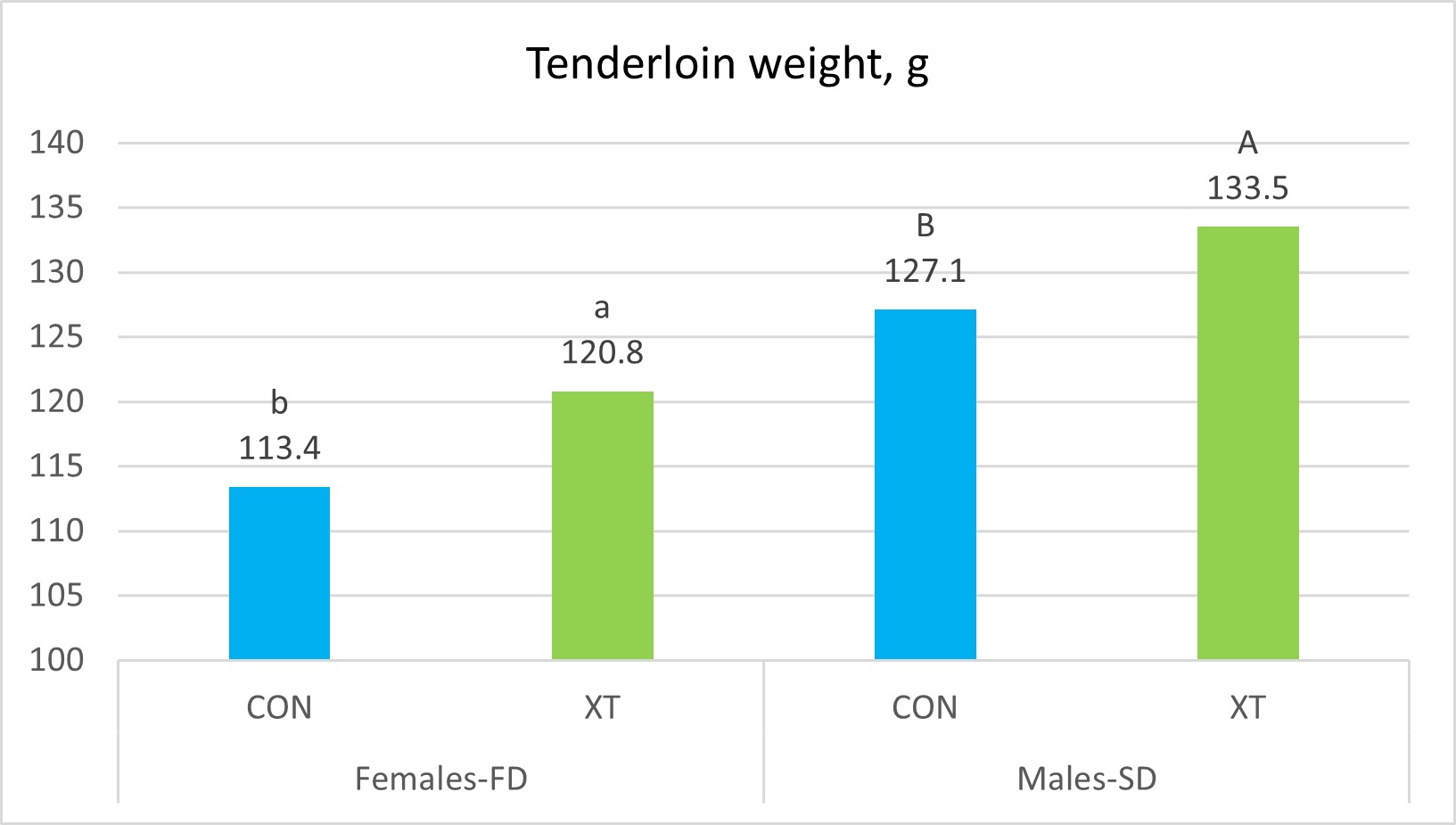 Figure 1 – Tenderloin weight in females on female diet (FD) and males on standard diet (SD), comparing control (CON) and Xtract 6930 (XT). Different lowercase letters (a, b) indicate significant differences within sex-diet scenario (p < 0.05). Different uppercase letters (A, B) indicate a tendency toward significance within sex-diet scenario (0.05 ≤ p < 0.10).Different diets, distinct responses
The study highlighted that the efficacy of phytogenic additives depends on both sex and diet formulation. Females on the female low-specification diet showed a nearly 2% improvement in feed conversion ratio (Figure 2) and higher tenderloin yield, indicating that the additive can help compensate for lower nutrient density. Females on the standard diet maintained stable performance, suggesting that their nutritional requirements were already met.
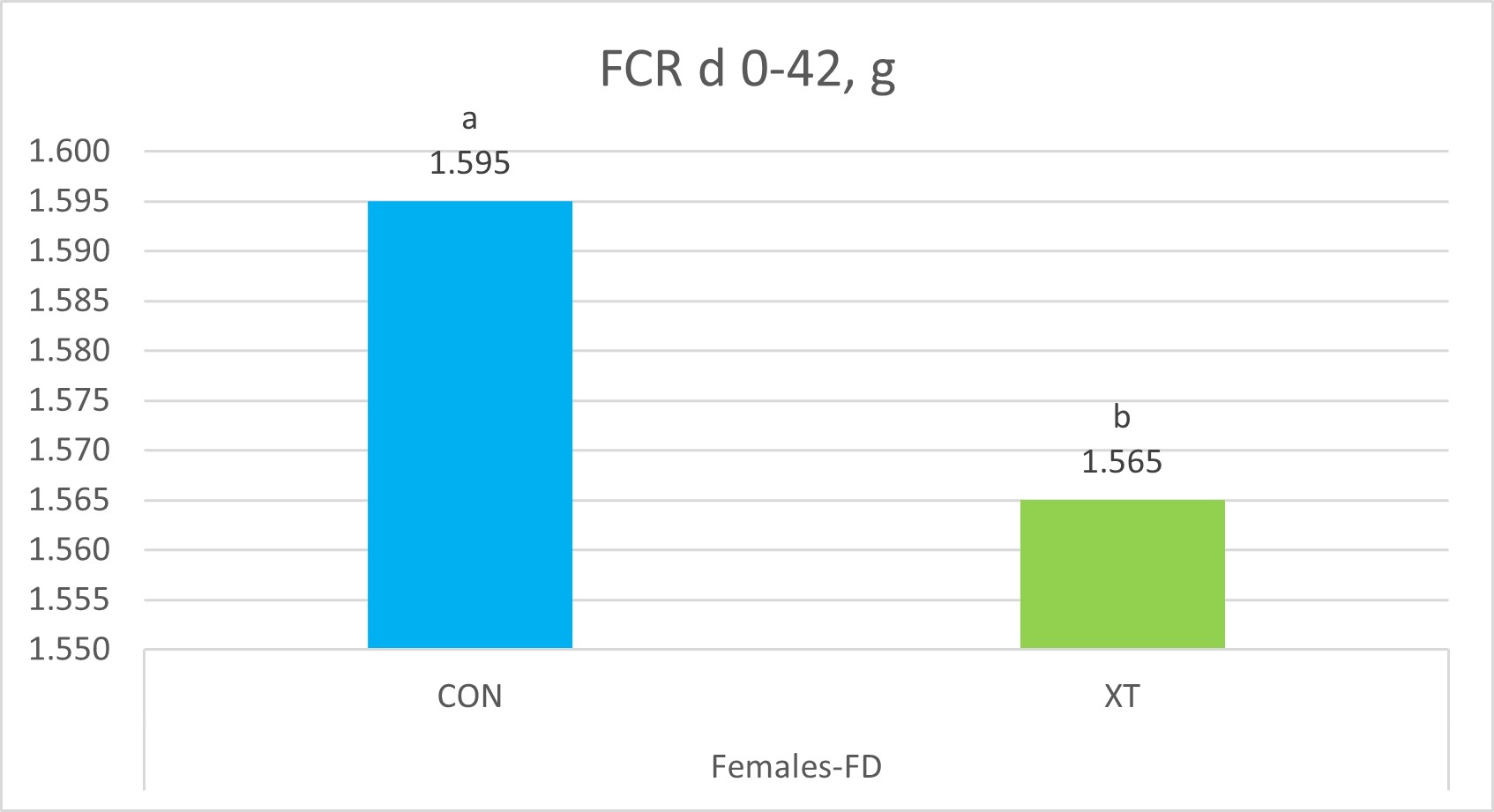 Figure 2 – Feed conversion ratio (FCR) of females receiving female diet (FD), comparing control (CON) and Xtract 6930 (XT). Different letters (a, b) indicate significant differences between treatments (p < 0.05).
Males on the standard diet and supplemented with Xtract 6930 responded with faster growth (Figure 3) and greater feed intake. Mixed‑sex groups also benefited, showing improved growth trends. In all cases, the direction of response was positive, demonstrating that phytogenic additives adapt well to different feeding programs and production conditions.
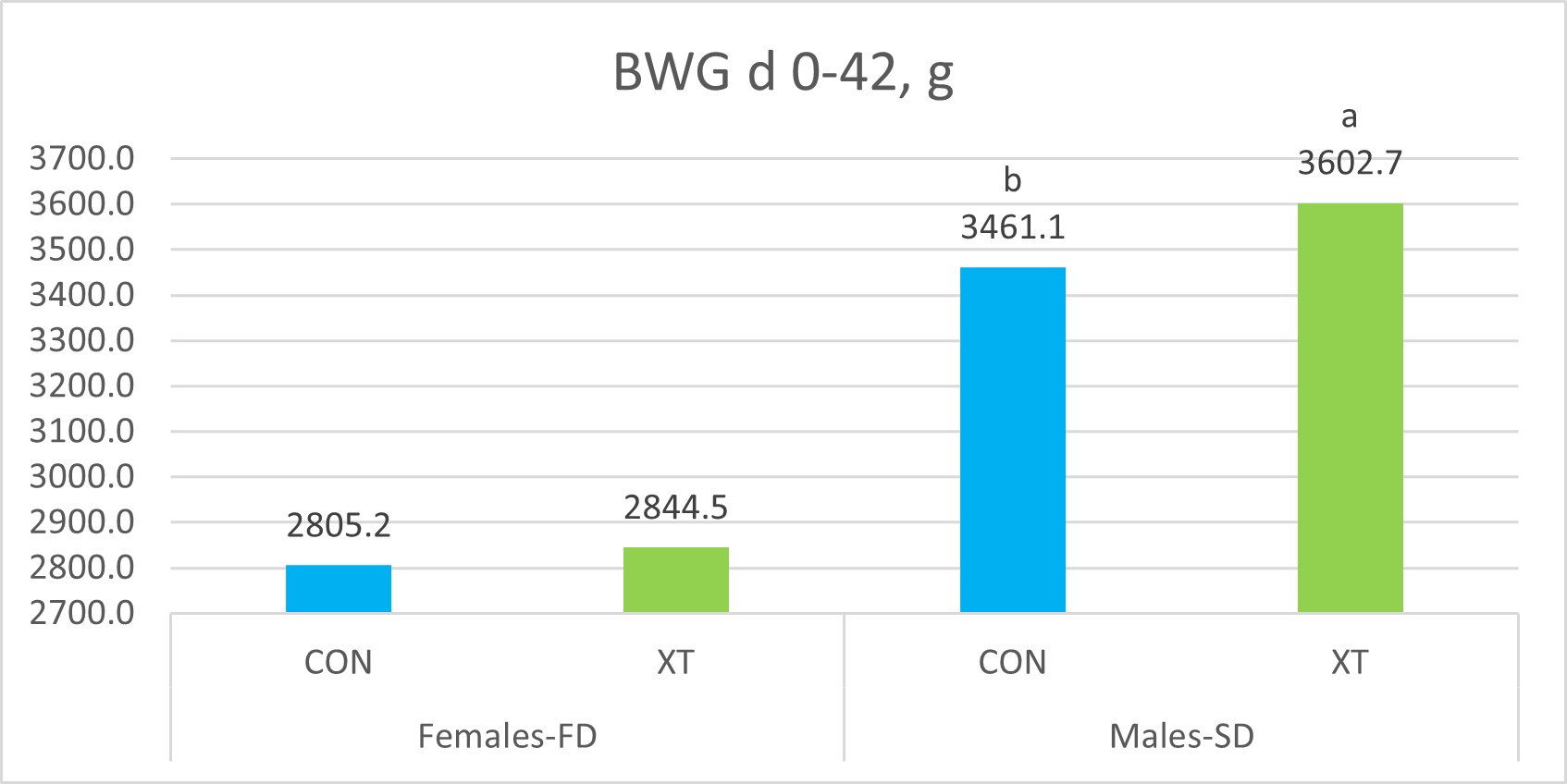 Figure 3 – Body weight gain (BWG) of females fed the female diet and males fed the standard diet, comparing control (CON) and Xtract 6930 (XT). Different letters (a, b) indicate significant differences within sex-diet scenario (p < 0.05).How phytogenics drive efficiency
Phytogenic compounds stimulate digestive enzyme activity and help maintain gut integrity, supporting optimal nutrient absorption and protein utilization. Improved digestion allows dietary amino acids to be more effectively directed toward muscle deposition, resulting in enhanced growth performance and carcass yield without increasing feed density. This supports the industry’s goal of producing more with less, enhancing sustainability while maintaining profitability.
Practical implications for producers
ADM’s research demonstrates that sex‑specific feeding strategies can be further optimised through the targeted use of phytogenic additives. At an inclusion level of 100 ppm, Xtract 6930 improved broiler performance and carcass quality under both female and standard diet programs.
For producers practicing separate‑sex rearing, the additive helps maintain feed efficiency and carcass quality across different diet densities while supporting flock resilience and uniformity. These outcomes translate into tangible economic value through improved feed conversion, higher tenderloin yield, and enhanced carcass returns, contributing to more efficient and sustainable production systems.
ADM Partner profile
ADM is your global leader in animal nutrition. We are dedicated to enabling sustainable growth that benefits our customers, the world’s population and this planet. We are One ADM Team, working with partners across the value chain to connect farmers, technology providers, technical experts to the end customer, and collaborating to address protein production efficiency, animal robustness and environmental impact. Visit ADM.com for more information.