
 DataM Intelligence, a globally recognized market research and consulting firm, has published its latest comprehensive report titled “Global Plant-Based Protein Supplements Market – Share, Size, Outlook, and Opportunity Analysis, 2026-2032.” This report arrives at a pivotal moment for the global nutrition and wellness industry, as plant-based protein supplementation crosses from a niche lifestyle choice into one of the most commercially significant and fastest-growing segments in the global supplement market. For supplement manufacturers, ingredient suppliers, sports nutrition brands, retail distributors, and investors evaluating the plant-based nutrition space, this report delivers the intelligence needed to make high-confidence decisions in a market that is nearly doubling in value within a single decade.
Request for Sample Report: https://www.datamintelligence.com/download-sample/plant-based-protein-supplements-market
Plant-based protein supplements are no longer a product category defined by what they exclude. They are being defined by what they deliver – complete amino acid profiles, clean-label credentials, allergen-free formulations, and sustainability positioning that resonates deeply with the most commercially valuable consumer segments of the 2020s. The shift is structural, demographic, and accelerating. And the companies that understand precisely where this market is heading – and why – will be the ones capturing the largest share of its growth.
A Market Growing at High Velocity
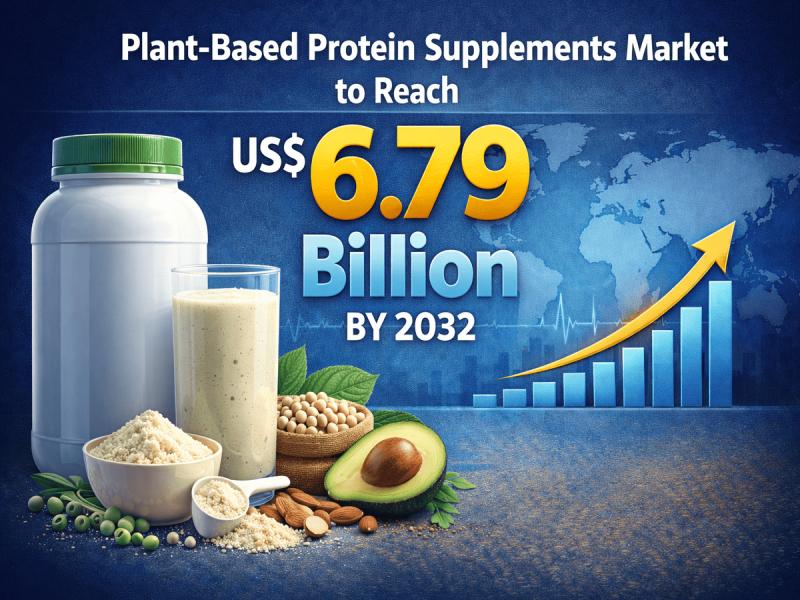
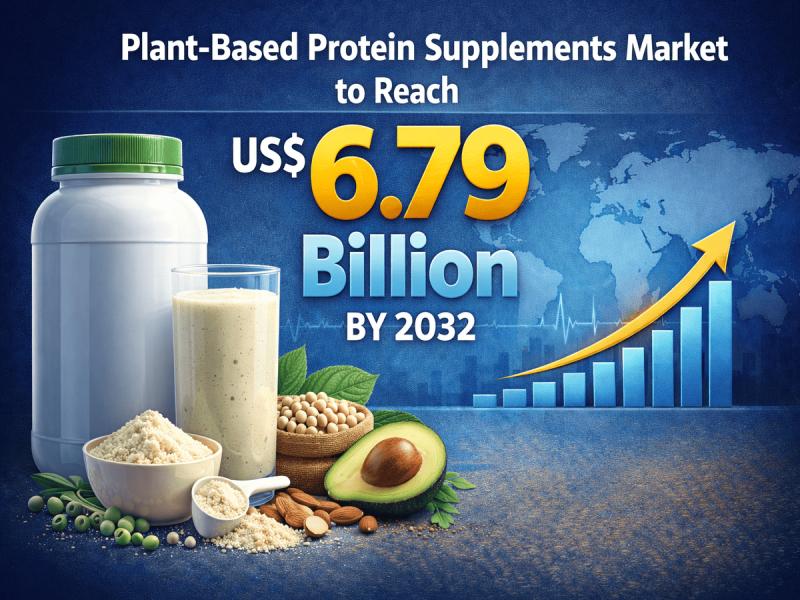
The global plant-based protein supplements market reached US$ 3.61 billion in 2024 and is projected to reach US$ 6.79 billion by 2032, growing at a compound annual growth rate of 8.21% during the forecast period 2024-2032. That is not incremental expansion. It is the near-doubling of a multi-billion dollar market within eight years – driven by a set of structural demand forces that show no meaningful sign of slowing.
An 8.21% CAGR places this market well above average growth rates seen across mature supplement and food ingredient categories, signaling that plant-based protein supplementation is in an active, sustained expansion phase – not a commoditization cycle. For investors and market participants evaluating where to allocate capital and commercial attention in the global nutrition industry, the plant-based protein supplements market represents one of the clearest high-growth opportunities available today.
The Forces Powering This Market Forward
The most fundamental growth driver is the accelerating global shift toward plant-based diets – a transformation being fueled simultaneously by health consciousness, environmental awareness, and ethical concern for animal welfare. Consumers across every major market are increasingly convinced that plant-based products are not merely equivalent to animal-derived alternatives but superior – in terms of health outcomes, environmental impact, and alignment with personal values. This perception shift is not marginal. It is mainstream, growing, and reshaping purchasing behavior across demographics, geographies, and income levels.
The vegan and vegetarian population globally continues to expand at a significant pace, creating a large and highly motivated base of consumers actively seeking plant-based protein solutions for daily nutrition, athletic performance, and recovery. The Academy of Nutrition and Dietetics reported an increase of over 8% in the use of plant-based supplements in prescription diets aimed at addressing nutritional deficiencies in the United States – a figure that reflects not just consumer preference but clinical endorsement of plant protein supplementation as a credible nutritional strategy.
Rising awareness around lactose intolerance and gluten-related disorders – particularly among millennials in developed markets across the US and Europe – is further accelerating adoption of soy and pea protein supplements as preferred alternatives to whey and casein-based products. For this consumer segment, plant-based protein is not a lifestyle statement. It is a dietary necessity, and the market is responding with a rapidly expanding range of products specifically formulated to address these needs.
The role of high-profile athletes and sports professionals in normalizing and endorsing plant-based performance nutrition is adding a powerful aspirational dimension to market growth. As elite sportspeople publicly adopt vegan dietary approaches and demonstrate sustained performance at the highest competitive levels, the perception that plant-based protein supplements can fully support athletic performance, muscle development, and recovery is becoming firmly established in the mainstream sports nutrition market. This validation is proving particularly influential with the fitness-conscious millennial and Gen Z demographics who represent the largest and fastest-growing consumer base for sports nutrition products globally.
Rising disposable incomes in emerging economies, combined with rapid urbanization and growing health consciousness across Asia-Pacific, Latin America, and the Middle East, are creating entirely new consumer markets for plant-based protein supplementation. As middle-class populations in these regions expand their engagement with preventive health and wellness spending, the addressable market for plant-based protein supplements grows correspondingly – adding a powerful geographic diversification dimension to what is already a robust growth story in established Western markets.
Product Innovation: The Commercial Engine of Market Expansion
One of the most exciting and commercially significant dimensions of this market is the pace and creativity of product innovation. Manufacturers and emerging food technology companies are investing aggressively in new formulations, novel protein sources, and differentiated product formats – and the results are expanding the application footprint of plant-based protein supplements into new consumer occasions and retail channels.
Soy protein currently commands the largest market share among plant protein sources due to its high consumer acceptance, cost-effectiveness, complete amino acid profile – containing all nine essential amino acids – and well-established nutritional credentials. However, pea protein is the fastest-growing segment, driven by its rising popularity among consumers seeking allergen-free, gluten-free, and lactose-free alternatives with strong nutritional performance. The growing availability of pea protein in diverse product formats – from powders to ready-to-drink beverages to protein bars – is expanding its commercial reach across both retail and e-commerce channels.
In terms of product type, protein powders are growing at the fastest rate, reflecting their versatility, ease of handling and distribution, cost-effectiveness, and the broad range of formulation applications they enable. Ready-to-drink plant-based protein products continue to hold significant market share, appealing to consumers seeking convenient, on-the-go nutrition solutions that deliver high nutrient density without preparation effort. These formats are particularly resonant with fitness-oriented consumers who require fast, reliable protein intake before, during, or after training.
The competitive landscape is being actively shaped by strategic distribution partnerships and geographic expansion moves that are accelerating product availability across global retail and e-commerce networks. In April 2021, PlantFuel – a plant-based nutritional supplement brand – signed a retail distribution agreement with GNC to make its products available across more than 2,300 GNC locations, including vegan-fermented BCAAs, performance mushroom blends, and its Performance Protein product delivering 20 grams of protein per serving. Danone expanded its Vega One plant-based protein range into China in 2020, including Vega One Sport specifically formulated for athletes – a move that signals the scale of commercial ambition major players are bringing to emerging Asian markets.
Regional Dynamics: North America Leads, Asia-Pacific Accelerates
North America holds the largest regional market share in the global plant-based protein supplements market, driven by the United States where sports nutrition supplement consumption is among the highest in the world. Rising consumer awareness around nutrition, weight management, and healthy lifestyle choices – combined with a rapidly expanding vegan and flexitarian population – continues to fuel strong and sustained demand across retail, e-commerce, and direct-to-consumer channels. The US market represents both the largest single national opportunity in plant-based protein supplementation today and the benchmark for how other markets will evolve as plant-based diets continue to go mainstream globally.
Asia-Pacific is the fastest-growing regional market and represents the most compelling medium-to-long-term commercial opportunity in the global plant-based protein supplements landscape. Rising investment in Japan and China in the development of natural ingredients including soy for nutraceutical production, combined with rapid urbanization, rising disposable incomes, and growing health consciousness across India, Southeast Asia, and Australia, is creating demand conditions that are ideally suited to sustained plant-based protein supplement market expansion.
For manufacturers and investors looking to establish early market positions in the region that will define global nutrition industry growth over the next decade, Asia-Pacific warrants immediate and serious strategic attention.
Competitive Landscape: Who Is Competing and How
The global plant-based protein supplements market features a mix of established multinational nutrition companies and rapidly scaling specialist brands. Key players include Nutiva Inc., Danone SA, CytoSport Inc., Glanbia plc., MusclePharm Corporation, Now Health Group, and others competing across dimensions of formulation innovation, distribution reach, sustainability positioning, and brand equity. The market is fragmented, creating meaningful opportunities for differentiated entrants and well-capitalized emerging brands to establish competitive positions before consolidation dynamics intensify.
The DataM Intelligence report provides detailed company profile analysis, competitive landscape mapping, and comprehensive coverage of recent mergers, acquisitions, new product launches, and growth strategies shaping competition across this market.
What the Full Report Delivers
The Global Plant-Based Protein Supplements Market report from DataM Intelligence provides full market size and share analysis across all key segments – source, type, distribution channel, and all major geographies. The report covers competitive landscape analysis, company profiles, recent developments, mergers and acquisitions, new product launches, growth strategies, revenue analysis, Porter’s Five Forces analysis, pricing analysis, regulatory analysis, and comprehensive supply chain analysis.
An Excel data sheet provides multi-level data points across all segments, and product mapping captures key products from all major global players. The insights are grounded in exhaustive qualitative interviews with industry participants and underpinned by rigorous quantitative market modeling.
This report is built for supplement manufacturers and ingredient buyers evaluating product development and sourcing strategy, sports nutrition brands assessing competitive positioning and portfolio expansion opportunities, industry investors and investment bankers conducting due diligence on the plant-based nutrition sector, research professionals building competitive intelligence frameworks, and emerging companies identifying market entry opportunities in one of the fastest-growing segments of the global supplement industry.
The Window of Opportunity Is Open Now
The global plant-based protein supplements market is not approaching its peak. It is in the middle of its most dynamic growth phase. The forces driving it – an expanding global vegan and health-conscious population, rising intolerance and allergen concerns accelerating the shift away from animal-derived proteins, a product innovation pipeline delivering compelling new formats and protein sources, and the geographic expansion of plant-based nutrition adoption across Asia-Pacific and emerging economies – are intensifying, not fading.
From US$ 3.61 billion in 2024 to a projected US$ 6.79 billion by 2032, the market is telling a clear and compelling story. The companies and investors who read that story carefully – and act on it with intelligence and conviction – will be the ones that define the competitive landscape of this market for the decade ahead.
DataM Intelligence has done the research. The data is validated, the opportunities are mapped, and the competitive landscape is fully analyzed.
Gain immediate access to the complete Global Plant-Based Protein Supplements Market report – fully validated intelligence across all segments, comprehensive Excel data sets, and competitive product mapping across all major global players.
Buy Now: https://www.datamintelligence.com/research-report/plant-based-protein-supplements-market
Fabian
DataM Intelligence 4market Research LLP
Ground floor, DSL Abacus IT Park, Industrial Development Area
Uppal, Hyderabad, Telangana 500039
USA: +1 877-441-4866
UK: +44 161-870-5507
Email: fabian@datamintelligence.com
DataM Intelligence is a market research and business intelligence firm delivering decision-ready insights across technology, industrial, healthcare, agriculture, consumer, energy, and infrastructure markets. The company provides premium research reports, custom studies, competitive intelligence, and growth strategy support for organizations making high-value commercial decisions.
This release was published on openPR.