
John Keller decided to change his life at 31 years old.
He was unhappy with his career path and decided it was time to lean into his passion: massage therapy. The only thing standing in Keller’s way was the $8,000 tuition for Lancaster School of Cosmetology. He needed the schooling in order to be legally certified to practice.
With the help of federal financial aid, Keller was able to make his dreams come true. He graduated from the cosmetology school in 2009 and has practiced massage therapy ever since. His work in the field, he said, made it possible for him to buy a house in New Holland, where he’s raising children.
“(Federal student loans) helped me to get through, and I was able to pay it off, because I had a great education,” Keller said.
But the financial aid that helped fund Keller’s schooling could be at risk as the U.S. Department of Education finalizes a new law, adopted as part of the One Big Beautiful Bill Act last year, that will strip funding for students who attend select post-secondary schools. The law, which will go into effect July 1, would remove undergraduate programs from financial aid eligibility if they can’t prove their graduates make more than someone who has only a high school diploma.
Federal officials will determine whether an undergraduate program is eligible for federal loans, also called Title IV funding, by analyzing the tax filings of graduates.
For a school to keep its federal loan eligibility for a specific program, graduates four years out from earning their degrees must have a median income greater than 25- to 34-year-olds who have graduated only high school. Schools that enroll mostly in-state students will have to meet state benchmarks; other schools would be held to a national standard.

The most recent federal data broken out by age group and education level, released by the National Center for Education Statistics in May 2024, reflects 2022 salaries. In 2022, the median income nationwide for 25- to 34-year-olds with only a high school diploma was $41,800.
Federal officials will pull data from several places to determine a program’s eligibility, including school reports on programs and enrollment. Schools also share data with the federal government about when a student first enrolls, the cost of their attendance and the amount of grants and non-federal loans that student receives.
That information is compared to data program graduates report in their annual tax filings to the Internal Revenue Service.
Beauty school concerns
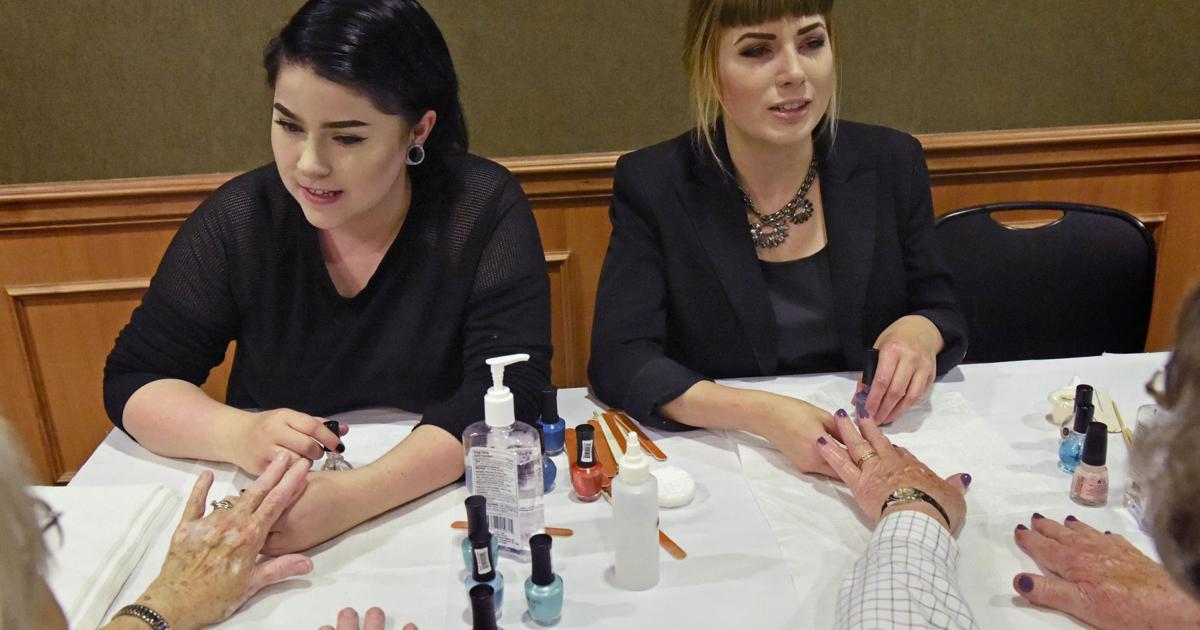
Debbie Dunn, president of Lancaster School of Cosmetology, said the changes will be devastating for postsecondary programs in the beauty industry because their graduates often rely on tips. LSC offers programs in cosmetology, cosmetology teaching, esthetics, massage therapy and nail technology.
To avoid paying taxes on tipped income, some graduates might not report all of their tips, Dunn said, making it seem as if they earn far less than they do.
“We can’t tell them where to go to work, we can’t tell them how many hours to work, we can’t tell them what to get paid, we can’t tell them to report all of their tips,” Dunn said.
According to a report by American University, roughly 80% of students in undergraduate certificate cosmetology programs go to a school that would fail under the approved metrics.
Dunn said the law will take away higher education opportunities for many low-income people, and it could hurt schools like hers in the long run. If a program is no longer eligible to receive federal loan money, she said, enrollment could dip dramatically.
Cutting Edge Barber Academy in Lancaster saw its enrollment double after the school became Title IV eligible. Amit Corso, the academy owner, said he’s not sure whether the school could sustain itself if enrollment drops. Academy leaders would have to consider lowering the $19,900 tuition to keep its numbers, he said.
“It could possibly be the end of us,” Corso said.
The motivation
While the law is new, the regulation of schools receiving financial aid is not.
Jill Desjean, the director of policy analysis at the National Association of Student Financial Aid Administrators, said similar policies have been in place going back to former President Barack Obama’s administration. The difference now, she said, is that Congress is codifying the regulations into law.
The law uses a similar metric to the one in place now. Desjean said Congress is dropping a funding eligibility requirement based on a debt-to-earnings measure that looks at graduates’ loan burden versus their ability to pay off those loans with the wages they earn.
The purpose of both current regulations and the new law, Desjean said, is to hold educational institutions accountable for the federal taxpayer dollars they receive by making sure they deliver a robust, profitable education.
“Why would you go to college to be worse off than you would have been if you hadn’t?” she said. “It’s been about the details. It’s been about … making sure that you are designing something that captures all of the bad actors … but isn’t inadvertently capturing someone else who is delivering quality education.”
The new law includes a similar provision for postgraduate programs that measures the median income of graduates with master’s and doctoral degrees against people in their field without those degrees.
The earliest a school would lose its access to federal funding is 2028. In July, Desjean said federal officials will begin analyzing graduate earnings and the first decisions will be handed out the following summer. A school that falls short of the law’s earnings metric in two of three consecutive years will lose access to federal loans for two years.
Desjean said it would be difficult for a school to reverse course year-over-year to avoid a second failing grade. For schools that fail the first year, the law allows for an “orderly program closure” to finish teaching all of the program’s existing students.
Schools can’t appeal the federal government’s decision unless there was a calculation error.
Bigger picture
Desjean agreed that some programs could be disproportionately affected by the law, including those offered by cosmetology and fine arts schools.
Pennsylvania College of Art and Design President Andy Barnes takes pride in the school’s “pre-professional” programs, which he said sets students up for stable careers in the art industry. While he said the college’s graduates often make a decent living, he’s also mindful of the fact that artists are typically working in a gig economy where a person’s income might not be accurately reflected on their tax returns.
Barnes is worried about what the new law will mean for low-income people. He said a lot of the college’s students rely on federal loans. Without access to federal funding, those students would have to find private loans to finance their schooling, which often come with higher interest rates.
Other students could decide against pursuing postsecondary education altogether. Fewer students, Barnes said, “could pose an existential threat” to the college.
“We’re trying to give access to everyone,” he said.
Advocating for change
The Department of Education will soon start to collect public comments from across the country to help craft regulations for the law. Part of Dunn’s mission in recent weeks has been to spread the word as much as possible to other cosmetology business owners and elected officials to encourage them to submit feedback.
U.S. Rep. Lloyd Smucker, a Lancaster County Republican who voted for the One Big Beautiful Bill, has been advocating for changes to Title IV eligibility assessments. Joining a bipartisan letter sent to U.S. Secretary of Education Linda McMahon in February, Smucker argued the regulations “do not account for modern workforce realities.”
The letter asks the agency to use loan repayment, default and extension rates to measure success instead of earnings. Industry-specific considerations also should be added to the law, the letter argued, including provisions for tipped and part-time workers.
Smucker also introduced legislation in 2024 to ensure students attending career and technical schools have the same access to federal financial aid as students who go to traditional four-year universities.
“Cosmetology and other skills-based pathway programs create meaningful career opportunities for tens of thousands of Pennsylvanians across the 11th District. Unfortunately, restrictions on these programs often fail to account for their long-term success and the value they provide to our communities,” Smucker said in a statement.
Success! An email has been sent to with a link to confirm list signup.
Error! There was an error processing your request.