
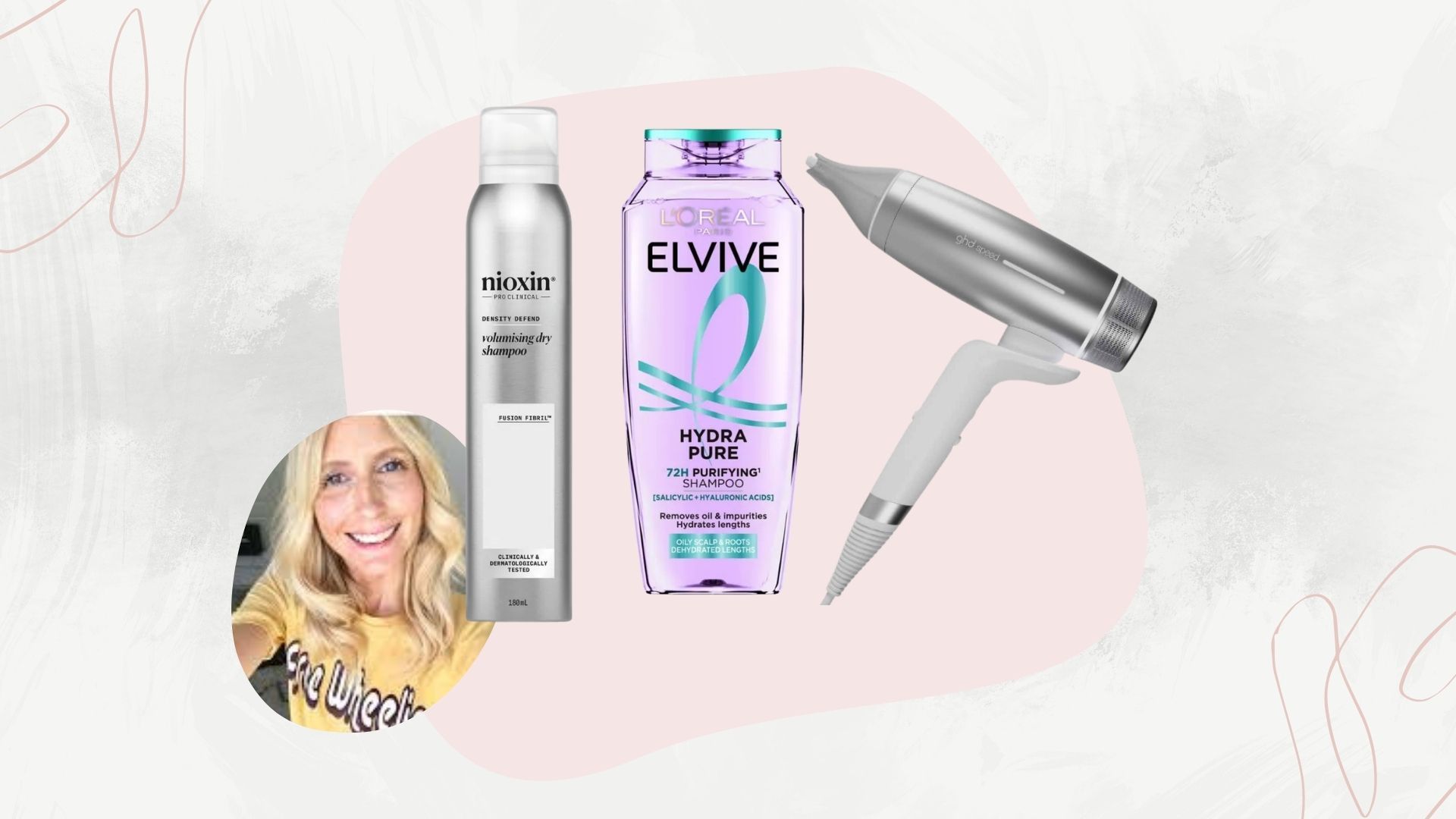
Like many women in their 40s, I’ve spent a small fortune trying to give my hair lift with products all promising ‘bounce, ‘body, and ‘va-va-voom.’ Yet, at 47, my hair seemed to look drier, duller and, frustratingly, thinner than before.
The irony? I hadn’t actually lost much hair at all. I eventually realised that my hair didn’t need more products, but rather better care.
If this sounds familiar to you, it’s first important to understand that “flat” hair in mid-life isn’t always about thinning hair. In fact, it’s often about losing movement. So, with this in mind and the help of the experts, I’ve been on a journey to restore some life to my midlife locks.
Article continues below
You may like
Why care, not volume, was the answer to my midlife hair challenge
The first step was ascertaining the true cause of my lack of lift. “Very often, hair described as ‘thin’ or ‘flat’ isn’t about density at all – it’s about condition and routine,” Jordanna Cobella, Creative Director at Cobella salon and Wella Professionals UK & Ireland Colour & Trends Ambassador, explains. Build-up, dehydration and products that are simply too heavy can cause hair to collapse at the root, even when there’s plenty of it there.
As with skincare, it’s about the quality, not quantity, of products and sticking with a more edited hair care routine. Hormonal changes (yep, them again) can also alter how hair behaves. As oestrogen declines, hair fibres often become drier, coarser and more porous, which affects shine and swing. “Hair doesn’t move or reflect light in the same way,” Jordanna notes.
Akta Bavalia, Trichologist at Journey Clinic, also told me that “No routine can turn 47-year-old hair back into 27-year-old hair. But it can make hair behave better, look healthier and feel more like itself.” On that note, here’s what I did to achieve exactly that…
1. Stopped rushing my hair wash
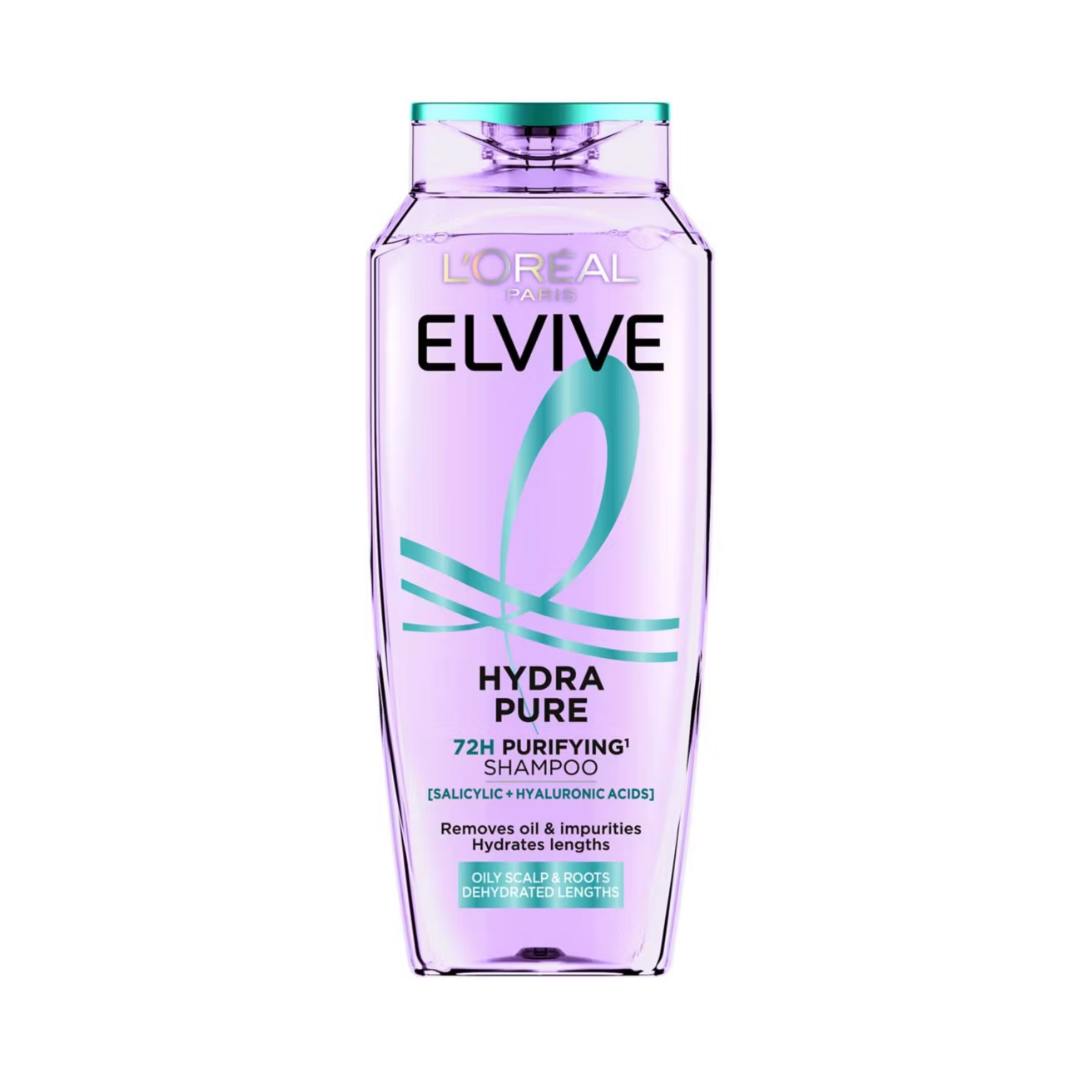
L’Oréal Paris Elvive
Hydra Pure 72H Purifying Shampoo
I’m not an “everything shower” person – I’m firmly in-and-out in under five minutes. But that rushed approach wasn’t doing my hair any favours: under-cleansing is one of the biggest causes of limp midlife hair, according to the experts. “If the scalp isn’t thoroughly cleansed, residue from sebum, styling products and dry shampoo remains at the root,” says Akta. “That weight alone can make hair collapse.”
Jordanna recommends double cleansing: a clarifying or purifying shampoo first to properly remove build-up, followed by a second, more hydrating cleanse. “Rushing the rinse, not emulsifying shampoo properly and even going to bed with wet hair can all contribute to flatness.” Previously, I didn’t treat washing my hair as any kind of restorative phase of my hair routine – it was just a necessity, like wearing deodorant. Spending more time similarly cleansing my hair and scalp with the best shampoo for fine hair, just as I did my face, left it feeling and looking lighter and sprightlier.
2. Realising conditioner wasn’t the ‘bad guy’
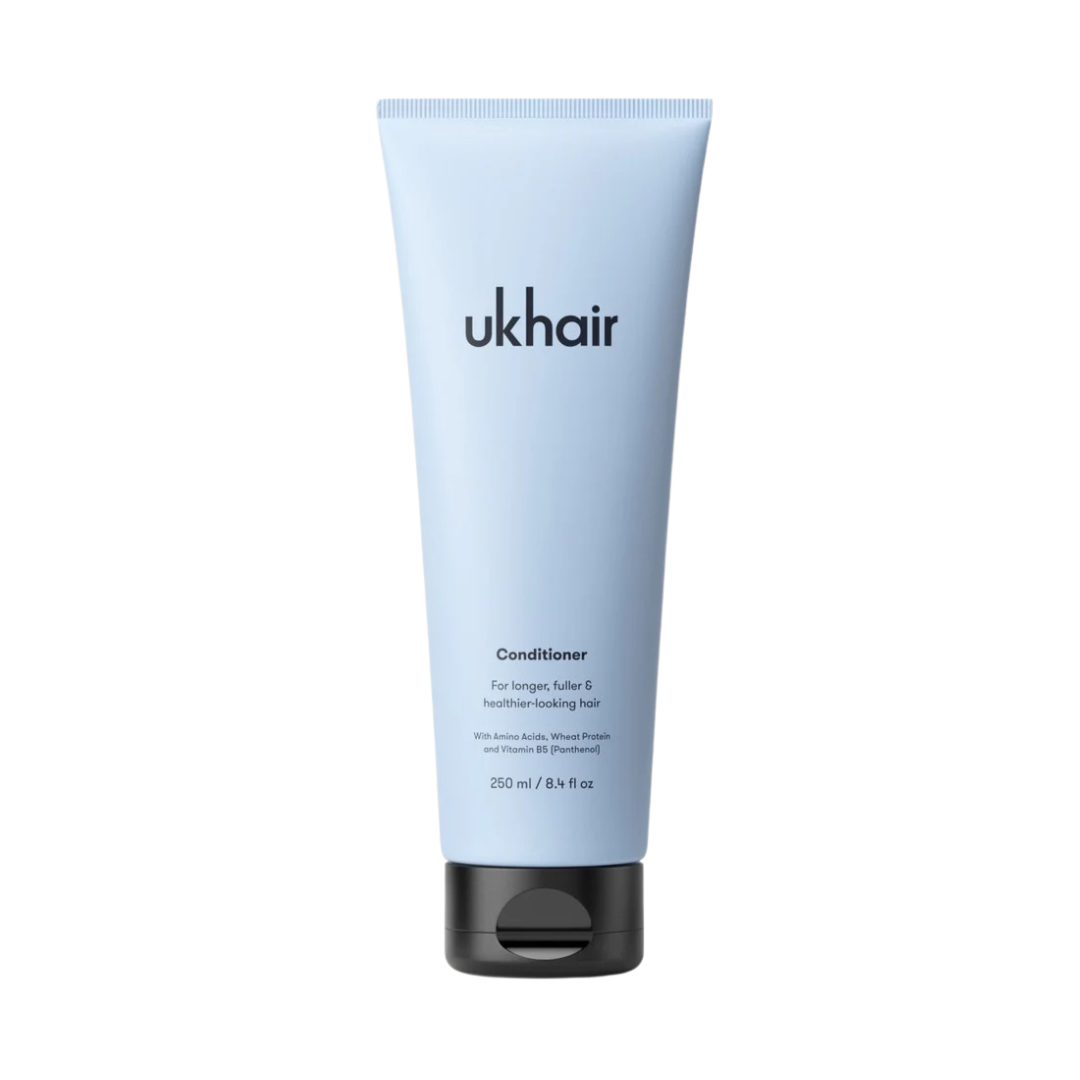
For years, I treated conditioner like a necessary evil – something to be kept firmly away from my roots at all costs. But skipping it altogether can make hair look thinner and duller over time.“Without conditioner, the cuticle stays rough and dehydrated,” says Jordanna, “which reduces shine and makes hair appear finer.”
The trick is formulation and placement. Conditioner belongs through the mid-lengths and ends, not plastered onto the scalp, and lighter formulas are far more midlife-friendly. Akta explains that modern conditioners can actually help hair look fuller by improving slip, strength and light reflection – as long as they’re not too rich or overused. Products like UKHAIR by UKLASH Conditioner, £15, are formulated with this balance in mind, helping to smooth the cuticle, enhance shine and maintain movement rather than weighing hair down. Within a few washes, my hair looked softer, brighter and, unexpectedly, more buoyant.
What to read next
3. Re-thought my styling products
“Styling should shift from control to enhancement,” says Akta, and recommends lightweight, flexible formulations, such as mists or foams, that support shape and lift without stiffening the hair or weighing it down. When hold is needed, Living Proof Flex Hairspray offers structure without the rigidity of heavier creams or waxes. Heat styling also benefits from a rethink, as hair is often more fragile in midlife. “Lower heat settings, heat protection and restraint are key,” recommends Akta.
The new ghd Speed Ionic Hair Dryer, £299, dries hair faster than most, with a cool outer stream designed to keep heat damage in check. Or rather than blow-dries or repeated passes with hot tools, Akta suggests a softer approach: “allow hair to air dry to around 60–70%, then briefly blow-dry to remove excess moisture.” Old-school velcro rollers are also worth revisiting, and I’ve become obsessed with Nioxin’s Density Defend Volumising Dry Shampoo, which is some kind of magic in a can, lifting my hair with an almost non-existent presence.
4. Started reading the label
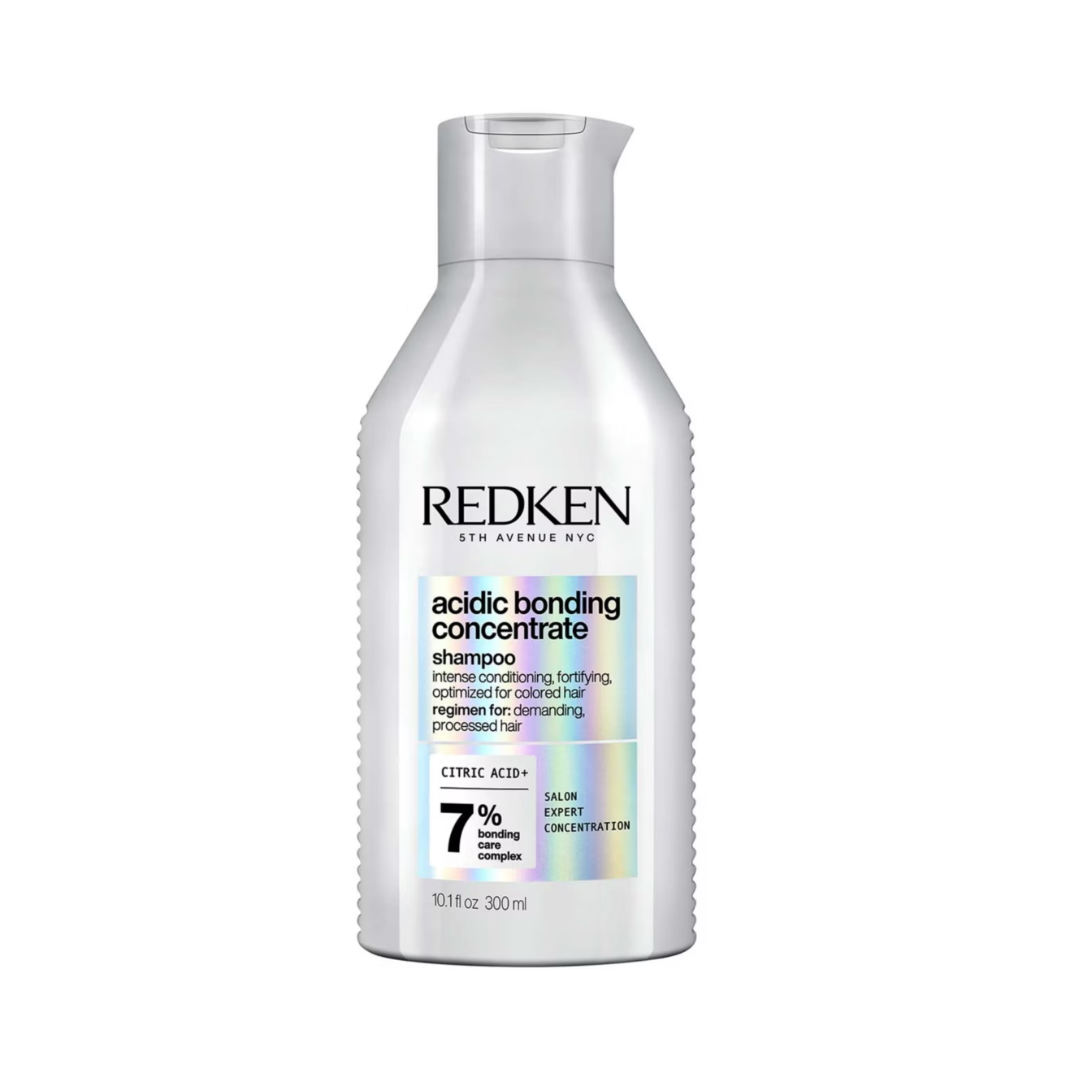
Redken
Acidic Bonding Concentrate Shampoo
“Certain ingredients are especially helpful for ageing or fragile hair,” Akta explains, pointing first to citric acid, which is commonly used in conditioners to support pH balance. This, she says, “helps the cuticle lie flatter and improves softness and manageability,” making hair feel lighter and smoother rather than coated. Strengthening ingredients can also help, as they “reinforce the hair shaft and improve the appearance of strength and fullness without heaviness.”
Akta adds that scalp health plays a crucial role, too, advising that I look for pH-balanced formulas, fragrance-free options and ingredients like piroctone olamine, which help maintain oil balance at the root, which is “essential for preventing flatness.” She’s also keen to reframe the conversation around silicones, which often get a bad rep, when actually water-soluble or water-dispersible forms can be particularly useful for fine, easily weighed-down hair. 75% of the ingredients in my previous hair products were not beneficial. Now there are just three bottles in my shower, each earning its place tenfold.
5. Stopped drying my hair (as much)
I realised the pursuit of ‘fresh’ colour was costing my hair softness, shine and movement. Instead, I started to use hair extensions to reintroduce warmth and dimension in a far gentler way. As Victoria Lynch, founder of Remi Cachet, explains, using extensions to add tone allows you to brighten and enhance colour “without putting additional chemical stress on the natural hair, something that becomes increasingly important as hair gets finer with age. The focus shifts to subtle blending and working with how colour naturally evolves – rather than repeatedly lifting already-fragile lengths with dye.” The result, for me, has been hair that looks highlighted, but is more vibrant and glossy, with noticeably better bounce.
The one reset I’d recommend
If I could offer one piece of advice to anyone in their 40s convinced their hair has ‘lost itself’, it would be this: stop throwing more at it. Strip it back. Start with the scalp. Cleanse properly. Condition wisely. Be considered with styling. As Jordanna puts it, “hair often hasn’t failed – it’s just being weighed down by habits that no longer suit it.”