
April 19, 2026
7 min read
Add topic to email alerts
Receive an email when new articles are posted on
Please provide your email address to receive an email when new articles are posted on .
” data-action=subscribe>
Subscribe
We were unable to process your request. Please try again later. If you continue to have this issue please contact customerservice@slackinc.com.
Back to Healio
Key takeaways:
U.S. medical schools average about 17 hours of nutritional education.
Nutritional support can reduce mortality and improve health.
Physicians can be trained to recognize nutrition issues and refer appropriately.
U.S. physicians are graduating unprepared to address the leading causes of death in their patients.
Cardiometabolic diseases related to diet account for approximately $800 billion annually in U.S. health care expenditures. Medicare bears a substantial share of these costs via diabetes, cardiovascular disease, obesity and hypertension treatment.
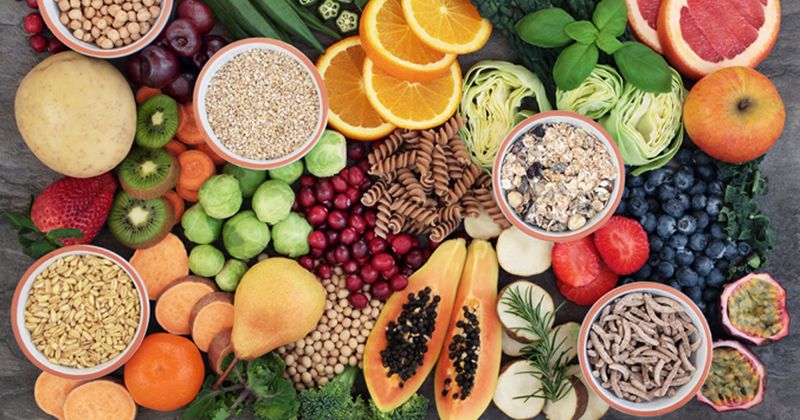
European educational models present nutrition as an integral component of everyday health. Image: Adobe Stock
Also, multiple studies have found that diets based on healthy plants that avoid processed meats and sugars reduce risks for cognitive decline, with structured interventions providing the most benefits for patients at risk.
However, approximately 71% of U.S. medical schools fail to provide the recommended minimum of 25 hours of nutrition education. Some offer fewer than 10 hours across 4 years of training.

Elena Luciani
More concerning still, the average number of required nutrition instruction hours has declined from roughly 25 hours historically to approximately 17 hours today, even as the evidence supporting nutrition-based prevention and treatment has expanded substantially.
Recent national curriculum analyses, Association of American Medical Colleges competency frameworks and federal workforce strategy initiatives continue to identify nutrition training as a persistent structural gap in undergraduate medical education and a barrier to implementing effective food-is-medicine interventions at scale.
Yet there are signs of emerging change.
In March 2026, HHS and the U.S. Department of Education announced voluntary commitments from 53 medical schools across 31 states to provide at least 40 hours of nutrition education, or a 40-hour competency equivalent, beginning in the 2026 academic year.
Although these commitments do not by themselves resolve the broader curricular gap, they signal a notable shift in how nutrition is being positioned within the training of future physicians.
This educational deficit has measurable clinical consequences. Physicians consistently report recognizing the importance of nutrition but lacking confidence and competency to counsel patients effectively.
As a result, dietary counseling remains underutilized in routine care despite strong preventive value.
Meanwhile, randomized clinical trial evidence demonstrates that individualized nutritional support reduces mortality by approximately 27% among malnourished hospitalized adults, and even brief physician-delivered dietary counseling interventions improve cardiometabolic risk factors and diet quality at the population level.
National policy frameworks such as the federal National Strategy on Hunger, Nutrition, and Health identify clinician nutrition competency as essential to reducing chronic disease burden, improving equity and lowering long-term federal health expenditures.
Strengthening nutrition education across the physician training pipeline therefore represents a high-yield strategy for improving population health and modernizing preventive care delivery.
Learning from international models
The solution requires a fundamental reimagining of how nutrition science is integrated into medical training. International academic programs in food and human nutrition sciences offer useful examples of interdisciplinary education.
By linking foundational science with clinical reasoning, public health, food science and prevention, these programs reflect a broader understanding of nutrition as a discipline that connects biological mechanisms with health across the lifespan.
This kind of integrated academic model may help inform current efforts to strengthen nutrition education in U.S. medical training.
Interdisciplinary training in nutrition science including exposure to clinical nutrition, physiology, biochemistry, translational research and emerging fields such as space health underscores the breadth and rigor the field requires.
It also reinforces the view that nutrition should not be treated as a peripheral topic added to an already crowded curriculum, but rather as an integrative science that strengthens understanding across multiple medical domains.

Robert Glatter
A further lesson from European models, particularly in Mediterranean countries such as Italy, may be cultural as much as curricular. In these contexts, nutrition has historically been framed not only as a matter of nutrient intake, but as part of a broader model of prevention, daily living and long-term well-being.
As a result, nutrition is more naturally understood as an integral component of everyday health rather than as a secondary or optional aspect of care.
This broader cultural framing may also create conditions in which nutrition is more readily integrated into interdisciplinary education, where it is approached as a technical subject as well as part of a broader understanding of health across the lifespan.
Competencies over credit hours
Recent consensus work has identified 36 core nutrition competencies for U.S. medical students and physician trainees, developed through a modified Delphi process involving nutrition experts and residency program directors.
These competencies span foundational nutrition knowledge, assessment and diagnosis, communication skills, public health, collaborative treatment and appropriate referral, all areas where international programs have demonstrated success.
Importantly, improving nutrition education in medical training does not mean expecting physicians to become nutrition specialists. No clinician can master every domain in depth.
Just as patient care relies on endocrinologists, internists, cardiologists and other specialists, it should also recognize the essential role of nutrition professionals within the multidisciplinary team. Physicians need enough training to identify nutrition-related problems, provide basic evidence-based guidance and refer appropriately when specialized care is needed.
The most successful U.S. medical schools achieve the 25-hour minimum not through standalone courses, but by integrating nutrition across the curriculum, reinforcing how nutrition relates to total body health across the lifespan. This mirrors the approach taken by comprehensive European programs that embed nutrition within physiology, biochemistry, pathology and clinical rotations.
Experiential learning through culinary medicine, combining didactic education with hands-on food and cooking experiences, has shown particular promise.
Studies demonstrate that medical students exposed to culinary medicine achieve higher competencies in 25 diet-related preventive cardiology areas and improve their own dietary habits, with downstream benefits for patient outcomes including improved blood pressure and cholesterol control.
The path forward
The infrastructure for change is emerging. In 2023, the Accreditation Council for Graduate Medical Education announced plans to make medical nutrition education a mandatory requirement for residency and fellowship accreditation by 2026.
Also, the Association of American Medical Colleges has committed to developing competency-based assessments. Congress has passed bipartisan resolutions calling for meaningful nutrition education as well, recognizing that federal Medicare funding supports graduate medical education.
What remains is implementation. U.S. medical schools should look not only to domestic reform efforts, but also to international examples of rigorous and interdisciplinary nutrition education.
Academic training models that integrate nutritional science with clinical and biomedical education show how nutrition can be taught with scientific depth, clinical relevance and interdisciplinary breadth. Such approaches may serve as valuable points of reference in developing more integrated, competency-based nutrition education within medical training.
The evidence is clear. Nutrition education works, nutritional interventions save lives, and our current approach is failing both our trainees and our patients. International programs have shown us what is possible. The question is whether American medical education will rise to meet this challenge.
The evidence supporting enhanced nutrition education in medical training is compelling and multifaceted. Recent meta-analyses demonstrate that nutritional interventions reduce mortality by 27% among malnourished medical inpatients, with more recent high-quality trials showing even greater benefits.
Additionally, physician-delivered dietary counseling, even when brief, leads to improved diet quality and clinical outcomes across multiple conditions including diabetes, obesity and cardiovascular disease.
The consensus competencies developed through the modified Delphi process provide a practical framework that U.S. institutions can implement. These competencies emphasize culturally sensitive nutrition recommendations, food insecurity screening, multidisciplinary collaboration and evidence-based counseling, which are skills that align well with interdisciplinary models of nutrition education that integrate scientific knowledge with clinical and public health application.
The integration of experiential learning through culinary medicine represents a particularly promising innovation, with studies showing improved student competencies, better personal dietary habits among trainees, and measurable improvements in patient outcomes. This hands-on approach mirrors the practical, interdisciplinary training that characterizes successful international nutrition education programs.
The barriers to implementation — limited curricular time, lack of standardized assessments, insufficient faculty expertise, and competing priorities — are well-documented but not insurmountable.
The recent commitment by the Accreditation Council for Graduate Medical Education to mandate nutrition education in residency programs by 2026, combined with support from major medical education organizations, creates unprecedented momentum for systemic change.
For more information:
Elena Luciani, MS, a specialist and researcher in clinical nutrition with the Campus Bio-Medico University of Rome, can be reached at elena.luciani@me.co. Robert Glatter, MD, FACEP, FAAEM, is an attending physician in the department of emergency medicine at Lenox Hill Hospital and assistant professor of emergency medicine at Zucker School of Medicine at Hofstra/Northwell. He can be reached at rglatter@northwell.edu.
Sources/Disclosures
Source:
Expert Submission
References: Adams KM, et al. Am J Clin Nutr. 2006;doi:10.1093/ajcn/83.4.941S. Albin JL, et al. Adv Nutr. 2024;doi:10.1016/j.advnut.2024.100230. Anderer S, et al. JAMA. 2026;doi:10.1001/jama.2026.3569. Aspry KE, et al. Circulation. 2018;doi:10.1161/CIR0000000000000563. Baker LD, et al. JAMA. 2025ldoi:10.1001/jama.2025.12923.Biden-Harris administration national strategy on hunger, nutrition and health. https://bidenwhitehouse.archives.gov/wp-content/uploads/2022/09/White-House-National-Strategy-on-Hunger-Nutrition-and-Health-FINAL.pdf. Published Sept. 2022. Accessed April 14, 2026. Chen H, et al. JAMA Neurol. 2026;doi:10.1001/jamaneurol.2026.0062. Devries S, et al. Am J Med. 2017;doi:10.1016/j.amjmed.2017.04.043. Eisenberg DM, et al. JAMA Netw Open. 2024;doi:10.1001/jamanetworkopen.2024.35425.Fact sheet: Secretary Kennedy and Secretary McMahon celebrate medical school commitments to increase nutrition training for future doctors. https://www.hhs.gov/press-room/fact-sheet-sec-kennedy-sec-mcmahon-celebrate-med-school-commitments-to-increase-nutrition-training-for-future-doctors.html. Updated March 5, 2026. Accessed April 14, 2026. Gomes F, et al. JAMA. 2019;doi:10.1001/jamanetworkopen.2019.15138. Hu FB, et al. Am J Clin Nutr. 2025;doi:10.1016/j.ajcnut.2025.04.036.Università Campus Bio-Medico di Roma: Didactics. https://www.unicampus.it/en/courses/training-offer/bachelor-s-degree/Departmental-Faculty-of-Sciences-and-Biotechnologies/cdl-food-and-human-nutrition-sciences-l-13/cdl-food-sciences-and-human-nutrition-study-plan/. Updated 2023. Accessed April 14, 2026. Krist AH, et al. JAMA. 2020;doi:10.1001/jama.2020.21749. Lee Y, et al. PLoS Med. 2019;doi:10.1371/journal.pmed.1002761. Mitchell LJ, et al. J Acad Nutr Diet. 2017;doi:10.1016/j.jand.2017.06.364. Mozaffarian D, et al. J Am Coll Cardiol. 2024;doi:10.1016/j.hacc.2023.12.023. Park SY, et al. Neurology. 2026;doi:10.1212/WNL.0000000000214916. Schuetz P, et al. Lancet. 2019; doi:10.1016/S0140-6736(18)32776-4. Schuetz P, et al. Lancet. 2021;doi:10.1016/S0140-6736(21)01451-3. Strengthening nutrition education in medical education. https://www.aamc.org/about-us/mission-areas/medical-education/strengthening-nutrition-education-medical-education. Accessed April 14, 2026. Wong A, et al. Am J Clin Nutr. 2023;doi:10.1016/j.ajcnut.2023.07.003. Wynn K, et al. Can Fam Physician. 2010;doi:PMC2837706.
Disclosures:
Luciani and Glatter report no relevant financial disclosures.

Ask a clinical question and tap into Healio AI’s knowledge base.
PubMed, enrolling/recruiting trials, guidelines
Clinical Guidance, Healio CME, FDA news
Healio’s exclusive daily news coverage of clinical data
Learn more
Add topic to email alerts
Receive an email when new articles are posted on
Please provide your email address to receive an email when new articles are posted on .
” data-action=subscribe>
Subscribe
We were unable to process your request. Please try again later. If you continue to have this issue please contact customerservice@slackinc.com.
Back to Healio