
Protein Supplements Market
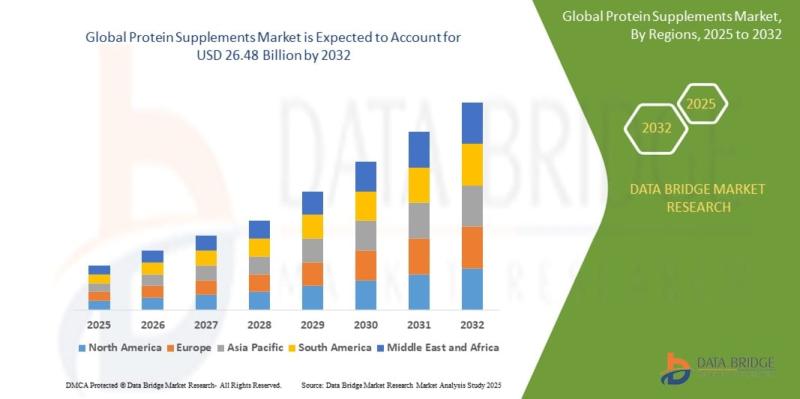
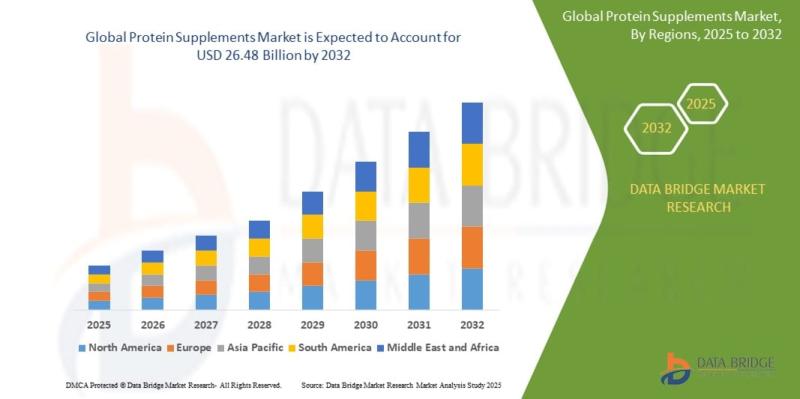
As per Data Bridge Market Research analysis, the Protein Supplements Market was estimated at USD 13.16 billion in 2025. The market is expected to grow from USD 14.54 billion in 2026 to USD 26.48 billion in 2032, at a CAGR of 10.50% during the forecast period with driven by the rising demand for functional nutrition, increasing health awareness, and expanding fitness industry participation.
Get the full PDF sample copy of the report: (Includes full table of contents, list of tables and figures, and graphs) https://www.databridgemarketresearch.com/request-a-sample/?dbmr=global-protein-supplements-market
Market Size & Forecast
2025 Market Size: USD 13.16 Billion
2026 Projected Market Size: USD 14.54 Billion
2032 Projected Market Size: USD 26.48 Billion
CAGR (2026-2032): 10.50%
Largest Region: North America
Fastest Growing Region: Asia Pacific
Key Market Report Takeaways
North America holds the largest market share (~38-40%) driven by strong consumer awareness and established fitness culture
Asia Pacific is the fastest-growing region due to rising disposable incomes and expanding urban population
Powder-based protein supplements dominate product segment due to cost-effectiveness and versatility
Sports nutrition applications lead the market owing to increasing gym memberships and athletic participation
Fitness enthusiasts and athletes represent the dominant end-user segment, followed by lifestyle consumers
Market Trends & Highlights
North America leads the global market due to high consumer awareness, strong distribution networks, and widespread adoption of sports nutrition products
Asia Pacific is the fastest-growing region, driven by urbanization, rising middle-class population, and increasing health consciousness in countries such as China and India
Sports nutrition remains the dominant application segment, supported by rising gym culture and demand for performance-enhancing dietary supplements
Growth is driven by a combination of increasing protein deficiency awareness, evolving dietary preferences, and rising demand for plant-based alternatives
Technological advancements in protein extraction, formulation, and flavor enhancement are reshaping product innovation
Strategic partnerships, e-commerce expansion, and regulatory approvals for novel protein sources are accelerating market expansion
Details about the report and current availability can be viewed : https://www.databridgemarketresearch.com/reports/global-protein-supplements-market
Market Dynamics
Market Drivers
Rising Health Awareness and Fitness Trends
The global shift toward preventive healthcare and wellness has significantly increased demand for protein supplements. Consumers are actively incorporating protein into daily diets to support muscle health, weight management, and overall fitness. This trend is particularly strong in North America and Europe, where fitness culture is deeply established. Growing gym memberships and sports participation further amplify product demand.
Expansion of Sports Nutrition Industry
The rapid growth of the sports nutrition sector is a major driver, supported by increasing professional and amateur athletic activities. Protein supplements are widely used for muscle recovery and performance enhancement. Demand is further fueled by endorsements from athletes and fitness influencers. Emerging markets in Asia Pacific are witnessing accelerated adoption due to rising sports infrastructure and awareness.
Innovation in Plant-Based and Alternative Proteins
Technological advancements in plant-based protein sources such as pea, soy, and rice protein are driving market diversification. Consumers are shifting toward vegan and lactose-free alternatives due to dietary restrictions and sustainability concerns. Companies are investing heavily in R&D to improve taste, texture, and bioavailability. This trend is particularly prominent in Europe and North America.
E-commerce and Digital Distribution Growth
The expansion of online retail platforms has significantly improved product accessibility and consumer reach. E-commerce enables direct-to-consumer sales, personalized marketing, and subscription-based models. Digital channels are especially influential in Asia Pacific and Latin America, where smartphone penetration is increasing. This shift enhances market penetration and brand visibility.
Increasing Disposable Income in Emerging Markets
Rising income levels in developing economies are enabling consumers to spend more on health and wellness products. Urbanization and changing lifestyles are contributing to higher adoption rates of protein supplements. Countries such as India, China, and Brazil are key contributors to this growth. This economic shift is expanding the global consumer base.
Market Restraints
High Cost of Premium Protein Products
Premium protein supplements, especially those with advanced formulations or plant-based ingredients, are relatively expensive. This limits accessibility for price-sensitive consumers in developing regions. High costs are also associated with R&D and quality sourcing of raw materials. As a result, market penetration may be restricted in low-income segments.
Regulatory and Compliance Challenges
The protein supplements market is subject to strict regulations regarding labeling, safety, and health claims. Regulatory frameworks vary significantly across regions, creating compliance complexities for manufacturers. Delays in approvals and changing policies can hinder product launches. This is particularly challenging in Europe and North America.
Supply Chain Disruptions and Raw Material Dependency
The market relies heavily on raw materials such as whey and plant proteins, which are subject to supply fluctuations. Disruptions in dairy production or agricultural outputs can impact pricing and availability. Global logistics challenges further exacerbate supply chain instability. These factors affect production costs and profit margins.
Consumer Skepticism and Product Misconceptions
Despite growing demand, some consumers remain skeptical about the safety and necessity of protein supplements. Misconceptions regarding side effects and overconsumption persist in certain markets. Lack of proper education and misinformation can limit adoption. This is more prevalent in emerging regions.
Intense Market Competition and Price Pressure
The market is highly competitive with numerous global and regional players offering similar products. Price wars and discounting strategies can reduce profit margins. Smaller companies struggle to compete with established brands that benefit from economies of scale. This intensifies market fragmentation.
Market Opportunities
Growth in Plant-Based and Vegan Protein Segment
The increasing shift toward vegan diets presents a significant opportunity for plant-based protein products. Consumers are seeking sustainable and allergen-free alternatives to whey protein. Companies investing in innovative plant protein blends can capture a growing niche market. Europe and North America are key regions driving this trend.
Expansion in Emerging Markets
Asia Pacific, Latin America, and parts of Africa offer substantial growth potential due to rising health awareness and urbanization. Untapped rural and semi-urban markets present new revenue streams. Localized product offerings and affordable pricing strategies can enhance penetration. Government initiatives promoting nutrition also support growth.
Product Innovation and Functional Nutrition
The integration of functional ingredients such as probiotics, vitamins, and minerals into protein supplements is creating new product categories. Consumers are increasingly seeking multi-functional health benefits. Innovation in ready-to-drink formats and on-the-go products is expanding usage scenarios. This trend enhances product differentiation.
Strategic Partnerships and M&A Activities
Collaborations between supplement manufacturers, fitness brands, and e-commerce platforms are driving market expansion. Mergers and acquisitions enable companies to strengthen their product portfolios and geographic presence. Investment in startups focusing on alternative proteins is increasing. These strategies accelerate innovation and scalability.
Personalized Nutrition and Digital Health Integration
Advancements in digital health technologies are enabling personalized nutrition solutions. Companies are leveraging data analytics to offer customized protein products based on individual needs. Subscription-based and app-integrated services are gaining traction. This trend is expected to redefine consumer engagement.
Market Challenges
Fragmented Market Structure
The presence of numerous players leads to a highly fragmented market, making it difficult for companies to establish strong brand differentiation. Smaller firms face challenges in scaling operations and competing with global leaders. Market fragmentation also results in inconsistent product quality across regions.
Regulatory Variability Across Regions
Different countries have varying regulations regarding dietary supplements, creating complexities in global operations. Compliance with multiple standards increases operational costs and delays market entry. Companies must continuously adapt to evolving policies. This challenge is particularly significant in Europe and Asia Pacific.
Supply Chain and Logistics Constraints
Global supply chain disruptions, including transportation delays and raw material shortages, impact production timelines. Dependence on specific regions for key ingredients increases vulnerability. Rising logistics costs further affect profitability. These issues are more pronounced in developing markets.
Consumer Trust and Brand Credibility Issues
Instances of product adulteration and false claims have affected consumer trust in certain regions. Building brand credibility requires significant investment in quality assurance and transparency. Negative perceptions can slow market growth. Companies must focus on certifications and clear labeling.
Pricing Volatility and Economic Uncertainty
Fluctuations in raw material prices and economic instability can impact product pricing strategies. Inflation and currency variations affect purchasing power in emerging markets. Companies must balance affordability with profitability. This creates challenges in maintaining consistent growth.
Market Segmentation & Analysis
By Product Type
The market is segmented into whey protein, casein protein, soy protein, pea protein, and others. Whey protein dominates the market with the highest share due to its high bioavailability and widespread use in sports nutrition. Plant-based proteins such as pea and soy are the fastest-growing segments, driven by vegan trends and sustainability concerns. The plant-based segment is expected to grow at a higher CAGR than the overall market.
By Application
Applications include sports nutrition, functional food, and dietary supplements. Sports nutrition holds the largest market share due to high demand from athletes and fitness enthusiasts. Functional food is the fastest-growing segment, supported by increasing integration of protein into everyday food products. Growth is driven by convenience and health-focused consumption patterns.
By End-User
End-users include athletes, bodybuilders, lifestyle users, and elderly consumers. Athletes and bodybuilders dominate the segment due to performance-driven consumption. Lifestyle users represent the fastest-growing segment, driven by general health awareness. The aging population is also contributing to demand for protein supplements for muscle maintenance.
By Distribution Channel
The market is segmented into online and offline channels. Offline retail (supermarkets, specialty stores) holds the largest share due to established distribution networks. However, online channels are the fastest-growing segment, driven by e-commerce expansion and direct-to-consumer models. Digital platforms are enhancing accessibility and personalization.
Analytical Insights
Largest Segment: Whey protein due to high efficiency and established demand
Fastest Growing Segment: Plant-based protein due to sustainability and dietary shifts
Dominance is driven by performance benefits, affordability, and consumer trust
Growth segments are fueled by innovation, changing dietary habits, and environmental concerns
Regional Analysis
By geography, the market is categorized into North America, Europe, Asia Pacific, Latin America, and the Middle East & Africa.
North America
North America dominates the global protein supplements market, accounting for the largest revenue share. The region benefits from strong consumer awareness, advanced distribution networks, and high adoption of fitness lifestyles. The U.S. is the primary contributor, supported by a mature sports nutrition industry. Presence of leading manufacturers and continuous product innovation further strengthen market leadership.
Europe
Europe represents a mature and steadily growing market, driven by strong regulatory frameworks and increasing demand for plant-based protein products. Countries such as Germany, the U.K., and France are key contributors. High R&D investments and sustainability trends support innovation. Consumer preference for clean-label products is shaping market dynamics.
Asia Pacific
Asia Pacific is the fastest-growing region, driven by rapid urbanization, rising disposable incomes, and increasing health awareness. China, India, and Japan are major markets experiencing strong demand growth. Government initiatives promoting nutrition and expanding fitness infrastructure support market expansion. The region offers significant untapped potential.
Latin America
Latin America is an emerging market with gradual growth driven by improving economic conditions and increasing adoption of health supplements. Brazil and Mexico are key markets contributing to regional growth. Infrastructure development and expanding retail networks are supporting market penetration. However, economic volatility remains a limiting factor.
Middle East & Africa
The Middle East & Africa region shows steady but slower growth due to infrastructure limitations and lower consumer awareness. Increasing investments and government initiatives in health and wellness are supporting gradual adoption. The private sector is playing a key role in expanding distribution networks. Growth potential remains moderate.
Key Insights:
Largest Region: North America
Fastest Growing Region: Asia Pacific
Get the full PDF sample copy of the report: (Includes full table of contents, list of tables and figures, and graphs) https://www.databridgemarketresearch.com/request-a-sample/?dbmr=global-protein-supplements-market
Competitive Landscape
Market Structure Overview
The protein supplements market is moderately fragmented, with a mix of global leaders, regional players, and emerging startups. Competition is driven by innovation, product differentiation, and brand positioning. Companies focus on expanding product portfolios and leveraging advanced technologies. Competitive analysis provides insights into market positioning and strategic direction.
Key Industry Players
Leading companies operate with strong global presence, diversified product portfolios, and advanced R&D capabilities. Market leaders focus on innovation, quality assurance, and brand recognition. Regional players compete through cost-effective offerings and localized strategies.
List of Key Industry Players:
Glanbia plc
Abbott Laboratories
Nestlé S.A.
Herbalife Nutrition Ltd.
Amway Corporation
MusclePharm Corporation
The Hut Group
Iovate Health Sciences International Inc.
Transparent Labs
Orgain Inc.
Competitive Strategies
Companies are focusing on product innovation, including plant-based and functional protein supplements. Strategic partnerships and collaborations are enhancing distribution and market reach. Mergers and acquisitions are strengthening market positioning. Geographic expansion and e-commerce integration are key growth strategies. Firms aim to enhance differentiation and customer value.
Emerging Players & Market Dynamics
Startups and niche players are introducing innovative and cost-effective solutions, increasing competition. These companies focus on specialized segments such as vegan proteins and personalized nutrition. Rising investments and funding activities are accelerating innovation. Digital transformation is enabling new business models and disrupting traditional market dynamics.
Latest Developments
January 2025 – Nestlé S.A.: Expanded its plant-based protein portfolio with new sustainable formulations, strengthening its position in the vegan nutrition segment and enhancing global market reach.
October 2024 – Glanbia plc: Launched advanced whey protein isolates with improved absorption rates, reinforcing its leadership in sports nutrition innovation.
July 2024 – Abbott Laboratories: Introduced clinically tested protein supplements targeting elderly nutrition, expanding its healthcare-focused product segment.
March 2024 – Herbalife Nutrition Ltd.: Partnered with fitness platforms to promote personalized nutrition programs, increasing digital engagement and customer retention.
November 2023 – Amway Corporation: Invested in R&D for plant-based protein sources, supporting sustainability initiatives and product diversification.
August 2023 – The Hut Group: Expanded its e-commerce distribution network across Asia Pacific, improving accessibility and regional market penetration.
May 2023 – Orgain Inc.: Launched organic protein products with clean-label certification, addressing growing consumer demand for natural supplements.
Check out more related studies published by Data Bridge Market Research:
https://www.databridgemarketresearch.com/reports/global-yeast-market
https://www.databridgemarketresearch.com/reports/global-textured-soy-protein-market
https://www.databridgemarketresearch.com/reports/global-plant-based-oils-market
https://www.databridgemarketresearch.com/reports/global-pulse-market
https://www.databridgemarketresearch.com/reports/global-jojoba-oil-market
Contact Us:
Data Bridge Market Research
US: +1 614 591 3140
UK: +44 845 154 9652
APAC : +653 1251 975
Email:- corporatesales@databridgemarketresearch.com
Data Bridge Market Research is a market research and consulting company that educates its clients about the market and encourages growth and expansion. We offer customized reports, syndicated research, consulting services, cloud-connected intelligence, and a holistic suite of offerings including competitive intelligence, epidemiology analyses, trade analytics, country analysis, and pharma insights.
This release was published on openPR.