
Recovery is one of the most overlooked aspects of fitness and health – and we can all admit that the ever-important act of stretching often falls by the wayside in favour of the more fun or glamorous parts of a workout.
Which is exactly why creator Riley Rehl challenged herself to 30 days of dedicated stretching to reduce stiffness, improve flexibility and, ultimately, increase mobility.
We couldn’t relate more – so we’re breaking down the importance of stretching, what Riley learned during the challenge and how you can incorporate it into your own routine.
What are the benefits of stretching daily?
Stretching is more than a quick toe touch before a run or a brief arm pull before shoulder day. A regular routine can help preserve mobility, improve range of motion and reduce the stiffness that builds up from training and daily life.
Over time, this can make movement feel easier, support better exercise technique and help you stay comfortable and active as you age. There’s even evidence from a recent study suggesting stretching can support muscle growth in a similar way to weight training.
For those who spend long periods sitting – or, on the flip side, are constantly training – a solid stretching routine can reduce tightness in areas like the hips and shoulders, while easing stiffness in the back and hamstrings. It’s also an effective way to prepare the body for exercise.
What was the challenge and what stretches did she follow?
Riley committed to 20 minutes of stretching a day, often following guided routines to ensure she covered all major muscle groups.
Throughout the challenge, she incorporated movements including the frog stretch, downward dog, hamstring stretches, deep lunges, glute stretches and neck work.
‘I’m sick of this challenge… but I know it’s good for me,’ she joked halfway through.
She also adapted her routine based on what her body needed. After deadlift sessions, she focused on spinal mobility to prevent stiffness; after runs, she prioritised her legs. She also incorporated foam rolling where needed, which can help reduce temporary muscle soreness – particularly delayed onset muscle soreness after intense sessions.
 Youtube /@rileyrehl
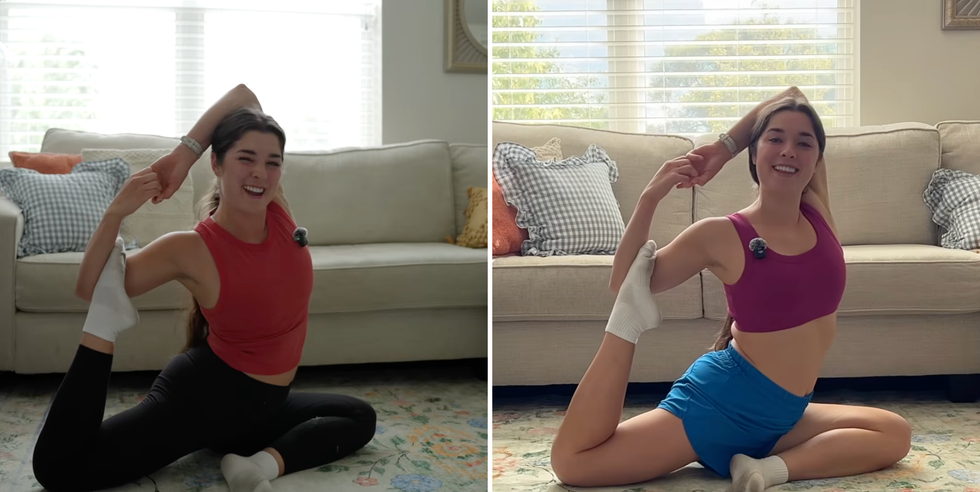
Riley’s before and after of the mermaid stretch
What was Riley’s verdict?Less pain and more limberness
By the end of the challenge, Riley reported reduced back pain – which had flared up midway through after a heavy deadlift session – along with noticeably improved ease of movement.
‘I feel a lot better,’ she said.
Increased flexibility
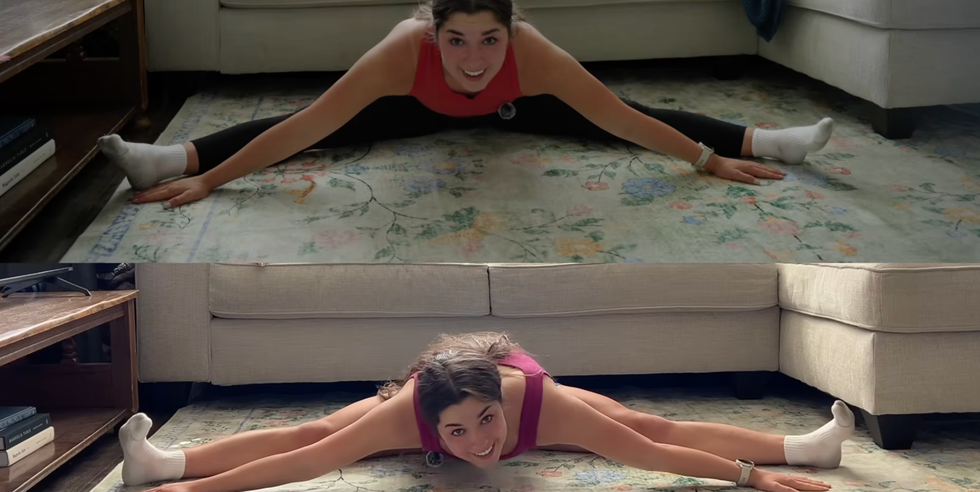
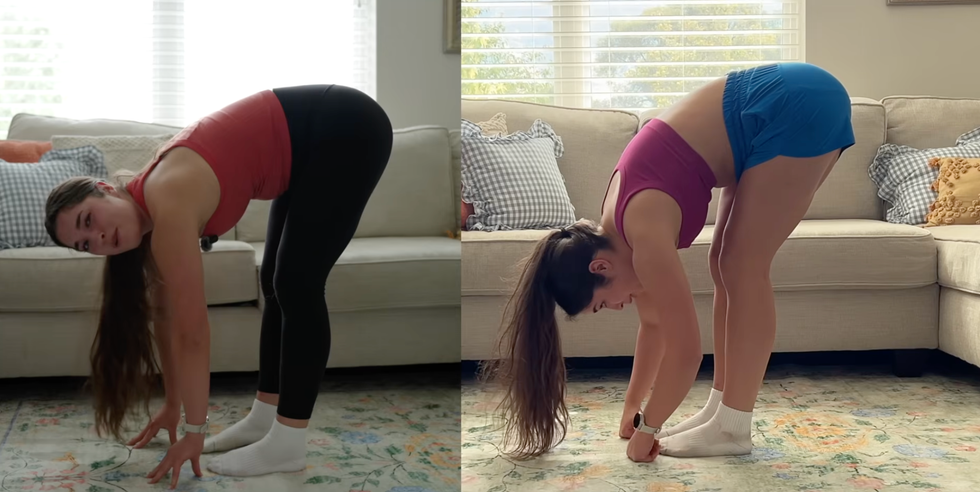
Her flexibility also improved significantly over the 30 days. She tracked progress across movements including splits (both sides and middle), the mermaid stretch, forward folds and toe touches – with clear results.
As she put it, ‘if I want to get even more flexible… I’ll need to spend more time,’ noting lingering tightness in her hamstrings. Still, she considered the gains in such a short period well worth it.
Youtube /@rileyrehl
Time to reconnect with the body
The biggest benefit, Riley noted, was the chance to reconnect with her body beyond standard workouts.
‘Stretching has become part of my night routine at this point,’ she said midway through. By the end, she planned to continue in a more sustainable way: ‘I might not do 20 minutes a night… but I definitely want to keep it in my routine.’
‘It was honestly awesome to just take some time every single day to stretch and move my body.’
Youtube /@rileyrehl
What are the best everyday stretches to introduce to your routine?
You don’t need to commit to 20 minutes of stretching every day – realistically, that’s not always doable. But there are simple ways to incorporate it into your routine.
‘Strength and flexibility go hand in hand, especially as we future-proof our health,’ PT and WH contributor Kate Rowe-Ham told us.
Stretching generally falls into two categories: static and dynamic. Static stretching involves holding a position for a period of time – such as a hamstring or quad stretch post-workout – and is best for improving flexibility and easing tightness. Dynamic stretching involves controlled movement through a joint’s range, like leg swings or arm circles, and is typically more effective before exercise as it prepares the body to move.
It’s worth incorporating both into your routine.
Some effective stretches to try include:
Downward dog: helps loosen the hamstrings and backForward fold: targets the lower back and hamstringsChild’s pose: stretches the back, arms and shouldersShoulder stretch: releases upper-body tensionTricep stretch: targets the back of the arms and upper backMore stretching and mobility: 
Isabelle Knevett is the Fashion Features Editor at Women’s Health, bringing a wealth of experience in media and fashion since 2019. She has led high-impact PR campaigns for global giants like Adidas and Reebok and has reported on everything from fashion analysis and shopping trends, to deep dive features and investigative reporting. A former professional dancer, she understands the value of quality gym and activewear, making her a true expert in the field. Her work has been featured in Marie Claire Australia, ELLE Australia, Australian Women’s Weekly, WHO and more. When she’s not buried in a fashion magazine or sweating it out the gym or dance studio, you’ll find her reading or writing about fashion, feminism and global politics.