Why do some people seem to shed weight easily while others don’t get the same results, no matter how hard they try? According to the theory of obesity phenotypes, if the way we each gain weight is different, then best way to lose it may be different too.
On this episode of On Nutrition, bariatrician, gastroenterologist, and internist Dr. Andres Acosta shares his research on obesity phenotypes, how genetics can play a role in developing obesity, and how your phenotype gives providers a pathway for how to tailor your treatment.
Listen to Understanding obesity phenotypes
Read the transcript:
Andres Acosta, M.D., Ph.D.: It’s time that we take obesity seriously. Not only calling it a disease, but actually treating as such.
Tara Schmidt, RDN, LD: This is On Nutrition, a podcast for Mayo Clinic, where we dig into the latest nutrition trends and research to help you understand what’s health and what’s hype. I’m Tara Schmidt, RDN, LD, a registered dietitian with Mayo Clinic in Rochester, Minnesota. This episode, Obesity Phenotypes.
Why is it that some people seem to shed weight easily while others, no matter how hard they try, don’t get the same results? Well, according to our guest, Dr. Andres Acosta, it’s a combination of biology and genetics. Dr. Acosta runs the Precision Medicine for Obesity Lab at Mayo Clinic in Rochester, Minnesota, and also founded the company Phenomix Sciences.
He’s a triple threat. A bariatrician gastroenterologist, an internist who doesn’t ascribe to a one size fits all approach to obesity. Instead, he believes in tailored treatment for each patient.
Tara Schmidt, RDN, LD: Hi, Dr. Acosta. Thanks for joining me today.
Andres Acosta, M.D., Ph.D.: Thank you so much for having me.
Tara Schmidt, RDN, LD: Tell us, how did you get interested in obesity research to start with?
Andres Acosta, M.D., Ph.D.: when I was going through med school, I realized that we’re doing super good by treating cancer. We made great progress in treating cardiovascular disease. But we were not doing good at preventive cancer or cardiovascular disease. And turns out that both come from one root cause, which is obesity.
So I decided to focus my career in trying to understand obesity. And then when I was going through my Ph.D., I started realizing that we have different interventions. We have different approaches, different treatments– back then a few medications, now of course, a lot more medications,
Tara Schmidt, RDN, LD: Yeah.
Andres Acosta, M.D., Ph.D.: But we used to see this common, consistent topic: doesn’t matter what your intervention is, people who do amazing and people who do poorly.
The big question that we need to ask ourselves is why. Why would I inject myself once a week for a year and lose no weight with one of the new GLP ones? Or why I will go and have bariatric surgery, change my anatomy of my gut, and still don’t lose weight?
What is unique among those people who don’t respond? But also what’s unique about those super responders?
And that’s what has driven me for now 20 years to try to study this question and try to come up with the answer of it.
Tara Schmidt, RDN, LD: We used to just kind of say, “it’s lifestyle.” And then we, we had surgeries, then procedures came. We always had some meds, like you mentioned. But now we have an even wider menu of options for people.
And they wanna know what’s gonna work for them. And not only in the short term, but in the long term.
Andres Acosta, M.D., Ph.D.: Absolutely. Patients wanna know. And then we also need to walk away from, “oh, if you didn’t respond, it’s probably because you didn’t hear my advice.” Or, ” You didn’t do what I told you.” We need to stop blaming patients.
Tara Schmidt, RDN, LD: Completely.
Andres Acosta, M.D., Ph.D.: Obesity is a disease with a strong pathophysiology that we need to understand.
For you and I that have been doing obesity for many years, it’s so exciting to have so many options. Now we need to find which patient needs what and when.
Tara Schmidt, RDN, LD: We’ve been waiting a long time for this, right? You and I and the rest of the medical field. First, we know BMI isn’t a perfect tool for diagnosing obesity, but it can be an indicator of someone’s adiposity or the amount of body fat someone has. So obesity is a disease where you have an excess amount of adiposity to the point where it’s impairing your health. So Dr. Acosta, how else can you measure adiposity outside of BMI?
Andres Acosta, M.D., Ph.D.: You can measure the percentage of body fat. Either using a body composition such as a DEXA machine, a bioimpedance, or more fancy tools like an MRI machine. And that will tell you what’s your severity, compared to someone who does not have obesity.
Now, what we need to understand is that the excess of adiposity, for someone with a little bit more fat, might already turn into disease or into a health risk. And someone will have more adiposity and not turn into health risk. And that’s why the definition of both our CDC as well as the WHO of obesity, defining as a disease is when it says that, when the excess of adiposity starts creating a risk of another disease.
Tara Schmidt, RDN, LD: How do you determine why people are gaining weight to the point of obesity?
Andres Acosta, M.D., Ph.D.: So people are gaining weight because of many different reasons. A great example that I think is very simple for everyone to understand is: if I’m a super athlete, and I suddenly stopped training because I get injured, but I continued to eat, and you know, use example of Michael Phelps. He was eating 6,000 calories, but he was also in the pool for about six hours a day.
If he stopped training, but he continued to over consume calories, he will gain weight. Simple example. I gained weight because I stop exercising and I continue to consume calories, right?
Another example is: you get a medication that increases your appetite, and that medication is for something else, such as a steroid that we use a lot of times in medicine. Increases my appetite, makes me retain fluids, I’m gonna gain weight.
But those examples are rare.
Now, what happens in common obesity? We know that people are gaining weight throughout the years. And the question again is why?
A lot of us actually are trying to lose weight or trying to maintain our weight, and we still, despite that, we keep having issues.
What we start realizing is that there were groups of people. And we start grouping patients in which was the most predominant actionable trait, or phenotype.
Tara Schmidt, RDN, LD: And when you say phenotype, you’re talking about obesity phenotypes or subgroups. Can you walk us through what those four key obesity phenotypes are?
Andres Acosta, M.D., Ph.D.: The first one is people with abnormal calories to satiation. They consume high calories before they feel full. So they come to one sitting, they start eating and they go for seconds and thirds, and they can eat more than 2000 calories in one sitting. I say the abnormal association is Hungry Brain– that’s different than people who come to our test, start eating and they feel full, with normal amounts of food, and then they feel hungry again within an hour or two. Their stomach empties faster, and then the signals that come through the gut to the brain are not working appropriately and they feel hungry in between meals. that’s Hungry Gut.
But these are separate than people who might wanna eat a lot in one sitting but are eating because not of their biology, but more because of their hedonic behavior, in which they’re looking for reward.
So that Emotional Eating, stress eating behavior is like, oh boy, “I’m doing a podcast later with Tara today. I’m so stressed out. I’m going to eat something before.” Right? That is a stress eating behavior.
And then the last group of patients that we realize is there’s a group of patients who are not burning enough calories. Where we measure their energy expenditure, they are low burners.
Tara Schmidt, RDN, LD: So we have Hungry Brain, which we feel like we need to eat more in order to reach. Feeling the feeling of satiety or feeling satisfied.
Hungry Gut: we digest our food faster and therefore feel hungrier faster because an empty stomach is gonna say to your brain, ” let’s eat again.”
Emotional Eating, which is fairly self-explanatory.
And Slow Burning, which is a clinically relevant, kind of decreased metabolic rate.
Andres Acosta, M.D., Ph.D.: That’s correct.
Tara Schmidt, RDN, LD: And hormones like leptin or ghrelin play a role in these phenotypes too, right?
Andres Acosta, M.D., Ph.D.: Yeah. So of course hormones play a major role.
So we know that leptin released from adipose tissue needs to go to our brain, but also to our gut, and tell us whether I have little storage in my fat cells or a lot of storage. So think about your warehouse.
Leptin is the signal: empty warehouse. Overflowing warehouse. Right? And that’s signal is to go to the brain. Beautiful biology.
Unfortunately in obesity we develop leptin resistance. So about 90% of people with obesity have high leptin levels. But the signal is not really getting to the patient saying, Hey, the warehouse already at overflow.
We need to slow down, and stop getting more calories in. That signal is not working.
Tara Schmidt, RDN, LD: Okay, so that’s leptin, our warehouse capacity manager that the body stops listening to sometimes. What about ghrelin?
Andres Acosta, M.D., Ph.D.: Well, ghrelin is an appetite hormone. It releases from our gut. Particularly when the stomach is emptied and before we eat, we have the highest levels of ghrelin. and that hormone will go up to our brain and tell our brain, “Hey, it’s time to eat something.” Also will go up to our stomach and help us growl. that stomach, those sounds that we feel we are feeling hungry.
Tara Schmidt, RDN, LD: I remember in college, that’s how everyone remembers that ghrelin is the growling hormone, right? Ghrelin makes you hungry.
Andres Acosta, M.D., Ph.D.: That’s the perfect name. Ghrelin. The growling, yes.
What is very interesting is that in, in patients with Hungry Brain, we tend to see a little bit more leptin resistance. And we did not see any difference with ghrelin, which is an interesting observation and clearly tell us that a lot more studies are needed.
Tara Schmidt, RDN, LD: And you can actually get tested to identify your specific obesity phenotype like we’re talking about. So tell us about that process.
Andres Acosta, M.D., Ph.D.: So at Mayo we built a genetic test that involves machine learning and genetics. So here we have a genotype that produce a phenotype that drives to a disease, and we can actually predict your phenotype, right?.
And now that genetic test has been spun out into a company as well as with Mayo Clinic, and that’s been commercially available.
Tara Schmidt, RDN, LD: It’s pretty fascinating.
If someone wanted to learn their phenotype but did not necessarily have access or didn’t want to get tested, do they have an option to learn more about their phenotype?
Andres Acosta, M.D., Ph.D.: Yeah, so, of course there are academic centers are doing this kind of testing. We spin out this company, as I mentioned before, called Phenomix Sciences, which is a Mayo Clinic spin out company that has the genetic test and the questionnaires to identify the phenotypes.
And I think that has been a, a wonderful way of providing access to patients who wanna understand and know their underlying phenotype and the reason why they struggle with obesity. Now there’s about 300 clinics around the United States and a few other countries that are already offering these genetic tests.
But the test is still not reimbursed. So still is a out-of-pocket cost, which unfortunately that takes time. But I understand that the company’s working, day and night to get through that reimbursement process so it can be covered by insurance. And hopefully that’ll happen next year.
Tara Schmidt, RDN, LD: That’s exciting.
Tara Schmidt, RDN, LD: There are four key obesity phenotypes. First, there’s Hungry Brain when you need to consume a lot of calories just to feel full.
Then there’s Hungry Gut. This is for people who feel full with a normal amount of food, but they digest faster and feel hungry again within an hour or two. Other people have an Emotional Eating phenotype where eating becomes a coping mechanism.
And then there are the Slow Burners, people with a decreased metabolic rate who don’t burn enough calories. Hormones like leptin and ghrelin play a role in obesity too. Leptin communicates to our gut and brain to tell us how full we may be, but sometimes if a person has leptin resistance, that’s signal won’t go through for ghrelin, think growling.
This hormone communicates to the stomach and brain that it’s hungry, and now that phenotype testing is available, you can figure out which obesity phenotype applies to you. Next, we’ll learn about how genetics can play a role in developing obesity.
Tara Schmidt, RDN, LD: Do you ever have patients fall into more than one of your phenotype categories or maybe none at all, even?
Andres Acosta, M.D., Ph.D.: About almost a third of the patients will have two or more phenotype. What is interesting is if you have two or more phenotypes, you have higher body weight, so you’re heavier. And you have more risk of obesity related diseases, more risk of cardiovascular disease, more risk of diabetes. So tells you that if you have two or more problems in your phenotypes, you’re gonna have severe or more severe obesity.
Tara Schmidt, RDN, LD: Do demographics have an effect on our phenotypes? I’m sure you’ve heard the assumption out there that women are more likely to be Emotional Eaters. For example. What does the science say?
Andres Acosta, M.D., Ph.D.: So every single decision we make and every study we make, we consider sex as a biological factor. I’m using sex and not gender, because we look at their genetics.
As you can imagine, men might consume a liver more calories than women, but then the prevalence of all these phenotypes is exactly the same for men and women. So we cannot say that one has more than the other. Women do not have more Emotional Eating than men. Let’s put that out there. Right? Men also have a stress eating behaviors and Emotional Eating. Same thing with Slow Burn. And same thing with Hungry Brain. Hungry Gut.
We also have, look whether race might be different. And we actually were delighted to study that in 150 people from different ethnic and racial backgrounds, and we saw no difference based on race or ethnicity. The question that remains out there, that I’m not a hundred percent sure, is age.
Tara Schmidt, RDN, LD: Okay.
Andres Acosta, M.D., Ph.D.: Seems like if you are younger and you have obesity, you might be more predisposed to have Hungry Brain and Hungry Gut than the other two phenotypes.
Emotional Eating seems to be coming more towards your forties and fifties, and than the Slow Burn is something too, we see more in the forties and fifties as well, more in the fifties. So maybe there’s a component there of chronological presentation, and the first two have more a genetic predisposition, while the other two might be more environmental, as well as you know, how we adapt and cope with life.
Tara Schmidt, RDN, LD: Yeah, and that was exactly my next question of: do these develop over time and what factors are contributing? So age itself and, and the impact that age has on metabolism might be one factor. Life events might be one factor or how we cope, et cetera.
Andres Acosta, M.D., Ph.D.: One of our colleagues, Maria Daniela Hurtado, she’s an endocrinologist in Mayo Clinic, Florida. She’s studying this question about menopause and how menopause affect phenotypes, which I think is a fascinating question. And hopefully eventually we’ll also study andropause because men are also going through metabolic changes as we age.
But it’s important to understand what happens to our body. We know we start losing muscle mass while we age. Is that the driver on a Slow Burn phenotype at older age? Or maybe not. So those questions we need to know,
But we were very lucky to get a grant support from, Novo Nordisk-, the Danish pharmaceutical company, who was very interested about this question: whether the phenotypes who present early in life will predict weight gain. And people with the genetic predisposition for Hungry Brain, or high calories to association, they tend to gain more weight before the age of 25 than people with the other three phenotypes, which is a very interesting observation, right?
It tells you about the strength of genetics into the development of obesity and the explanation of why obesity is a biological disease.
Tara Schmidt, RDN, LD: Once you’ve found out a patient or research subject’s phenotype, you essentially have different protocols for them to follow because everyone has different needs.
So do you wanna talk about some of the protocols that you have them follow?
Andres Acosta, M.D., Ph.D.: The core principle of Mayo is the patient’s interest come first. And the reason why we’re doing this research is not because I wanna understand the genetics and how we feel full. I need to understand how my patients feel full and how I’m gonna treat my patients.
So quoting my mentor, Michael Camilleri, he told me when I joined Mayo: “Whatever you study in the morning. It needs to help your patient in the afternoon. And whatever you learn that afternoon, you need to study next morning.” If I know your biology and I know every single diet that has been tried out there, and every single medication, how can I match them? How can I pair them together?”
Tara Schmidt, RDN, LD: Yeah.
Andres Acosta, M.D., Ph.D.: And the beauty of what we have done is that I like to say we did not invent anything.
So Michael Camilleri, Matt Clark, and then, Dr. Donald Hensrud–
We came together and say, okay, we have these four phenotypes. What are the four diets?
And here’s what we came up with: if you have Hungry Brain, we said, okay. What is two good diets that work for Hungry Brain? Barbara Rolls published in the nineties the “Volumetric Diet”.
It’s still very popular. We now talk about eating more servings of salads, right, to make you feel full.
So Barbara Rolls developed a diet that was developed for high calories to satiation. And then the other thing we know for people with high calories to satiation is that they usually don’t feel hungry at breakfast. So we told them, “Hey, do time restricted eating.” In other simple words, skip breakfast.
And they were actually happy because they were forcing themselves to have breakfast because we’ve been telling people you need to have breakfast, right?
So we told these people low calorie diet, volumetric, one to two meals per day, either breakfast and lunch or lunch and dinner. 95% of our patients chose lunch and dinner. Big volumetric diet. Think about a big salad with some protein on top that it takes you a lot of time to eat.
Right?
Tara Schmidt, RDN, LD: Okay, that’s Hungry Brain. What about Hungry Gut?
Andres Acosta, M.D., Ph.D.: For Hungry Gut, again, we didn’t invent anything. Dear friend and colleague from University of Adelaide, Michael Horowitz, he has been talking about this preload diet. What is a preload diet? Having a protein snack before your main meal.
Now think about this protein snack. Most of our snacks have very little protein, right?
Tara Schmidt, RDN, LD: Go in your pantry, there’s not a lot of protein in there. Yeah.
Andres Acosta, M.D., Ph.D.: No, no. That bar that you wanna eat or that even fruit or veggie that you wanna snack in the middle of the day. Not much protein. But now we say protein snack.
Why? Protein will make a real high release of GLP-1, PYY, CCK–go to your brain, tell you to feel full longer. And we said, I think that’s the diet for Hungry Guts.
Emotional hunger. You know, we just need to talk about their emotions. What we need to do, I like to compare these to when you go to Alcoholic Anonymous, you walk into a room and you know that everyone has that phenotype. Now we bring them to the room and they’re gonna cognitive behavioral therapy. Everyone knowing that everyone has Emotional Eating. So it’s, it is easy to share your emotions. It easier to go down and do really cognitive behavioral therapy when you actually know you are talking with a group of people who everyone shares the same phenotype.
Right? That if you go to a group that there’s all sort of phenotypes? There will people say, I have Emotional Eating, and the other one says, “Oh, I don’t why you have that.” Like, come on. Right. You shut down yourself and you stop talking. In this case, it’s the opposite. Everybody opens up.
And the last group with people with a Slow Burn. These folks are not burning calories. They have low muscle mass. And then we told them, okay, simple, you go to the gym. So these ones, we told them to go to the gym. And then you do resistance training with high interval intensity training HIIT and then protein supplementation after the workouts. So instead of telling everyone needs to do everything. Hungry Brain, Hungry Gut. You only focus on your diet. Emotional eatings, you focus on that cognitive behavioral therapy and Slow Burn, the only group that was told to focus on exercise and resistance training and protein supplementation after each exercise routine.
And then we took this rather simplistic diet. Again, we didn’t invent it. We just pair it to the right biology. We compare it against a group that we told them everyone does everything, diet, behavioral therapy, and exercise. So we compared less, but tailored and phenotype-tailored versus comprehensive, and everyone got everything. Turns out that less is more. More weight loss, 8% weight loss in 12 weeks versus 4%. And if we look at each one of the phenotypes, each one of the phenotypes improve.
When we measure their biology of each one of the phenotypes, their biology improve in each one of the phenotypes, including the people that we told them to go to the gym. They lost 8% also at one year, and they gain 15% of muscle mass.
Andres Acosta, M.D., Ph.D.: So tells you that you don’t have to be very smart in life.
You just need to have right observations pairing the biology to previously known diets actually really improve outcomes. And, now we’re using that in the clinic.
Tara Schmidt, RDN, LD: And how meaningful for, you know, you and I who know the patients who’ve come into our offices and said, “I have done this my entire life. I have done everything under the sun to lose weight. I know more about weight loss than you do”– to finally be told I have something for you that’s actually tailored to you.
And it’s more exact. And honestly, less work than what you’ve likely been following.
You would’ve assumed that the people who were doing the diet thing and the psychology thing and the exercise thing, of course they’re gonna lose more weight, but that wasn’t true.
Andres Acosta, M.D., Ph.D.: yeah. But Tara, what is fascinating is, you know, so many of our patients says, “Doc, I wanna know if my breast cancer is BRCA positive.”
Tara Schmidt, RDN, LD: Yes.
Andres Acosta, M.D., Ph.D.: Or I wanna know whether I have the risk ’cause my mother or my grandmother had breast cancer.
And why in obesity, we try so many different things, but we don’t look for that diagnostic test, that genetic test, that measuring of your metabolism?
And we think obesity disease, it should treat like every other. We should find diagnostic tests. We should get to the bottom, but you should get to the root cause. And there will be people who tell them, yes, this is your emotions.
There’ll be people who say No, it’s more your gut-brain access, your regulation of appetite or is your metabolism, you’re not burning enough calories. And I’m sure the more we do this, we’ll be able to find more things. Maybe it’s your microbio as you use an example. You know, maybe it’s your fats is producing too many inflammatory toxins, your adipose sites.
We should measure those things.
So it’s time that we take obesity seriously. Not only calling it a disease, but actually treating as such
Tara Schmidt, RDN, LD: What you are doing in. You’re showing patients is that this is not a behavioral problem. This is not a you problem. This is not “laziness”, but that’s, that’s what obesity bias is, is it’s making assumptions about the behaviors of people with the diagnosis of obesity.
Andres Acosta, M.D., Ph.D.: Every time I give a diagnosis or I give an answer to my patients, I get unexpected tears. And it is a mix of tears of sadness, but also relief. And the sadness is because they finally get an answer to their lifelong struggles. It’s like, okay, now I understand why I wanna eat snacks all the time and always thinking about food.
Tara Schmidt, RDN, LD: Yeah.
Andres Acosta, M.D., Ph.D.: Or why I have to eat the whole pizza and I cannot stop at two slices, right? But at the same time, it’s a relief because suddenly people understand why they have a struggle with this disease.
People are extremely disciplined that do everything else right, but unfortunately they struggle with this disease and now we give them an answer and that is priceless.
It has changed the conversation of my patients forever, to the point that they come and see me. My Hungry Gut. It’s well controlled, doc. Thank you.
Tara Schmidt, RDN, LD: Yeah.
Yeah. It’s, it’s life changing for those patients.
Tara Schmidt, RDN, LD: Almost a third of patients being treated for obesity will have two or more obesity phenotypes.
They generally have a higher body weight and a higher risk of obesity related diseases like cardiovascular disease and diabetes. When it comes to demographics, there’s no difference between obesity phenotypes across sex or racial background, but age may play a role.
People who are younger and have obesity may be more predisposed to have the Hungry Brain and Hungry Gut phenotype. And people with the predisposition for Hungry Brain tend to gain more weight before the age of 25 than people with the other three phenotypes. So it’s likely that genetics has a hand at play here, but the Emotional Eating and Slow Burn phenotypes have a higher prevalence in people who are in their forties or fifties, meaning our environment and life events.
And how we cope with them could possibly play a role in our phenotypes developing over time too.
Your obesity phenotype gives doctors a pathway for how to tailor your treatment. For Hungry Brain, the best approach is following a volumetric diet. Feed that heightened need for calories by volume. With full calorie foods, like more fruits and vegetables, time restricted. Eating a form of intermittent fasting may also work well.
For Hungry Gut, doctors recommend the preload diet. Before your main meal have a protein snack. This will release hormones that tell your brain to feel fuller for longer. Emotional hunger has a psychological aspect that cognitive behavioral therapy can address.
And for Slow Burn, lifting weights and high intensity interval training works best, along with supplementing your workouts afterwards with protein.
These are all lifestyle changes patients can make to work with their body.
Next up, do obesity phenotypes also determine which medications, procedures, and surgery might work best for someone.
Tara Schmidt, RDN, LD: Now, the protocols that you shared thus far had to do with lifestyle. Where do medications, procedures, and surgery play a role?
Obviously there are qualifications for all of those things. You don’t just get bariatric surgery because you have obesity. There are criteria, of course.
Are there connections between these phenotypes and personalizing their treatment pathways, when necessary, past lifestyle?
Andres Acosta, M.D., Ph.D.: Absolutely. And that’s how we actually started studying this. In 2015 we compare phenotypes to anti-obesity medications. And we continue to evolve until now in which we actually have paired, a medication to each one of the phenotypes.
So for Hungry Brain, this high calories to satiation, you can use a first generation medication called Phentermine Topiramate Extended Release, brand name Qsymia. But you can also find a generic, which makes it great because it’s affordable, so only — depending where you pick it up– 40 to 60 bucks a month. And this medication works great for Hungry Brain.
And we have the highest level of evidence that these actually is gonna work for these phenotype. A double-blinded placebo controlled trial, one year length.
If you are Hungry Brain positive– either by the biological trait, by measuring the calories, or by the genetic test– you’re going to lose 17.7% of total body weight loss. So when you’re thinking about Wegovy and Zepbound and Mounjaro and terzepetide and semaglutide and all these things, this medication with this phenotype works equally than these other medications.
Tara Schmidt, RDN, LD: Mm-hmm.
Andres Acosta, M.D., Ph.D.: Wow. Right.
Tara Schmidt, RDN, LD: Yeah.
Andres Acosta, M.D., Ph.D.: Now with the GLP-1s we have shown in publications already that exenatide and liraglutide, both first generation GLP-1s work for Hungry Gut. And semaglutide works great for Hungry Gut as well. An impressive response rate. If you are Hungry Gut positive, and you get semaglutide, 19% of total body weight loss in one year. Remember, the trials only shows depending where you are, 15 to 16%. 19%. Now, if you’re a non-responder, only gonna lose 10%.
Tara Schmidt, RDN, LD: Still significant though, honestly.
Andres Acosta, M.D., Ph.D.: So 10% is not bad, right?
Tara Schmidt, RDN, LD: Yeah.
Andres Acosta, M.D., Ph.D.: That 10% can go into another medication such as Qsymia and lose 17.7%.
And the difference is that that 10% with sema, which is not bad, could be better with Qsymia. And you can be paying, you know, depending on your co-payments, insurance or not, if you’re paying out of pocket will go from a thousand to 500 for sema or terzepetide. It could go down to 40 to 50 on Qsymia. Right? So it’s fascinating how tailored phenotype guide intervention we can improve. So GLP-1 for Hungry Gut.
Tara Schmidt, RDN, LD: Which made complete sense, right? Because it delays gastric emptying. That’s exactly.
Andres Acosta, M.D., Ph.D.: It delays.
Tara Schmidt, RDN, LD: What someone is struggling with when they have Hungry Gut.
Andres Acosta, M.D., Ph.D.: Correct. But people with hungry gut also feel hungry in between meals. So also GLP-1goes to the brain and also tells the brain, “Hey, don’t feel hungry in between meals.” And hunger, your food noise is gone. Beautiful responders.
And then with a medication called Naltrexone/bupropion, Contrave, that has been used for obesity, approved for obesity in 2014, that those are the best responders for Emotional Eating. It’s like no brainer. You give an antidepressant with a medication for addiction, you put them together, people lose a little bit weight. You give them to the right people, 12% weight loss. But significant improvement of anxiety and depression. So only you treat the Emotional Eating, you also treat the underlying root cause of the anxiety and depression that is driving you to eat.
The GLP-1s don’t do that.
Now here comes a little bit of disappointing news. For Slow Burn folks, there’s not a medication. So, it’s sad because we wish we can say, oh, there’s a medication for each one of them. So what we’ve been using for Slow Burns is, “Hey, your medication is the gym.” So don’t pay for a med, pay for a gym membership. Really go to the gym.
And if you’re struggling with hunger while you’re trying to decrease the lower calories and you’re trying to exercise, we can use any of the medications I just mentioned, including phentermine alone as an appetite suppressant. But none of the medications currently available, FDA approved, will increase your metabolism.
So it’s fascinating to see that at least for the three phenotypes we have FDA approved medications and we can use medications for that fourth phenotype and really improve outcomes. So it’s great because we’re pairing the biology of a patient with, medication improving outcomes.
We also have shown that we can improve outcomes with devices, with endoscopic sleeve gastroplasty that we suture the stomach in from internally. They respond better if they’re Hungry Gut phenotype. And we show that in a multicenter study with 50 patients.
And finally, for surgery, we have shown that people with the Roux-en-Y gastric bypass tend to do better if they have a Hungry Gut.
Tara Schmidt, RDN, LD: That’s exciting.
Do you have kind of an ultimate goal with the work that you’re doing? What would you love to accomplish that you haven’t already?
Andres Acosta, M.D., Ph.D.: We wanna get down to understanding the biology of each one of our patients; and each patient to understand why they have struggled with obesity through their lives. Once we understand that. I wanna pair them to the right intervention.
Tara Schmidt, RDN, LD: Mm-hmm.
Andres Acosta, M.D., Ph.D.: And then find a way to monitor that: whether they have responded, or whether we need to think about adding another agent or switching it to something else.
So we need to understand when do we are able to really control your disease, whether to see whether you need to continue on the therapy or not. So that’s gonna be a combination of diet, interventions, medications, devices. But we need to think obesity is a chronic disease, a journey.
Tara Schmidt, RDN, LD: Yeah.
Andres Acosta, M.D., Ph.D.: Right? We don’t stop living without obesity. All of us are in this constant journey. And the journey that we are experiencing now in our lives is a good journey because we live in abundance of calories. And I like to say that’s actually, we didn’t see it as a good thing because before we were starving and it was not pleasant. So the fact that we are living in abundance in the history of humankind since we were created, it’s a good thing. We just need to understand how we’re gonna survive in this new journey.
Hopefully we’ll continue to live in abundance and the fact that we can have more than one meal a day, we can have multiple meals a day, and we can think about whether the type of food that I’m eating, how that’s affecting my biology and my own genetics.
So we need to really get down to understanding these are my genetics. Everything else that I keep putting on top of it is my exposure, what I’m exposed to. And we need to understand the next layer will be having a genetic biomarker with these extra layers on top.
Tara Schmidt, RDN, LD: Yeah.
Andres Acosta, M.D., Ph.D.: Either microbiome, metabolomics, proteomics, what is our exposomics, and then really understand that and hopefully have tests that we can under metas baseline and then follow you throughout the years.
Tara Schmidt, RDN, LD: Yeah. We live in a different type of challenging environment, an obesogenic environment, if we want to use that term, but a different type of challenge than our ancestors.
Andres Acosta, M.D., Ph.D.: So now we have these starvation pathways ready to go, ready to eat a lot,
Tara Schmidt, RDN, LD: And would you say understanding our genetic history is an important part of being successful long term with weight loss.
Andres Acosta, M.D., Ph.D.: When we start losing weight, our phenotypes may get more pronounced or more, you know, more important.
But we also go through life, right? And in life, we’re exposed to different things.
So, for example, I’ve had a lot of my patients who came to COVID who did not have Emotional Eating, and I know that because I saw them before COVID. That they were already normal weight who were calling me during the COVID pandemic and saying, I’m having Emotional Eating now.
I’m in my house, I’m working from home, I’m snacking from my fridge. I cannot stop. What should I do? Clearly a situation of a lot of stress with access to food and you, and you don’t know what to do. The new phenotype. So it’s important that we understand this because it’s not a static, it’s very dynamic.
And then I have patients who have reached a very low normal weight. And I’ve tried to taper down their GLP-1s and they cannot because their hunger continues to come back so clearly, their biology has not been reset or their genetic predisposition is so strong that they might not be able to walk away without a tool to help fight back their biology.
But we will only know those things, Tara, if we start measuring things. Otherwise, we’re practicing a trial and error obesity medicine. We’re making blinded decisions with no evidence to support what we do.
Tara Schmidt, RDN, LD: Not only exhausting for the medical professional, but even more so for the patient, emotionally, physically, financially sometimes as well.
Andres Acosta, M.D., Ph.D.: For the patient, it is a life journey and we have made a great stop towards making the initial diagnosis. Now we need to build the follow-up tools for monitoring and knowing who needs what, when.
Tara Schmidt, RDN, LD: Well, Dr. Acosta, I am very grateful and fascinated by what you do and I know that the world will continue to be watching and seeing what you guys are up to next. So thank you for all that you do for our patients and, and thanks for your time today.
Andres Acosta, M.D., Ph.D.: Thank you, Tara, for the invitation.
Tara Schmidt, RDN, LD: Doctors have figured out which diets work best for each type of obesity. And they’ve done the same with medications, procedures, and surgeries too. And they know who will respond best to those interventions.
What’s most important though, is not just the intervention itself, but the follow-up. Scientists are still learning how our bodies are affected by our phenotypes. They also aren’t static. Throughout our lives, our phenotypes can change with life events and circumstances.
We can’t always reset our biology, and sometimes our genetic predispositions are so strong that we’ll need a continued intervention like medication for the rest of our lives.
That said, the science continues to grow and we can look forward to learning more and more about our bodies and obesity in the future.
That’s all for this episode. But if you’ve got a question or topic suggestion, you can leave us a voicemail at 507-538-6272—we might even feature your voice on the show!
For more On Nutrition episodes and resources, check us out online at mayoclinic.org/onnutrition. And if you found this show helpful, please subscribe, and make sure to rate and review us on your podcast app—it really helps others find our show.
Thanks for listening! And until next time, eat well, and be well.
Sign up to receive Mayo Clinic Press emails.
Find us online at Mayo Clinic Press for more health and wellness articles, podcasts and books.
Do you have feedback, questions or topic suggestions? Email us at mcppodcasts@mayo.edu.
Relevant reading
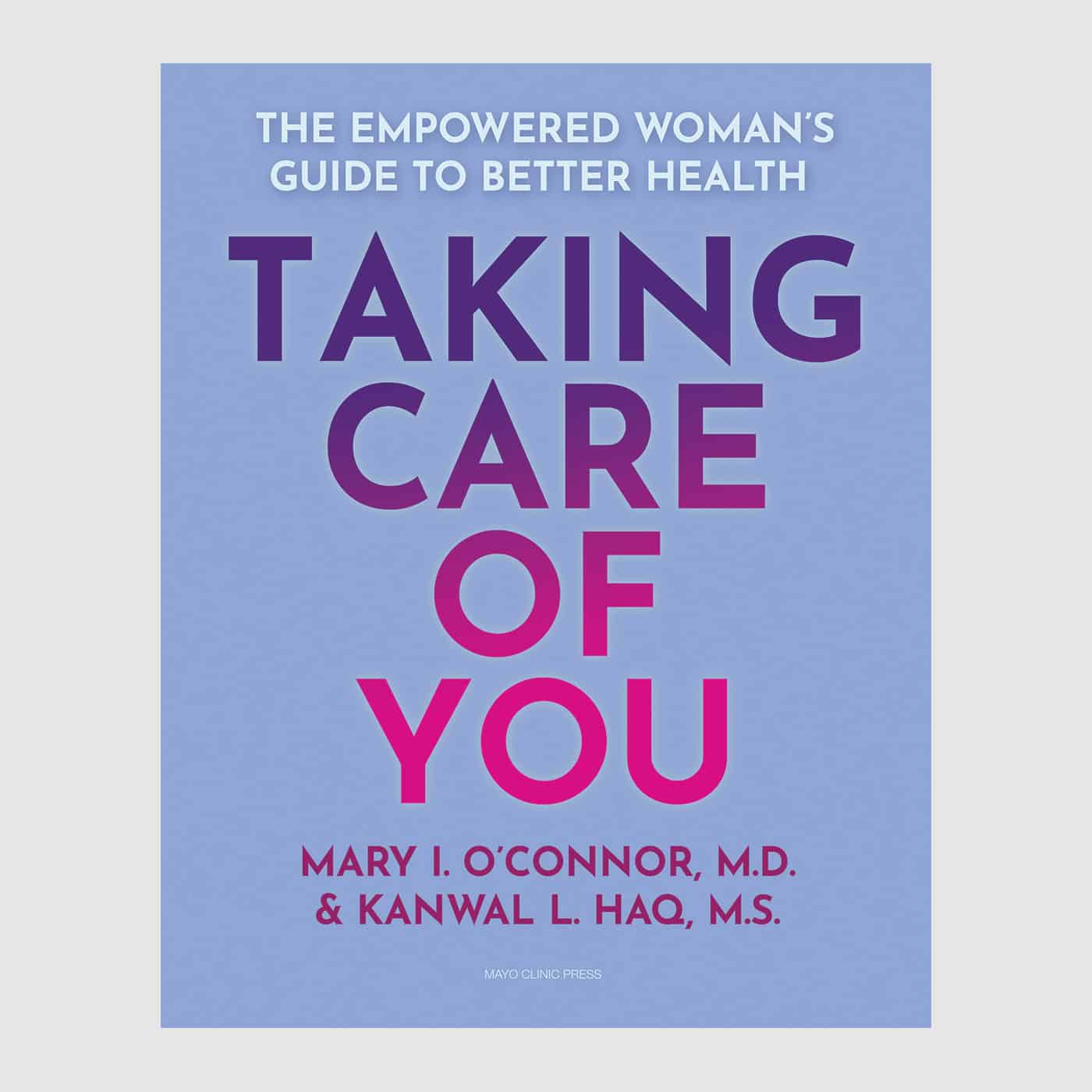
Taking Care of You
A practical and extensive resource guide for women who want to understand and take charge of their own health and healthcare, presented in short, focused, easy-to-read chapters.