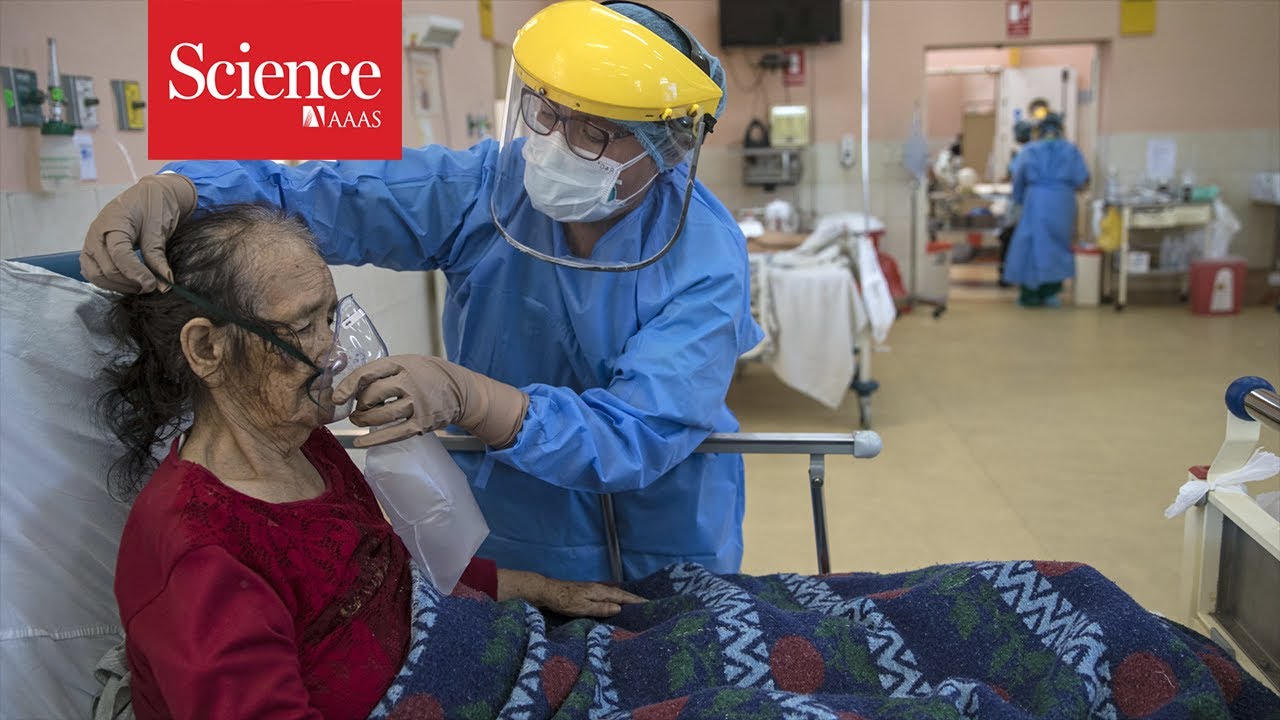
SARS-CoV-2, the virus that causes COVID-19, can severely damage lungs, but in serious cases it doesn’t stop there—clinicians have observed body-wide damage due to the coronavirus. As researchers begin to better understand the pathology of the disease, new treatments can be deployed to help save lives.
Read the feature:
Credits
producer
Meagan Cantwell
supervising producer
Joel Goldberg
story by
Meredith Wadman
Jennifer Couzin-Frankel
Jocelyn Kaiser
Catherine Matacic
story editor
Elizabeth Culotta
illustrations
Valerie Altounian
research
Durvasula, et al., American Journal of Kidney Diseases
DOI: 10.1053/j.ajkd.2020.04.001
Klok et al., Thrombosis Research 2020
DOI: 10.1016/j.thromres.2020.04.013
Moriguchi et al., International Society of Infectious Disease
2020
DOI: 10.1016/j.ijid.2020.03.062
Xiao et al., Gastroenterology 2020
DOI: 10.1053/j.gastro.2020.02.055
images
CDC/Dr. Thomas Hooten
Chest Heart & Stroke Stroke Scotland/Stuart Brett/
The University of Edinburgh 2018
China Daily CDOC via Reuters
Case courtesy of Dr. Derek Smith, Radiopaedia.org
Felipe Dana/AP Photo
John Minchillo/AP Photo
National Institute of Allergy and Infectious Disease
National Institutes of Health
Raphael Lafargue/Abaca/Sipa via AP Images
Rocky Mountain Laboratories
Rodrigo Abd/AP Photo
video
Surgical Theater/The George
Washington Univerity Hospital/
Keith Mortman, MD
music
Audio Kraken/Pond5
PremiumProductionTracks/Pond5
special thanks
Alice Kitterman
Catherine Matacic
Chrystal Smith
Jessie Adams