General Athletic Health: Nutrition
Good nutrition will not replace sensible training schedules, hard work, and appropriate rest as
key pathways to becoming an all-star performer.
Having your athlete eat to reach his or her peak performance level likely doesn’t require a special
diet or supplements. It’s all about working the right foods in the right amounts and at the right
times before, during and after activity.
Pre-Game Preparation
Some good pre-game food options include:
Watermelon, cantaloupe, honeydew and other melons. For these fruits, it is best to serve
them chilled to increase absorption and enjoyment. Start early, one to two hours before
the activity and continue all the way through the post-game ride home.
Bananas. Does your athlete get butterflies in the stomach that make it difficult to eat a
pre-game meal? Bananas have plenty of potassium and other key vitamins, are pretty
easy on the stomach.
During Activity
Your athlete’s performance on game day will depend on the foods she or he has eaten over the
past several days and weeks. Strive for foods that are easy on the stomach, convenient to eat, and
give quicker energy sources.
Peanut Butter is full of protein, has some iron, and goes well with many other types of
food. It is great for quick energy intake between multiple games or events and can blend
with whole-grain breads or crackers to give your athlete an additional carbohydrate boost.
If nut allergies are a concern, sun butter is a nice alternative.
Don’t forget about those melons for replenishing fluids and salt losses.
Post-Game Recovery
Preparation for the next event starts within the first 30 minutes after a practice or competition
with a high quality recovery meal. Key components include protein and calcium for muscle
recovery and bone health.
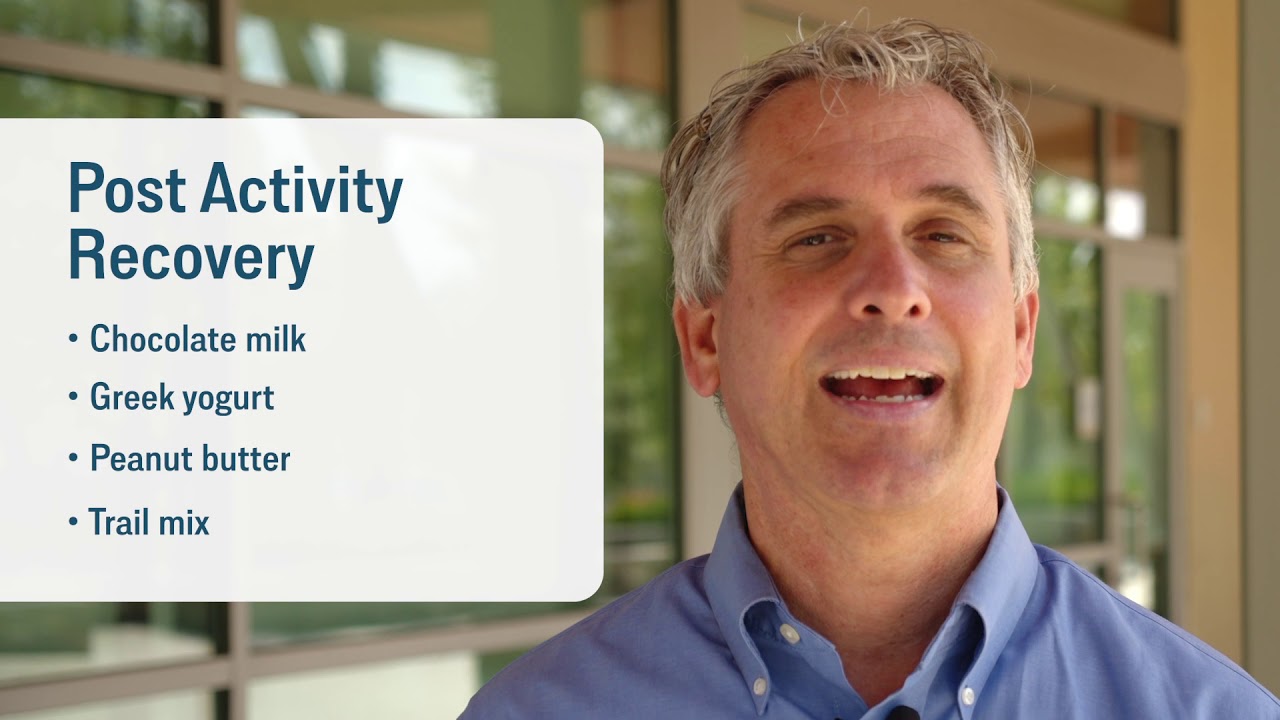
My top picks for post-game recovery include:
Chocolate Milk. An absolute favorite recovery drink that starts with a solid amount of
carbohydrate to help deliver necessary protein to tired muscles. Then throw in Vitamin D
and calcium for bone health. There will be few complaints from young athletes about the
great taste. If there are digestion issues or allergies with cow’s milk then chocolate soy,
rice or almond products also will work.
Greek Yogurt with live cultures provides solid amounts of protein, Vitamin D, calcium
and also probiotics that can assist digestion, especially in athletes who might need to take
anti-inflammatory or antibiotic medications.
Trail mix and peanut butter
Tart Cherry Juice. Another outstanding post-exercise recovery drink that is great at
reducing muscle soreness along with a nice dose of Vitamin C that can help repair soft
tissue damage.
Super Choices for Meals and Snacks
Athletes also need a certain amount of fat each day. I advise athletes to concentrate on eating
healthier fats, such as the unsaturated fat found in most vegetable oils, some fish, nuts, and seeds.
Some of my top picks for meals and snacks that incorporate these important elements include:
Avocado is chocked full of omega-3 fatty acids that help reduce swelling and other
inflammation while also adding to repair of soft tissue such as muscle tendons and
ligament. It can be easily mixed into salads, sandwiches or eaten by themselves.
Salmon. No talk about superfood is complete without mention of this fabulous fish. The
list of benefits is vast and includes creatine (helps with rebuilding muscle energy
sources), Vitamin D, calcium, iron, solid protein and those omega-3 fatty acids.
Beets, arugula, spinach and celery. These foods have amounts of nitrate that can help
reduce discomfort with ligaments (connect bones) and tendons (connect muscles to
bones).