There are many kinds of viruses and a newly identified type has caused a recent outbreak of respiratory illness now called #COVID19.
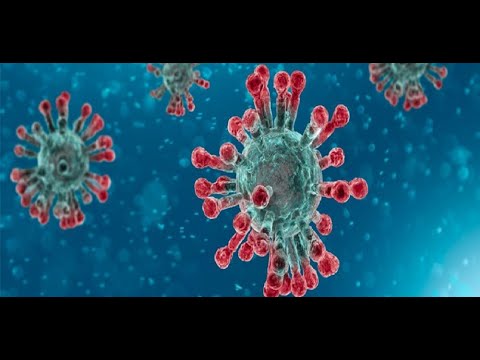
SARS-COV-2 belongs to the family of coronavirus named for the Crown like spikes on their surfaces. SARS-Cov-2 can cause COVID-19(Coronavirus Disease 2019) a contagious viral infection that attacks primarily your throat and lungs. Human coronaviruses were first identified in the mid-1960s. So, what happens to your body when you contract the #coronavirus? What exactly causes your body to develop common cold, severe cough, pneumonia, and other serious illnesses? How would a #COVID19 vaccine work? COVID-19 symptoms include Cough, fever, shortness of breath, muscle aches, sore throat, unexplained loss of taste or smell, diarrhea, and headache.
The coronavirus must infect living cells to reproduce. Let us take a closer look. The virus is extremely small and can only be visible through electron microscopes. Inside the virus, genetic material contains the information to make more copies of the same virus. A protein shell provides a hard, protective enclosure for the genetic material as the virus travels between the people or animals it infects. An outer envelope allows the virus to infect cells by merging with the cell’s outer membrane. Projecting from the envelope are spikes of protein molecules. Both the flu virus and the new coronavirus use these spikes as a key to get inside a cell in your body where it takes over the cells internal machinery and repurpose it to build the components of new viruses. When an infected person talks, coughs or sneezes, droplets carrying the virus may land in your nose or be briefly suspended in the air and then move into your lungs. Once inside your body, the virus encounters cells in your throat nose or lungs. One spike on the virus inserts into a receptor molecule on your healthy cell membrane like a key in a lock. This action allows the virus to get inside your cells. Unlike most viruses, Coronavirus does not need to enter the host cell nucleus. It can directly access parts of the host cell called ribosomes. Ribosomes use genetic information from the virus to make viral proteins such as the spikes on the virus’ surface. A packaging structure in your cell then carries the spikes in vesicles which merge with your cells outer layer (the cell membrane). All the parts needed to create a new virus gathered just beneath your cell’s membrane, then a new virus begins to but off from the cell’s membrane.Each lung has separate sections called lobes. Normally as you breathe, air moves freely through your trachea or windpipe then through large tubes called bronchi and then into smaller tubes called bronchioles and finally into tiny sacs called alveoli. Your airways and alveoli are flexible and springy. When you breathe in each air sac inflates like a small balloon and when you exhale the sacs deflate. Small blood vessels called capillaries surround your alveoli. Oxygen from the air you breathe passes into your capillaries and then carbon dioxide from your body passes out of your capillaries into your alveoli so that your lungs can get rid of it when you exhale.
In a healthy body, hair like cilia lining the tubes constantly push the mucus and germs out of your airways where you might expel them mostly by coughing. Normally cells of your immune system attack viruses and germs that make it past your mucus and cilia and enter your alveoli. However, if your immune system is weakened like in the case of a coronavirus infection, the virus can overwhelm your immune cells and your bronchioles and alveoli become inflamed. As your immune system attacks the multiplying viruses, it can cause inflammation which may lead your alveoli to fill up with fluid making it difficult for your body to get the oxygen it needs. This is what leads to pneumonia and you can develop two types of pneumonia; lobar pneumonia where one lobe of your lungs is affected, or #bronchopneumonia that affects many areas of both lungs.
Symptoms of pneumonia include breathing difficulty, chest pain, coughing, fever chills, confusion, headache muscle pain and fatigue. It can also lead to more serious complications; Respiratory failure occurs when your breathing becomes so difficult that you need a machine called a ventilator to help you breathe. These are the machines that save lives.
Whether or not you develop these symptoms depends on several factors like your age and pre-existing conditions. We understand that this may all be very scary but the push to develop COVID-19 vaccine is currently underway. Previous studies of #SARS #COVE-2 lead researchers to believe that patients who recover from the virus have a temporary protection from re-infection for a period while other studies suggest otherwise.
This presentation contains images that were used under a Creative Commons License. Click here to see the full list of images and attributions:
Related Posts