#Coronavirus_tamil / #Coronavirus #symptoms news Tamil/Coronavirus Tamil News #Today / #coronavirus_symptoms / Coronavirus #prevention in Tamil
This video is about #coronavirus #Tamil #Latest #News #update full explanations by STAR LABORATORY. A coronavirus is one of a number of viruses that cause diseases in mammals and birds. In humans, the viruses cause respiratory infections, including the common cold, which are typically mild, though rarer forms such as SARS, MERS and 2019-nCoV can be lethal. Symptoms vary in other species: in chickens, they cause an upper respiratory disease, while in cows and pigs coronaviruses cause diarrhea. There are no vaccines or antiviral drugs to prevent or treat human coronavirus infections.
Coronaviruses are in the subfamily Orthocoronavirinae in the family Coronaviridae, in the order Nidovirales.[4][5] They are enveloped viruses with a positive-sense single-stranded RNA genome and a nucleocapsid of helical symmetry. The genome size of coronaviruses ranges from approximately 26 to 32 kilobases, the largest for an RNA virus.
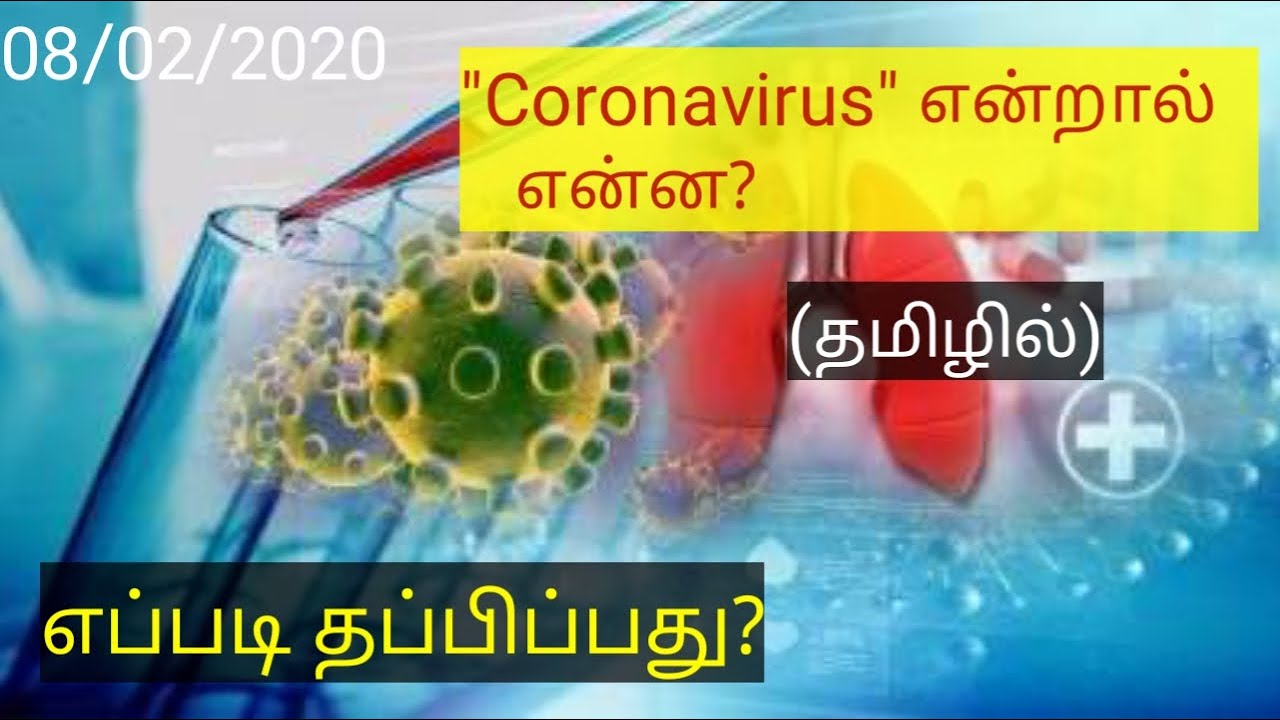
The name “coronavirus” is derived from the Latin corona, meaning crown or halo, which refers to the characteristic appearance of the virus particles (virions): they have a fringe reminiscent of a crown or of a solar corona.
The name “coronavirus” is derived from the Latin corona and the Greek κορώνη (korṓnē, “garland, wreath”), meaning crown or halo. The name refers to the characteristic appearance of virions (the infective form of the virus) by electron microscopy, which have a fringe of large, bulbous surface projections creating an image reminiscent of a crown or of a solar corona. This morphology is created by the viral spike (S) peplomers, which are proteins on the surface of the virus that determine host tropism.
Proteins that contribute to the overall structure of all coronaviruses are the spike (S), envelope (E), membrane (M), and nucleocapsid (N). In the specific case of the SARS coronavirus (see below), a defined receptor-binding domain on S mediates the attachment of the virus to its cellular receptor, angiotensin-converting enzyme 2 (ACE2).[8] Some coronaviruses (specifically the members of Betacoronavirus subgroup A) also have a shorter spike-like protein called hemagglutinin esterase (HE).
How does the coronavirus disease spread?
People can catch COVID-19 from others who have the virus. The disease can spread from person to person through small droplets from the nose or mouth which are spread when a person with COVID-19 coughs or exhales. These droplets land on objects and surfaces around the person. Other people then catch COVID-19 by touching these objects or surfaces, then touching their eyes, nose or mouth. People can also catch COVID-19 if they breathe in droplets from a person with COVID-19 who coughs out or exhales droplets. This is why it is important to stay more than 1 meter (3 feet) away from a person who is sick.
Who is at risk for coronavirus?
The virus that causes COVID-19 infects people of all ages. However, evidence to date suggests that two groups of people are at a higher risk of getting severe COVID-19 disease. These are older people (that is people over 60 years old); and those with underlying medical conditions (such as cardiovascular disease, diabetes, chronic respiratory disease, and cancer). The risk of severe disease gradually increases with age starting from around 40 years. It’s important that adults in this age range protect themselves and in turn protect others that may be more vulnerable.
WHO has issued advice for these two groups and for community support to ensure that they are protected from COVID-19 without being isolated, stigmatized, left in a position of increased vulnerability or unable to access basic provisions and social care.
What is the treatment for the coronavirus disease?
There is no specific treatment for disease caused by a novel coronavirus. However, many of the symptoms can be treated and therefore treatment based on the patient’s clinical condition.
Is diarrhea a symptom of the coronavirus disease?
The most common symptoms of COVID-19 are fever, tiredness, and dry cough. Some patients may have aches and pains, nasal congestion, runny nose, sore throat or diarrhea. These symptoms are usually mild and begin gradually. Some people become infected but don’t develop any symptoms and don’t feel unwell.
Is headache a symptom of the coronavirus disease?
The virus can cause a range of symptoms, from ranging from mild illness to pneumonia. Symptoms of the disease are fever, cough, sore throat and headaches.