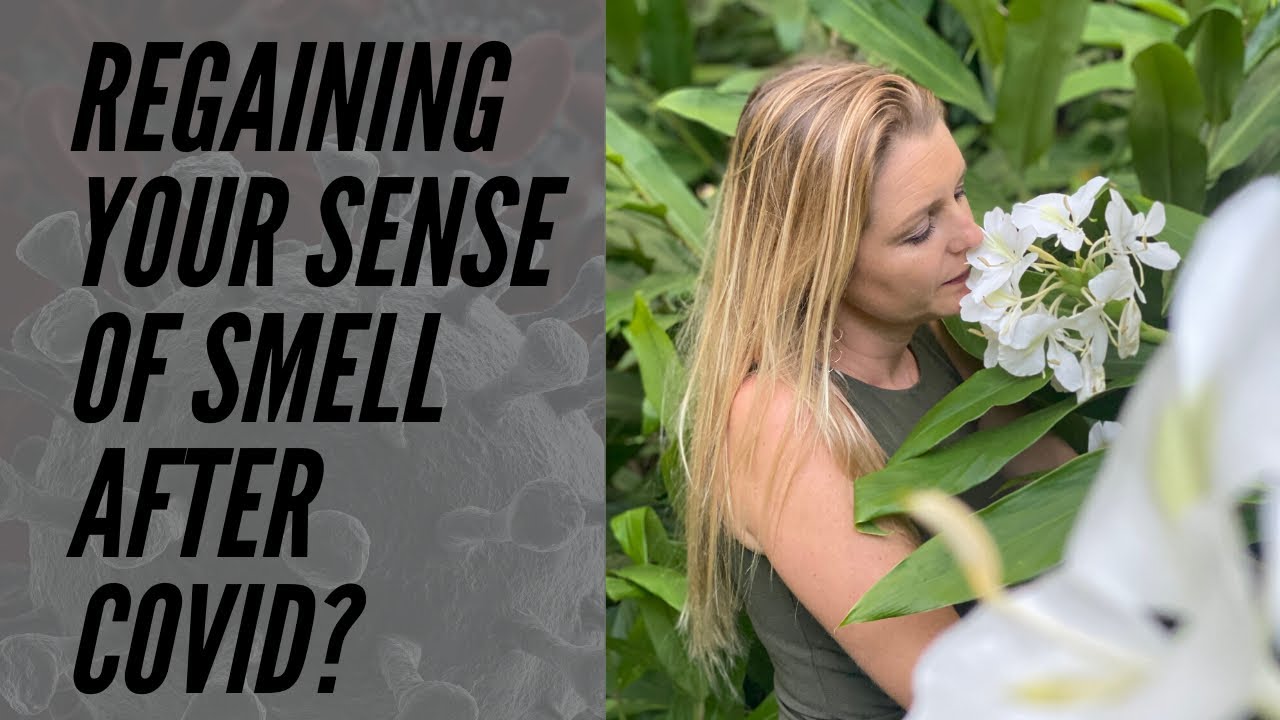
In this video, Dr. Van Dyken discusses “olfactory training” – a technique that has shown impressive results in “retraining” neurons and thereby regaining the sense of smell. She reviews an effective, validated method using common essential oils.
_______________________________
We talk a lot about the symptoms of COVID-19. Things like shortness of breath or difficulty breathing, cough, fevers and chills, muscle aches, etc. You may have heard about loss of smell, also known as olfactory dysfunction, in relation to COVID-19. This symptom is surprisingly common – so common if fact that the CDC has added it to the official list of diagnostic criteria for covid-19, and losing your smell ALONE is enough reason to self-isolate and get a covid test.
Losing the sense of smell after an infection is not unique to SARS-CoV-2. It has been reported in other viral infections (like from parainfluenza, rhinovirus, and SARS-1), but the incidence is much lower than SARS-CoV-2 infection. You may think that losing your sense of smell is no big deal, but –it actually is a pretty big problem that drastically decreases quality of life. The sense of smell and the sense of taste are very closely linked, such that most people that lose their sense of smell also lose their sense of taste.
Individuals who have olfactory dysfunction encounter many problems – here are some examples:
problems with cooking.
decreased appetite.
Decreased personal hygiene.
Not being able to detect a dangerous environment or situation, like toxic gas, combustion, smoke, and chemicals.
The good news is that in many cases, the olfactory dysfunction resolves. We don’t have long term data for SARS-CoV-2 yet. At present, given the data we have, the short term smell and taste recovery rate is approximately 44-74%. That’s a big range.
So what about people who have lost their sense of smell, and desperately want it back? Is there any hope? Are there any techniques that science has shown to be useful in this regard?
The most successful method, by far, is something called olfactory training. It was developed in Europe. The exact way it works is still unknown, but it is hypothesized that doing this might cause the neurons responsible for smelling to regenerate (or grow back). That’s incredible!
So how does it work? Basically, you expose your nose to four different and specific odors – in a particular way with a particular mindset – twice daily, for a minimum of 12 weeks. The longer you do it, the higher the chances of your smell returning. Originally, in order to participate in olfactory training, you had to go to a specialized center and smell four super specialized and expensive smells. Luckily, in 2017 an Ear, nose and throat surgeon named Zara Patel from Stanford University described and validated a method of doing this with essential oils. She conducted a randomized, clinical trial demonstrating that the essential oil method is comparable to traditional method using standardized concentrations of odorants and the Sniffin’ Sticks testing method. It works! Its also useful to know that this strategy helps improve loss of smell due to other causes – like age, chronic nasal obstruction, Parkinsons disease, and other unknown causes.
So lets describe the protocol.
You will need four specific essential oils.
Rose
Lemon
Eucalyptus and
Clove
Brand type and price don’t matter.
Open one essential oil container, hold it under your nose, and breathe slowly and deeply for 15 seconds. While you are breathing, focus on what you remember the specific odor to smell like before you lost your sense of smell. Concentrate deeply on that.
After your 15 seconds are up, take a 15 second break and then rotate to the next scent. Repeat this procedure until you have gone through all four scents.
Do this training protocol twice a day, every day, for six months. The longer you do the training, the more likely it is to be successful – so don’t give up! Those little neurons grow very slowly, so they need time to be restored.
References:
1. “Symptoms of Coronavirus | CDC.” 12 May. 2020,
2. “Self-reported Olfactory and Taste Disorders in … – PubMed.” 25 Mar. 2020,
3. Smell and taste dysfunction in patients with SARS-CoV-2 ….” 10 Mar. 2020,
4. “Randomized Controlled Trial Demonstrating Cost … – NCBI.”