The number of COVID-19 patients at The University of Kansas Health System is slightly higher today. 33 patients are being treated for the virus, up from 32 on Friday. 11 of those patients are in the ICU, up from 5 Friday. Four patients are on ventilators, same as Friday. Three patients died over the weekend, bringing to 30 the number of COVID-19 patients who have died at the health system since the beginning of the pandemic.
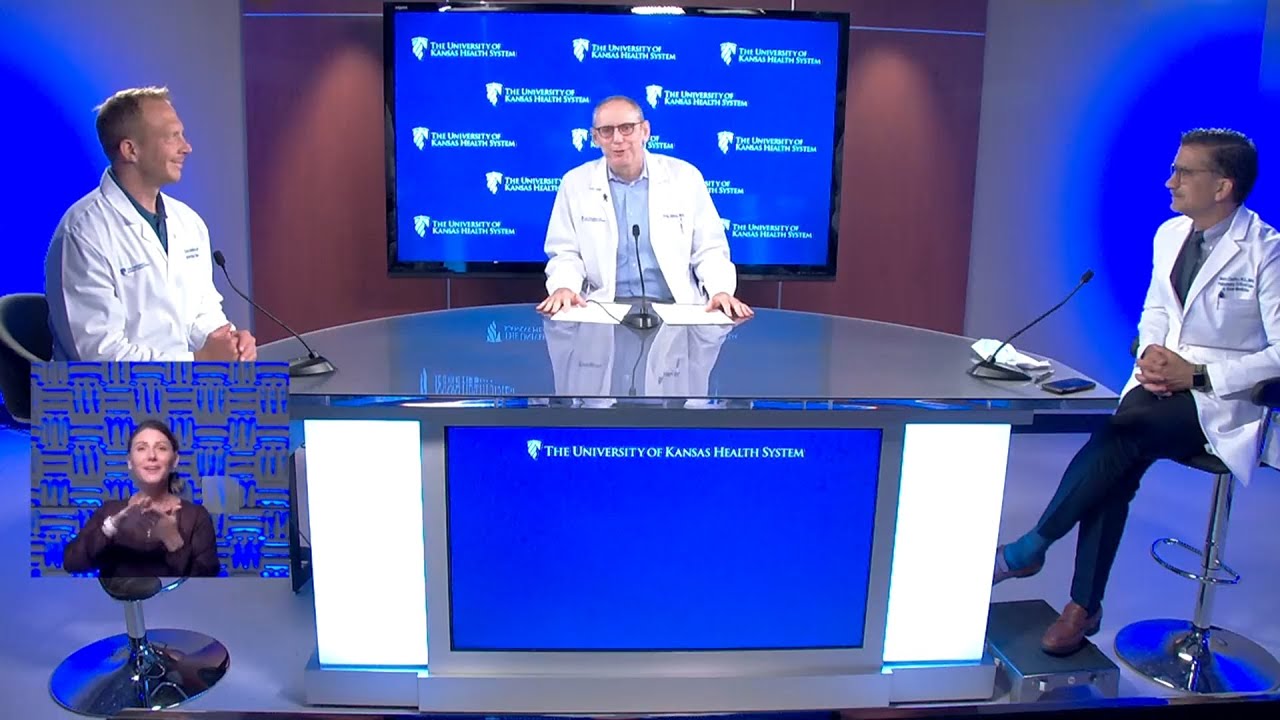
Mario Castro, M.D., MPH, vice chair for clinical and translational research and a pulmonologist at the University of Kansas School of Medicine, joined the conversation with big news of a COVID-19 vaccine clinical trial that begins at our sister organization the University of Kansas Medical Center in two weeks. “This will help us change the curve and get back to normal,” he said. Lance Williamson, RN, infection prevention and control manager and KDHE Epidemiologist John Rule share insights on the virus spread following a recent think-tank of area specialists.
Dr. Castro said there are five vaccines currently being supported by the NIH. One of those, developed at Oxford University, shows great promise and will be used in the KU Med clinical trial. KU Med is one of several trial sites around the country hoping to involve 30,000 people in all. He outlined how to sign up for the trial by going to the Coronavirus Prevention Network, and said be sure to enter KUMC when prompted for the name of the institution you’re participating with. He also talked about who will be eligible to participate. He described the process, saying there will be two injections four weeks apart and a total of 9 visits, some by phone. The study will follow participants for two years. He’s hopeful the vaccine can be tested and given FDA approval for distribution by early next year. Even with that best-case scenario, he says it will take some time to get the mass vaccination rate up to 75%, which many say is the minimum needed for herd immunity. He said, compared to other vaccine trials, this one is moving at “warp speed.” But he pointed out that it’s being done safely and in the right scientific way, and so far, has shown no side effects in either animal or human trials.
John Rule reported good news for Kansas, with the number of COVID-19 cases flattening and the death rate dropping below one percent. It had been 7-8 percent in April. He says the state has been focusing on the pandemic since January, before it became as widespread as today. He thinks the governor’s face mask order has helped bend the curve in cases for the state. He also says the state has been buying enough equipment, such as syringes, to help roll out the vaccine when it’s available. He cautions people not to mistake this for the flu, as this virus has caused many more deaths, and worries there may be a spike in deaths in September and October.
Lance Williams talked about which groups of people, include frontline healthcare workers, will be first to get the vaccine. He worries the community may get a false sense of security by seeing steady numbers. He says he knows universal masking works and understands everyone misses their way of life before COVID-19. He hopes everyone can make the commitment to stay the course until the vaccine is ready.
Dana Hawkinson, MD, medical director of infection prevention and control at The University of Kansas Health System, said the fastest a vaccine has ever been brought to market in the past is four years, and this effort is remarkable. He also stressed it’s vital to get a flu shot this fall, because nobody is sure what will happen if you get both viruses. He implored viewers to wear a mask because nobody wants a return to the stay-at-home orders.
Steve Stites, MD, chief medical officer at The University of Kansas Health System, is worried that there are those who don’t believe any vaccine is safe. He pointed out there will be no live virus in the vaccine, and we should not worry because so much is being done to make sure it’s going to be both safe and effective.
Tuesday, July 28 at 8:00 a.m. is the next daily briefing call. Carrie Wieneke, chair of OBGYN, updates what we know about COVID-19 and pregnancy. Expectant mothers have many questions and fears. She and Dr. Whitney Pressler, Medical Director Newborn Nursery, answer questions from expectant moms who have a lot of fear around COVID-19 during pregnancy and delivery.
Related Posts