Algae has no official existence in a particular kingdom of classification system.
Therefore algae is only a collective term to represent
chlorophyll bearing organisms
possessing thalloid vegetative body and
shows no differentiated tissue system.
General Characteristics
Thallus organization
Cell Structure
Algal Flagella
Algal pigments
Algal nutrition
Food reserves
Reproduction
Classification
Some microbiologically important microalgae
Thaloid vegetative body or thallus means the body which does not form root, stem, and leaves.
General Characteristics
Aquatic habitats
Photoautotrophs
No differentiated tissue system
Mostly unicellular sex organs
Do not develop embryo
Thalloid vegetative body(does not form root, stem, and leaves)
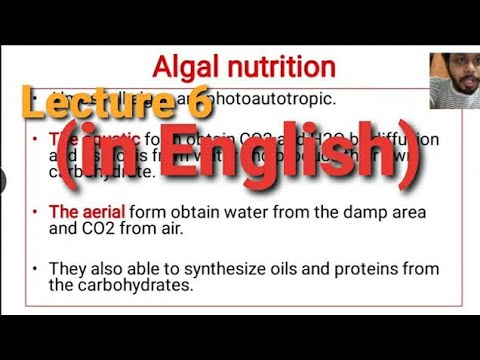
Algal nutrition
Almost all algae are photoautotropic.
The aquatic form obtain CO2 and H2O by diffusion and osmosis from water and produce their own carbohydrate.
The aerial form obtain water from the damp area and CO2 from air.
They also able to synthesize oils and proteins from the carbohydrates.
On the basis of their nutritional strategies, algae are into classified four groups:Obligate heterotrophic algae. They are primarily heterotrophic, but are capable of sustaining themselves by phototrophy when prey concentrations limit heterotrophic growth (e.g., Gymnodium gracilentum, Dinophyta).
Obligate phototrophic algae. Their primary mode of nutrition is phototrophy, but they can supplement growth by phagotrophy and/or osmotrophy when light is limiting (e.g., Dinobryon divergens, Heterokontophyta).
Facultative mixotrophic algae. They can grow equally well as phototrophs and as heterotrophs (e.g., Fragilidium subglobosum, Dinophyta).
Obligate mixotrophic algae. Their primary mode of nutrition is phototrophy, but phagotrophy and/or osmotrophy provides substances essential for growth such as the vitamins of the B12 complex or fatty acids (photoauxotrophic algae can be included in this group) (e.g., Euglena gracilis, Euglenophyta).