iCANX Talks:
Major Progress in COVID-19 Vaccination through the use of Nanomaterials Designed for Immunotherapy
Professor André Nel
University of California, Los Angeles, USA
Group Website:
ABSTRACT:
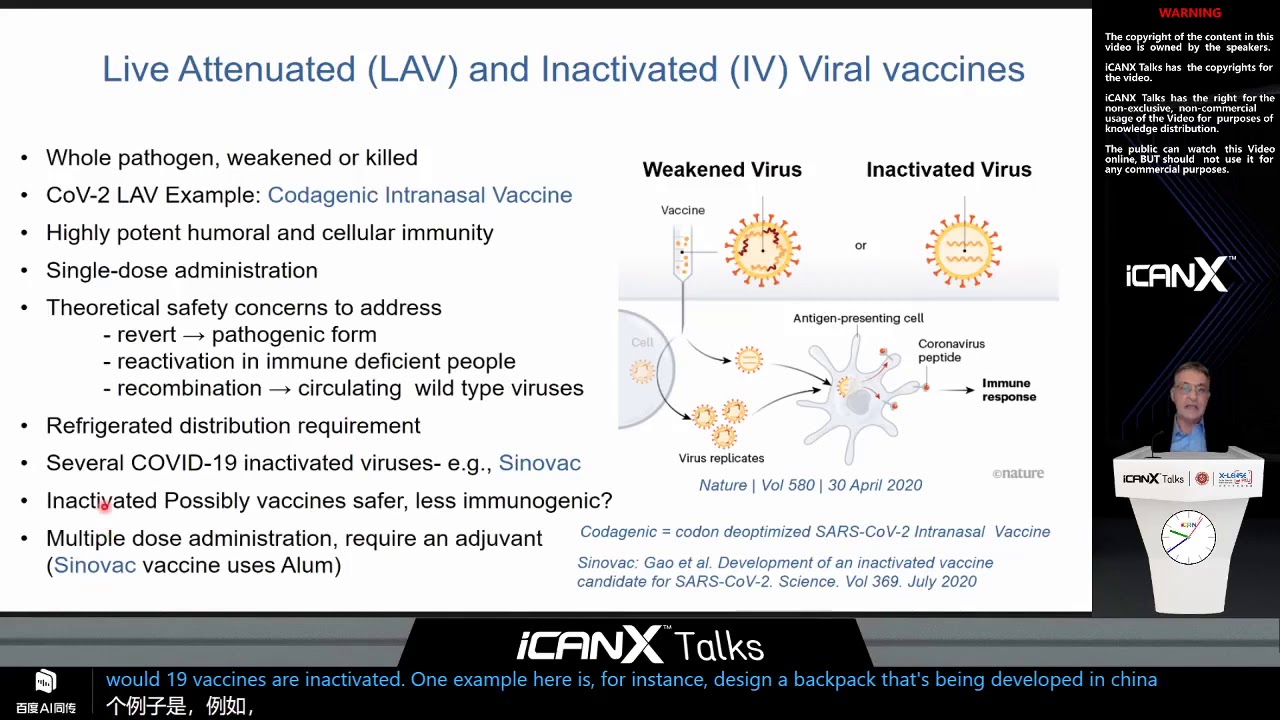
New vaccination strategies to accomplish herd immunity and reduce the global mortality associated with COVID-19 are urgently needed. In addition to conventional strategies such as live-attenuated and inactivated viral vaccines or the use of viral-vectored vaccines, major recent progress had been made in the use of next-generation nano-enabled vaccines, including delivery of DNA or RNA templates, viral subunits and peptides by custom-designed lipid nanoparticles or viral-like nanoparticles. I will discuss the design strategies that have gone into the manufacturing of representative vaccine candidates, including the necessity to obtain an optimal 3D confirmation of SARS-CoV-2 spike and RBD proteins or their nucleic acid precursors. These design strategies, including the nucleic acid structure, are key for generating effective viral neutralizing antibodies and T-cell responses. I will elucidate the microfluidics construction of lipid-based nanoparticles, which include ionizable cationic lipids for optimal nucleic acid binding and endosomal release through the formation of hexagonal structures. The efficacy accomplished by representative vaccine candidates will be reviewed in terms of animal and human experimentation, including by making comparisons to previous vaccination studies undertaken with SARS-CoV-1 and MERS antigenic components. I will emphasize the importance of achieving vaccine safety through the correct choice of nanoparticle components, antigens and adjuvants to prevent TH2 skewing of the immune response, which could lead to vaccine-induced lung damage or antibody-mediated infection enhancement. There will also be a discussion of the utility of viral subunits and peptide/epitope-based vaccines and how these can be used in future vaccine design to obtain synergistic T-and B-cell memory responses by lymph node targeting strategies. I will address the importance of durable immune responses as well as the possibility that immunogen-driven mutational effects may impact maintenance of immunity. The foregoing information will be used to elucidate the implication of nano-enabled strategies for future vaccine efforts to other potentially pandemic disease agents as well as cancer immunotherapy. I will elucidate some of this potential by showing a few examples of our own work in the area of cancer immunotherapy and production of a COVID subunit vaccinating nanoparticle.
BIOGRAPHY:
Andre Nel is a Distinguished Professor of Medicine at UCLA, where he has established a large federally-funded nanotechnology research program dealing with nanomaterial safety, and nanotherapeutics. The UC Center for the Environmental Implications of Nanotechnology (UC CEIN) is a premier think tank for the safe and sustainable implementation of nanotechnology in the US, while the team-based science efforts he has helped to establish as Research Director of the California Nanosystems Institute have spearheaded nanomedicine translation and commercialization on the UCLA campus. Professor Nel is a recipient of the Harry Truman Award and also received the California Governor’s Environmental Economic Leadership Award on behalf of UC CEIN. He plays a national leadership role in science, biomedical research, nanotechnology and policy. He served as a chair of an internal NIH study section and was a NSF panel member for producing a comprehensive US Government blueprint for nanotechnology development in the US from 2010-2020. He was a member of the US Bilateral Presidential Commission for technology cooperation with Russia, and served as a panel member on Pres. Obama’s PCAST panel for strategizing the NNI technological innovation and commercialization. Dr Nel represented the US State Department and the NIH in cooperative research agreements with the Chinese Academy of Sciences, in which he was recognized as Honorary Foreign Professor. In addition to groundbreaking work in nanotechnology, Dr Nel was Principal Investigator of the NIH-funded UCLA Asthma Center and received the John Salvaggio Award for outstanding service to the American Academy of Asthma Allergy and Immunology. His current nanomedicine research addresses targeting of the immune system by nanoparticles to accomplish chemotherapy and immunotherapy of cancer, as well as the treatment of allergic disorders and autoimmune disease by tolerogenic nanoparticles. He is a frequently invited plenary speaker at international scientific conferences, listed as a Clarivate Analytics highly cited scholar, inventor of multiple patents and founder of two startup companies.