(28 Sep 2020) LEAD IN:
Almost a million people have now lost their lives to COVID-19.
It’s a tragic loss, but those who have died have also left an important legacy to doctors around the world.
Because of them physicians are beginning to understand the disease and how to treat it, with tremendous consequences.
STORY-LINE:
More deaths are expected as we head towards winter because of the recent surge in coronavirus infections in many countries around the world including Europe and the United States.
Yet there are also signs that death rates are declining and that people who get the virus now are faring better than those who were infected in the early months of the pandemic.
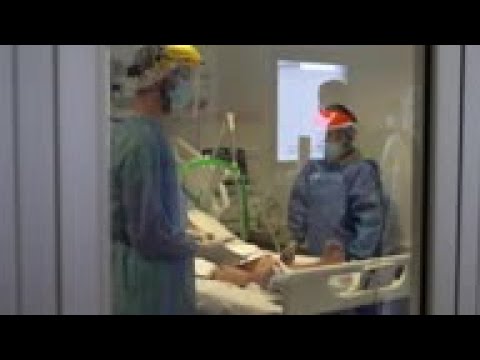
Clinical trials have shown several drugs are able to help fight COVID-19 and doctors are constantly learning how to improve treatments for the sickest patients in hospitals.
For example doctors know more now about ways to avoid using breathing machines, such as keeping patients on their stomach.
Although cases are rising, death rates seem to be falling, that’s for many reasons according to the U.S. Centers for Disease Control and Prevention (CDC).
Figures can change as more data is collected, but the CDC says death certificates show the percentage of deaths attributed to pneumonia, influenza, or COVID-19 for week 38 is 6.6 percent down from 9.8 percent the week before.
In England, researchers report that case fatality rates have fallen substantially since peaking in April with the rate in August around 1.5 percent versus more than 6 percent six weeks earlier.
One reason for the trend is the changing demographics of the pandemic.
More cases now are in younger people who are less likely to die from their infection than older people.
Also as testing is increased, more people with mild or no symptoms are being detected, expanding the number of known infections and shrinking the proportion of fatalities.
In the UK the RECOVERY trial (Randomised Evaluation of COVID-19 Therapy) is testing existing drugs in large scale studies to determine their effectiveness.
Lead investigator, Professor Martin Landray is Deputy Director of the Big Data Institute at Oxford University’s Nuffield Department of Population Health.
He’s also Director of Health Data Research UK which aims to ensure researchers and innovators get the information they need to better understand diseases, treat and ultimately cure them.
One big change, since the start of the pandemic, is in the use of the steroid dexamethasone.
According to Landray, at the start of the epidemic many advised against giving steroids to suppress the immune system in people trying to tackle a new viral infection.
“We now know that for those patients on ventilators, you can reduce mortality by a third with a simple, inexpensive, widely available treatment. We didn’t know that, we do now. We also know that remdisivir reduces hospital stay, but we don’t know yet know, still, whether that actually improves survival. And keeping people out of hospital or reducing their stay in hospital is important. But it’s not the key factor. The key factor is can we save lives,” says Landray.
Importantly large scale trials have also shown doctors what will not improve patient’s outcomes.
The jury is still out on the use of convalescent blood plasma, this is using blood from COVID-19 survivors to treat patients. The aim is to boost their antibodies.
A promising treatment for COVID-19 is monoclonal antibodies.
Heymann agrees.
Find out more about AP Archive:
Twitter:
Facebook:
Google+:
Tumblr:
Instagram:
You can license this story through AP Archive: