
Europa with a Nutritionist and Registered Dietician
The traditional diet of Central and Eastern Europe is known for being abundant in carbohydrates and animal proteins. Typical carbohydrates include potatoes, bread made of ray and wheat flours, and many different types of grains including buckwheat, millet, and sorghum served as porridge and dumplings. Animal proteins are not limited to muscle meats of beef, pork and lamb but include products from the whole animal, organ meats for example, as well as milk products, poultry and eggs.
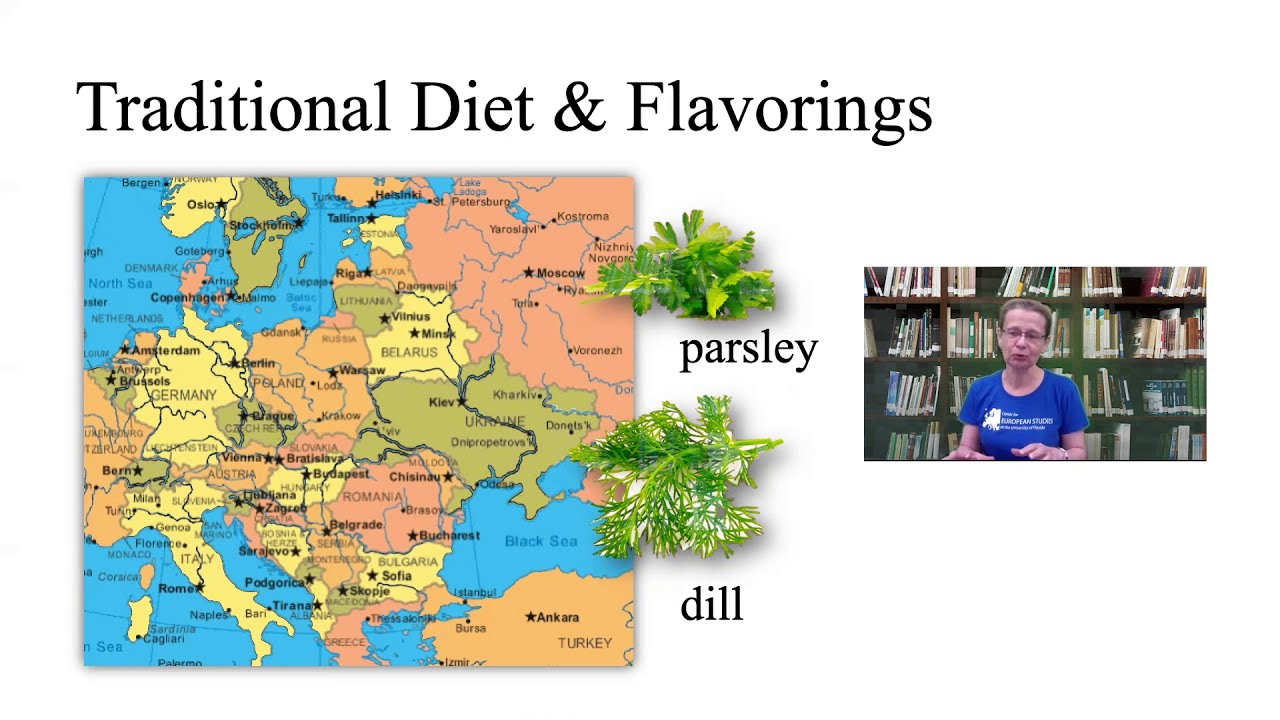
The cuisine of that part of Europe is not known for an abundant use of spaces and most dishes have mild flavors. Two of the common herbs that add characteristic flavors are parsley and dill.
Many European countries and all the member states of the European Union follow specific Food Based Dietary Guidelines (FBDG). Each country developed FBDG based on foods specific for that country. However, some guidelines are general and can be summarized across the continent. Three examples of the more general recommendations urge Europeans to (1) eat diverse foods from all food groups, (2) eat fruits and vegetables several times a day, and (3) eat foods rich in vitamins A and C.
The climate of Central and Eastern Europe determines that foods, mostly fruits and vegetables are readily available only from May until September. Both, fruits and vegetables, are good sources of vitamins A and C. At the same time, the human body has daily needs of the vitamins regales of the season. At that point in our conversation, we can start appreciating the seasoning. Parsley and dill can be grown in small containers, in the window boxes and both are good sources of vitamins A and C. We all know that citrus fruit and in particular lemon is a good source of vitamin C but unfortunately lemons do not grow in Central and Eastern Europe and they do not provide vitamin A. If we compare gram for gram dill, parsley and lemon, the green herbs have more vitamin C than lemon.
Resources
To learn more about the role of vitamin A in the body and the foods that are good sources of the nutrient, please use the National Institute of Health publications:
• Vitamin A Fact sheet for Professionals available at
• Vitamin A Fact Sheet for Consumers available at
To learn more about the role of vitamin C in the body and the foods that are good sources of the nutrient, please use
• Vitamin C Fact sheet for Professionals available at
• Vitamin C Fact Sheet for Consumers available at
USDA Complete nutritional profile of the herb is available in Food Data Central
• Dill
• Parsley
FBDG for European Union and the member states are available as publications of European Commission through Health Promotion and Disease Prevention portal and are available at