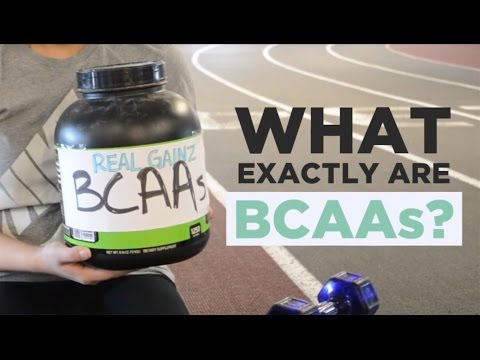
This video describes how branched-chain amino acids (BCAAs) interact within the body and explores claims that consuming BCAAs improves athletic performance and endurance.
Video by Coomal Rashid, Manu Sharma, Shara Chowdhury and Aisha Ikra Saeed
Copyright McMaster University 2017
References:
Bhandari, S. (2016,). In Branched-Chain Amino Acids. Retrieved from
Giardina, S., Marzani, B.,Marzatico, F., & Negro, M. (2008). Branched-chain amino acid supplementation does not enhance athletic performance but affects muscle recovery and the immune system. Journal of Sports Medicine and Physical Fitness, 48(3), 347.
Gleeson, M. (2005). Interrelationship between physical activity and branched-chain amino acids. The Journal of nutrition, 135(6), 1591S-1595S.
Karlsson, H. K. R., Nilsson, P.-A., Nilsson, J., Chibalin, A. V., Zierath, J. R., & Blomstrand, E. (2004). Branched-chain amino acids increase p70S6k phosphorylation in human skeletal muscle after resistance exercise. American Journal of Physiology – Endocrinology and Metabolism, 287(1), E1–E7.
Matsumoto, K., Koba, T., Hamada, K., Sakurai, M., Higuchi, T., & Miyata, H. (2009). Branched-chain amino acid supplementation attenuates muscle soreness, muscle damage and inflammation during an intensive training program. The Journal of Sports Medicine and Physical Fitness, 49(4), 424–431.
Roussell, M. (n.d.). Ask The Macro Manager: What Are The Best BCAA Food Sources? Retrieved February 1, 2017, from