Unwrap the truth about your food 👉 Get the ZOE app https://joinzoe.onelink.me/XebC/9r7grdmf
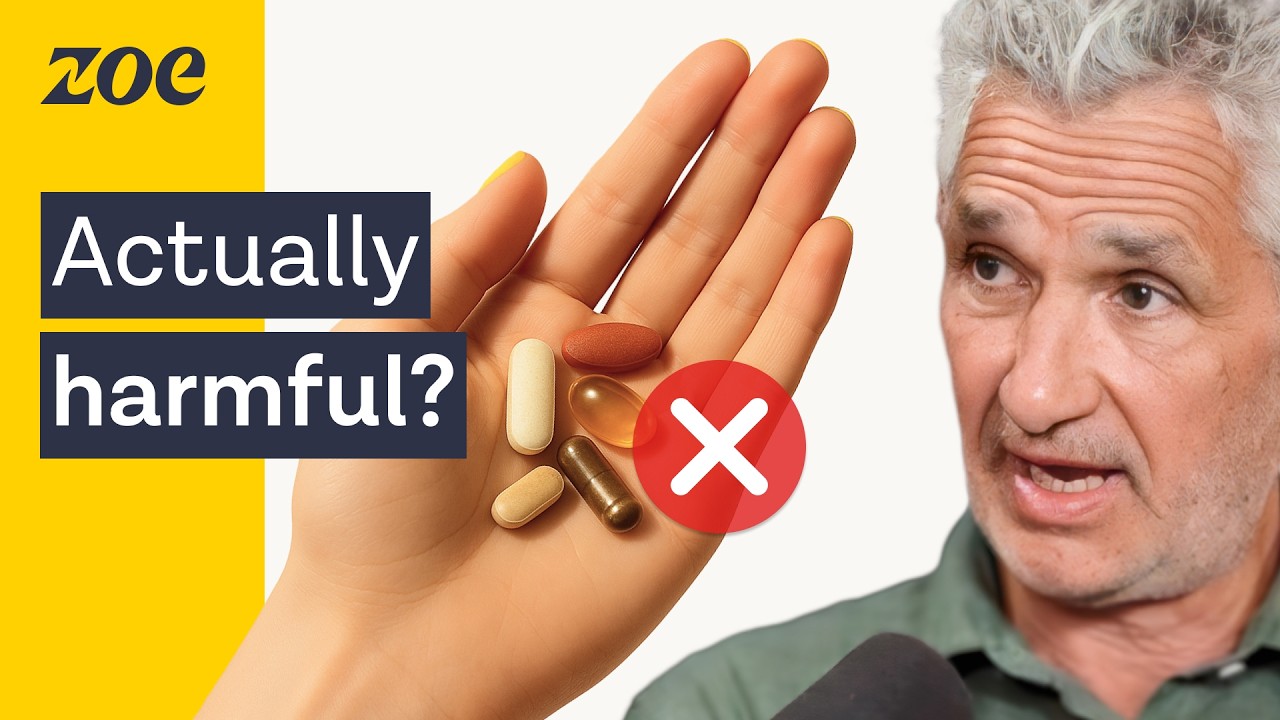
Can pills and powders really improve our health? Despite their clinical look, most supplements aren’t tested with the scientific rigour we expect from medical treatments, and many don’t live up to their promises.
Today, we’re joined by two of ZOE’s top scientists to reveal the truth. They discuss groundbreaking new research and share the results of a brand new randomized controlled trial that could reshape how we think about supplements and introduce an entirely new kind.
Tim Spector is one of the world’s top 100 most cited scientists, a professor of epidemiology, and ZOE’s scientific co-founder. He’s joined by Dr. Sarah Berry, a world leading expert in large scale human nutrition studies, Professor of Nutrition at King’s College London, and Chief Scientist at ZOE.
By the end of this episode, you’ll have the latest science to help you make informed decisions about supplements and understand what your gut health really needs in 2025.
Follow ZOE on Instagram | https://www.instagram.com/zoe/
Timecodes
00:00 Can supplements actually harm your health?
02:55 Why vitamin pills can do more harm than good
05:45 The truth behind scurvy, rickets, and early nutrition
08:30 Why we’re still stuck in a post-war supplement mindset
11:17 Should you supplement if you’re not deficient?
14:03 What calcium supplements really does to your heart
16:49 The real reason food companies add vitamins
19:20 The problem with your diet isn’t deficiency
21:45 Why fixing your diet is harder than it sounds
24:30 Why we need a new kind of supplement
27:09 Whole plants vs powders: why structure matters
29:40 Why plant diversity is the future of gut health
32:10 What’s the difference between prebiotics and probiotics?
35:05 Inside the randomized trial testing a new gut supplement
40:00 How the gut supplement changed the microbiome
42:31 Why probiotics worked… but much less
45:11 The surprising link between microbes and mood
48:22 How much did cholesterol and inflammation improve?
51:33 Could this reshape how we supplement in the future?
📚Books by our ZOE Scientists
The Food For Life Cookbook | https://amzn.to/4amfIMX
Every Body Should Know This by Dr Federica Amati | https://amzn.to/4blJsLg
Food For Life by Prof. Tim Spector | https://amzn.to/4amZinu
Free resources from ZOE:
Live Healthier: Top 10 Tips From ZOE Science & Nutrition | https://zoe.com/freeguide
Gut Guide – For a Healthier Microbiome in Weeks | https://zoe.com/gutguide
Mentioned in today’s episode
The Evolution of Science and Regulation of Dietary Supplements: Past, Present, and Future The Journal of Nutrition (2024) https://www.sciencedirect.com/science/article/pii/S0022316624003560
Supplemental Vitamins and Minerals for Cardiovascular Disease Prevention and Treatment, Journal of the American College of Cardiology (2021) https://pubmed.ncbi.nlm.nih.gov/33509399/
Long-term multivitamin supplementation and cognitive function in men: a randomized trial, National Library of Medicine (2013) https://pubmed.ncbi.nlm.nih.gov/24490265/
A diverse high-fibre plant-based dietary intervention improves gut microbiome composition, gut symptoms, energy and hunger in healthy adults: a randomised controlled trial, MedRxiv (2024) https://www.medrxiv.org/content/10.1101/2024.07.02.24309816v1
On Calcium supplementation:
Dietary calcium intake and risk of fracture and osteoporosis: prospective longitudinal cohort study, British Medical Journal (2011) https://pubmed.ncbi.nlm.nih.gov/21610048/
Have feedback or a topic you’d like us to cover? Let us know here: https://gf6hx47iu5g.typeform.com/topicsuggestion
Episode transcripts are available here: https://zoe.com/learn/category/podcasts
can supplements actually harm your health they can we’ve been misled from this old idea that vitamins and minerals were deficient in everybody but it was never actually true for the majority of people we get the vitamins and minerals that we need from our diet the problem has changed we’re deficient in fiber in plant diversity and people’s view of what these are is very different to the reality tim Spectre is one of the world’s top 100 most cited scientists a professor of epidemiology and my scientific co-founder at Zoe i’m also joined by Dr sarah Bry a world leader in large-scale human nutritional studies a professor of nutrition at King’s College London and chief scientist at Zoe everyone wants a quick fix and you see these bottle supplements that are promising the world with all of these claims but this whole idea of adding extra chemicals to then boost your health we’re making our body work harder and sometimes they can therefore even be toxic problem with our diet today is over 50% of what we’re eating it’s upsetting our gut microbes making us sick and lacking in these vitamins and nutrients so we add it back in and that’s seen as this marvelous solution but it really is just a sticking plaster over a gaping wound in an ideal world yes we would all have this amazingly healthy diet the reality is we don’t and so we wanted to create a new kind of supplement a helping hand that was also representative of the way that we should be eating our food and Sarah have you done a brand new randomized control trial on this prebiotic gut supplement that you can tell us about today 100% welcome to Zoe Science and Nutrition where worldleading scientists explain how their research can improve your health [Music] sarah and Tim thank you so much for joining me today pleasure very excited so I don’t need to explain the rules but we’re going to start with a rapidfire Q&A from our listeners tim are many people wasting money with the supplements they take sadly yes sarah can vitamin supplements provide the same health benefits as getting nutrients from eating whole foods rarely tim can supplements actually harm your health they can sarah do you see marketing claims from some supplements and think that’s just nonsense yes I often see a load of neutraolics regarding them tim are there alternatives to synthetic supplements that are just as quick and simple there are sarah have you done a brand new randomized controlled trial on a prebiotic gut supplement that you can tell us about today yes brilliant and finally Tim what’s the most common misconception about supplements i think it’s that if you take an excess amount of something that is good in tiny amounts it’s going to do you uh some good and there’s virtually no evidence that’s true my earliest memory of supplements is watching my grandmother knock back a long line of pills in like different shapes and colors and sizes and I think you know one for her bones and one for her skin and another for her heart and I do remember thinking well that’s pretty convenient what a sort of handy simple way to stay healthy and these supplements are just like medicine now looking back on it I also see there’s something quite strange about it and it’s very sort of clinical and almost a little dystopian you know like some future world where you don’t get to eat any real food and you get everything in you know seven little colored Star Trek style yeah exactly we’ve had so many questions about supplements it’s probably the biggest topic we’ve been asked to cover in the last six months what exactly are supplements and why were they created in the first place there isn’t an official definition of supplement as far as I’m aware but it’s usually some chemical that you have as a pill or a liquid or a powder that will uh replace a deficiency and improve your health and this is why we have supplements added to foods all the time routinely some of them by law for example in breads when you strip out the normal bit of the wheat you lose the normal vitamins that are there the B vitamins and so by law you have to supplement that food again with what you’re lacking so that’s the the general remit but it’s a very broad area and it’s usually taken to be things that are in some chemical form rather than in a a food form and traditionally when we think about supplements we think about vitamins and minerals these are essential for our health and at a time where there was deficiency supplements were of value but we’re talking hundreds of years ago for example where there was deficiency in vitamin C among sailors which we often talk about in in nutrition that led to something called scurvy it’s almost eradicated now as long as you’re consuming a reasonably balanced diet it’s very difficult to be deficient in these essential vitamins and essential minerals there are some people at certain stages in their life that may benefit from supplements so for example iron deficiency and anemia is quite a big problem amongst certain populations but for the majority of people we get the vitamins and minerals that we need from our diet and 100 years ago was this very different because you mentioned scurvy and I do remember this in history you know like sailors needing to eat lemons or something it’s not only scurvy that you’re talking about in these deficiencies yep so there were lots of different deficiencies it depended on where you were living as well and there still are some vitamin mineral deficiencies in other countries who are typically malnourished but in well-nourished countries like the UK like the US it’s really unusual but yes there were deficiencies years ago not just in vitamin C but in many other vitamins and minerals for example you know all these pictures 100 years ago in Glasgow of kids with bendy joints this was a vitamin deficiency that now really no longer uh exists we often talk about how the diets in the past were much healthier so why was it that this concern and actually this occurrence of deficiency it generally happened during industrialization and the UK was at the forefront of the industrial revolution and people rapidly moved from the countryside where they didn’t really have these deficiencies to big cities and the food supply had to be reorganized and people ended up just for example eating bread or just porridge didn’t get any fresh fruits vegetables any variety and so as soon as you lose that variety you go on to these staples you do risk having some of these uh vitamin deficiencies so it’s that was the cause of this and this actually you see in times of war and displacement of people that’s when you get these vitamin deficiencies in things like thamin deficiency vitamin D vitamin C all these occur in major catastrophes so that’s why nutrition was actually set up as a science really because of the two world wars dealing with nutritional deficiencies at a population level so that’s why we’ve been obsessed with this idea that supplements are replacing these nutrients that for these geopolitical reasons have been a problem and this legacy has carried on into the modern day and we’ve still got this mindset that we’re living in this post-war environment which no longer is applicable for the vast majority of people and I think when we think about supplements it’s thinking about deficiency which very very few of us are deficient in most of our essential nutrients micronutrients we also think about insufficiency so if we think about iron for example some people who aren’t getting enough iron or aren’t absorbing it well might have iron deficiency anemia there is a place then to supplement with iron then there’s other people that might have moderately okay iron stores but might be quite fatigued and may benefit from some additional iron so that’s in a a phase of insufficiency but this whole idea of adding extra nutrients or adding extra chemicals vitamins minerals in to then boost your health I think that’s where we start to go into problems so using iron again as an example if you have sufficient iron stores this idea that oh well hold on iron prevents us from feeling fatigued if you have anemia let’s add more iron in to feel really you know this great boost of energy if you’ve got enough you don’t need to add more in it’s not going to make you feel more energetic if anything it can actually be harmful so is my analogy a bit like my car needs petrol and it needs oil to function but as long as it’s got enough petrol enough gas and enough oil like if I put twice as much oil actually all I do is like pour oil I’m not making things any better yeah and I think as well our bodies are so so clever our bodies know how much we need of these different vitamins and minerals and other nutrients so for example with iron we control the levels within really tight um upper and lower boundaries and we have clever mechanisms to make sure we can control our iron stores our vitamin stores our minerals etc and by adding loads more in we’re making our body work harder and sometimes they can therefore even be toxic because if we don’t need it in many instances we need to get rid of it to prevent toxicity and that can put extra strain on our kidneys other organs etc calcium is another great example for you know the last 30 years we’ve been told that we’re all lacking calcium and that’s why we’re getting brittle bones and fractures are going up and it was never actually true and our body is brilliant at keeping our calcium levels exactly right and when they’ve done studies finally showing that when you give people calcium supplements as opposed to in food you don’t get any benefit on the bones because it doesn’t get into them as as it does when you’re normally eating food and it can build up to dangerous levels and increase your risk of heart disease so again we’ve been misled from this old idea that vitamins and minerals were deficient in everybody even if you’re not deficient having extra is going to give you benefits as Sarah’s saying it’s across the board this is this real misconception about this whole field imagine a version of you in 6 months someone who’s made a few changes and feels dramatically better because of it that’s why we make this show to give you the science and tools to get there but to keep doing that we need your support if you’ve gotten value from this episode please hit subscribe you’ll get a front row seat to the latest science and we’ll keep doing the work to bring it straight to you okay now back to the show you’re saying they’ve now done studies on taking calcium uh as a pill and it actually increases your risk of heart disease yes so it it doesn’t help fractures which is what it was supposed to be it’s what I used to prescribe it all the time giving calcium to uh menopausal women for example it doesn’t prevent fractures and there is increasing evidence that it’s associated with heart disease hasn’t been proven causally but it’s associated with increased risks of heart disease possibly because it’s increasing the hardness and thickness of your arteries so these are just several examples you know whether it’s vitamin C or it’s um calcium of this mindset that our body just needs minute amounts of these things finely tuned and there’s no reason to have 10 100 times more of it has never been shown that that is beneficial I think Jonathan it’s always important to caveat and you know I’m always here to add that extra nuance that I think yes in general adding in these supplements particular particularly high doses is not necessary for the majority of the population who are having a healthy balanced diet there are certain groups in the population that will benefit so particularly certain um elderly groups who aren’t consuming enough energy who aren’t consuming the right diversity of foods who aren’t consuming enough foods they may benefit from having just a kind of broadspectctrum multivitamin and mineral folic acid absolutely for women of childbearing age who are trying to get pregnant in the early stage of pregnancy supplementing with folic acid reduces the risk of neural tube defects between 30 to 75% in different populations people who have iron deficiency anemia yes supplementing with iron in the right way b12 works you know very well for vegans who struggle to get their B12 levels up we talk about generalities here there are obviously subgroups that do still benefit from it so if I understand this rightly you’re saying there are particular groups for whom supplementation makes good sense and so being pregnant as a great example that you really believe in if you’re elderly and you’re no longer probably really eating as much food as you should and or you’ve got an eating disorder for example would be another one so in those particular cases but in general we’re not in the world that these vitamins were invented for which is just industrialization and you’re just basically getting plain white bread every day for months on end when you could actually be missing them even with the rather sad state of the diets that we eat today in the West actually vitamin deficiency is not a problem for most people yes for most people the thing that annoys me the most when I think particularly about the neutrabolics out there is that you go into some of these supplement aisles and you see these bottle supplements that are promising the world that you’ll look 20 years younger that these hair supplements these menopause supplements and they’re just washed with all of these claims and you know everyone wants a quick fix everyone wants a silver bullet they’re not the silver bullet and often they’re marketed at 10 20 times the price of a standard multivitamin and mineral just because it says whatever claim actually you know praise to someone’s insecurity or concern that they might have people think you know oh if I’m paying a lot of money for a vitamin or a mineral you know supplement it’s got to be good quality well that’s not the case most surveys show that sometimes they don’t even contain the chemical they say they do most of them are now made in China it’s the biggest producer of these in vast factories and I think the majority are now made from genetic engineering of of microbes they ferment them in these big tanks so people’s view of what these are is very different to the reality and they don’t know that when they’re taking these it actually contains the products they think it does uh or that you know there aren’t going to have other additives in there that might make sure they don’t work or get absorbed now Tim what I see around me with supplements is not things that talk about solving my deficiency or the deficiency that you know my daughter might have but making all sorts of health claims right so they say it’s going to boost my immune system or my brain health or is like good for my you know my children’s health i see that on all you know all the serial packets what’s going on there this is a throwback uh to the post-war years where they did studies of people who’d suffered famines or had major deficiencies and the early nutritionists would discover that someone for example had hardly any zinc in their diet uh were getting lots of infections so they had zero zinc the blood levels were zero and these groups were getting recurrent infections if they replace them with zinc then they got better that’s been translated 50 years on to say that if you add zinc to anybody at whatever level it’s going to boost their immune system or aid their immune system and is that true it’s rubbish there’s no evidence that additional zinc has uh any uh enhancing effects on your immune system once you’ve once you’ve relieved the deficiency and zinc deficiency is incredibly rare uh if you’re not in one of these extreme situations so that allows any food manufacturer to add a little tiny amount of zinc to any food and they can then claim it boosts immune function makes me feel very angry because people are being misled and this allows big food manufacturers to stick labels on foods that are blatantly unhealthy contain 30% sugar uh with a healthy label saying you know enhance or boosts your immune system when the science really doesn’t back it up and we are prevented in many other areas from giving real advice uh of things that can actually be beneficial for your system so Big Food has made sure that these really old-fashioned outofdate science stays there and that they can just by adding tiny amounts of whether it’s copper manganese zinc uh niacin whatever made artificially to bad foods can now give it a health claim it’s ridiculous it should be stopped so what I understand is that the sort of supplements that I’m likely to get on the supermarket shelf today are not likely to deliver sort of big health benefits to me unless I’m in one of these categories you’ve described before and so I’m not suddenly going to be able to boost my immune system or my brain health with the supplements that we traditionally see is that a good understanding of what I’ve heard from you both yeah I think that we need to move away from worrying about deficiencies and taking supplements for deficiencies except in a few certain population groups and we need to be cautious about seeing these supplements and thinking that they’re going to boost our health that’s where there isn’t sufficient evidence but I think the area of fortification and the area of supplementation are two slightly different areas the whole reason for fortification is to try and target key minerals that at a population level we were struggling with some years ago so Tim if the problem isn’t deficiency what is the problem with our diet today the problem with our diet today is that high-risk processed foods dominate what we’re eating so over 50% of what we’re eating has some element of risk to our health it’s lacking in nutrients it’s lacking in fiber it’s making us sick it’s making us overeat it’s upsetting our gut microbes and this is this new way of thinking so it’s not about individual chemical deficiencies it’s about the whole environment of our food that is rotten that is making us sick that is inflaming our gut microbes which then inflames our immune system which then leads to this constant state of irritation in our bodies so we get all these chronic diseases and I think it’s sort of a mixture of over nutrition with lower quality food so we’re we’re sort of in this new era where we’re getting fiber deficiency whilst being overfed we’re not getting quality food we’re just being bulked up with sugars and other chemicals and this I think is the the major problem we’re facing and it can’t be cured with supplementation for these individual items as it was very effective after the war that’s the big difference so we we need to change the villain here the villain is not the lack of vitamins it is the whole food system the food quality and the fact that we’re missing out on the whole plants that we used to be eating before big food got in there and changed way and I think Jonathan you know even though we’ve said okay if you have a balanced diet you don’t need these supplements etc we’re getting what we need you know we know that the current diets that we’re having that are deficient like Tim said in fiber in plants in diversity etc and excessive in all of these unhealthy nutrients that kind of diets accounting for one in five premature deaths we know in the UK and the US that 20% of premature deaths are estimated to be from the food that we’re eating from having an unhealthy diet and I think that’s a really stark statistic because that means that 20% of premature deaths can be prevented by changing our diet but it’s hard and not only that it’s also all those chronic diseases and some estimates you could reduce that burden by about 80% if you transferred everyone on the current bad diet to an optimal diet so I think realizing what the problem is and what a major impact it could have on every population in the world I think is really important and I think as well at any point we can make a change in our diet and I know we’ve talked about this often in the podcast there’s some great research showing that whether you’re 40 50 60 70 years of age there is still a huge benefit to making a change here and now you both talk a lot about this on on this podcast as do many other guests about you know the amazing ability to impact your health as you change your diet and I think we know that many people find it really hard to make significant and sustainable you know permanent changes to their diet why is that i think there’s lots of reasons and I think the reasons differ for every individual there’s practical reasons such as accessibility to healthy nutritious fresh whole food there’s affordability there’s been lots of research that shows on average there’s a 50% price difference between minimally processed food compared to the old processed heavily processed equivalent uh foods we’ve also got to remember how we live our lives has changed that you have many households where both parents are working 50 60 years ago typically very few women were working fortunately it has changed but one of the problems with that is then there’s less time to prepare food there’s less time to menu plan there’s less time to think about it and it’s easy to take the easiest route i think education is the other thing that’s changed you know most countries no longer teach cooking in school many homes when you’re renting them certainly in the US don’t come with any cooking facilities only a microwave so this is the other problem that even if you had access to food you wouldn’t have the education or the facilities to cook with it so it’s a lot of grassroots problems as well as as well as these these food deserts that every country has our needs have changed so when supplements were really first becoming important was when we were deficient in micronutrients that’s not the issue now the issue is we’re deficient in fiber we’re deficient in plant diversity we’re having excess of other nutrients so the problem has changed and so we need to think about a new generation of supplements and a new era of supplements what are we trying to supplement for now because our needs are different to when you know 50 100 years ago so given that problem that suddenly we need to supplement something completely different from what we had to supplement in the past i know that you came to me and said I need to do a new clinical trial this happens quite often as listeners of the podcast may know and you said you wanted to try like a new type of supplement right and you described it as a prebiotic gut supplement sort of plant-based not powdered and you wanted to see whether it was actually possible to do supplementation against the sort of problems the scarcities we have today can you explain for a minute like why that was and the idea behind it yeah so amongst the science team and together with our head nutritionist Federica Rati who was really heavily involved in this as well we wanted to create something that was really tackling what we believe are the biggest problems the lack of fiber the lack of bioactive so chemicals like polyphenols that are in so many of fruits vegetables and other plants and also the lack of plant diversity so as a population in the UK and the US these are the biggest problems there’s also other features that we wanted to tackle like we’re not having enough whole grains we’re not having enough legumes you know pulses beans those sorts of things and that’s the root of I think the problem alongside overconumption of other nutrients such as saturated fat or sugar for example and bearing in mind that we live these busy lives bearing in mind all of the challenges that we just talked about we wanted to create something that would be a helping hand a new kind of supplement and a supplement that was also representative of the kind of way that we should be eating our food so it’s whole foods where the structure of the food is generally intact and we’ve done whole podcasts on this Jonathan where I’ve talked about the important of the food matrix so the importance of retaining the structure of the food because that plays also an important role in modulating the helpfulness of that food and Sarah used some very fancy words like modulating and matrix could you help to understand because I think you have this hypothesis that um using these sort of synthetic supplements which are all powders might be less effective than things that you would take from plants but could you help to explain that better yeah so let’s take a step back when I think about the healthfulness of a food so how healthy a food is I think of three core elements i think of the nutrients so the very classical things that we talk about how much protein fiber fat carbohydrate minerals and vitamins they are then I think of what we call the non-nutrient bioactives so these are the thousands of other chemicals that are in food and we know food has on average about 50,000 chemicals so these are chemicals like polyphenols that we often talk about that have really beneficial effects mediated through the microbiome and our health these are the sorts of things that feed the different good microbes in our guts yeah they have wide reaching effects many of the effects are mediated through our gut microbiome through essentially feeding yes our good bucks in very simple terms and then we know that these bioactives and these nutrients are encapsulated within the structure of a food okay every food has its own different structure we call it the food matrix but we’re essentially talking about the structure of the food and the structure of the food changes how those bioactives how those nutrients are metabolized how much they’re metabolized where they’re metabolized how much reaches the gut and also our kind of sensory feedback mechanisms like how full they make us feel how how hungry we are later for example and so when we’re thinking of creating a a new generation of supplements I think we need to think of the macronutrients that we’re deficient in fiber 95% of the UK US population are not consuming enough fiber we need to think of all these bioactives all of these polyphenols that we don’t get enough of having more in our diet reduces inflammation feeds the microbes etc and then we need to think about making sure that where possible and where relevant not just for the sake of it these are within a suitable structure of the food so for example if we’re giving nuts don’t grind the nuts down give little chunks of nuts if we’re giving the seeds don’t grind the seeds down give chunks of the seeds because that will change how we absorb it where we absorb it how we feel how we metabolize it another way of thinking about this is that in the past we’ve been reductionist and we’ve tried to say okay well let’s rather than giving you lemons we will just extract the vitamin C from the lemon that one chemical ascorbic acid which gets added to processed foods and things whereas you’re ignoring the other 800 chemicals in the lemon so that if you just did a bit of dried lemon you’d be actually getting the benefit of hundreds of other potentially beneficial chemicals and that’s the the real philosophy here is a in the past it’s been reductionist with thinking about you know supplements in their chemical nature and just said let’s get the best one from all of them whereas actually plants as you said have 50,000 chemicals or more and we’re trying to in harness as many of those because most of them are likely to be beneficial for us and that we don’t know yet exactly what they are so it’s it’s taking a much more holistic view of how we should be uh supplementing with real plants and Tim you’re a microbiome expert this is one of the things which has obviously been the biggest change in our understanding of I guess not just nutrition but also human health over the last 20 years how does that play into what Sarah’s talking about about this variety of um different chemicals but also the desire not to smash things up into powders there have been studies for the last 20 years on um giving fibers to individuals and seeing how the gut microbiome changes and so traditionally we would use uh one or two fibers and the three commonest ones are something called Goss and Foss and Inulin and when they were given individually in in large amounts they would improve the gut microbiome but interestingly they they wouldn’t have as much benefit as you would have thought they would only feed a certain subtype of the of the community of microbes growing there you didn’t get the increase in diversity so the next group of researchers then started combining five or six of them together and then you saw a greater uh improvement in the gut microbiome but you know I don’t think we should stop at five or six we should be going for hundreds or thousands of different types of fiber which would then have exponential effects and that’s really what the science is showing us and as Sarah’s going to explain you know when when we tested us in the gut microbiome that’s exactly what we saw so the more diversity of fibers you put in the greater the benefit you see on the gut microbiome and we also know this is greater than probiotics the the effect of fibers is a bit like a fertilizer uh rather than just giving little individual seeds which is what the probiotics are doing they tell us fat is bad that low sugar means healthy additives nothing to worry about the packaging the buzzwords the health halos but the truth our supermarkets are filled with ultrarocessed food in disguise food engineered to look wholesome while harming our health the result is a crisis in how we eat how we feel how we live zoey was built to change that we run the world’s largest nutrition study independent of big food and grounded in science and now we’ve built a free app to reveal what the labels won’t snap a photo of your food see how processed it really is instant scores no guesswork so you can make smarter choices for better health unwrap the truth download the free Zoey app we’ve been talking about a prebiotic gut supplement can you remind people what the difference is between a prebiotic and a probiotic cuz absolutely they sound almost exactly the same they do yes biotic just means it’s lifegiving and it’s healthy uh it has a health benefit a prebiotic means that it’s like a precursor so it’s fertilizer for gut microbes that then allows them to proliferate and give health benefits so it’s like you’re fertilizing your gut microbes to then go crazy and be healthy a probiotic is a live microbe that you ingest and then that in itself acts as a seed and then has health benefits on the gut and so both of them have been shown to be healthy in multiple experiments so you had this idea that would it be possible to create a sort of prebiotic gut supplement and you definitely said you wanted to go and do a study and prove whether or not it could work how did you come up with the blueprint for this the recipe for this this supplement so I need to give credit to Federica our head nutritionist for this um she spent a lot of time thinking firstly about what are we trying to solve for as I mentioned lack of fiber lack of diversity lack of bioactives what are we trying to make sure it’s not just a powdered supplement given the importance of the the food structure in this given the important role that preserving that plays in some instances and she developed the recipe that we went on to test in an RCT and this recipe is high in fiber it’s high in bioactive so it has the amount of polyphenols for example that you’d get in the equivalent of a couple of portions of fruit from just a small amount of this particular gut supplement and it’s high in plant diversity so it’s got 32 different plants but importantly 32 different plants from a whole variety of plants so from mushrooms from legumes from whole grains from fruits from vegetables from nuts from seeds and what it’s delivering as well as lots of fiber as well as lots of bioactives as well as lots of polyphenols is an estimated 54,000 different chemicals that are all going to have a role in our body in our health and Tim I know you spent a lot of time on this also how did you figure out what to put into this recipe because you had sort of this one shot for the trial you wanted to try and prove whether or not it’s possible to come up with this whole new class of supplement right his prebiotic gut supplement so we sat down with the team and looked at the different possibilities that we’d be able to put into this and came up with a short list of different foods that have been shown in the literature to be beneficial for health or particularly for gut health and from that we then refined it down to foods that you wouldn’t be normally eating every day so that we had a variety of ones that we’d be actually adding to the chemicals that you wouldn’t find in your normal diet so it was this combination of factors based on theoretical knowledge and trying to work out what would be an addition to the average American uh British diet but of course that was just the first step because we knew that just taking the theory isn’t the same particularly when dealing with a combination of foods that might interact with each other we know that if you’ve got different chemicals in there like magnesium and zinc and iron they interact with each other so they stop each other working and that’s why you have to study the whole thing together once you’ve got your short list and that’s exactly what we did yeah and I think that’s really really critical and that’s one of the key reasons we did the randomized control trial because it’s all very well putting on the back of pack backed by science because it’s got these 20 ingredients that there’s these studies on the individual ingredients but because we know in nutrition science now that they do interact that they do modify how one acts versus another acts when they’re in combination you can’t take that evidence i don’t think it’s an appropriate thing to do you need to look at the product as a whole you need to look at the supplement as a whole and see as a whole how does it impact your health so Sarah you you came to me and said I want to run this experiment bas I’ve got this theory that there might be an ability to sort of create a supplement that works and you want it to be this thing called a randomized control trial could you tell me about that well I went cap in hand i said Jonathan please can I have some more money because randomized control trials are very expensive to run hence why so many supplements out there the majority of supplements don’t have randomized control trials because they’re challenging they’re expensive so a randomized control trial is the gold standard way to conduct nutrition research in order to look at how effective a given food nutrient dietary intervention is in terms of our health and we conducted a trial where we recruited over 300 people and we randomly allocated them to what we call three treatment arms so a third of people were randomly allocated to consume for 6 weeks our prebiotic supplement for another 6 weeks another third were randomly allocated to consume a probiotic and we chose one of the standard probiotics that you can find in your grocery store that there is lots of evidence for its effectiveness and so that’s like a little pill that has some live bacteria so this was a little pill containing live bacteria for which there’s lots of evidence showing its beneficial one of the most popular ones that been shown in multiple trials to to have a benefit and then we chose a third control which was what we call a functional control because the real complexity of dietary interventions is that when you add something into your diet often you’re displacing something and also we consume meals we consume diets we consume whole patterns uh you know dietary patterns and so if we were going to add in this prebiotic supplement that the goal is is for you to sprinkle it on top of your food or add it to you know on top of your yogurt your salads etc we wanted a control that would be used in a similar way and why is the control group so important and why is this randomized control that you’re talking about why is that important so a control group is critical in a randomized control trial it’s critical because there’s lots of noise in us so if I was to give you a supplement there might be a change for the better or for the worse that could be random rather than due to the supplement itself and so what we do is we compare your response to someone who is having a control so in drug trials we often call them placeos where you might have an active pill versus a placebo like a dummy pill that’s got nothing in it and it’s so that we can see is there a true real effect of what we’re giving you versus that control so that’s why the placebo effect is is real whether it’s a you know a drug trial or a a food trial particularly when you’re looking at some subjective outcomes um like how does it affect your mood your hunger your energy levels all these things really important to have that and we know from many many published studies that people who are told that they’re having a a supplement whether it’s a real or dummy there is this placebo effect this dummy effect and people often say oh yes I felt healthier I felt better I slept better when actually it’s just due to them thinking that they’re taking something so that’s why it’s really really important to control for that because then you have confidence that there is a real effect going on now if you’re only taking blood measures then there isn’t that subjectivity for example but because in our trial we were looking at multiple outcomes including how people were feeling it was even more important that we had those control arms so these three groups one was taking this prebiotic gut supplement one was taking a probiotic and one was basically taking sort of bread sprinkles yeah so the third control was these kind of bread sprinkles which can be used in the same way as the prebiotic gut supplement and what was the next part of the trial well a trial is quite complex so we have to go through quite a rigorous process of designing the protocol deciding really important features of a protocol like inclusion criteria who are we going to recruit how long do we want them to be on the trial for what are our key measures that we want to look to show that there’s a health effect what kind of dose are we going to give of the prebiotic gut supplement or the probiotic etc once we’ve made those really key decisions we then have to go through a process of applying for ethical approval and this is a painful process but a really important process and then we register our trial on a clinical trials database it’s a public database it means therefore you are obliged to publish your results and it’s a really important part of the research process it means we can’t hide if we don’t get the results that we want to see and and Sarah I think you know I want to tackle sort of the elephant in the room here you know you’re both research scientists obviously I’m at Zoey which is also a commercial company like how is what you’re describing different from what you know most of those companies that are selling a vitamin or a supplement might be doing so I think there’s two key differences one is that we’re doing an RCT is the main difference where many will use the term backed by science where they will lean on publish research based on individual ingredients and then the second thing is is the fact that we did a randomized control trial there’s many companies that will do what we call kind of longitudinal studies or consumer surveys yeah we could call them pay a third party to survey 20 people they give them the product and they say how much they improved it’s a bit like the cosmetics industry does the same thing for for wrinkle creams and so they say you know x% of people said that they had more energy after which is great but compared to what they don’t have the control arms so I think having the control arms is the most critical thing here as well as the fact that we were doing on the whole uh prebiotic gut supplement you got these people to do this what did you end up measuring so we measured at the beginning and end of the six week intervention when they’re taking the different um treatments so the prebiotic gut supplement the probiotic and the other control uh we measured microbiome composition we measured gut symptoms so everything from indigestion to bloating and so many more we also measured how people feel so we asked people what’s your sleep like what’s your energy like what’s your hunger levels like what’s your mood like and then we also looked at people’s biochemical markers so by this I mean things like their blood fat so like their bad cholesterol like LDL cholesterol their levels of inflammation etc and then we also invited a smaller group of participants to come back and do a sub study called a postprangial study and this is a study where we asked people to consume a carbohydrate load so 60 grams of carbohydrate on one day on its own and another g day together with the prebiotic gut supplement to see if that modifies how we metabolize it and how we feel if we add that into a meal because that’s how it’s intended uses to add it to a meal so what were the results the key finding was that the prebiotic gut supplement significantly improved gut microbiome composition it significantly improved it compared to the probiotic and compared to the control and interestingly it improved species that we’ve previously identified through our years and years of research at Zoey that are associated with favorable measures of health favorable measures of blood pressure lipids inflammation etc and so much more that was one of the key findings i just add the detail is you know it was significantly greater but I was expecting a bigger effect of the probiotic yep that is well proven but this had 10 times the effect uh on shifting the good and the bad bugs compared to the probiotic so yeah it was sort of night and day and this just goes to show that generally you know the attitude of giving fertilizer rather than seeds seems to be much better approach for the gut microbiome and what was interesting is we measured the particular species that are were in the probiotic because it’s always a good way of looking at what we call compliance did people actually take the probiotic and those significantly went up so we knew that they were really taking the probiotic taking the cancer so you’re basically measuring their their poop at the end of the six weeks and you can tell they’re taking the probiotic you can see the probiotic did work there were these additional bacteria in their gut but what you’re saying is even adding a few of these special probiotic is nothing like as effective as adding blend it didn’t shift the good to bad ratio nearly as much as the prebiotic gut supplement so that to me was a bit of a a wow moment um and changed my view of whether you know the future is all about developing probiotics or actually this whole new way of thinking about prebiotics and looking after our gut that way with any other results yeah so we also asked people how they felt and this is something we do in a lot of the trials that we do at Zoey and I know I’ve explained before that we rarely do this in nutrition research but actually how you feel ultimately is one of the most important outcomes we should be looking at and what we found was that the number of people or the proportion of people who had improvements in things like happiness or in energy and these kind of self-reported outcomes was far greater in those who were taking the prebiotic gut supplement versus those taking either of the controls and so we can say that with some confidence because we had that control group it wasn’t just because they felt that oh well I’m taking something so of course I have more energy etc they actually felt different yeah so they had differences in hunger differences in their feelings of energy and also differences in their feeling of happiness and Tim’s far more familiar with this but there’s lots of evidence to underpin that actually if we can modify the microbiome which we saw in our microbiome results that that can bring about changes in things like our mood in things like our levels of hunger and also in terms of like our energy levels and I think the other interesting thing is this happened pretty quickly didn’t it it wasn’t we didn’t have to wait till the end of the study to see these actual self-reported changes so you do notice quite quickly uh that these things are happening particularly if you know you’re having to fill out a form every day uh and do it but I think it shows that changing your diet can have dramatic effects quickly on some of these things that traditionally haven’t been measured in in nutrition science at all another finding that we had that I was particularly excited by is that in a subgroup of individuals who had slightly higher cholesterol and slightly higher levels of inflammation we found that when they were taking the prebiotic gut supplement there was a significant improvement in inflammation in cholesterol as well so we saw a 0.22 22 mill mole reduction in LDL cholesterol which might sound small but that’s a really big reduction how much do they take of this gut supplement every day so we asked them to have a couple of scoops a day so it’s the equivalent of kind of a small handful and we asked them to carry on the rest of their diet as they would so they could just add it to their diet and something else we did is we did actually look at if their diet changed if other aspects of their diet changed across the three treatment arms because that’s really important to be able to say well hold on the effects that we’re seeing are due to the prebiotic gut supplement and not due to the fact that they’re making other changes and we saw that their diet remained consistent across all three arms so that we could say again with more confidence it’s due to what we’re adding in rather than that we’re taking something out so it’s quite a small amount like it is definitely still a supplement rather than here’s an entire new meal that you’re just giving people to eat yeah and this is the idea given what we said earlier about how difficult it is to change your whole diet to start modifying your meals the whole purposes is that it’s just something to supplement your normal food it’s not to replace your food we still want to encourage a healthy balanced diet but it’s a really simple way just to add that extra kind of boost to your health into your meals you’ve described all of this you know has this been peer- reviewviewed and published yeah so the hard work doesn’t stop once we get the results we then write it up as a a paper and we submit that to go through a very vigorous peer review process for publication in a journal and it’s now in press in nature communications medicine to be published really soon so the reason you wanted to do this was really to understand if it was possible to come up with a whole new like category I guess of supplements for 2025 not you know 1925 what’s the overall takeaway here Tim uh the overall takeaway is that we’ve succeeded that uh beyond our expectations this approach by embracing all we’ve learned about gut health and and nutrition the new way of thinking allows a whole new way forward of providing these supplements to to diets and at the same time whilst we want to still encourage people to have as healthy a diet as possible this is a way to enhance that simply and easily that everyone can do particularly when they’ve got busy lives it’s all very well saying this is the perfect diet but we live difficult times and we need to be pragmatic as well so I think we’ll be seeing a whole range of other products based on these principles seeing how much more effective it is than chemical powders or even some of these individual probiotics as we’ve shown here this is a whole new way of thinking about how we can enhance our gut and our health and are there equivalent results for sort of these traditional chemical powders that you were talking about at the beginning or as far as I’m aware there’s nothing of this scale or uh significance in terms of result most of these other powders haven’t been tested properly if they have they’re more likely to be the survey type without a full uh placebo control or done over uh significant periods of time but there are some companies doing it and we do want to encourage others to do the proper studies and when they do do these proper RCTs they should be applauded and what does it tell you about other products you also told me when you came away with this that this does also tell you for example that probiotics do work and they do have an impact is that right uh yes our study showed that the probiotic this is um lactobacillus ramnosis which has been shown in other studies to have a beneficial effect on things like anxiety and depression uh does have some benefit on the gut microbiome but relative to the prebiotic supplement it’s a minor effect so I think we need to be looking at combinations of probiotics to have anything like the same effect as we found with our uh gut supplement here the science is still developing in the probiotics and we believe that future is is going to improve as well so I’m not ruling out combining probiotics with our our prebiotics in the future as well i think there’s a whole new era that we can see that could really change the landscape of nutrition brilliant thank you very much i’m going to try and do a quick summary and I think we covered a lot of different areas i think we started with the fact that almost everything we’re told about sort of vitamin supplements comes from this world of like you know little kids having ricketetts in 1900 and it’s just not a match for the world we have today where we’re all suffering from too much food that is sort of emptied of quality Jonathan and that is in the western population micronutrient deficiency is still a problem in in some countries it’s really important to caveat that so we don’t underplay that thank you adding zinc is not going to improve my immune system like that’s rubbish that too much of of some vitamins could even hurt me so I heard that actually taking you know calcium supplementation won’t help my bones and it’s actually associated with an increased risk of heart disease so this idea that there’s no possible downside isn’t right we need to be aware that you know taking super doses and things that our doctors don’t suggest to us isn’t necessarily going to help but on the other hand you know today we have a completely separate problem which is you know our gut microbiome is getting none of the food that it needs that we’re eating this diet that is all this like high-risk processed food completely different from what we grew up with and therefore there is a real gap that we need to understand how to supplement because it can be hard you’re in an airport you’re traveling you go to the corner store and there’s like nothing that isn’t made by big food and has like 16 things in the label and when I scan it it says it’s high risk and hence you had this idea well what about if we could try a new supplement for the gut for 2025 like and think about something that’s going to be a prebiotic gut supplement with all the science we have today did this randomized control trial had these amazing results that we really saw a big shift in in the microbiome we saw a shift in a whole set of measures about how people feel in a subset you also saw a shift in these other measures interestingly we also saw improvement with a probiotic so we saw benefit from from that as well again showing sort of the way that it is possible to shift the microbiome relatively small amount and I think my takeaway is this is really exciting as just like the opening up of something really new a whole new category of supplements that both of you could actually believe in rather than your normal response when I ask you about and you say “Well that’s all all nonsense.” Um and tends to be in stronger language when we’re off air as well yeah I think you’ve summarized it there Jonathan if you enjoyed this episode with Sarah and Tim I know you’ll love watching this conversation about another popular health supplement where Tim is joined by Zoe’s head nutritionist Federica Amati to take a deeper dive into the truth about vitamin D thanks for watching and see you next time