
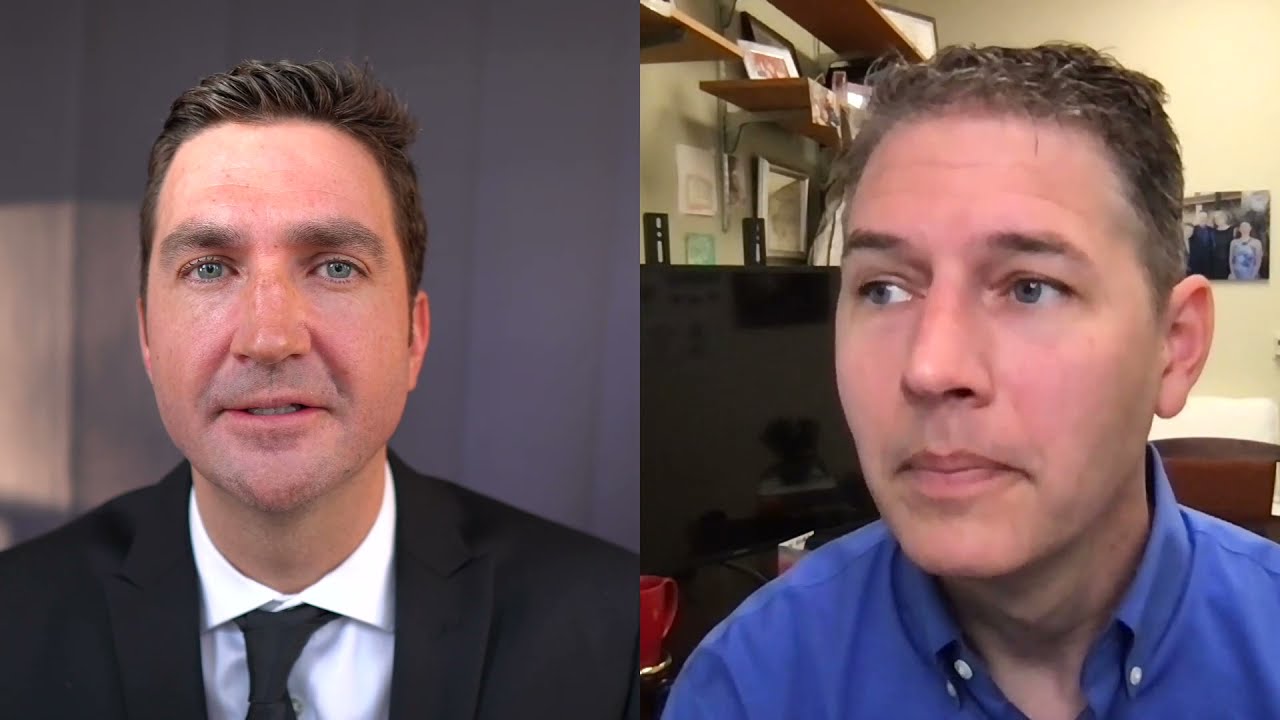
Virologist Shane Crotty, PhD explains what a positive coronavirus (SARS CoV 2) antibody test means for your immunity and addresses the important question:
If you’ve had COVID-19 and have a positive antibody (serology) test, does that mean you’re immune from COVID 19 reinfection?
See the full interview with Professor Crotty here: https://youtu.be/6aOMs1loXN0
Shane Crotty is a Professor at the La Jolla Institute for Immunology, Center for Infectious Disease and Vaccine Research, Crotty Lab. Prof. Crotty also has an academic appointment with the University of California San Diago. See his full bio here: https://www.lji.org/labs/crotty/#overview
Prof. Crotty on Twitter: https://twitter.com/profshanecrotty
Interviewer: Kyle Allred, Physician Assistant, Producer and Co-Founder of MedCram.com
(This video was recorded on March 23, 2021)
THE MEDCRAM WEBSITE:
Visit us for videos on over 60 medical topics and CME / CEs for medical professionals: https://www.medcram.com
SUBSCRIBE TO THE MEDCRAM YOUTUBE CHANNEL:
https://www.youtube.com/user/MEDCRAMv…
Get notified of new videos by hitting the bell icon:
MEDCRAM WORKS WITH MEDICAL PROGRAMS AND HOSPITALS:
MedCram offers group discounts for students and a variety of medical programs, hospitals, and other institutions. Contact us at customers@medcram.com if you are interested.
MEDIA CONTACT:
Media Contact: customers@medcram.com
Media contact info: https://www.medcram.com/pages/media-c…
Video Produced by Kyle Allred
Thank you to Andrew Elstein for reviewing and fact-checking
FOLLOW US ON SOCIAL MEDIA:
https://www.facebook.com/MedCram
Tweets by MedCramVideos
https://www.instagram.com/medcram
DISCLAIMER:
MedCram medical videos are for medical education and exam preparation, and NOT intended to replace recommendations from your doctor.
#COVID19 #SARSCoV2
so you mentioned there’s no test to confirm accurately if you’ve had a previous cobin 19 infection i think probably a question a lot of people have is what about the antibody you know serology test and there’s even new from my understanding a new test that i think quest has out that gives some quantitative result to the antibody test kind of gives an antibody tighter to some degree and so is that something that it you know if someone’s had documented covet 19 and they they have antibodies on a test like that can they breathe a little sire relief that they you know according to your data published in science maybe they will have robust immunity for six to eight months yeah really good question and i guess to to to parse it into there are good tests to tell if you have had covid before but they haven’t been implemented consistently across across the population right and so people have there were a variety of different definitions and tests that have been used and some are better than others in terms of covet immunity there’s also uh there’s no there’s no clear-cut straightforward test for for covert immunity either that is if you are going to be protected from this virus over the next six months or a year i think the scientists are generally in agreement that if someone has a high level of neutralizing antibodies currently they will have a high degree of protection and that that will be maintained for a significant period of time because the the antibodies drop relatively slowly but a neutralizing antibody assay is a is a sophisticated assay it’s it’s it’s a lot of work and not not generally implementable for people so you can take a surrogate of that which are which are antibody antibody binding assays but then those are also measuring different things and some of them are pretty measuring things pretty close to neutralizing antibodies and some of them are measuring things pretty far away from neutralizing antibodies so most of the neutralizing animal well the neutralizing enemies are pretty much all against spike but they’re mostly against the rbd domain of spikes so one little piece of spike and so if you measure antibodies to that rbd domain that’s a pretty good indicator of neutralizing antibodies if you’ve if you’ve then made a scale right and directly scaled it to neutralizing antibodies and i don’t know of commercial tests that currently do that it is scientifically doable and if you did it for everybody in the country you you’d have a pretty good measurement of of antibody-mediated protection but a lot of the tests measure a totally different protein nucleocapsid which has nothing to do with neutralizing antibodies and you might have a really high nucleocapsid antibody tighter and and have a terrible neutralizing antibody tighter because the the two aren’t directly related um and what we’ve said beyond that is antibodies are great and if you have a lot of antibodies you have you have a very good chance of being protected but if you and most vaccines have successful vaccines illicit high titers and neutralizing antibodies but if you if you don’t have high titers of antibodies um are there other things your immune system could be doing that are still going to protect you and maybe not protect you from infection per se but protect you from getting sick or getting very sick or going to the hospital and that’s where the memory b cells come into play and the different kinds of t cells come into play and and what we’ve seen is that individual people have complicated patterns of those people might have a relatively low amount of antibodies but a lot of memory b cells and a lot of cd4 t cells and we don’t know how well those exactly would protect people we think there’s a reasonable amount of data from a variety of different directions that would say yeah those that immune memory would do something to help those people out and so again at the population level it looks pretty good even when people have relatively low antibodies but at the individual level that’s meaning the immune responses are pretty complicated and there’s no simple test to read out on that and so what we said in our paper in science was that uh okay if we measure the antibody response in a person is that predictive of the memory b-cell and the different t-cell responses in the people and unfortunately it wasn’t those different arms of the immune system look like they’re being regulated differently in different people so somebody might have quite a low antibody type they might look lousy from an antibody test but they might actually have pretty good t cell responses or vice versa and so um all of those things together say currently there is no simple test that you can implement for people that will tell them um what’s my what’s my level of covet immunity if you put it on a scale right am i sort of in a green zone a yellow zone or a red zone and and scientists are working you know very hard to try and get that information um but it won’t be surprising if it’s five years from now before we really understand the whole combination of different ways the immune system can can protect you from this virus and then we open up the whole pandora’s box of variants right at this point and say okay everything we’ve been talking about is against the original sarsko v2 and certainly everything that was in our science paper and virtually everything that’s been published on uh on reinfections um the studies that i referred to um studies that were designed to study reinfection um have pretty much all been looking at the original strain and again there’s lots of memory to that and there’s lots uh at the population level lots of protective immunity to that but there is very good reason to be concerned about several of these several of these variants that immunity might be significantly lower