Seniors Over 60: These 3 Vitamins Rebuild Weak Legs in Days | Health Insights
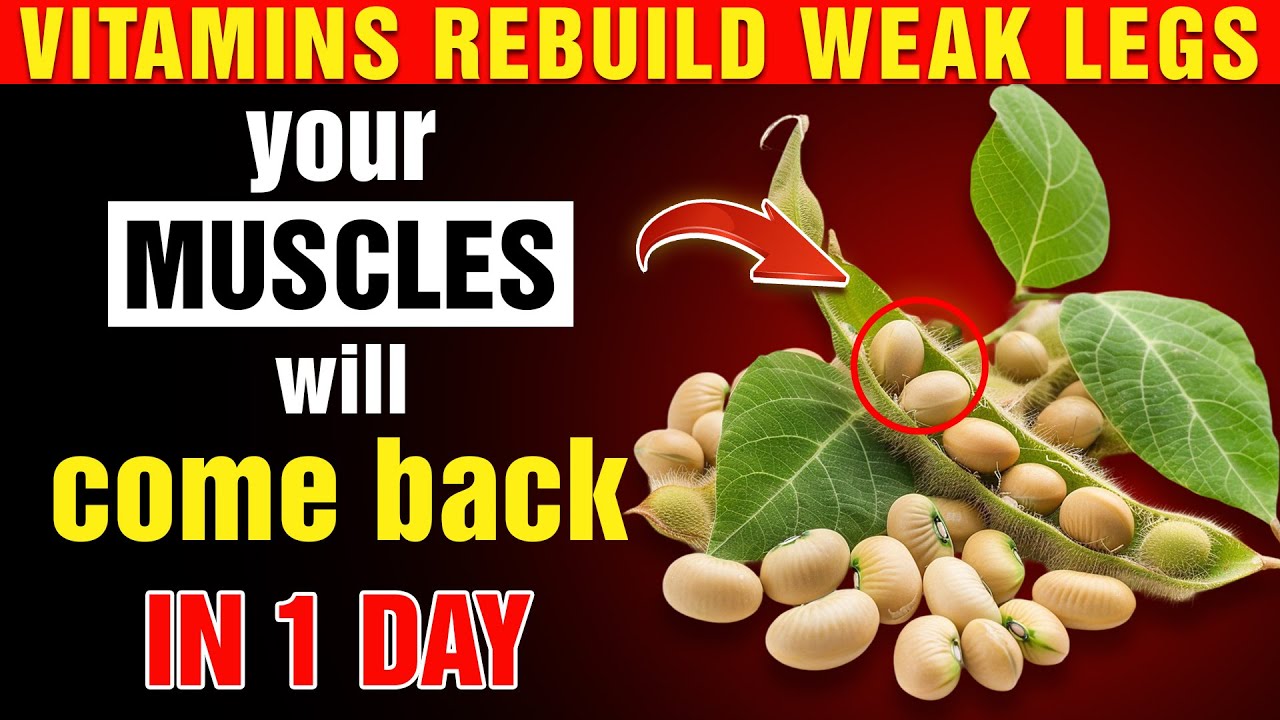
Are you over 60 and struggling with weak legs or muscle loss? The good news is that rebuilding muscle strength and improving leg health can be achieved naturally by incorporating 3 powerful vitamins into your daily routine. In this video, we’ll reveal the top 3 vitamins that seniors should consume to regain strength, improve mobility, and stop muscle loss in just a few days.
🔑 What You’ll Learn in This Video:
◉The 3 essential vitamins that help seniors rebuild weak legs and enhance muscle recovery.
◉How these vitamins support leg health, improve muscle strength, and prevent sarcopenia (age-related muscle loss).
◉Easy ways to add these vitamins to your daily meals or supplements for maximum muscle growth and mobility.
◉The role of vitamins in maintaining strong, healthy legs and overall senior wellness.
💪 Start taking these vitamins today and see the difference in your leg strength and mobility!
👉 Like, share, and subscribe for more senior health tips, mobility advice, and wellness strategies!
➤ TIMESTAMPS:
➤ ABOUT OUR CHANNEL:
Hello! I’m Health Insights. My channel shares stories about nutrition for seniors, lessons and philosophies to help you achieve good health and a quality spiritual life. Click Subscribe to update the latest videos!!
➤ CHECK OUT OUR CHANNEL HERE:
[ @HealthInsights67 ]
➤ SUBSCRIBE HERE
https://www.youtube.com/channel/UCfcQ_mVMkf5VfnGk5320BjQ?sub_confirmation=1
➤ Playlists
Health Insights Podcast | Senior Wellness
Beans: Stop Muscle Loss Fast | Health Insights
➤ RECOMMENDED VIDEOS:
Over 60? Eat THIS Every Morning at 7 AM to Rebuild Muscle in Just 2 Week | Health Insights
SENIORS, Maintain Strong Muscles by Eating THIS Every Day to Stop Muscle Loss | Health Insights
SENIORS, Boost Muscle Protein Synthesis with THIS FOOD to Stop Muscle Loss | Health Insights
#MuscleLossAfter60
#SeniorHealthTips
#healthinsights
#StopMuscleLoss
#HealthyAging
#seniorwellness
#muscleloss
➤ FOLLOW US ON:
🌍 Website: https://healthinsights67.blogspot.com/
📸 Facebook: https://www.facebook.com/healthinsights67/
➤ GET IN TOUCH:
✉ Contact us at: health247.mediaqc@gmail.com
➤ Disclaimer:
◉ Voice generated by AI. This is a fictional voice not representing any real person. The doctor character appearing in the video is not a real person.
◉ This channel provides strictly educational content. While it offers relevant information, it is not intended for self-diagnosis nor does it replace medical guidance. Every individual has a unique health and situation; consult a healthcare professional for clarification. Seek specific advice from your doctor or specialist. Thank you for watching!
have you ever felt that familiar ache in your legs after just a short walk or maybe you notice yourself gripping the handrail a little tighter when going up the stairs it’s easy to dismiss these things as just a natural part of getting older isn’t it like somehow weak legs are just an inevitable destination on the road of life but what if I told you it doesn’t have to be that way what if I told you that you have more power than you think to reclaim that strength and stability in your lower body feeling unsteady finding it harder to get up from a chair or just having less endurance for everyday activities can really impact your independence and your confidence it can make you hesitant to go out to visit friends or even just to enjoy a simple walk in the park it’s frustrating and it can feel like you’re losing a piece of yourself but the amazing thing about our bodies even as we age is their incredible capacity for repair and rebuilding especially when given the right support we often focus on exercise which is absolutely vital but sometimes even the best exercises don’t yield the results we hope for if our bodies are missing some fundamental building blocks think of it like trying to build a house without enough bricks or cement you can have the best builders in the world but they’ll struggle without the right materials and for our muscles especially the big powerful ones in our legs that carry us through life those building blocks often come in the form of essential nutrients now before we dive into these specifics I’d love to hear from you connecting with others who are on a similar journey is so empowering please take a moment to comment below Health Insights for seniors and share your first name and country it’s wonderful to see where everyone is joining from and it helps us build this community together supporting each other and getting healthier every day your experiences and thoughts are always welcome here in this video we’re going to explore something truly powerful how just three specific vitamins can play a critical role in rebuilding strength in your legs helping you feel more stable confident and ready to take on the day we’re talking about nutrients that are absolutely essential for muscle function nerve signals and overall cellular health in your legs and the exciting part when your body is properly nourished with these key elements you can start to feel and see a difference potentially sooner than you might expect kicking off that rebuilding process in a way that makes your legs feel more capable we’re not talking about miracle cures but about giving your body the fundamental support it needs to do what it’s designed to do stay strong and active let’s start with the first one a nutrient that is often overlooked but is absolutely foundational for not just bone health which it’s famous for but critically for muscle function as well I’m talking about vitamin d you might think of vitamin d primarily in relation to Calcium and strong bones and yes it’s essential for that it helps your body absorb Calcium which is vital for bone density reducing the risk of fractures that can severely impact mobility but its role goes far beyond the skeleton vitamin d has a profound impact directly on your muscles your muscle cells including those in your legs have receptors for vitamin D this means that vitamin d isn’t just passively involved it actively interacts with your muscle tissue at a cellular level it plays a key role in muscle protein synthesis that’s the process by which your muscles repair and build new tissue as we get older this process naturally slows down contributing to age related muscle loss known as sarcopenia low levels of vitamin d can accelerate this decline making your leg muscles weaker and less resilient think about the muscles in your thighs and calves they are constantly working whether you’re walking standing or climbing they need to be able to contract efficiently and recover quickly vitamin d helps facilitate proper muscle contraction by influencing the movement of Calcium within muscle cells yes Calcium is important for muscle contraction too not just bones when vitamin d levels are low this process can become less efficient leading to muscles that feel weak tired and less responsive this can manifest as difficulty with balance increased risk of falls and that general feeling of instability you might experience research has consistently shown a strong link between vitamin d deficiency and muscle weakness particularly in older adults studies have found that individuals with adequate vitamin d levels tend to have better muscle strength improved physical performance and a lower risk of falling compared to those who are deficient it’s like giving your muscle cells the signal they need to perform optimally and to rebuild themselves effectively after they’ve been used now how does getting enough vitamin d translate into feeling stronger legs when your vitamin d levels are optimized your muscle cells can function more efficiently the protein synthesis process gets better support allowing muscles to repair minor damage from daily activity and build new fibers more effectively over time while significant muscle mass rebuilding takes consistent effort and time ensuring adequate vitamin d can help kickstart this process and improve muscle function relatively quickly you might start noticing that your legs feel less fatigued after activity that you have a little more power when standing up or that your balance feels slightly steadier these are often early signs that your muscles are responding to getting the nutrients they need consider the impact on your daily life if your legs feel stronger and more stable you’re more likely to be active you’ll feel more comfortable walking further engaging in activities you enjoy and simply moving around your home with greater ease and confidence this increased activity in turn further helps to strengthen your muscles creating a positive cycle it all starts with making sure your body has enough of this fundamental nutrient getting sufficient vitamin d can be challenging especially as we age our skin’s ability to synthesize vitamin d from sunlight decreases and dietary sources can be limited this is why deficiency is so common in older adults ensuring your levels are adequate is a crucial step in supporting your leg muscle health and overall mobility it provides the underlying support structure that allows your muscles to respond better to activity and to rebuild themselves effectively it’s about giving your body the essential tools it needs to maintain strength and function directly impacting how capable and strong your legs feel day to day now that we’ve explored the critical role of vitamin d in muscle function and leg strength let’s turn our attention to another vital nutrient that works in conjunction with vitamin d and has its own unique benefits for your nervous system and energy levels both of which are absolutely essential for strong responsive legs alright so we’ve just talked about vitamin d and how absolutely vital it is not just for keeping your bones strong which we all know is important for staying mobile but also for directly influencing your muscle cells helping them contract and supporting that essential process of muscle protein synthesis which is basically how your muscles repair and grow it’s like setting the stage and giving your muscle cells the basic instructions they need to function and start rebuilding but having strong muscle cells isn’t enough if the signals telling them what to do aren’t getting through clearly or if the muscles don’t have the energy to perform think of your legs like a complex machine you need the right building materials that’s where vitamin d helps but you also need the wiring to be perfect so the commands from the control center your brain get to the right parts and you need fuel in the tank for the machine to actually run and that brings us to our second crucial vitamin one that is a powerhouse for both your nervous system and your energy levels and is particularly important as we get older vitamin B12 now you might have heard of vitamin B12 in the context of energy and that’s absolutely true it plays a critical role in converting the food you eat into glucose which is the fuel your body and muscles use without enough B12 this energy production process becomes less efficient you can eat plenty of healthy food but if your body can’t properly unlock the energy from it you’re going to feel tired sluggish and your muscles including those big ones in your legs that do so much work simply won’t have the stamina they need that feeling of your legs feeling heavy after just a little activity or running out of steam quickly low energy from insufficient B12 can be a major contributor to that but vitamin BTWELVE’S role in supporting your leg strength goes even deeper because of its profound impact on your nervous system your brain and spinal cord send signals down through nerves to tell your leg muscles when to contract how strongly to contract and when to relax these nerve signals are absolutely fundamental to movement coordination and maintaining balance Vitamin B12 is essential for the health and maintenance of these nerve cells particularly the myelin sheath which is like the insulation around a wire healthy myelin allows nerve signals to travel quickly and efficiently when you don’t have enough vitamin B12 this myelin can break down and the nerve signals can become slow weak or even misfire this can directly affect how well your brain communicates with your leg muscles the signals might not get through as strongly meaning your muscles don’t contract with the same power or the signals might be delayed affecting your coordination and reaction time which is crucial for balance and preventing falls you might experience symptoms like numbness tingling or a pins and needles sensation in your feet and legs which are classic signs of nerve issues often linked to B twelve deficiency this nerve damage or neuropathy can make your legs feel inherently weaker and less reliable independent of the muscle tissue itself imagine trying to lift something heavy when the signal from your brain to your arm muscles is weak you just can’t generate the same force is similar with your legs if the nerves aren’t sending clear strong messages your leg muscles can’t perform at their best even if the muscle tissue itself is relatively healthy by ensuring adequate B12 levels you’re supporting the health of the communication lines between your brain and your legs allowing for stronger more coordinated muscle contractions this improved nerve function combined with better energy production can make a significant difference in how powerful and responsive your legs feel it helps reduce that feeling of weakness that comes from poor nerve signaling and the fatigue that comes from low energy one of the reasons B12 deficiency is so common in older adults is related to absorption as we age our stomach produces less stomach acid and we produce less of a protein called intrinsic factor both of which are needed to properly absorb B12 from food this means that even if you’re eating foods that contain B12 you might not be getting the full benefit this makes it particularly important for seniors to be mindful of their B12 status improving B12 levels whether through diet or supplementation can lead to noticeable improvements in energy and nerve function which in turn supports stronger more capable legs it helps restore that vital connection between your brain and your muscles allowing them to work together more effectively so we have vitamin d helping the muscle cells build and function and vitamin B12 ensuring the nerves are communicating effectively and that the muscles have the energy to perform these two work together beautifully but there’s a third vitamin that is gaining increasing recognition for its role in bone health and importantly how it interacts with vitamin d and Calcium in a way that can also indirectly support muscle function and the overall strength and resilience of your lower body structure this is vitamin K2 now vitamin K is often associated with blood clotting and that’s vitamin K1 Vitamin K2 is different it’s primary role in the body is like a traffic cop for Calcium we know Calcium is essential for bones and also for muscle contraction but Calcium needs to go to the right places vitamin K2 activates proteins that help direct Calcium towards your bones and teeth where it’s needed to maintain density and strength crucially it also helps prevent Calcium from depositing in soft tissues like arteries and potentially muscles while some Calcium is essential for muscle contraction excess or misplaced Calcium deposits in muscle tissue could theoretically contribute to stiffness or impaired function over time by helping to ensure Calcium is properly utilized and directed vitamin K2 supports the overall health of the musculoskeletal system think about the foundation your leg muscles are built upon your bones strong healthy leg bones provide the necessary framework and anchor points for your muscles to work effectively if your bones are weak due to poor Calcium utilization it puts extra stress on your muscles and joints and reduces the stable base they need to generate force vitamin K2 by working with vitamin d to ensure Calcium is properly integrated into your bone structure helps maintain that strong foundation this indirect support for bone health is absolutely crucial for overall leg strength and stability reducing the risk of issues that can sideline you and lead to muscle disuse and weakness furthermore emerging research is exploring more direct roles for vitamin K2 in muscle health and energy metabolism though this area is still being fully understood some studies suggest that vitamin K2 might influence muscle mass or strength possibly through mechanisms related to energy production in muscle cells or by reducing inflammation which can impair muscle function while the research isn’t as extensive as for vitamin d or B12 regarding muscle rebuilding its established role in Calcium metabolism and bone health combined with its potential influence on muscle tissue makes it a vital partner in supporting the strength and resilience of your legs especially as you age it’s about ensuring the entire system bones nerves and muscles is working together optimally so you see how these three vitamin d vitamin B12 and vitamin K2 form a powerful trio vitamin d helps the muscle cells themselves vitamin B12 ensures the command signals are clear and the energy is available and vitamin K2 helps ensure your skeletal foundation is strong and Calcium is going where it should supporting overall musculoskeletal health addressing potential deficiencies in these areas can provide your body with the fundamental building blocks and support systems it needs to start that process of rebuilding and strengthening your leg muscles helping you feel more capable and stable now that we’ve covered the what these three key vitamins and why they matter let’s talk about the how how can you ensure you’re getting enough of these vital nutrients and what are some practical steps you can take starting today to support your leg health alright so we’ve just explored the incredible roles that vitamin d vitamin B12 and vitamin K2 play vitamin d helping your muscle cells directly and supporting bone strength vitamin B12 keeping those vital nerve signals firing clearly and boosting your energy and vitamin K2 making sure Calcium goes where it needs to go to keep your bones strong and your system running smoothly it’s clear they form a powerful team for supporting your leg strength and overall mobility now the big question is how do you make sure you’re actually getting enough of these crucial nutrients especially since as we get older our bodies don’t always absorb or produce them as efficiently as they used to let’s dive into some practical ways to address this starting with vitamin d often called the sunshine vitamin our skin can produce vitamin d when exposed to sunlight however this isn’t a reliable source for many reasons particularly as we age our skin becomes less efficient at synthesizing vitamin D many of us spend more time indoors and when we are outside we’re often rightly so using sunscreen to protect against skin cancer which also blocks vitamin d production where you live in the world also makes a huge difference if you’re far from the equator especially during winter months the sun’s rays aren’t strong enough for adequate synthesis because of these factors it’s genuinely challenging for most seniors to get enough vitamin d from sunlight alone dietary sources of vitamin d are also relatively limited fatty fish like salmon mackerel and sardines contain vitamin d as do egg yolks and some mushrooms that have been exposed to UV light however the amounts in these foods are often not enough to meet daily requirements especially if you’re starting from a deficient state many foods are fortified with vitamin d like milk orange juice and cereals and these can help but relying solely on fortified foods can still leave you short this is where supplementation becomes a really important consideration for many older adults vitamin d supplements are widely available in forms like D2 and D3 vitamin D3 is generally considered more effective at raising blood levels of vitamin D deciding on the right dose isn’t a one size fits all situation though it really depends on your current vitamin d levels which can be checked with a simple blood test many doctors recommend aiming for a blood level of 30 nanograms per milliliter or higher for optimal bone and muscle health your doctor can help you determine if a supplement is necessary and what dose is right for you based on your test results and overall health picture taking a supplement consistently particularly during months with less sunlight can be a very effective way to ensure your body has the vitamin D it needs to support those muscle building processes and Calcium absorption for strong bones next up is vitamin B12 as we discussed absorption is a major hurdle for seniors B12 from food is bound to protein and it requires sufficient stomach acid and intrinsic factor to be released and absorbed in the small intestine with age the production of both stomach acid and intrinsic factor tends to decline conditions like atrophic gastritis common in older adults or the use of certain medications like proton pump inhibitors for heartburn or metformin for diabetes can further impair b12 absorption this means you could be eating foods rich in B12 like meat fish poultry eggs and dairy but still not be absorbing enough to meet your needs for many older adults relying solely on dietary B12 is simply not enough to maintain healthy levels symptoms of deficiency can creep up slowly and mimic other age related issues like fatigue weakness balance problems and cognitive changes making it easy to miss because of the high prevalence of B12 deficiency in seniors estimates vary but it’s significant many healthcare professionals recommend that older adults consider B12 supplementation or consume foods fortified with B12 the B12 in supplements and fortified foods is not bound to protein making it easier to absorb even with reduced stomach acid or intrinsic factor B12 supplements come in various forms including oral tablets sublingual under the tongue tablets nasal sprays and injections oral supplements are often effective especially at higher doses because even if absorption is impaired a small percentage can still be absorbed passively for individuals with severe absorption issues b12 injections might be necessary again this is a conversation to have with your doctor they can test your B12 levels and help you decide on the best approach whether that’s focusing on fortified foods taking an oral supplement or needing injections ensuring adequate B12 is absolutely fundamental for keeping those nerve pathways to your legs healthy and strong and maintaining your energy levels directly combating some of the root causes of perceived leg weakness finally let’s talk about vitamin K2 unlike vitamin d and B12 which we often hear about vitamin K2 is less commonly discussed but it’s incredibly important for that Calcium traffic control we talked about which supports your bone foundation vitamin K exists as K1 and K2 K1 is found in leafy green vegetables and is primarily involved in blood clotting K2 is found in fermented foods like natto a Japanese fermented soybean dish though not popular everywhere certain cheeses and some animal products like liver and egg yolks our gut bacteria can also produce some K2 but the amount varies and may not be sufficient getting enough K2 from diet alone can be tricky especially if you don’t regularly eat fermented foods or specific animal products while the body can convert some K1 to K2 this conversion process is not very efficient in humans this is why many people particularly seniors may not be getting optimal amounts of K2 from their diet alone supplementation is an option for vitamin K2 often found in forms like negative 4 millaion quaches and negative 7 millaion quaches negative 7 Malawian quatches is often favored for supplements because it has a longer half life in the body meaning it stays active longer vitamin K2 supplements are frequently combined with vitamin d supplements because these two vitamins work synergistically particularly in Calcium metabolism vitamin d helps you absorb Calcium and vitamin K2 helps direct that Calcium to your bones and teeth keeping it out of soft tissues while the research on K two’s direct impact on muscle is still developing its crucial role in bone health provides essential support for your leg muscles strong bones mean a stable structure for your muscles to work from reducing the risk of fractures that can lead to disuse and muscle loss when considering any of these supplements it’s vital to talk to your doctor they can check your current nutrient levels review your medical history and any medications you’re taking as some vitamins can interact with medications like vitamin K with blood thinners and recommend the right type and dose for your individual needs self treating with high doses of vitamins isn’t advisable it’s about getting your body to optimal levels safely and effectively ensuring you have adequate levels of vitamin d B12 and K2 is a powerful step you can take to support the health and strength of your legs from the inside out it’s about providing your body with the essential raw materials and ensuring the internal communication and energy systems are functioning optimally but getting these vitamins in place is just one piece of the puzzle when it comes to rebuilding and maintaining strong legs as you age there are other foundational elements that work hand in hand with proper nutrition to truly make a difference you can feel in your daily life one of the most powerful partners to ensuring your legs stay strong and capable working right alongside making sure you have enough of those vital vitamins is movement it might sound simple maybe even a little obvious but gentle consistent exercise is the catalyst that helps your body actually use the nutrients you’re taking in to build and maintain muscle think of it this way the vitamins we’ve discussed are like the high quality building materials the bricks the timber the cement but you need a construction crew and a plan to actually build the house movement is that construction crew it sends the signal to your muscles and bones that they need to be strong and functional prompting your body to utilize those materials effectively when you engage your leg muscles through activities like walking climbing stairs safely of course or even simple exercises like leg lifts while sitting you’re creating a demand your muscles respond to this demand by initiating repair and growth processes this is where those vitamins become indispensable vitamin d for example plays a role directly in muscle function and strength without adequate vitamin d your muscle fibers might not contract as effectively and the signaling pathways needed for growth and repair after exercise can be impaired so while the movement provides the stimulus vitamin d helps ensure the muscle cells are ready and able to respond to that stimulus by getting stronger then there’s vitamin B12 which is absolutely vital for healthy nerve function and energy production every movement every step you take relies on clear signals travelling from your brain down the nerves to your leg muscles if your B12 levels are low these nerve signals can become sluggish or faulty leading to feelings of weakness numbness or poor coordination in your legs this can make even simple movements feel difficult or unstable creating a cycle where you move less and your legs become weaker by ensuring adequate B12 you’re helping to keep those communication lines open and clear making it easier and more effective for your muscles to respond when you want them to move plus the energy boost B12 provides helps you feel more capable and motivated to move in the first place and let’s not forget vitamin K2 working quietly but powerfully in the background while KTWO’S most well known role is directing Calcium to your bones this is incredibly important for leg strength too strong bones provide the stable framework that your muscles attach to and pull against if your bones are becoming weaker it affects the entire system K2 ensures that the Calcium you absorb with help from vitamin d is properly deposited into your bone structure keeping it dense and strong this strong foundation is essential for supporting the forces generated by your leg muscles during movement and helps prevent the kind of bone weakness that can lead to fragility fractures which severely impact mobility and muscle health so K2 supports the skeletal base upon which your leg muscles operate the key is finding movement you enjoy and can do consistently it doesn’t have to be strenuous exercise even starting with short gentle walks around your home or neighborhood can make a difference simple activities like marching in place while watching TV doing a few squats using a chair for support or calf raises while standing at the kitchen counter all add up the goal is to gradually increase how much and how often you move challenging your muscles just a little bit more over time consistency is far more important than intensity when you’re starting out think about how these pieces fit together you ensure you’re getting enough vitamin d B12 and K2 through diet and potentially supplementation always after talking to your doctor remember these vitamins are then available in your system to support muscle health nerve function energy levels and bone strength when you then introduce movement you’re giving your body the signal to put those resources to work rebuilding and strengthening the movement stimulates the muscles and the vitamins provide the essential support needed for repair growth efficient function and a strong foundation it’s a beautiful synergy beyond vitamins and movement other foundational elements like staying well hydrated and ensuring adequate protein intake also play supporting roles muscles are about 75% water and proper hydration is essential for muscle function flexibility and preventing cramps protein provides the amino acids the actual building blocks that muscles use to repair and grow after exercise so while our focus has been on these three specific vitamins and how they directly impact the complex processes related to leg strength and function remember they operate within the context of your overall health and lifestyle addressing all these areas together creates the most powerful impact rebuilding leg strength isn’t just about lifting weights or taking supplements it’s about creating an environment in your body where your muscles and nerves can thrive it’s about providing the right nutrients stimulating the muscles through regular activity and taking care of your overall well being the journey to stronger more capable legs is absolutely achievable at any age and it starts with understanding what your body needs and taking consistent positive steps it’s easy to feel discouraged when your legs don’t feel as strong as they used to or when simple tasks become harder but please know that you have the power to make significant improvements by focusing on key nutritional support like vitamin d B12 and K2 and combining that with regular gentle movement you are actively working to rebuild and maintain your strength these aren’t overnight fixes but the changes you can feel more stability more energy less fatigue can start to appear sooner than you might think sometimes feeling noticeable in just days or weeks as your body begins to respond to the support and stimulation taking control of your health in this way is incredibly empowering it allows you to maintain your independence continue doing the things you love and enjoy a higher quality of life whether it’s keeping up with grandchildren enjoying your favorite hobbies or simply navigating your home with confidence stronger legs make everything easier and more joyful so if you’ve been feeling that weakness in your legs I truly hope this information gives you a clear path forward and a sense of hope remember to discuss any changes to your diet or supplement routine with your doctor as they are your best partner in this journey if you found this video helpful please give it a thumbs up that tells us we’re providing valuable information you want to see more of and don’t forget to subscribe to Health Insights for seniors if you haven’t already and hit that notification bell so you don’t miss our future videos packed with tips and advice for living your best life over 60 we love hearing from you share your experiences or questions in the comment section below have you noticed the difference from focusing on these vitamins or starting a gentle movement routine let us know your insights can help others in our community thank you so much for watching here’s to your health your strength and to living every day with energy and confidence