
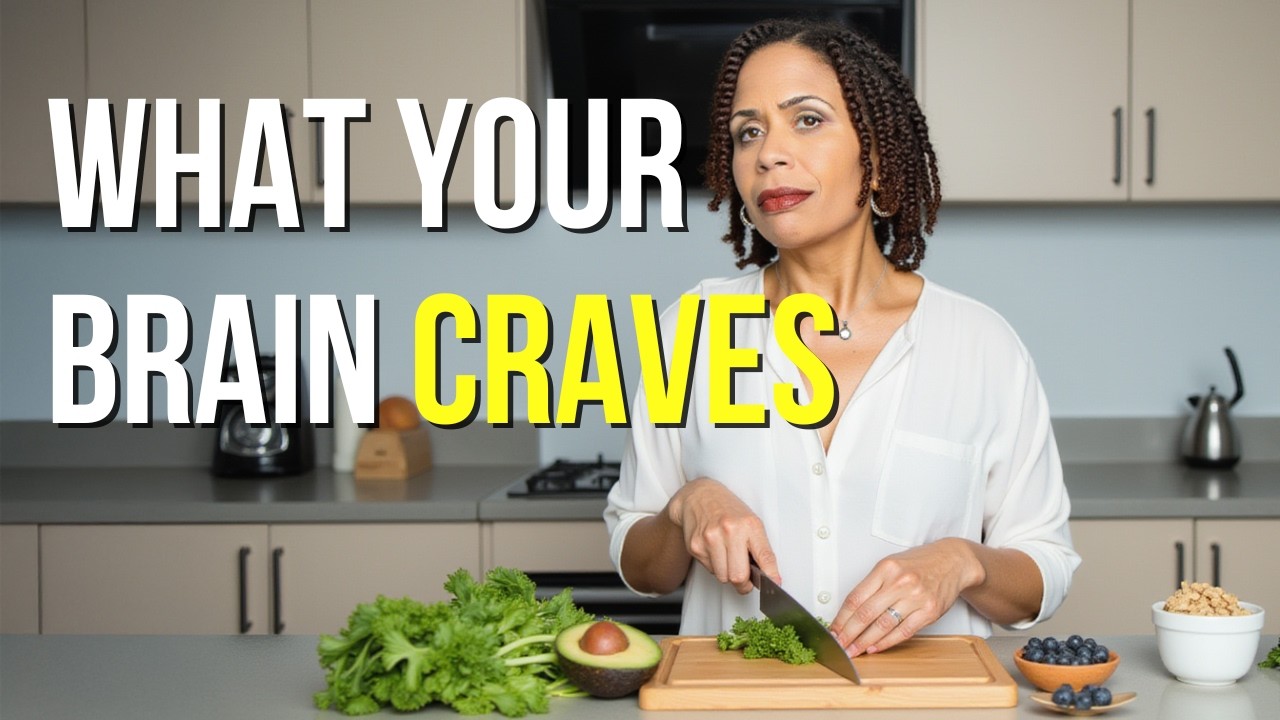
Discover how the food you eat directly impacts your brain health and mental clarity. This video explores essential nutrients like omega-3 fatty acids, B-vitamins, antioxidants, and key minerals, showing how they support brain function, mood, and resilience. Learn practical tips to incorporate brain-boosting foods into your daily meals and snacks for long-term cognitive and emotional wellness.
SHOP THE MENTAL WELLNESS STORE https://mentalwellnessspace.store/
GET YOUR FREE SELF-COMPASSION GUIDE to help replace critical self-talk. http://SelfTalkHelp.com
GET MY ANXIETY BOOK https://amzn.to/3vWdJAX
MY AMAZING VIDEO EDITOR https://www.5filmsmedia.com/contact (this is not an affiliate link but a resource. I’ve had a long relationship with Ruslan and his company, so use my name and he will hook you up! 😊 You can tell him I said that)
WANT TO START IN THERAPY? Here’s a convenient and affordable option with my sponsor BetterHelp
https://Betterhelp.com/drmarks
For a monthly fee, you get a REAL licensed therapist with whom you can meet weekly by phone, video or chat. You can also send daily messages.
For a full review of the service, watch this video https://youtu.be/kDs9HxGnyxw
If you use this link you will get a 10% discount on your first month. https://betterhelp.com/drmarks This is an option I’ve researched. I get a referral commission if you sign up.
Want to know more about mental health and self-improvement? On this channel I discuss topics such as bipolar disorder, major depression, anxiety disorders, attention deficit disorder (ADHD), relationships and personal development/self-improvement. I upload weekly. If you don’t want to miss a video, click here to subscribe. https://goo.gl/DFfT33
Disclaimer: All of the information on this channel is for educational purposes and not intended to be specific/personal medical advice from me to you. Watching the videos or getting answers to comments/question, does not establish a doctor-patient relationship. If you have your own doctor, perhaps these videos can help prepare you for your discussion with your doctor.
Have you ever wondered why you feel mentally sluggish
after a few days of poor eating? Or why certain foods
seem to give you more mental clarity? The connection between what you eat and how your brain functions
isn’t about having enough energy. It’s about providing your brain with specific nutrients
it needs to perform its best. I’m Doctor Tracey Marks, a psychiatrist,
and I make mental health education videos. Today we’re starting a new series
for nutrition and wellbeing, and we’re beginning with the essential nutrients
your brain needs to function optimally. Understanding these nutrients helps
you build a resilient brain that can better handle life’s challenges. First, let’s understand why your brain is
so demanding when it comes to nutrition. Though
it only makes up 2% of your body weight, your brain uses
about 20% of your body’s energy. But it’s not just about calories. Your brain needs specific nutrients
to maintain its structure, produce neurotransmitters,
and protect itself from damage. So let’s break down
the important nutrients for brain health. First up, omega-3 fatty acids. Think of these as essential nutrients
for your brain health. About 60% of your brain
is made of fat, with DHA being one of the most important
building blocks of brain cell membranes. It helps keep cells healthy and facilitate
smooth communication between them. DHA supports memory and learning, and EPA, another omega-3 fatty acid works alongside it to reduce inflammation and support
metabolic processes in the brain. Together, these omega-3s
play crucial roles in maintaining optimal brain function and may help
protect against mood disorders. You can find omega-3s in fatty fish like salmon, sardines, and mackerel. Plant based sources
if you don’t eat meat or fish, include chia seeds, flax-
seeds, and walnuts. And here’s a way to incorporate it. Try adding fatty fish to your meals
a couple of times a week, or sprinkle chia seeds or flaxseeds onto your breakfast
for an omega-3 boost. Next up are the B vitamins. B vitamins,
including B6, B12, and folate are essential for producing neurotransmitters,
which are the brain’s chemical messengers. These vitamins help
with energy production, mental clarity, and a stable mood. A deficiency in B vitamins
can lead to fatigue, irritability, and even memory problems. Some food sources are leafy
greens, eggs, dairy, and lean meats, and they are all good sources
of B vitamins. Vegetarian and vegans can focus
on fortified cereals and plant-based milks,
as B12 is mostly found in animal products. Try to include a variety of B rich foods
for your meals. For example, an omelette
with spinach and mushrooms in the morning can provide a nice source of vitamin B.
Antioxidants like vitamin C and E help protect the brain from oxidative
stress, which is essentially wear and tear on the cells from environmental
and internal factors. Oxidation of stress can contribute
to aging and cognitive decline, so antioxidants are key in
keeping our brain cells healthy. As for food sources,
berries, citrus fruits, and leafy greens are all high in vitamin C,
while nuts and seeds like almonds and sunflower
seeds are great sources of vitamin E. To incorporate these snack on berries
or an orange for vitamin C, and add nuts or seeds to a salad or oatmeal
for a dose of vitamin E. Magnesium is a mineral
that helps regulate brain plasticity, which is the brain’s ability
to change and adapt. It also plays a role in
managing the brain’s response to stress, making it super important
for maintaining mental resilience. Some food sources of magnesium
are leafy greens, which seem to have a lot of these nutrients,
nuts, seeds, and whole grains. Try adding a handful of nuts
as a snack or incorporating more whole grains
like quinoa or brown rice to your meals. And last up is zinc and iron,
and they’re less popular, but they’re still important minerals
for brain health. Zinc plays a role in regulating
neurotransmitters and supporting memory function, while iron is essential
for transporting oxygen to the brain, deficiencies in these minerals
can lead to issues with focus and mood. Zinc can be found in shellfish, meat,
and pumpkin seeds, while iron is rich in lean meats,
spinach, and legumes. Adding a serving of beans
or lentils to your meals can boost iron, and pumpkin seeds are an easy snack option
for zinc as well as magnesium. Now that we understand which nutrients
are important for brain health, let’s talk about how to incorporate them
into your day to day. Build a brain-healthy plate. Aim to fill half your plate
with colorful fruits and vegetables, a quarter with lean proteins,
and then a quarter with whole grains. If you are not vegetarian, ideally, your protein source
would be fatty fish at least twice a week. Also, you want to snack smart. Keep nuts, seeds, and fresh fruits on hand for a quick, brain-boosting snack. Plan your meals. Meal planning can help
you ensure that you’re getting a variety of brain
healthy nutrients throughout the week. Also, consider supplementation: Although it’s
best to get your nutrients from food, sometimes
supplementation may be necessary, and this is particularly true
for vitamin B12 if you follow a vegan diet, or omega-3s
if you don’t eat fish. Always consult a health care provider
before starting any new supplement regimen. Keep in mind,
strict rules are not as important as making consistent, sustainable choices
that nourish your brain over time. Powering up your mind
through nutrition is an impactful way to support your mental
well-being and cognitive function. By focusing on nutrients like omega-3 fatty acids, B vitamins, antioxidants,
and key minerals, you can give your brain the fuel
it needs to perform at its best. I want to emphasize that the benefits
of a brain healthy diet
extend far beyond the immediate effects. By consistently nourishing your brain
with these essential nutrients. You’re investing in your long-term
cognitive health and emotional resilience. In the coming weeks, we’ll explore
how your gut health affects your mood, the role of inflammation
on your mental health, and how mindful eating can transform
your relationship with food. If you want to learn more about how
nutrition affects your mental wellbeing, make sure you subscribe
and hit the notification bell so that you don’t
miss the next video in the series. Thanks for watching today. I’ll see you in the next video.