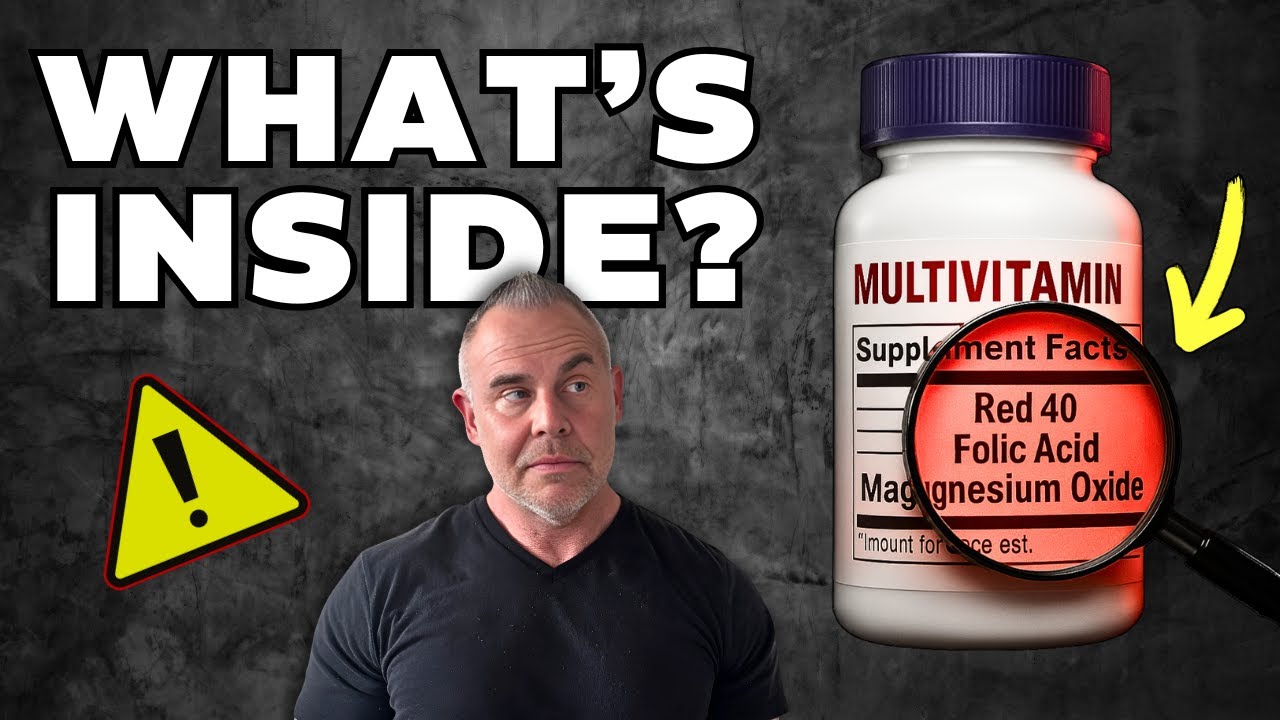
Are you taking a multivitamin that’s truly benefiting your health? In this video, we’ll dive into the key ingredients and factors that make a great multivitamin. From essential vitamins and minerals to bioavailability and manufacturing quality, we’ll cover it all. Whether you’re looking to fill nutritional gaps, boost energy, or support immune function, a high-quality multivitamin can make all the difference. So, what makes a great multivitamin? Watch to find out!
💊 Recommended MultiVitamins💊
(Budget-Friendly)
Nature Made Multi Complete:
(Premium Methylated Options)
Thorne Multi-Vitamin Elite AM/PM:
Panda Supplements Premium Multi:
Life Extension Two-Per-Day:
(The Specialized Options)
Pure TheraPro Methyl Multi (Iron-Free):
Methyl-Life Chewable Methylated Multi:
Chapters:
00:00 Introduction to Multivitamins
00:32 Understanding B Vitamins
01:13 Importance of Mineral Forms
01:59 Avoiding Artificial Additives
02:44 Optimal Dosages and Missing Nutrients
03:37 Quality Verifications and Red Flags
04:27 Is a Multivitamin Necessary?
05:04 Timing and Absorption Tips
05:41 Recommended Multivitamin Brands
07:39 Specialized Multivitamin Options
08:33 What to Avoid in Multivitamins
09:09 Conclusion and Next Steps
⬇️ Discount Codes & Affiliate Links ⬇️
https://www.samedaysupplements.com/
(Discount Code: M2M)
https://nutricartel.com/
(15% off code: M2M )
https://ascsupplements.com/
(20% off code: 20MISSION)
https://www.vintage-muscle.com/
(28% off code: M2M)
https://www.apollonnutrition.com/
(15% off code: mission15)
https://suppkingz.com/
(15% off code: MISSION15)
Always Weigh Your Pre’s! Here’s The Scale I Recommend:
https://amzn.to/311qJFC
🔥Don’t forget to check out my other reviews! (Search YouTube: David Fredrickson (THEN TYPE WHAT YOUR LOOKING FOR.)
🔥Follow me on Instagram: https://www.instagram.com/ds.fredrickson/
🔥Checkout our website: https://https://davidfredrickson.com/
🔥SUBSCRIBE TO THE CHANNEL for fitness content, supplement reviews, bodybuilding information and tips.
#healthtips #nutritiontips #supplement #multivitamin #healthhacks #bioavailability
Most multivitamins on the market are either underdosed or overdosed or use forms of nutrients that the body just has trouble absorbing. So, what are we really paying for? Well, in this second episode in my what to look for series, I’ll break down exactly what to look for and what to avoid when purchasing a multivitamin. This way, you’re getting the benefits you need, not just that expensive neon yellow pee. Let’s start with the ingredients because even the best marketing can’t hide what’s actually in a formula. First, we’ll start with B vitamins. You want to look for methylated, not synthetic forms. If your label says folic acid and cyanocobalamin for B12 instead of methylolate or methylcobalamin, that could be a red flag. Synthetic forms like cyanocobalamin for B12 are harder for the body to convert into active usable forms. This is especially true for people with common genetic variants like MTHFR which reduce the body’s ability to methylate nutrients efficiently. And while cyanaccobalamin can be absorbed slightly better at first, studies show that methylcobalamin stays in your system longer and is more effective over time. The second thing to look for minerals. The forms matter more than you think. Magnesium oxide is cheap and it’s found in most of the common grocery store multivitamins, but your body absorbs barely any of it. Studies actually show magnesium oxide has an absorption rate as low as 4% while magnesium glycinate can reach up to 18 to 19%. So look for magnesium as glycinate, malate or 38. If you’re looking at zinc, look for pollinate or by glycinate, even citrate, iron, blycinate or chilated, calcium as citrate or malate, not as carbonate. Avoid all oxide forms and look for chilated minerals for best absorption. Try and avoid artificial dyes and unnecessary fillers like micro crystallin cellulose. Ingredients like red dye number 40, yellow number five and six, blue number one and two, and titanium dioxide aren’t there to help you. And some of these studies link them to hyperactivity, inflammation, and even DNA damage. Then when it comes to dosing, look out for some of the multis that go way overboard, like 10,000% of your daily B12. This might be okay with certain forms, but unless you’ve been tested and confirm that you need that amount, it’s more than your body can process. On the other hand, some multis are underdosed and they barely meet daily requirements. Here’s what to look for. Aim for formulas that provide 100% to 300% of your daily values for most nutrients. Enough to support you, not overwhelm you. Pay special attention to folate dose between 400 to maybe 800 micrograms as methylolate. B12 dose between 25 and 100 micrograms as methylcobalamin. And vitamin D3 dose between 1,000 to 2,000 IU. Magnesium between 200 400 mgs. And there’s one vitamin that’s often missing in most formulas. That’s vitamin K2, which is crucial for bone and heart health. Look for that form as MK7 dosed between 90 to 180 micrograms daily. So between poor absorption, artificial extras, and unbalanced dosages, a lot of multivitamins fall short. That’s why it’s important to look for quality verifications like seals with uh USP verified, NSFcertified, and informed choice. These mean that the products have been tested by an independent lab, not just by the brand selling it. These certifications confirm that the ingredients match what’s on the label, that there’s no unsafe levels of heavy metals or contaminants, that the product meets proper manufacturing standards, and it dissolves properly with good bioavailability. A couple personal red flags for me. First one would be proprietary blends. These hide the individual ingredients some amounts. And I’ve said it before, if they’re hiding this, who knows what else they’re hiding. Second thing would be companies that will not share third-party testing with you. That’s definitely a red flag for me. Now, a question you may have is a multivitamin necessary for you. Well, if you eat a diverse, nutrient-rich diet and don’t have any major stresses or restrictions, not only are you an anomaly, you may be an alien. Then, if that’s the case, maybe you don’t need it. But for most normal people, especially those dieting, eating plant-based, skipping meals, under stress, or taking medications that deplete nutrients like antibiotics, anti-depressants, or acid reducers, a well- formulated multi can help you fill in those real nutritional gaps. So, before we get into the recommendations I have for you guys, we need to bring up timing because it can matter, especially if you want good absorption. So, you want to try timing your multivitamin dosages around meals that contain fat. This will help those fat soluble vitamins A, E, D, and K absorb much better. Also, if your multi has iron, avoid taking it with coffee or tea. This is because they contain an ingredient called tannins that can interfere with iron’s absorption. And finally, if your multi is high potency, consider splitting the dosages into AM and PM. This might be better for absorption and utilization. And now on to a few recommendations for you guys. We’ll start with a budget friendly option that’s third-party tested. This is natureade multicomplete. So it’s third party tested. It’s USP verified. It has no artificial dyes, no unnecessary fillers, but it does contain folic acid instead of methylolate and cyanocobalamin instead of methylcobalamin. This could be best for those wanting a basic coverage where the quality has at least been verified. Then here’s a couple premium methylated options. Thorn multi- elite AM and PM. This has methylated B vitamins. It has chilated minerals. It’s NSScertified for spore, which is actually one of the highest testing standards. And it’s split into an AM bottle and a PM bottle for better absorption. This is best for athletes or those wanting the highest quality regardless of the cost. With that said, I’ll put a link to this so you can see that cost along with all these other recommendations in the description below. Next, the one I personally take, Panda Supplements Premium Multi. This has methylolate, methylcobalamin. It has all the active minerals that you need, the blyinate, the chilates. It’s GMP certified to cover manufacturing standards and it has a synergistic set of ingredients for absorption. You have K2, D3, coretin and vanadium, but there’s no third-party testing or verification as far as USP or NSF. This would be best for those wanting a premium methylated formula with excellent mineral absorption. Then we have life extension two per day. It has methylolate, methylcobalamin, high quality mineral forms, good dosing, not too high and not too low, no artificial colors, and this is actually a good multi for those wanting premium ingredients from an established brand with a good reputation. And lastly, the specialized options. We have pure thorough promethyl multi-ironfree. We have quattropholic methylolate and mechal active B12 with ambient trace minerals that are chilated minerals. This has an acidresistant capsule for better absorption and no fillers as well as vegan friendly making this best for those with MTHFR variants or methylation concerns. Then methylife chewable methylated multi which is specifically formulated for MTHFR support. It has Maggapolate Pro, which is the highest purity form of methylolate. It’s a kid-friendly option that adults can use as well, and it’s a cherry berry flavor, and it has no artificial dyes. This is best for families or those who prefer chewables over anything else. Lastly, things to avoid. Most drugstore gummies. This is because they contain a lot of sugar, artificial dyes, minimal ingredients, and vitamins that you find in the store like Centrum or similar mass brands, they’re usually going to contain the folic acid, the low quality minerals, and a lot of other stuff you don’t want like artificial dyes. any multivitamin with proprietary blends that hide ingredient amounts and mega dose formulas with 1,00% plus of daily values, especially if those percentages fall on fat soluble vitamins. So, bottom line, a good multi should be boring. No neon colors, no outrageous claims, and no proprietary blends. Thanks for watching. I’ll see you in the next episode of What to Look for. And if you want more information about the newest study on multivitamins, take a look at this video.