




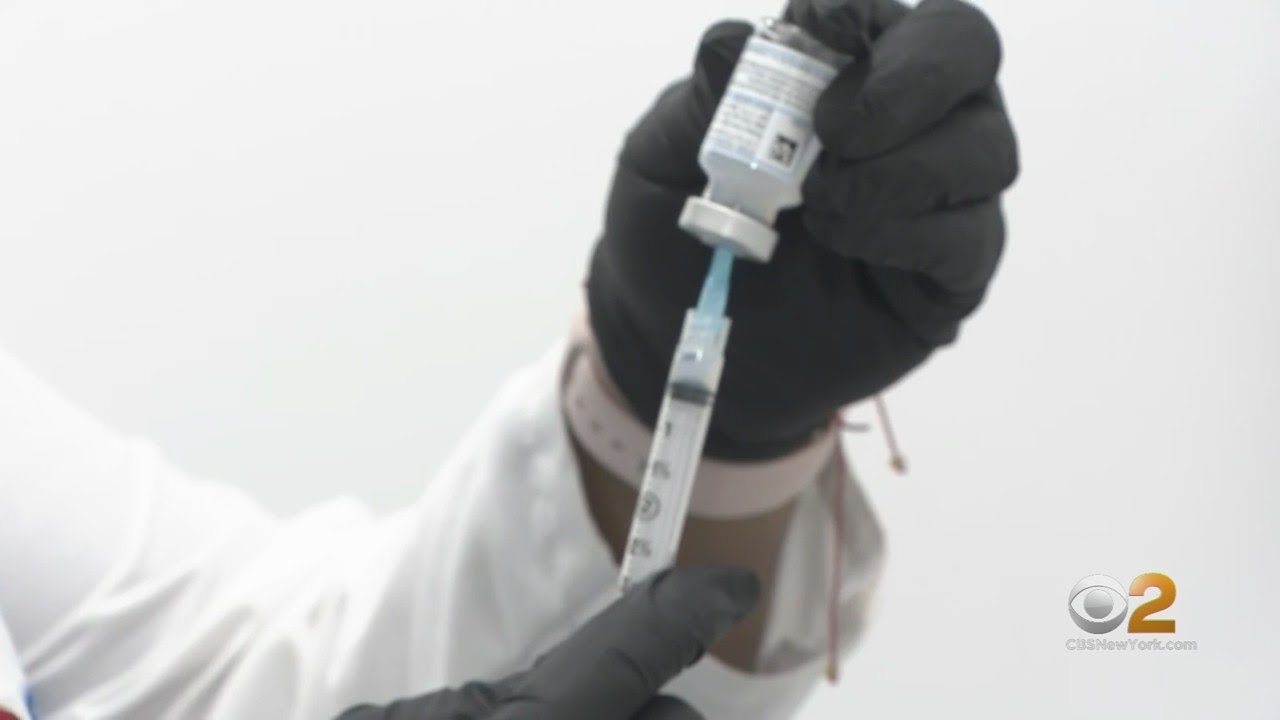
From those first COVID-19 vaccinations to booster shots, there are growing options for people to protect themselves from the coronavirus. It’s leading to questions about the future — will we need annual booster shots? Will these vaccines combat new variants? And will we ever reach herd immunity? CBS2’s Dr. Max Gomez sorts through the confusion.
there are growing options
for people young and old to protect themselves
from Coronavirus. It’s leading to questions
about the future. Will we need annual
booster shots? Will these vaccines
combat new variants? And will we ever
reach herd immunity? Dr. Max Gomez sorts
through the confusion. DR. GOMEZ: In order to get
a handle on this pandemic experts say we need to reach
something called herd immunity. I think we need to at least
have 90% of the population that is protected by
either vaccination or natural infection or
the combination of both. DR. GOMEZ: This is not
even at 60% vaccinated at this point. Dr. Paul Offit, a
professor of pediatrics at the Perlman
School of Medicine at the University of
Pennsylvania and a member of the FDA vaccine
recommendation panel says we may be able to reach
some form of herd immunity. If you define herd immunity
as a critical decrease in this virus’ ability to spread
from one person to another so much so that you
have a dramatic decrease in hospitalizations and deaths,
I think the answer is yes. But in order to do that, we’re
going to have to figure out a way to vaccinate
the unvaccinated. The question is why have
so many people refused the COVID vaccines? One argument is that
we accept the flu, which causes 400 to
700,000 hospitalizations and 20 to 60,000
deaths a year, but– In many ways, this
virus is worse than flu. What this virus does that
practically no respiratory virus does is it causes you to
make an immune response to the lining of your
own blood vessels causing inflammation
or vasculitis. And therefore all organ
system can be affected. I mean, for children,
that diseases called MIS, multi-system
inflammatory disease, where kids come
into our hospital with not only lung
disease, but heart, liver, kidney disease
it’s hard to watch. DR. GOMEZ: The good news is
that new vaccine technology will allow us to
develop vaccines effective against new variants. But the challenge remains
how to reach herd immunity. If we start to see
variants that are produced that are more and more
resistant to vaccine induced immunity, that’s
going to be a problem. I think too, and this is
one of the biggest ones, is misinformation. There’s just a lot of
bad information out there that’s readily available,
that’s causing people to make bad decisions for themselves
and for their children. The third is nobody should tell
me what to do with my body, which is fine if
you’re talking about not getting a tetanus vaccine. I mean, if you step
on a rusty nail, choose not to get a tetanus
vaccine, get tetanus, no one’s going to
catch tetanus from you. It’s not a contagious disease,
that’s a personal choice. This is a contagious virus. This is a virus that you can
transmit to other people. So you’re not just
making a personal choice. And I think that’s probably
the most upsetting part in all this, which is, we just don’t seem to
care about our neighbor.