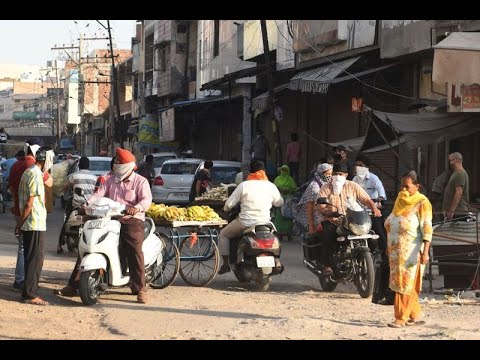
Rather than relying on mass infection to build resistance to the coronavirus, the country needs a long-term, data-driven, decentralized approach.
India reported its first case of COVID-19 on January 30. As of May 1, while the country moves through its fifth week of an unprecedented national lockdown, a total of 25,148 cases have been confirmed with 1,152 deaths. While these figures may seem relatively low compared with hot spots in Europe and North America, they may not be capturing the real picture. So far, India has tested only 902,654 samples, which equates to around 694 tests per million people—one of the lowest rates in the world; furthermore, testing figures vary by state.
With 0.55 hospital beds per 1,000 people, only 48,000 ventilators, and a population of 1.3 billion, many observers wonder how India can manage a crisis as severe as the coronavirus.
Pursuing herd immunity has been touted as a possible strategy in poor countries with young populations, such as India. This controversial approach, which was recently discarded by the United Kingdom, relies on a majority of the population (60 percent to 80 percent) gaining immunity or resistance to the virus by becoming infected and then recovering.
In its cruelest form, pursuing herd immunity without a vaccine is a version of survival of the fittest.
While this is a common approach underlying mass vaccination campaigns for diseases like measles—which rely on safe and tested vaccines—trying it with a deadly, new and untreatable disease is a massive risk. In its cruelest form, it is a version of survival of the fittest.
There are three reasons why herd immunity may not work for India and could also be potentially dangerous—leading to increased hospitalizations that overwhelm the health system and eventually cause a high number of deaths.
First, experts don’t know a lot about COVID-19 immunity, especially how long immunity lasts, what kind of protection it offers, and whether reinfection is possible. These are all questions that researchers around the world, including those at the World Health Organization, are still trying to figure out.
Subscribe my channel for more content