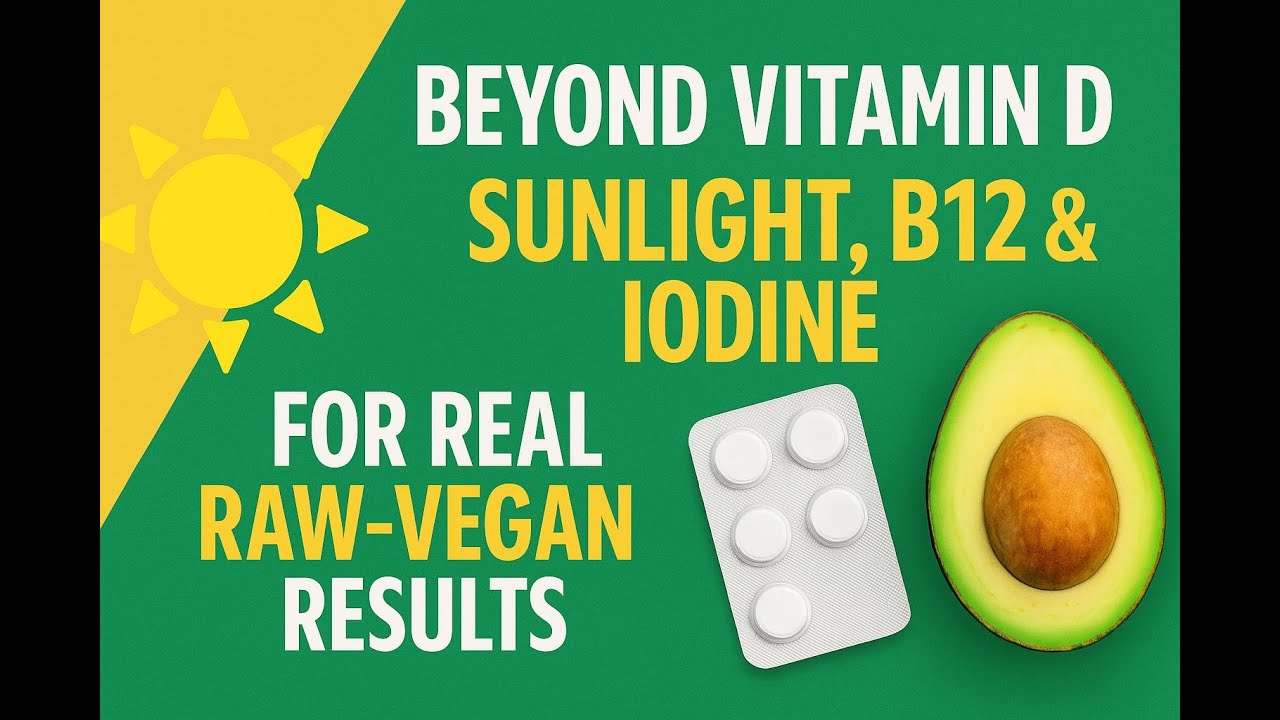
The complete* Grand Rounds with Dr. Baxter Montgomery featuring Don Bennett—a veteran raw-vegan educator and disease-avoidance specialist. In this eye-opening session, we cover why diet and nutrition must be treated separately today, how supply vs. demand for nutrients drives hunger and healing, and what most raw eaters miss about sunlight-made compounds (beyond vitamin D) that impact immunity, blood pressure, and metabolic health. We also unpack B12, iodine, and phototherapy, the pros/cons of cruciferous vegetables and nightshades, food mis-combining vs. mono-meals, and a first-things-first approach to sleep, movement, and stress.
Purchase Dr. Montgomery’s book “The Food Prescription for Better Health: A Cardiologist’s Proven Method to Reverse Heart Disease, Diabetes, Obesity, and Other Chronic Illnesses Naturally!” https://a.co/d/30DGcmt
Join the Montgomery Heart & Wellness Plant-Based Nutrition Facebook Group. https://www.facebook.com/share/g/16XdsM8wqy/?mibextid=wwXIfr
Topics: raw vegan pitfalls, high-fat vs. low-fat extremes, why fortified foods can mask deficiencies, testing smarter (D, B12, iodine), healthiest raw vegan diet, and why to avoid nightshades.
00:00 Introduction
02:30 Don’s Background
04:30 Researcher Mindset & Ethos of Science
08:00 Supply vs Demand for Nutrients
10:40 Critical vs Important Nutrients
13:10 Diet ≠ Nutrition
15:05 Raw Diets & Fortification Gaps
17:10 Beyond Vitamin D (Sunlight Compounds)
20:40 Phototherapy Basics
24:10 7 Raw Diet Pitfalls
28:20 Mono-Meals & Digestion
34:40 Health on a 1–10 Scale
37:00 Why “Do What Works” Fails
39:10 First-Things-First Health Framework
41:45 Nightshades & Crucifers
45:00 Soil, Farming, & Nutrient Density
52:10 Q&A Highlights (D/B12/Iodine)
1:10:20 Sodium & Green Powders
1:17:20 Wrap-Up
Keywords: vegan, plant-based, raw vegan, raw plant-based diet, fruitarian, Don Bennett, Baxter Montgomery, vitamin D, nitric oxide, phototherapy, UVB, iodine deficiency, B12, natural hygiene, mono-meal, food combining, nightshades, cruciferous vegetables, supply and demand nutrition, healing diet, lifestyle medicine
Hashtags: #RawVegan #PlantBased #VitaminD #Iodine #B12 #LifestyleMedicine #MontgomeryHeart #Fruitarian #veganfood
* Audience questions have been deleted when the name and/or face of the audience member appears.
Note: Educational content only. Work with your medical provider before changing medications, supplements, or diet.
world maybe. Um, oops, let me get this on recording. I’ll start over. Good evening everyone and welcome to Grand Rounds of July. And uh we have a very special guest today uh Don Bennett who’s going to enlighten us on uh the power of the raw plant-based diet. And and I have a lot of questions. I’m sure lots of you guys have a lot of questions. Uh he’s the author of three books. uh how to have the best odds of avoiding degenerative disease, the operation and maintenance manual for human beings. Uh he’s authored the raw food diet and other healthy habits, your questions answered and what you know that isn’t so a reality based guide to the less than accurate information in the health improvement community. Our speaker today is passionate educator, health educator, and one of the most unique and insightful guides you’ll ever meet. A vegan for over half a century and a successful all raw futarian for more than 27 years. When it comes to reality based health creation information, Don Bennett is someone you cannot count someone you can count on for enlightening and empowering insights. Don is a disease avoidance specialist and teaches and counsels people on how to have the best odds of avoiding degenerative disease and creating robust health in today’s world. We’re happy to have Don with us today as one of the multi-dead long educators and advocates for the raw vegan diet. Don, welcome. And um you know, this is quite an impressive resume and I I’m I’m really anxious to hear your comments. Um you know, we use a raw plant-based diet for all of our patients. In fact, we published uh in the medical journal to use we called it a defined plant-based diet, but they were on a raw diet for 28 days. And whenever my patients are the sickest, we put them on a raw plant-based diet. So, I’m really anxious to hear what you have to say about the raw plant-based diet. You have lots of experience with it and so and our audience is is eager to hear your comments. So, uh without further ado, why don’t you take the stage and the microphone and we’ll it’s all yours. And oh, just as a word of commentary, Don’s going to speak speak for about 25 minutes and we’ll open the floor for questions. Uh and we’ll go from there. Thank you. Thank you, Dr. McGomery. Okay. Hi, everybody. Um, by by way of introduc by way of introduction, um, I have been researching uh, health issues for about 49 years. I’ve been vegan for about 48, teaching about health for 27 years. I’ve been eating a raw vegan diet for a little over 22 years, and in counseling for about uh, 20 years. Um, now today’s presentation I uh entitled it uh information you’re going to you’re only going to hear here. And the reason why I call it that is I’m a raw vegan educator and I listen to all the other raw vegan educators. Um, and I’m I’m not hearing some things taught by other educators that I’m teaching. And I’m wondering why that that is. I mean, I I didn’t really learn from anybody. I I learned I figured out the raw food diet for myself. I figured out the the healthiest way to live for myself because when I started I started learning about this um there wasn’t any internet. Libraries were of no help. I kind of had to use common sense and uh and logic to figure out things like wait a minute should we be putting fire to our food? I don’t think that was our original diet. I doubt it. Can’t see how it would have been. Um, so we shouldn’t be doing that and we we should be eating things that we could just eat naturally without having to do a lot of stuff to it and it should be delicious as is. So I just started figuring things out for myself and came to certain conclusions and just was doing it for myself. But when I started getting a lot healthier, I started sharing it with other people. Um, and then over the decades, the things that I’ve been teaching that I’ve kind of figured out for myself. Um, I’m wishing other people I was hoping other people would be teaching similar things. I’ve tried to peer-topeer with other raw vegan educators. And it’s funny how some of them just kind of don’t want to. They’re kind of like islands under themselves and they just want to do their thing and I it’s okay if I do my thing. And but um, look, medical doctors peer-to-peer with each other. So, why wouldn’t raw vegan educators peer-to-peer with each other? All right, so let’s get going. So, I’ve been researching health issues for almost half a century. Uh, boy, I never thought I’d get to the point where I could say, “Wow, half a century. Yay. Well, I’m still here above room temperature and able to fog a mirror.” So, I guess that’s good. Um, so, but but the important thing is I’ve been researching, not studying, and that’s what’s important. Now, yeah, there were people like uh TC Fry and Herbert Shelton, but I didn’t know of those people when I first started trying to figure things out. So, one day someone said to me, “Oh, you you you’re a natural hygienist, and I didn’t know what that was. I thought that was uh maybe, you know, a dental hygienist who just didn’t didn’t use soap.” I didn’t know what that was. Um but the I I had basically figured out the tenants of natural hygiene for myself without realizing what I was doing. And then I found the the Natural Hygiene Society. I joined that and I was just in tears that there were other people who also figured out because I thought I was going to be one of maybe a dozen people on the planet eating this way and living this way. I mean, who be nutty enough to eat and live this way. That’s what I thought way back almost half a century ago. All right. So, studying is is not good. Researching is good. And when you research, it’s good to um use the ethos of science. Now, and by the way, on my website, health101.org/science is where you can read about the ethos of science. And here’s the tenants of the ethos of science. Uh, and I’m sure Dr. Montgomery agrees with me on these. Open questioning, um, no authorities, no biases or personal preferences, either your own or anyone else’s for that matter. an honest desire for the facts, uh, transparency, reliance on the evidence, uh, a respect for rational and honest discussion and a and a desire to peer-to-peer. The ability to change your positions when the evidence merits it, and intolerance of distortion and misrepresentation, and I’m a big one for this one. Um, a skeptical interrogation of accepted notions. That’s also very important. But I think the most important one is first do no harm. Right? Medical doctors take that oath. I think anyone who teaches anything about health should abide by that oath. Now, have you heard from any raw vegan educators uh things like the concept of supply and demand as it relates to nutrition? Uh I speak about this all the time. was just it was natural for me to think about it in this respect. Um but I don’t really hear a lot of other people talking about and what about there are two categories of nutrients and I’ll expand on all these in a moment. Um what about diet and nutrition are two distinct categories. A lot of times educators will just put those two together, lump them in one category. Here’s the diet you eat and if you eat this diet you’ll get all the nutrition you need. It was true a very long time ago. It’s not really true true today. Um, how about have you heard how it’s possible to get less nutrients on a raw vegan diet? And people are like, what? How is that possible? I’ll tell you why in a moment. Uh, how many of you heard that sunshine makes more nutrients in the skin than just vitamin D? A lot of people I ask people in in the talks I give but to show show of hands how many people know that sunshine makes more than vitamin D in the skin. I don’t see any hands going up and I’m like wow we really need to know about this because if you’re low in D you’re low in the other ones too but if you only work on D you’re leaving the other ones behind. How many of you have heard um that there are many different raw vegan diets? I count about seven different raw vegan diets. And how about have you heard eating fruit doesn’t automatically mean that the fruits that we eat will provide enough of all uh enough of all the nutrients that we require. How many of you ever get asked how healthy do you want to be? When someone comes to counsel with me and they want to improve their health, I say well the first question shouldn’t be what diet do you know should you eat or how how you should do this or that or how much sleep do you need. First, how healthy do you want to be? Put it on a scale of 1 to 10. And you know, if you want a 10, there’s things you do. If if you don’t want to do all those things, well, maybe you’d be okay with an eight. And if you pick a number of eight, okay, but the lower the number, the greater the odds of getting getting a diagnosis of something serious. How many of you have heard this? Just do whatever works for you. Well, I’m going to explain to you in a moment why that’s not a great idea. Um I’ve already mentioned to learn as a researcher and not as a student. This is a great piece of uh of great recommendation that people should give. Taking a first things first approach when people you know they say well I’ve got this set of symptoms or I got that set of symptoms. What should I do? First things first. And a lot of times that really just relates to any kind of symptoms you get. So there’s a first things first approach you should be doing. Um, how about we’re not designed to eat everything in a market’s produce section. You go into a large market and you see the produce section there. We assume as raw vegans, let’s say, that we can that it that’s all our food, but it isn’t. And I’ll tell you more about that in a second. What about the difference between nature growing our food for us and us growing our food for us? There it happens to be a big difference in the nutritional quality of those two groups of foods. Um, okay. Supply and demand. Let’s talk about this for a second. When we talk about nutrition, when it is talked about, I should say, it’s often talked about in the terms of supply. How much does X amount of romaine lettuce give you of calcium, etc. How much of this gives you that? But we very rarely hear anyone when they’re talking about nutrition talk about the demand side of the equation because someone’s demand for calcium or pick any nutrient, doesn’t matter. some someone’s demand for it can be a lot different than somebody else’s demand for that nutrient. So that’s got to be taken into consideration. And one of the reasons sometimes for a very high demand is the person has an existing deficiency. So some people have deficiencies of some nutrients and some people don’t. So demand should always be part of the discussion when talking about nutrients. Now how about the two categories of nutrients and and people try and guess what they could be. Well, it’s the critic critically important nutrients and the important nutrients. Okay? So, the nutrients we’re talking about here are the essential nutrients. The nutrients that you have to get from food. You have to get it from the outside, either from food or the sun or from from something. Your body can’t make it. So, they that’s the nutrients I’m talking about here. So, there’s critically important and important. What are some of the examples of critically important nutrients? Well, how about oxygen, water, sodium? These are a few. These are like the biggies. You can’t live for very long without enough of these. But how about in the important category? Well, my favorite to talk about is iodine. Iodine is also an essential nutrient. You need it. But you can go for decades, even years without any. And and that whole time your your health is going downhill and downhill and downhill very slowly. So when you don’t get enough of the critically important nutrients, your health goes downhill very quickly. When you don’t get enough of the important nutrients, your health goes downhill very slowly, which makes it more difficult to figure out, well, am I getting enough of this or am I getting enough of that? Uh, you you kind of know if you’re not getting enough oxygen. It lets you know pretty quickly. Your body lets you know pretty quickly if you’re not getting enough oxygen. And and water, you’ll start to get a very deep thirst after a while. But iodine and and vitamin D and some other nutrients, it could take a very long time before you start going downhill and realize there’s something going on there. Um, if you go to health11.org, I don’t know if you can see the whole uh is that link appear? Yes, we can see at the bottom. Yeah, the whole link. Okay. It’s getting cut off on my screen for some reason. Uh, health.org/blog.htm2. Yes. Hashtag2. Yes. Okay. Yeah. If you go there, and by the way, you don’t have to copy this down. All these links will be available. I put them all on one page for this podcast. Oh, great. Now, diet and nutrition are two distinct categories. They weren’t 50,000 years ago. Way back then, we ate from the wild. As long as you were getting enough to eat and didn’t get eaten, you were going to get enough nutrients. today, they need to be two distinct categories. So, if someone’s talking about diet and they’re not talking about nutrition as a separate and distinct category, uh they’re missing the boat on that one, to be honest. Um, how about how it’s possible to get less nutrients on a raw vegan diet? How can that be possible? People are like, I don’t know about that one, Don Bennett. Well, this has to do with the fortification program. So, a lot of the foods that um people eating the typical western diet are eating, it’s not a healthy diet, but a lot of those foods are fortified like with D or B12, right? So, you’re getting them. Um, and so when a lot of people I’ve counseledled when they switch from a typical Western diet to a raw vegan diet, uh, they’re not taught by certain educators that you got to be careful about B12 and D because you’re no longer getting it fortified in the in the unhealthy diet. it used to be eating. So now you got to pay attention to doing certain things like getting strong enough sunshine all year round. And if you can’t get a phototherapy device for those uh months that the sun isn’t strong enough, B12, you may not be getting enough cobalt in your diet to for the body to be able to make B12. So check your B12 every 6 months just to make sure. Um this is important information that a good raw vegan educator should impart to people. Now here’s the uh the link that I was talking about. If you go to my website lovefruit, that’s where you can find out how to get the free uh ebooks um where to get all these links to all these articles uh and blog posts that I’m going to be talking about in this presentation. It’s all right there. That’s the only thing you really need to know. health1.org/lofruit. Okay. Now, sunshine makes more nutrients in the skin than just vitamin D. There’s a there’s about like half a dozen other ones. Uh time does not permit me to go into them now. I do have an article on them which which talks about what they are and how they really only can come from sunshine. They’re not in food. You can’t get them in supplements. Now D you can get as a supplement of course. But if you go get tested and you’re low in D, well if you’re low in D, you’re automatically low in those other halfozen nutrients. But if you only take a D supplement, which only contains D, you’re leaving those other very important, equally important nutrients behind. So, it’s very important to know uh that if you can’t get strong enough sunshine all year round, better than taking a D supplement to keep your D up to get a phototherapy device. It’s just a fancy light box that mimics the UVB rays of the sun, the the the the wavelengths that make all those nutrients in your skin. So, that’s very important. And I’m just I’m sorry. Are those other nutrients listed on your site? Oh, yeah. Yeah. Yeah. If you go to If you go to here, my site slash the letter D is in dawn. Um, that’s my article on vitamin D and it’ll tell you what those nutrients are and it’ll really drive home the the importance of the point of of getting enough sunshine or its equivalent all year round. Now, some people have no problem doing that. people who live closer to the equator, but people who live in New York and upwards in Canada, they’re not going to be able to do it all year round. A lot of people in Europe not going to be able to do that all year round. So, it’s important to get a phototherapy device, which makes D and all the rest of those nutrients and it really does make a a big difference uh regarding your health. And you have recommendations of the type of photo therapy device to get in your on your site. Perfect. In that article, Sure. Awesome. Now, there are different raw vegan diets. I’ve counted about seven. There’s ones with too much fat, usually the gourmet raw vegan diet. There’s ones that actually you end up getting too little fat because they say, “No, no, no, it’s a low-fat diet.” Well, I don’t like the term low-fat diet because what is what is low? It really doesn’t it doesn’t really mean anything. And some people end up going too low. So, too high and too low are both not good. There are raw vegan diet that includes harmful foods. Um, there’s ones that have less than 100% that are less than 100% raw. And it’s amazing how even if you still have some cooked food in your diet, how it can keep certain defense mechanisms uh in place in in your uh in your gut, for for example, which hampers the absorption of nutrients. So that’s why when people go from 50/50 cooked raw to 60 40 raw cooked to 7030 raw cooked to 80 20 raw cooked 9010 raw cooked they get you know about the same amount of improvement with each 10% jump. But when they go from 9010 to 100% it’s like a billion% improvement in their health. Now why is that? It’s because the body then can let go of all those defense mechanisms because you were still taking in certain cooked foods which uh cooked foods can cause auto you know autoimmune reactions and if there’s any grain products in there that they kind of scratch up the gut a little bit and that’s not good. So the gut has to protect itself. So that’s that’s the advantage of 100%. So if you want to be a 10 on a scale of 1 to 10 as far as your health is concerned, yeah, just you’d want to eat the way we ate originally and that’s no no damaged food, no cooked food. Uh then there’s a raw vegan diet that is um they give no attention to food mis combinations. They they list out all the different foods that are great for us to eat, but they don’t talk about food miscombing. And I don’t call it food combining. I I call it food miscombining because food combining sounds like, oh, you need to combine certain things in order to get No, no, no. There’s that’s the best meal is a meal of just one thing. It’s called a mono meal. It’s it’s the way all other animal species that live in the wild eat. All the other animal species that eat multiple things like like we eat multiple things. They never gather them up and make a meal out of them. They’re just eating a meal of this or a meal of that or a meal of that or a meal of that. It’s it’s the easiest on the digestion. And I’m going to show you how that impacts you in a moment. U there’s raw vegan diets where there’s no worries regarding nutrition. There’s a popular raw vegan educator who says as long as you’re eating all raw fruits and vegetables, you don’t have to be concerned about nutrition. Well, that’s just very wrong. That’s just that’s right out. It’s wrong. It’s been proven to be wrong. Um yet the the he and the people who follow him um keep saying it and it’s just not correct. Um there’s roan educators who just talk about diet and nutrition but they don’t have they don’t make any mention of the other basics of health. So if you want to be as healthy as you can possibly be yeah diet is the most complex one to to look into. Uh but it’s you got to look at all the other equally important aspects. Are you if you’re you can be eating the perfect diet and getting exactly the right amount of calories and exactly the right amount of nutrition. um enough of all the nutrients um food provided, non-food provided, but if you’re not getting enough deep sleep, if you’re not getting enough physical activity, um and a few other things, it’s impossible to be as healthy as you’re capable of being. That’s why it’s important to look at very holistically. Health very holistically, diet, exercise, sleep, u hydration, sunshine, stress avoidance, all those things. So, the basics of health, very important. And the healthiest of the raw vegan diets, well, that’s one of the seven raw vegan diets because if you have seven raw vegan diets, uh, odds are they’re going to give you different outcomes. And one’s going to be the healthiest and one’s going to be the least healthiest. So, once I figured that out, I said, “All right, I want to know what the healthiest one is. Let me figure that one out.” And that’s the one I’m going to teach. All right. So, there are many different raw vegan diets and you can learn about them in my Facebook group uh that I moderate. It’s the ultimate raw vegan futarian healing group and it’s on Facebook and the link to it is right there on the love fruit page. So, it’ll give you the link. You can go right to it. You can join up and ask questions or just search it. It’s got I think right now about 1,500 members or is it 3,000 members? I don’t know. It got very popular very quick very quickly. Um, okay. So now how about this one? Eating fruit doesn’t automatically mean that the fruits we eat will provide enough of all. And this is basically because of how fruits are grown today. Um, but let me just show you what happens if you don’t get enough of all the nutrients that the body requires. And by the way, the definition of the word enough is more than you need. Now think about that. Wait a wait a second. Enough is more than you need. Yeah. Because it’s impossible to eat in such a way where you get exactly the right amount of calcium you need for the day or the week. You You can’t You’re either going to get more than you need or less than you need. Which would your body pick? More than you need. So, it wants you to get a little bit more than you need of all the nutrients that it requires, guaranteeing it gets enough. So, that’s my definition of enough, which is a little bit more than you actually need. What does the body do with the excess? it either stores it or you excrete it. But what you don’t want is to not get, you know, to get less than you need. That’s not good. All right? So, but if you do get less nutrients, look, look what happens. Your body’s going to want more food. You ever see obese people? They’re honestly hungry. I’m not talking about for emotional reasons. They’re physiologically hungry and they want to eat more, but they got plenty of calories stored on them. What are they hungry for? They’re hungry for the nutrition they’re not getting enough of. So the body says, “Hey, you got plenty of calories, but I don’t have enough of all these different nutrients. Keep eating. Keep eating. Keep eating.” So they do. They eat more food, which requires what? More digestion. Digestion is a very energyintensive process. You only have a certain amount of nerv nervous system energy in a day and you go to sleep. And that’s why we sleep. And in deep sleep, you get a really good recharge of that nervous system energy. So the less digestion you need or the easier your digestion is, the better it is for you. Um, so if you need more digestion now, you need more sleep. And what does more sleep mean? Less awake time. And what does less awake time mean? Less fun, right? You can really only have fun when you’re awake unless your dreams are really good. Um, but the other thing more digestion means is there’s less healing going on because you your body can’t do healing and digestion at the same time. They’re both very energy intensive. So when you eat a meal and your meal has to be digested, your healing is kind of dialed down. So the easier your digestion, the the better your healing will be and the less healing the um the higher odds of degenerative disease. If you if you have less healing and you need more healing and if you have higher odds of degenerative disease, what does that mean? That again goes back to less fun and you don’t want that. Okay. So, uh you can find out more about this concept at the uh love fruit page uh which is for this podcast. Now, how healthy do you want to be? Again, as I said before, I ask people this the first thing and they’re like, “What what a weird question. I want to be very healthy.” I said, “Well, on a scale of 1 to 10, with 10 being the healthiest that you can be, what do you want?” And keep in mind, the higher the number, the lower your odds of getting a diagnosis of something life-threatening later on in life. That there’s a correlation there, okay? And and there’s also causation there, too. We can explain why that is, right? So, how healthy do you want to be? As healthy as you can possibly be is 10. The least healthiest you can possibly be is one. And if you’re at a one, you can’t even be listening to this podcast right now, basically, because you’re probably in hospice at that point. So, what do you want to be? Do you want to be 10 9 8 7 6 I mean where do you want to be? So some people will say oh I want I want to be a 10. Usually people who are dealing with an illness they want 10. There’s no there’s no no one is that’s dealing with any kind of serious illness ever since. Well, you know I think I’ll be an eight cuz I don’t really want to do what’s necessary to be a 10. No, they want 10 and then they say then when I’m all healed maybe I’ll think about being a nine or an eight. But okay. So they get to make that choice. But the people need to know about that because the things you need to do to be a 10 are actually a lot easier than there’s less options at 10. 10 you have really no options. If you want options when it comes to diet, pick four. Oh my god, you have so many options at four. You can eat at all these different fast food restaurants. You can eat you can even overeat on cooked food. It’s great being a four, but that comes with consequences. But out of 10, it’s there are no options. You just got to eat what we’re designed to eat. Um, okay. So, I I talk about this also in an article that I wrote, how healthy do you want to be? It really gets into this. Um, and makes people think, and a lot of people have said they voted this one of the the best articles I’ve written because it just it made them think. It gave them what they needed to stick to it. Because sometimes you choose the healthiest way of living and eating and it’s tough to stick to. But as long as you realize I’m investing in my future health, that really helps people carry through with it. Okay. Do whatever works for you. How many of you have heard this expression? Yeah. Okay. So, I I see hands going. Oh, I really don’t. Um, yeah. Do whatever works for you. Well, this expression, this recommendation is certainly great for pain relievers, right? Because how quickly will you know if a pain reliever works for you or not? within an hour or two, right? If you’re in pain, you take a certain pain reliever and you’re still in pain two, three hours later, it’s not working for you. So, with pain relievers, you’ll get, you know, instant um you you’ll know instantly. But what about a diet and lifestyle? Well, just do whatever works for you. Well, what’s the definition of works? The definition of works when it comes to diet and lifestyle is worked with ed on the end. But how will you know or when will you know that it worked? When you’re in the last month of your life, however long you live, when you’re in the last month of your life, that’s generally when you’ll know if the way you’ve been living for all those decades worked or not. If you get up into the late 90s and you’re in reasonably good health, you can pretty much be sure that what you did worked. If you get a diagnosis of some terminal disease at age 65, you can be reasonably sure that what you did did not work. But the thing is you’re in that case you’re not going to have a time machine to go back to 2023 to pick something different. So we really have to use our smarts and and and and be very logical about this and really research it if you want to have a diet and lifestyle that’s going to work for you throughout your entire life so you have great future health. Um so that’s why people say, “Oh, listen. You’re eating celery now. It’s helping.” Okay, then then it’s working for you. Well, you don’t know if it’s going to work for you as a diet and as a lifestyle. So, we really got to, you know, think about that one. And if you go to my blog, um, health1.org/blog, just look up and down the table of contents, you’re going to see a a short blog post I made about do whatever works for you. And it’s very important. So, I’ve shared that with a lot of people who’ve said, “Well, I just told her to do whatever works for her.” I said, “Yeah, but you got to think about that because, you know, there there’s science behind a lot of the decisions that we need to think about.” Now, I I’ve said this before, learn as a researcher, not as a student. Um, students don’t tend to question what they’re asked. They may ask questions of clarification, but they don’t tend to question what a teacher is teaching them like a researcher would. Researchers question everything. It’s just a matter of course for a researcher. Nothing personal. Um, so re so that’s why I say learn as a researcher so that you question everything. Um, and again on my blog I have a whole article about how it’s why it’s way better to learn as a researcher and not as a student because generally by the way as a student you’re just you’re just taking one person’s program and what if that program has 10% incorrect information. E that might cause you not to thrive in the future. I also say take a first things first approach to health. Just first things first. So when someone says okay I’m I’ve got these symptoms and I’ve read that if I take clove for this and egonia for that I that’s a do this for this and do that for that approach that’s more of a remedial approach. I say first things first it doesn’t matter what list of symptoms you come to me with let’s see are you getting enough nutrients in general are you getting enough deep sleep in general are you getting enough up and down motion to move your lymphatic fluid you know we go through the the basics first we tackle them then there might be something specific the person has to do maybe they’re when they get tested I I test people the bare minimum for DB12 and iodine those three for sure because they’re the most problematic nutrients that I found in my practice So if they come back and the vitamin D is low, okay, now they got to get a phototherapy device. Um, so so there are some other things to do. You don’t necessarily get a phototherapy device right away as a first things first approach. But yeah, just try and think of first things first like you do for a lot of other things. So here’s an article that I wrote that tackles this very subject and it really gets into it. It makes people think, you know, yes, this is a good idea. First things first. All right. Okay. So, we’re not designed to eat everything in a in a market’s produce section. Um, I’ll just give you a quick ex. Yeah, there’s lots of fruits there. But what about are are there any fruits we should not be eating? Well, yeah, nightshade fruits. We’re not really designed for nightshade night shades. And there’s two nightshade fruits that raw vegans eat. Tomatoes and red bell peppers. And uh I’ve had great success with dealing with some issues that people are having by just getting nightshade fruits out of their diet. Now people say, “Wait a second. Did Don Bennett just say not to eat tomatoes?” Okay, click turning off. Goodbye. I’m out. Uh well, look, don’t don’t shoot the messenger. I’m just saying. Um it’s a fruit, but we’re not designed to eat all fruit. So night shades are out. And there’s actually some issues with cruciferous vegetables. Now, people hear great things about cruciferous vegetables, and there are great attributes for them, but there’s also some downsides. So, you got to be aware of the upsides and the downsides to something. And my philosophy is, can I get the upsides of that thing from something else that doesn’t have that thing’s downsides? And if I can, goodbye to that thing, and I go to something else that has none of those downsides. Um, how about the difference between nature growing our food for us and we growing it for us? Well, look, there you go. On your left is where we used to get our food from, and on the right is where we get it from now. Nature is not a for-profit organization. Nature is growing for what? Not for profit. It’s growing for nutrition. And and some, you know, I I’ll see animals eating off one particular bush of blueberries, but not the other bushes. And I’m like, I’ll go over and taste. Oh, yeah. No wonder they’re eating from this blueberry bush. These blueberries taste a lot better than the blueberries on those other bushes. So, they’re sweeter and they probably have more nutrition. So, um but that’s nature growing. When you start growing things for profit, sometimes things suffer. And w with um commercial aggra industry growers, they discovered a while ago that the only thing they need to put back in the soil to be able to grow crop after crop after crop after crop after season after season is NPK, nitrogen, potassium, and phosphorus. That’s all they need to put back in the soil. But we need them to put back a whole bunch of other things into the soil. All right? We need more things than just potassium and phosphorus, don’t we? Of course, there’s dozens of other nutrients. Are they putting them back in? Well, no. Why would they? the government’s not forcing them to. Consumers aren’t asking for it or demanding it. So why should they? It would impact it would impact on their profit margins. So they don’t. So what do we do? We have to do workarounds. Unfortunately, there are workarounds for this. So we can still eat uh fruit. Uh we just have to make sure to use a workaround to be able to get enough of all the nutrients we need that the fruit isn’t providing. Did you know some oranges don’t provide any vitamin C? How is that possible? That cannot be possible. Oranges are a great source of vitamin C. Well, yes, in the photo on the left. In the photo on the right, if there’s not enough zinc in the soil where those orange groves are growing, the plant can’t make the vitamin C. The vitamins don’t come vitamins don’t come from the soil. Vitamins the plants make, but they need certain things. They need photons from the sun. They need um oxygen and hydrogen from the water. And they need one other thing, minerals to make all the different vitamins. And specifically for C it’s zinc and for this it’s that and for this it’s that. So for for C vitamin C it’s zinc. If the soil is zinc deficient there there’ll be hardly any vitamin C in those oranges. This has been shown. So we just got to you know we got to make sure that we’re getting enough zinc from somewhere a plant-based source optimally. Um so I you know don’t get me started on the agra industry. Uh I can go on for hours on that. So let me give you some recommendations. Don’t follow one educator because again, what if that one educator is teaching 90% accurate information but 10% inaccurate information? That 10% could cause you not to thrive going forward. And I’ve seen that um with some people following certain educators who were teaching the same stuff I’m teaching, 90% of it, but 10% they got wrong or left out or something. And the people following them ended up improving their health and then going downhill after a while. So find the conflicting information. Now people say, “Well, I don’t like conflicting information.” Talk to a researcher. Researchers love conflicting information. They love finding it because they’re trying to get at the truth. Regardless of what the truth is, a researcher is trying to find out the truth, the facts. So when they find conflicting information, they go, “Okay, goody. Now, I’m going to dive deep dive into both of these and see which one is the right one and which one is the wrong one.” And if you’re following one, you know, one of those, you want to know if the one you’re following is the right one or not. So be happy when you find conflicting information. Don’t let it bum you out. So this is why I say multissource education is best because it allows you to find the conflicting information and and if one educator is teaching uh is not teaching something, maybe another educator is teaching it. So this is not even having anything to do with conflicting information. This is just trying to get, you know, a a broad a base as possible of the correct information and be a researcher and not a student. Okay. So, if you go to that love fruit page on my website, there there is suggested reading there. There’s my books. There’s a book by Annne Osborne, a book by Ellen Livingston. There’s not a lot of them. Your your shelf would have to have this many books on it. Not a lot to really know everything you really should be doing. These are the three books that I’ve uh uh penned. And uh to everyone watching this podcast, if you go to the Love Fruit page of my website, there’s instructions there on how to get a free copy of the ebook version of these books. You have to you just have to say you you saw me on Dr. Montgomery’s podcast. You got to say that that there’s always a catch, isn’t there? Um all right, I’m going to leave you with one of my favorite uh expressions and then we can take some questions. What can do you great harm is what you know that just ain’t so. Yes. I love that. Uh yeah, that’s beautiful. Well, thank you very much, Don. This is a a very empowering um presentation. I like the simplicity of it and the directness of it and I like a lot of the points that you make. Um and I know you have this on your site. could you just uh for the sake of the audience give us a few uh of the nutrients that are important with vitamin D and I’m glad you mentioned that because you know this is something that I’ve always wondered so you know I’ve you know and I it’s something that I not just simply wondered but just thought to myself that sunshine and being outdoors in general is the more health benefits than just vitamin D. I just never knew what they were. And so I’m I’m really impressed with the fact that you have that information. What What are some nutrients? I know there are a lot, but if if there’s a top two or three that come to mind that you can spout off, what what are they nutrients that you know? Well, there’s one that’s really important for blood sugar uh blood pressure regulation, nitric oxide. Um so that’s what the sunshine will make in your skin. So that’s where we’re supposed to get that from because it you don’t really get that from foods. Um I have seen a few companies now making it as a supplement but again rather than a pill type supplement if you can get it naturally from sunlight or from the equivalent of sunlight that’s best. There’s another one called uh vitamin D sulfate. Dulfate that’s not to be confused with vitamin D. It’s different. And what research is now finding out is as far as the immune system is concerned, dulfate is actually more important than D. Now, we’ve known for a long time D is very important to the immune system. But now we’re finding out that D sulfate is even more important, but that does not come from food and it does not come from a can’t come from a supplement. So the only way to get it is from strong enough sunshine or the equivalent, which is a light box. Um, so let’s see. The cholesterol sulfate is another one. And you might think, well, why do we, you know, cholesterol cholesterol bad? We don’t want cholesterol. We stop eating animal products so that we don’t get No, your body needs cholesterol. It’ll make it’ll make what it needs, but guess what? In order to make what it needs, it needs cholesterol sulfate that comes from sunshine. Again, not not from food. And and there’s like three three other ones, but you can read it in my vitamin D article. Sure. That’s great. you know, and then along the same uh line of discussion, the phototherrapeutic light. So, let’s say for instance, we live in the North Pole. Uh we can’t get out into the sun. How many hours or minutes a day? If I were prescribing this for a patient, let’s say I see a patient have a vitamin D level of four and you know, they can’t get outdoors or whatever. What What’s the general recommendation in terms of minutes or hours in front of this photo therapeutic light that they’ll need? It it would depend on a couple of factors. Um, one is which light because all lights have different power outputs. Um, there’s the the ones that are six foot tall. Well, that would be a little less than the one that’s 3 foot tall. Um, the person’s skin tone plays a big role in it. Okay. Um, somebody very light tone skin uh will need um less than someone with very dark tone skin. Um, there’s that, there’s that. the the level of course also it depends how low they are and you know what’s amazing Dr. to Montgomery when I because I counsel people from all around the world cuz I can do it through email and there are the the ranges the reference ranges for vitamin D from all around the world are so different. I mean forget about the fact that the units of measure measurement are different. Um in the United States it’s it’s nanogs per milliliter. In Europe it’s nanomles per liter. But let’s just say that they’re they’re all the same units of measure. still the the the bottom of the reference ranges. I in the United States I see 30. That’s the usual one I see from labs. But then I’ve also seen 20 and I’ve seen 15 as the bottom of the okay range. That’s insane. That is just insane. Uh the actual bottom of the o of the optimal range starts at 50. So if you have somebody testing at 35 um nanogs per milliliter, the the lab says fine, no red flags. They’re they’re good. But no, that’s not optimal. Optimal starts at 50. So 50 to 80. Um so 65 would be the sweet spot. So I try and tell people, you know, keep doing this until you can get it up to 65. Now, here’s an interesting conundrum. Is a suntan a tan? Is it good for you? Trick question. Yeah, it’s u you know, typically when people are tan, that’s the sign they’ve been in the sun for an adequate period of time. But it could be an adverse reaction of the skin to the sun, especially if you get burned. Well, yeah. Well, burns are right out of the right out. We I’m hoping everybody listening today realizes that sunburns are are bad. Avoid at all cost. But uh people say, “Oh, he’s got such a rich, deep, healthy tan.” A tan is a protective mechanism that the body causes when you’re getting a little bit too much of those UVA rays, those damaging rays, it’ll start darkening the skin. So, when people test very low in D, and they say, “Okay, I’m going to go out in the sun now. I’m going to lie horizontal with no clothes on. I don’t care what the neighbors say and I’m going to start getting and I’m going to get a tan.” Well, the tan protects the body from UVA, but it also protects the body from UVB. So, it it decreases the amount of UVA and UVB that can come into the skin. And and UVB is what makes the nutrients. UVA does the damage. UVB makes the nutrients. So, I tell people, listen, if you’re going to get a phototherapy device, I would recommend you use that exclusively because it will not tan you because it doesn’t do UVA rays. It just does the UVB rays which make the nutrients. So, this may sound counterintuitive, but you want to stay out of the sun for now until you get your dangerously low vitamin D levels and and and the low levels of all those other nutrients up at least into the, you know, the optimal range. Then, if you want to go outside and get a tan, you can do that. But a tan is a bad thing when you’re using a phototherapy device because it just it reduces the amount of nutrients that the the light from the device will actually make in the skin. Isn’t this fascinating? It’s amazing. And I’m going to throw one other question open the floor because I know our our our audience have a lot of question but just back to the photo therapy like the the range I know it varies from skin tone but what’s the general range that you recommend? I mean the ballpark an hour. Oh no no no the one thing about phototherapy devices since they’re going to make a piece of technology they can make it to do it therapeutically. So this is the difference between a therapeutic amount of UVB and the amount you’d get from the sun. So you’d have to stay out in sunshine a lot longer to get the same amount of UVB as you would from a phototherapy device. It it’s a therapeutic device. So the one I recommend that most people 95% of people get it’s uh let’s see. Oh boy. Okay. There there it is. Okay. is sperty. Vitamin D spurty. Uh I but I have a page. Oops. I’d never go anywhere without my Sperty. No, I have a I have a page on my website. It’s actually health11.org/sperty with a low lowercase s. And that tells you the link to where you can get it. It’s not an affiliate link. I don’t make any money from these things, but it it tells you how far away you should stand, um where you should position it heightwise because you really only need to do your torso. So, you know, you do if you’re just starting out, you have pale skin, you do 2 minutes on your front, turn around, do 2 minutes on your back once a day, and you build up to five minutes a day. It has a timer on it, and when the timer reaches whatever you set it for, it goes ding. And that’s how you know you’ve gotten your 3 minutes or 5 minutes or whatever. Um, some people with very dark tone skin, well, they need to use it, they need to start at 5 minutes and they may need need to do this twice a day about 12 hours apart approximately because they have such dark tone skin. Um, but yeah, and of course before using it, anyone who’s thinking of, you know, they’re on Amazon right now looking for it or they’re going to spur.com to order one, before you start using it, it’s so so important. And I’m sure Dr. Montgomery will agree with me on this is to do a baseline vitamin D test so you can see where you’re starting. So once you know where you’re starting now you can know if what you’re how you’re using it and and don’t test any less than 3 months because vitamin D is very slow to increase. So you you start you test start using it 3 months later test again with the same lab with the same lab and then now you can compare apples to apples and see if you’re using it enough. But D takes a long time to rise up. And one of the reasons it takes a long time is demand. People say, “Well, why is my iodine level not increasing quickly?” Because your body’s demand for iodine. Every cell has an iodine receptor on it. So, you were very low. You had a deficiency of iodine because you don’t use iodized table salt. You don’t eat any sea fresh seaweeds. So, you haven’t been getting any iodine for years and years. So, no wonder you have an iodine deficiency. So, your but your body’s demand for it is is super high. You can only process a certain amount. So it could take you a year and a half at a therapeutic amount to get up to the level that you whole body tissue sufficiency of of iodine and vitamin. What would be a therapeutic amount, Don? I don’t like to give out amounts when it comes to iodine. Uh I don’t mind doing it with B12 because you really can’t harm yourself with B12. So I can say a therapeutic amount is 5,000 mil micrograms. uh a normal daily maintenance amount is a thousand micrograms for B12. If if you take too much, you’re not going to harm yourself. And there’s no B12 co-actor nutrients that you must make sure you’re okay in in order to take B12. So B12 is very safe and I give out that information no problem. I use different people have landed themselves in the hospital by trying to do it as a DIY project because you got to have you have to be selenium sufficient. You have to have a proper selenium level in your body before you start taking any iodine or you get too much unmanaged uh hydrogen peroxide and that puts you in the hospital and that’s no good. But an amount generally um this is people not dealing with cancer. This is just people dealing with an iodine deficiency. You would work your way up to about 50 um milligrams a day. Now people say 50 milligrams. Wow, that’s a lot. You know, medical professionals who know nothing about iodine, by the way, will say, “Well, that’s quite a lot of iodine.” I’ll share this with you. This is likely going to tell me if you resonate with this, Dr. Montgomery. I deal with a lot of people who are under the care of an endocrinologist for their thyroid. Okay. So, what do you get tested when you get your thyroid tested? You get TSH, T3, T4. Now, T3 and T4 are two hormones. What does the three and four in T3 and T4 represent? I have my the people who work with me ask their endocrinologist, well, what’s the three and the four? And they’ll get answers like, well, it just means that there are that these are two different hormones. That’s how we designate them. Yeah, but what is the three? Three of what? And so many of them don’t know because they’re not taught. It’s atoms of iodine. Showing you how important iodine is to the thyroid. And of all the organs in the body, the thyroid is the one that requires the most iodine. Actually, iodide, not iodine. Breast tissue requires iodine, thyroid requires iodide. There’s two forms of the same thing. Basically, it’s just two different forms. Um, so if endocrinologists don’t know, if they knew the importance, if they knew that three and four stood for atoms of iodine, they would include iodine testing as part of a thyroid function panel, wouldn’t they? So, it’d be TSH, T3, T4, reverse T3, um maybe the antibodies and iodine, the two iodine tests, right? They’d put that right in there. But they’re not there because there’s a certain industry out there that does not want the population getting healthy. And if the population got more vitamin D and more iodine, they’d be getting so healthy. It would be horrible for this particular industry. And sadly, as ill health goes up, their profits go up. So, they want ill health going up. And I’m talking about the pin heads in three-piece suits all the way up there on the top who are sociopaths. I’m talking about the doctors and nurses now. Uh, but there are a lot of people in the pharmaceutical industry, same thing. So, they don’t want people finding out about the importance of sufficient D and I. What’s your favorite iodine test? What What’s your favorite iodine test? Well, it’s um it’s a urine test. There’s two tests. They’re both urine tests. You can do them at home. There’s a kit you can get, but I just advise that you do it uh under the guidance of an iodine literate practitioner. And there, look, there are some naturopaths out there who know the importance of having sufficient iodine, but they don’t know about the they only do one test or they do the skin patch test, which is totally worthless. Or they don’t know about the importance of taking selenium before you start the iodine protocol. It’s actually part of the iodine protocol, but you start taking selenium before taking the iodine because it’s very important to do. So, they don’t know they they weren’t trained. There’s nobody training these people. All right? It’s it’s not like, you know, the medical profession has standards of practice, which is great. Um, non-medical alternatives. It’s the wild west out here, isn’t it? Right. Um, I wish more people would learn the right way to do an iodine protocol and testing both tests. It’s a spot test. Uh, no. I don’t put it in my book because again, it’s not something that you can just read an article or a book. I tried to write an article. I wrote an article about how to correct assess and correct your D level, your B12 level. I tried to write one for iodine. I couldn’t because it’s just so complicated. So, you need to work with somebody. I do it. There’s a lot of other people who do it. Uh it can be done over emails. It doesn’t have to be done on in person or the telephone. But it’s just there’s so many ways to go wrong and harm yourself by doing it wrong. So I ask you a question. Can you get out from sea vegetables? Yes. Now the reason why women in Japan have the lowest rates of breast cancer in the entire world is they’re eating lots of fresh seaweeds. Fresh seaweeds. Freshly caught seaweeds. Still wet, not never dried. And those fresh seaweeds will contain sufficient amounts of iodine and they’ve been eating it their whole lives, okay? That they haven’t gone for decades without eating it and then they started eating it. It’s just part of their diet. Like hamburgers are part of our diet. Not not our diet, but you know what I mean. Um so they get enough they’ve been getting enough iodine and and and that iodine the body can convert back and forth between iodine and iodide. So there that’s why they have such low rates of breast cancer. Uh, and by the way, women who have breast cancer, if they’re not taking like 200 milligrams of iodine, you know, under the care of a iodine literate practitioner, they’re nuts because it really does help because um I what what gland is so important for dealing with cancer? It’s the thymus gland, right? The thymus gland makes what? Tea killer cells. For the thymus gland to be operating properly, it needs enough iodine. If it ain’t getting it, it’s not making enough tea killer cells and cancer just gets goes unchecked. So again, these facts that the pharmaceutical industry, did I say that? Well, they don’t want anyone to know about this kind of stuff. So, can we get the seaweed, the the non-dried seaweed that um because I I I take iod, but can we get the non-dried seaweed? Um do do most of us have access to that? No. People have looked around and they try to, you know, get it. It’s in a package. Um, it needs it needs to be fresh. It really needs to be fresh caught. Most people are telling me, you know, no, I’m eating I’m doing d I’m doing kelp. I’m like, is it dried? They say yes. Well, do you know why? Remember the blue bottle of the blue containers of Morton salt with the white top and the the metal spout on it? What did it say on the container? keep in a cool, dry place with the spout closed. Because if you leave it out where it’s warm and you leave the spout open, the iodine sublimates sublimates. It goes from a solid to a gas. It doesn’t there’s no intermediate liquid state. It just supplimates right out and you wave goodbye to it. So when you dry seaweeds, wave goodbye to the iodine because it just sublimates away. So that’s why you’re not going to get iodine. Now, wait a second. How come the package of dried seaweed says it’s got x amount of iodine in it? How can that be then? Well, it had it before they dried it. That’s the pre-drying amount. How do they get away with this? Just blows my mind. But when you test people who’ve been taking I said, “Oh, you’ve been taking this dried doulson kelp for a long time.” And I’m in that camp. I did the same thing once I started looking into ID and then I tested myself after a few years and I’m sure I’m not going to have a deficiency because I’ve been adding Doulson kelp to my salads and no I had a deficiency. The the uh ID loading test which is given as a percentage should be above 90. So 90% of what you took as the the pill that comes with the test should be urinated away. I was at 40 40%. So my body was hanging on to so much iodine from that test pill of iodine that I took that means I had an iodine deficiency. So then I realized well how I thought delin cope oh the the fresh form of it will have enough you know a daily maintenance amount but now that I have in other words would it help for me to go move to Japan and start eating the fresh seaweed? No I already have an iodine deficiency. Fresh seaweed isn’t going to tackle an iodine deficiency any more than, you know, getting a normal amount of vitamin D is going to deal with a super low vitamin D level. Or what about if you have very very low B12? You can’t just say, “All right, I I’ll I’ll add some cobalt into my diet. Now my body can make B12.” It’s not going to make enough to to give you a therapeutic amount to get that level up to normal. Once you get these levels to normal, then you can do normal things. That’s the way I look at it. Fascinating, Jackie. open has a question about iodine. And if you start getting any of these, you don’t want to go into thyroid storm. So, you’d stop taking the iodine instantly. Um, but yeah, so yeah, don’t have your thyroid removed or I go for the the natural ways first. Give your thyroid enough of all that it requires and then see if over time you you regain functionality. Now, it’s not like B12. If your if your hands start shaking and you you test for B12 and you’re super low and you take some, the shaking will stop within a day or two and you’ll have a normal B12 level in under a week. But things like D and iodine takes a long time just because of supply and demand. You can’t just take thousands of milligrams of iodine. Your body can only you’d be urinating it all most of it away and wasting money. So you can only use so your body can only utilize and process so much of it. And then you got the demand factor as I talked about earlier. Every cell in your body requires iodine. When when people go for those fMRIs where they give the person iodine and they want to see where the tumors are because the tumors will suck up the iodine, right, and light up. I’m always interested in watching everything else that’s lighting up the the healthy normal tissue. There’s a portion in the brain that lights up. Imagine that one portion in the brain lights up more than the rest of the brain when you’re given that liquid radioactive iodine. That’s amazing to me. So, there’s a portion of the brain that requires more iodine than the rest of the brain. And the brain and it’s all the same organ. The skin gets a very soft glow because all the cells, every cell you have have has an iodine receptor. It’s like the best kept secret. And I won’t go into why. I did write an article about how medical doctors used to prescribe iodine pills. My grandfather had a has a box of old can’t take them anymore. They’re they’re long since outdated, but it’s a box of iodine pills that he got at a pharmacy because 100 years ago medical doctors prescribed iodine. But because iodine is bad for the sales of thyroid medications like you’re taking, oh no, they had to do away with with that. They had to do away with because you can’t patent iodine. You can patent the medication that you’re taking, but you can’t patent iodine because it’s a natural nutrient. So, there’s a lot of stuff going on there today that we all really need to know about to be the healthiest we can be because you want to take it not just for your thyroid, but for what? Your thymus gland, your skin, that portion of the brain, every other part of your body needs it. So, it’s one of the most important. It’s one of the best things you can do that with D and B12 are the three most problematic ones that most people including raw vegans are low in DB12 and iodine. Um because you know no one taught them to now be careful. You got to get enough sunshine and what if you don’t live where and with B12 if not enough cobalt in your diet. Your body won’t make B12 which is where we’re supposed to get our B12 from. We’re supposed to make it ourselves. And I was supposed to come from this and this but we don’t get it anymore. and the demand for it is higher today because of all the stress and the and the chemicals we breathe in and all this other stuff. So yeah, a lot to know but fortunately there are people like myself who know it. Um so that actually makes me wonder about chronometer. Um so many people use it as a guide to tell them about whether or not they’re getting enough nutrition. And if you’re saying that our food is not as nutritious as it used to be, how accurate is a chronometer? That is a great question. If I could hug you right now, I would because that is a great I love great questions. I wrote a whole article about the very thing you just asked and it goes into great detail about why you should not rely on chronometer for if you’re getting enough nutrition. Chronometer is great for looking at the percentage of fat and carbs and and protein. It’s great for that. You you put in what you eat, you know, for the week and it’ll tell you what percentage of your diet is fat, what’s protein, what’s carbohydrates. That’s useful information. But the information about nutrition, well, let me ask you this. When you you have you use Chronometer? Yeah, occasionally I’ve used it. Okay. When you use it, do you do you have that little box that plugs into the USB port of your computer that you put samples of the food that you’re eating into the box so chronometer can know the value of No, that’s why it’s it’s just it’s a guess, right? It’s it the numbers that it’s based on are ridiculous. If you look at the range of pick any nutrient you want, iron, pick iron, the range of iron in foods that are supposed to be good sources of iron vary from almost nothing to a goodly amount. So what are they what is chronometer picking on that range? It’s ridiculous. Um that’s why I say unless you can spend the thousands of dollars doing spectracel testing, which I I’m not even there it’s there’s better uses of your money first of all. You can assume certain things and this is what we can do today. We can assume that we’re not getting enough of all the nutrients that we need from the foods that we’re eating except for potassium and phosphorus, right? There’s no raw vegan walking around with a potassium or phosphorus deficiency because the growers have to put that back in the soil that our fruits are grown in. So, you don’t have to worry about those two. But what about the other dozen? Those you got to think about. And there’s workarounds for it. And some of them like people who have blood sugar regulation issues, they’re probably very low in chromium and venadium. Okay. So, yes, start doing, you know, start putting in some nutritional adjuncts and, you know, that complement the diet. There’s some green powders that I like that are really, really good. Um, because they’re the soil that those grasses that those green powders are made out of, they juice the grass. Um, those soils are good soils. they’re they’re they’re putting compost and everything into those soils. Unlike the aggra industry growers, you you should do that. But if you’re very low in chromium and venadium and you have blood sugar regulatory issues, you may need to take a pill type chromium and venadium for a couple of weeks, maybe a month just to give it a boost to get it up there. And then the natural the food provided I I use the terms um pre-plant and post-plant form of the nutrient. The pre-plant form of the nutrient is the form of the mineral that’s in the soil. The post plant form of the nutrient is the form of that same mineral after the plant has gotten through doing its thing, bringing in all the sunlight and the water and the stuff and and doing its, you know, m whatever it does, you know, the photo photosynthesis. That’s the postpl. The postpl version of minerals like cobalt or chromium or venadium are 95% bioavailable by the body. That’s good. The pre-plant, like if you were to eat dirt, if you were to eat soil, nice rich soil, it’s only about 5%. So when you use those pill type nut nutrient supplements, it’s only 5%. That’s why the numbers have to be so high. Cuz people say, “Well, wait a minute. Why are you telling me, look, look at this green powder. It only has this much of cobalt in it.” But look at the cobalt. Yeah, because 90% 95% bioavailable, 5% bioavailable. That’s why you need so much more in a pill type. So that once you start realizing these things, in other words, if I had a dollar for every aha moment I’ve experienced over the last 50 years, I’d be a billionaire today. Yeah. Um, you said that one of the essential nutrients is sodium. What does low sodium feel like? And can we not get enough sodium? And and what does that feel like? What does that look like? How do we make sure that we’re getting enough? Well, you can assume so many of us are on low sodium diets now. So it Well, yeah. Yeah. Because they were supposedly eating too high, too much sodium. All right. So, in other words, there was this thing where salt was the villain, right? Salt was raising blood pressure and all this. And so, low salt, low sodium foods were created. And then there the low sodium craze and then now it turns out when we look in hindsight it really wasn’t the so the salt that was raising blood sugar levels um blood pressure levels. Um so people went too far in the other direction and they avoided anything with sodium in it. Um I’m trying to remember off the top of my head what are the symptoms? Dr. Montgomery help me out here. The symptoms of too low a sodium level. It’s an it’s an electrolyte. So I think you start getting a little yes mental status it’s older people will become uh basically delirious uh sub you know the consciousness we’ve had people who come in nearly now it depends on how fast it goes down right right of course if you correct it too fast there’s a condition called central pontine myonolitis which is a problem too you can have seizures and things like that with that so you you if it comes down slowly. I’ve had people come in with sodiums of 118 and they’re fairly coherent because they just come down very slowly. Uh and so we just sort of gradually improve it. But but you know the the the the low sodium issue is one that I’ve always questioned because you most forms of sodium that the general public gets is not a natural salt. It’s a it’s an adulterated salt. They take say natural salt and boil it to 2,000° and then they have to and then then they have to bleach it and add anti-caking talcing you know substance. So it’s really a chemicalized agent that’s different than say a natural sea salt that’s sundried. I mean, what are your thoughts about that? That part of the Well, yeah. If you need sodium, like I said before, you don’t want the pre-plant form of sodium, which is the form of sodium in the soil because it’s only 5% bioavailable. And and as salt, you’re getting a bunch of other nonsense in with it. So, you want the postpl. In other words, you want to get one of those green powders, which are made from, let’s say, barley grass, for example. And the barley grass is growing in great soil that’s very nutritious, has a good amount of sodium in the soil. And then that’s taken into the plant and then it’s juiced and made into a powder and then you consume that in a smoothie or in a mush. That’s that’s the form of sodium you want because it’s 95% bioavailable. So that’s why you don’t need as much of it. In other words, the amount that’s going to be in that natural food and and when you try these green powders, not all of them, just there are good green powders and garbage green powders, but when you try the the good one and you’ll you’ll taste the it’s like it’s savory. It’s like a It’s like tomatoes used to taste to me when I grew them in my yard because it’s got a goodly amount of sodium. And sodium is so important. And how do you know? You literally have taste buds on your tongue coated for sodium. So when you’re when you’re seeking out food in the wild, you know, yes, you’ll taste for sweet and you’ll taste for sodium. So you’ll you want the sweetest fruits from the sweetest bushes or trees, but you’ll also want the ones that, you know, have the salty taste to them. want the saltiest. And that’s why we can code for for salt on our our tongue. Um because of how important sodium is. And then what do runners do? Runners, they’re running and sweating and sweating and they’re drinking water and water and water and they’re diluting their electrolytes including sodium. So their sodium levels drop. And I’ve known people who runners who have died from hyponutriia because their sodium levels just got diluted and dropped so far so fast. So that’s just nuts to, you know, to do something where it’s forcing you to sweat so much so quickly. Wow. Impressive. So the barley grass and other green powders, I’m looking at your links here and I see some things on here. So I’ll look that up as well. Yeah. If you go to the uh lovefruit page that I that I’ve showed in my um uh presentation, my website lovefruit, uh all the way on the bottom, you’ll see the one green powder that I recommend over all of them. And I’ve been using it in my practice for about 15 years now and with myself and a lot of people and it’s helped so many people and why it’s not people call it a miracle. It’s not a miracle. It’s just a food that happens to be grown that comes from really good nutritious soil. So somebody said to me, well why do the farmers why are they why is their soil what do they have some secret formula for their soil but the aggra industry growers don’t know how to do that? No, it’s not a question of not knowing. It’s a question of profit. The aggra industry growers don’t want to put sodium back in the soil because it’s not necessary for the plants to grow. Only potassium, um, phosphorus and nitrogen are necessary to grow those plants. But those plants won’t be very nutritious. But the people making growing the grass that they’re going to make into a supplement, a nutritional supplement, they’re they better be putting good stuff in their soil because if I take their supplement when and I have done this, and I take it to a lab, that powder, and I say, I want you to test for this nutrient, this nutrient, this nutrient, I give them 24 nutrients to test for, one of them being sodium, and if it comes back and it differs from what they say on the label is in it, they’re in big trouble. Obviously, I won’t recommend it anymore. They go out of business like that. So, if you’re if you’re growing a food specifically as a nutritional supplement, yeah, you take really good care of your soils. But if you’re growing it just to make lettuce to put inside of a hamburger, you don’t care what’s in it as far as the grower’s concerned. Wow. Wow. And this daily green boost, I’m looking at the powder. So, you can just mix it with water and drink it or just add it to the smoothie or Yeah. I wouldn’t mix it with water because you got to think about it. The one liquid we’re designed to drink is water. Water has no has no nutrients in it. I mean, it has minerals in it, but but they’re the pre-plant form of nutrients. So, when you drink water, what does the body do? It kind of distills it to make it completely empty. So, that water can become part of blood and become part of lymph and blood and lymph carry things around the body. So, the water which is a major component of blood and lymph have to become part of those things empty completely empty. Okay? So the body filters out all those minerals and it just you just poop out the minerals because they’re the inorganic form of the minerals. They’re not very bioavailable, only 5%. And supposedly you’re eating a good diet. So if so, when you drink water, it flies right through the small intestines. And as a lot of us know, the small intestines is where the bulk of nutrition is pulled into the body. So when you eat a solid food meal, that door between the small intestines and the large intestines closes. So the solid food meal is held up in the small intestines to have a lot of facetime to give it time enough for the nutrients to be pulled through osmosis into. So if you put a some good nutrition, some kick butt nutrition into water and drink it, it just flies right through because the body is sensing water. It it doesn’t know that you did this in nature. You could never have water chalk full of these nutrients. So that’s why I recommend to use daily green boost always with a solid food meal. So you make it as part of a thick smoothie or if you don’t have a blender, you can just make a mush. I call it a mush or a mash. Take a big bowl, put in some ripe bananas, put the green powder in, and mash it all up and just eat it. And it’s important to chew each mouthful. And then you’ve eaten a solid food meal. Well, you’ve eaten a meal of highly nutritious bananas is what you’ve done. Wow. Wow. Now, does it have a pretty bitter taste for people who don’t like greens or is it pretty No, you if you go to my Daily Green Boost page, you’ll see a picture of um a little kid. He’s like five, six years old. Elvis is his name. He loves his Daily Green Boost. When his mom is going to make a smoothie for him, he goes, “Don’t forget the green. Don’t forget the green.” Cuz he loves it. Kids can got it all over his face. If I see it. Oh, kids. I mean, if you just lick your finger and stick it in there and then lick, you’re like, “Wow, this is savory and I can tell some sweetness.” You don’t want it bitter. Bitter is bad. Bitter is bad. That’s how you remember. B is B. Bitter is bad. We We can taste bitter things. We have those taste buds on our tongue coated because in general, bitter things are bad for the body. A lot of them are poisonous. So, if we eat it, we we spit it right out. We’re not supposed to like bitter, but I know people who love bitter. And I’m like, what what is wrong with your taste buds? What is wrong with you? Um, yeah, bitter is bad. So, anything like that’s why I I will eat romaine lettuce and I’ve had nice sweet romaine lettuce grown in a garden, but arugula, you couldn’t pay me offer me 45 grand cuz I want to buy a Tesla. So, offer me 45 grand to eat arugula. I won’t do it. Oh, wow. I uh I like a rug actually but it’s but I understand your point that’s good that’s good to hear. So this is great uh news that uh we shouldn’t force ourselves to consume bitter foods, right? In other words, you want to eat stuff that you love that loves you back. And there are people who love arugula, but believe me, arugula does not love them back. Like you said, night shades, right? I I recently night shades because they do not love me back, right? And and that you some people are very sensitive to night shades, so they’ll know right away. But the people who who aren’t hyper sensitive to night shades, they’ll say, “Well, I can eat them.” Same thing with gluten, right? I’m not gluten intolerant. I can eat things with gluten because they don’t affect me. No, they don’t affect you acutely, but they’re going to affect you over decades. So, you’re still going to have damage. It’s just going to be over decades instead of an instant, you know, sensitivity to them. Aren’t I filled with fascinating stuff? No, this is this is extremely fascinating. And this is I’ll have to say this has been a wonderful uh hour in 20 minutes. I’ll definitely be reaching out to you for information on iodine. So I’ll sign up for some of your coaching and information because the iodine issue is certainly one that that I’ll need help with and certainly in helping my patients and so uh and your website fasating. Thank you for that. That’s that’s really cool. Yeah. So that’s fascinating. So thank Jackie. Did you did you do that? Hm. Would you do that at the bottom of the screen there? Look at that. My name is That’s her wizardry there. That’s beautiful. Thank you. Well, thanks again for this and this is hopefully this is the first of a of a number of times I bring you on. This has been uh easy the most fascinating talk I’ve had uh especially about the raw food. I’ve made a lot of notes here. I generated uh a number of questions. So, I’ll be reaching out to you very soon to u you know get your insight and wisdom on a lot of other things because I think um uh I think I can gain a lot of information from you that’s going to help our patients. So, look forward to hearing from me very soon. Thank you very much, Don. This is Oh, thank you for having me. This is great. Great. But everybody, thank you very much for attending. Uh let everyone know this is uh being recorded. uh and and even those you are here I mean there’s a lot of information that he shared with us that I think we should um go back and review this and do by all means do look at the website there’s a lot of great information on that website uh and I encourage any of you have any health questions or the like uh reach out to Don there’s some uh coaching uh classes and things and I think you can great gain a lot of insight the reason we do grand rounds we bring in experts like Don on who has a lot of information. I don’t pretend to have, you know, 1% of all the knowledge, let alone all of it. And so what but I I’m smart enough to bring in people who are smarter than I am who has a lot of knowledge about a lot of things. And and and I can certainly say this about Don. So look at the website, look at the articles, get the books, and reach out to him for any coaching or questions that you may have. Thank you very much, Don. I really appreciate it. Yeah. All right, everybody. Take care. All right. Have a good night everybody. Right.