For weekly health research summaries and extra insights, sign up here 👉 https://drstanfield.com/pages/sign-up
💊 Supplements I Take: https://drstanfield.com/pages/my-supplements
💊MicroVitamin+ (Pro) Powder: https://drstanfield.com/products/microvitamin-plus
💊MicroVitamin Standard Capsules: https://drstanfield.com/products/microvitamin
Timestamps:
0:00 Supplement 1
6:38 Supplement 2
7:36 Specific ingredient 1
8:50 Specific ingredient 2
10:25 Specific ingredient 3
13:51 Specific ingredient 4
15:20 Supplement 3
18:30 Supplement 4
20:22 Supplement 5
22:22 Bonus supplement
📜 Roadmap – how to look young & feel strong: https://drstanfield.com/pages/roadmap
✔️ Twitter: https://twitter.com/BradStanfieldMD
✔️ Patreon: https://www.patreon.com/bradstanfieldmd
Here are the links to the research papers referenced in the video:
https://pubmed.ncbi.nlm.nih.gov/38011755/
https://www.sciencedirect.com/science/article/pii/S2590097822000209
https://pubmed.ncbi.nlm.nih.gov/24355537/
https://pubmed.ncbi.nlm.nih.gov/26071633/
https://pmc.ncbi.nlm.nih.gov/articles/PMC10201678/
https://www.uptodate.com/contents/obesity-in-adults-overview-of-management
https://pmc.ncbi.nlm.nih.gov/articles/PMC6249991/
https://pubmed.ncbi.nlm.nih.gov/11396693/
https://pubmed.ncbi.nlm.nih.gov/24389767/
https://pubmed.ncbi.nlm.nih.gov/25903636/
https://www.uptodate.com/contents/treatment-of-irritable-bowel-syndrome-in-adults
https://pmc.ncbi.nlm.nih.gov/articles/PMC10488173/
https://pmc.ncbi.nlm.nih.gov/articles/PMC9535527/
https://pubmed.ncbi.nlm.nih.gov/30239559/
https://pubmed.ncbi.nlm.nih.gov/27166077/
https://pmc.ncbi.nlm.nih.gov/articles/PMC11103094/
https://www.tandfonline.com/doi/full/10.1080/09637486.2021.1981831
https://pmc.ncbi.nlm.nih.gov/articles/PMC6163803/
https://www.ncbi.nlm.nih.gov/pmc/articles/PMC2939007/
https://www.ncbi.nlm.nih.gov/pmc/articles/PMC3683817/
https://pmc.ncbi.nlm.nih.gov/articles/PMC7089819
https://academic.oup.com/jcem/article/109/8/1907/7685305
https://pubmed.ncbi.nlm.nih.gov/31454046/
https://ods.od.nih.gov/factsheets/VitaminK-HealthProfessional
https://www.ncbi.nlm.nih.gov/pmc/articles/PMC5494092/
https://pubmed.ncbi.nlm.nih.gov/25694037/
https://www.jacc.org/doi/10.1016/j.jacadv.2023.100643
https://pubmed.ncbi.nlm.nih.gov/34432056/
https://www.ncbi.nlm.nih.gov/pmc/articles/PMC2935890/
https://www.sciencedirect.com/science/article/pii/S0002916523277655
https://www.ncbi.nlm.nih.gov/pmc/articles/PMC2935890/
https://pubmed.ncbi.nlm.nih.gov/17030655/
https://pubmed.ncbi.nlm.nih.gov/30958356/
https://www.nejm.org/doi/full/10.1056/NEJMoa1811403
https://www.mayoclinicproceedings.org/article/S0025-6196(20)30985-X/fulltext
https://bmjmedicine.bmj.com/content/3/1/e000451
https://jamanetwork.com/journals/jama/fullarticle/2773120
https://www.ncbi.nlm.nih.gov/pmc/articles/PMC8912287/
https://academic.oup.com/nutritionreviews/advance-article/doi/10.1093/nutrit/nuac064/6671817
https://pmc.ncbi.nlm.nih.gov/articles/PMC11275561/
https://www.ncbi.nlm.nih.gov/pmc/articles/PMC5772850/
https://pubmed.ncbi.nlm.nih.gov/28426517/
https://jissn.biomedcentral.com/articles/10.1186/s12970-021-00464-y
https://pubmed.ncbi.nlm.nih.gov/39514262/
https://pmc.ncbi.nlm.nih.gov/articles/PMC9116406/
https://www.ncbi.nlm.nih.gov/pmc/articles/PMC7569385/
https://link.springer.com/article/10.1007/s11357-025-01592-y
Thumbnail by James Kelly
Video edited by Troy Young
Script by John Milliken
The links above are affiliate links, so I receive a small commission every time you use them to purchase a product. The content contained in this video, and its accompanying description, is not intended to replace viewers’ relationships with their own medical practitioner. Always speak with your doctor regarding the content of this channel, and especially before using any products, services, or devices discussed on this channel.
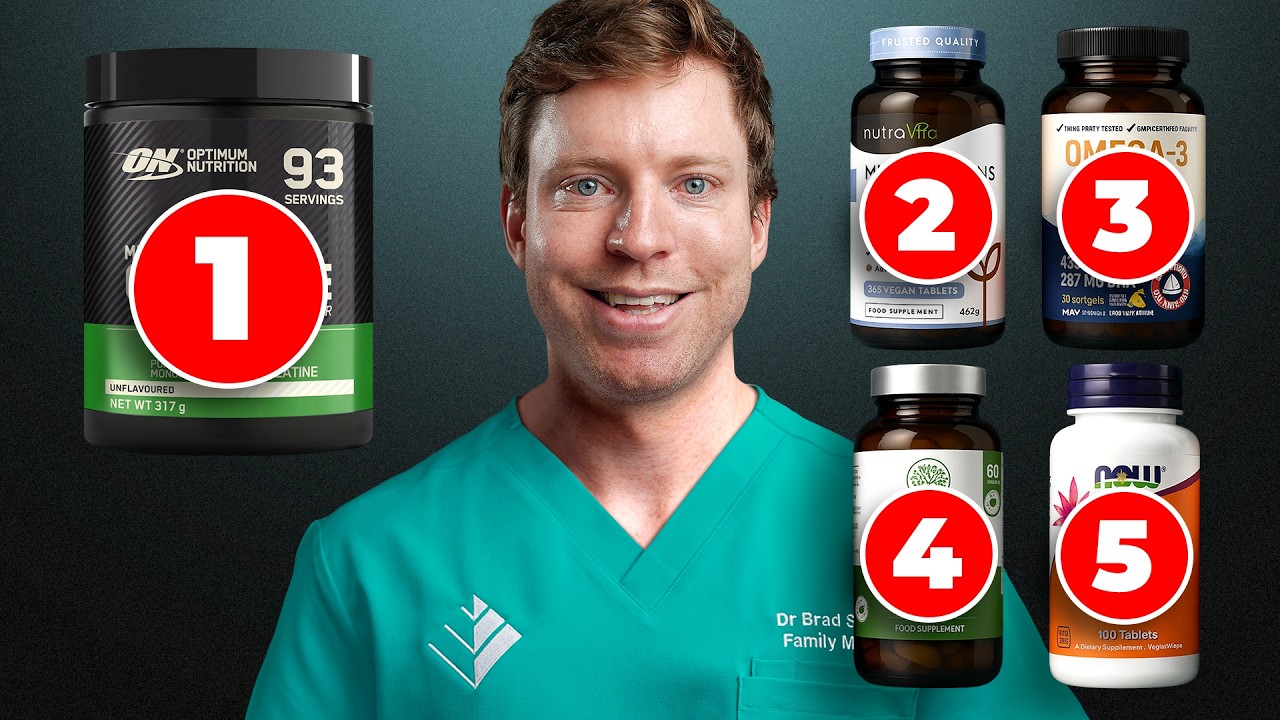
What are the best supplements to maximize our chances of living a long healthy life? Well, here are my top five picks that are grounded in research rather than hype and speculation. So, we’ve known for some time that certain food components can dramatically impact health and longevity. But an intriguing study published just last year gave us fresh evidence for just how big an impact it can be. Now, that study was a massive meta analysis. It included 64 separate studies involving 3 and a half million people. The researchers found that the higher the consumption of one key food component cut all cause mortality risk by 23% during the study period. But there were some mistakes that many people make when it comes to incorporating this key component in their diets. The component is fiber. So in addition to plenty of non-starchy vegetables and fruits, I supplement with an additional 2 1/2 g of psyllium husk. But we can overdo it with fiber and many people should even avoid it. So I’m going to explain the right way to approach it so that we can maximize its benefits. But first, let’s dive a bit deeper into what those benefits actually are. So, all cause mortality is like a big picture snapshot of our health. When we zoom in, we can uncover a number of surprisingly strong effects of fiber on the most important areas of our health. The first is inflammation. So, inflammation isn’t necessarily a bad thing. In fact, it’s our body’s natural defensive processes to things like injuries and infections. It’s a complex process where the body fights off infection and repairs damaged tissue. But then there’s chronic inflammation. This is when the inflammatory response is ongoing even when there isn’t a specific injury or infection. And this persistent inflammation is linked to serious health problems like heart disease and Alzheimer’s disease and it contributes to aging. So increased fiber intake combats that type of inflammation. The data that we have reveals a strong association between more fiber and lower chronic inflammation. So fiber also appears to fight heart disease. In large studies of people over a long period of time, they consistently find that those who eat more fiber have fewer heart attacks and strokes. So, for example, one systematic review and meta analysis looked at 22 studies and it included over 300,000 participants. It found that for each 7 g per day increase in fiber intake, the risk of heart disease dropped by about 9%. And we know that heart disease and strokes have several important risk factors. So, for example, one of them is high blood pressure. But how is fiber doing this? Well, we know that heart disease and strokes have several important risk factors and one of them is high blood pressure. So, increased pressure it stresses our blood vessels promoting inflammation and the formation of plaques. But fiber helps here. So, in a meta analysis of randomized control trials, it examined the use of flax seed supplements, which is a potent source of fiber. And overall, this boost in fiber intake led to an average reduction in blood pressure of about 2.85 points. Now, when researchers considered just those trials that lasted longer than 12 weeks, the effects were even greater. The average reduction here was over three points. Another risk factor for heart disease is high LDL cholesterol, and fiber here seems to help on several levels, including blocking cholesterol absorption in the gut. So, a large meta analysis of nearly 200 randomized control trials found that fiber supplementation significantly reduced LDL cholesterol by an average of about 3 mg per deciliter relative to controls. And for each 5 gram per day increase in soluble fiber intake, it reduced LDL cholesterol by 5 and a half milligs per deciliter. Overall then increasing fiber is a powerful strategy to slash our risks for heart attacks and strokes. Now another essential area when it comes to health and longevity is weight. So being overweight is associated with higher risks of death from all causes. In fact, a BMI of above 25 that risk is about 30% higher for every 5 unit increase of BMI. And a high BMI is connected with serious health problems. And I’m sure I don’t need to tell you this, but losing weight isn’t easy. And here’s how fiber can help. So fiber helps to reduce hunger and it increases our feelings of fullness. And when we’re free to eat what we want, people tend to eat less when fiber is increased. But how much less? Well, one review of published studies found that consuming an extra 14 g of fiber per day for more than 2 days is associated with a 10% drop in calories eaten. And this translated to a weight loss of about 1.9 kg over a 3.8month period. Now for obese individuals, the drop in calories and resulting weight loss was even greater. Now think about this for a moment. This is a proven weight loss strategy that doesn’t involve trying to eat less. Instead, it’s about shifting what we eat to include more fiber. Plus, fiber seems to improve blood sugar regulation and insulin sensitivity. So why does all of that matter? Well, stable blood sugar levels help to reduce food cravings and also to reduce the storage of excess fat. It also helps to reduce the risk of developing type 2 diabetes. A 2014 meta analysis sought to quantify this impact of fiber. So, it found that those who were consuming the most fiber had a dramatic 34% lower risk of type 2 diabetes compared to those eating the least. And there’s more. Fiber seems to help restore proper balance to one of our body’s most important systems, the gut. Fiber is the primary fuel for our gut bacteria and a diverse healthy microbiome is increasingly recognized as important for immune function for anti-inflammatory effects and even our mental health. Fiber feeds the beneficial bacteria and helps to produce short chain fatty acids. So these strengthen the gut barrier and reduce inflammation throughout the body. They also help to regulate our immune responses and the link with gut health has also been shown to be helpful in people suffering with irritable bowel syndrome. So researchers found that supplementing with psyllium husk seems to help relieve some of the symptoms of irritable bowel syndrome and the clinical guidelines actually recommend it as part of their treatment protocols. And the final benefit of fiber that I want to go through is again linked to gut health. So fiber helps to protect us against a deadly killer. It’s the third most common cancer in men and the second most common in women. So a large body of research shows that there’s an inverse relationship between how much fiber we get and colurectal cancer. So this is an amazing range of benefits from a single food component. But even when we pay close attention to our diet, it can be quite a challenge to get enough fiber. So the recommended daily intake is around 25 to 32 g of fiber. So that’s why I supplement with psyllium husk just to help me reach those targets. But I do want to stress some caution here about fiber. We don’t necessarily want to just run out and start eating tons more because there are a number of health conditions like Crohn’s disease and irritable bowel syndrome that can actually cause poor tolerance of fiber. So in these cases we might need to restrict fiber intake to manage symptoms. And just coming back to the point about irritable bowel syndrome again we have to be careful here. It depends about the exact type of irritable bowel syndrome. Sometimes psyllium husk can help others times it can actually make it a little bit worse. It just depends on the overall picture of the patient sitting in front of me. The second supplement that I take for performance and overall health has been shown to have important health benefits for our brain as we age. So, a large study looked at the effects of taking the supplement every day for a 2-year period, and the researchers discovered a relative improvement in overall cognition scores and memory. The effect on cognition was the equivalent to reducing the aging of the brain by about 2 years. So, what was the supplement in the study? It was a multivitamin and mineral. But you might be thinking, if you eat a good diet, you’ll already be getting everything that you need. But here’s why this might not always be the case. So researchers are uncovering declining nutrient levels in many crops. This table summarizes the studies from various countries and it shows that minerals have been significantly declining in fruits and vegetables. So even with a great diet, supplementing with a multivitamin and mineral can be a good idea. And this of course includes a number of distinct ingredients. So I want to highlight some of the clinical benefits of specific ingredients that are found in many formulations. First up is magnesium. It’s needed for more than 300 enzyme reactions in the body. It’s involved in protein synthesis and muscle and nerve function, blood glucose control, and blood pressure regulation. It also contributes to bone development, DNA synthesis, and the production of the antioxidant glutathione. But despite magnesium’s importance, the evidence suggests that many of us aren’t getting enough. So, according to a recent estimate, 60% of adults do not reach the recommended daily intake and 45% of the US population is magnesium deficient. And the concern here is that we’ve got a lot of data linking low magnesium levels to serious health problems. One of them is heart disease. Now, of course, the first step to addressing low magnesium levels is to make sure that we’re eating whole foods. So, generally, foods that have got lots of fiber in them. Not only are they a source of fiber, but they’re also a great source of magnesium. But again, it can be quite difficult to reach the recommended daily intake of magnesium. And that’s where a lodo supplement can be useful. And as the name suggests, it should supplement a healthy diet, not replace it. And my patients often wonder about the best form of magnesium since magnesium comes in a lot of different forms for supplements. Now, personally, I prefer magnesium torate. And in addition to magnesium, it also provides torine, which has its own potential health benefits. The next ingredient in a multivitamin and mineral that I want to highlight has gone through some dramatic changes in terms of its recommendations in recent years. So like magnesium observational studies have found links for wide-ranging health conditions and researchers began sounding the alarm that a huge number of people were deficient in this key vitamin and that led to the prestigious international body so the indocrine society to issue aggressive guidelines for testing and supplementing with this vitamin. The vitamin I’m talking about here is vitamin D and after those guidelines were published in 2011 the use of vitamin D supplements skyrocketed. But it turns out that while vitamin D was correlated with a lot of health conditions, when we actually looked at randomized control trials, the evidence wasn’t particularly strong. So that accumulating evidence led to the endocrine society to revise their guidelines last year and they dialed back calls for testing and lowered the recommended daily intakes. And they suggest that for most of us, 800 international units is absolutely fine. That’s all that we need. But with recent hype about vitamin D supplements, we need to be aware that it is possible to get too much. So, for instance, a three-year clinical trial in Canada tested the impact of several daily doses of vitamin D. So, one group took 400 international units, another took 4,000, and a third took 10,000. Researchers were looking specifically at how this affected bone density. And what they found was shocking. Those with higher doses didn’t improve outcomes. In fact, they made things worse. So, bone density in the wrist decreased by 2.4% 4% in the 4,000 international unit group and 3.5% in the 10,000 international unit group. So, like all vitamins and minerals, we need enough, but we don’t want too much. But speaking of healthy bones, there’s another important player here besides vitamin D and calcium, and that’s the next multivitamin and mineral ingredient that I want to highlight. So, it’s vitamin involved in blood clotting, but it also helps us to regulate our use of calcium. So, it’s vitamin K2. A study in 2013 used vitamin K2 supplements in a form called MK7 and it gave a dose of 180 micrograms. Researchers saw significant improvements here in how bones stay strong as people get older, especially in the lower back and hips. And as a result of research like that, the European Food Safety Authority has approved a health claim for vitamin K. They note that a cause and effect relationship has been established between the dietary intakes of vitamin K and the maintenance of normal bone. But there’s also been some evidence linking vitamin K2 and heart health. So what’s the connection here? Well, vitamin K2, it seems to help keep the calcium in our bones. So the theory goes that we might be able to keep the calcium out of our blood vessel walls. And we got the first hint that vitamin K2 might be able to improve heart health from observational studies such as this one. It followed up just under 5,000 people for a 7-year period. So those who had higher intakes of vitamin K2 had lower rates of all causes of death and heart disease in particular. But it’s important to remember again that this is just an observational study. Many different variables can skew the results. And that’s why we need randomized control trials to confirm what’s going on. So in 2015, a randomized double blind placeboc controlled study of the MK7 version of vitamin K2 showed that it did seem to improve stiffness of arteries in women. And to add to that evidence, there’s been a newly published study where the scientists, they started the study by measuring the calcium buildup in blood vessels. So the standard way to do this is a coronary artery calcium score or CAC score. So they split the participants into two groups. One received the placebo and the other group received vitamin K2 and vitamin D. And after 2 years, there appeared to be no difference between the groups that took the vitamin K2 and the placebo group in terms of how much calcium built up in their blood vessels. Now that does sound initially disappointing, but then you read a bit further. So during the 2-year study period, the calcium buildup in the placebo group was 254 units. And in the vitamin K2 group, it was only 203 units. So yes, that didn’t reach statistical significance, but there’s a strong trend towards improvements. But the authors decided to have a look at participants with calcium scores of 400 and above at the beginning of the study. And here there was a significant difference between the placebo group and the vitamin K2 group. Overall, the study provided tantalizing evidence that we might be able to use vitamin K2 supplements to prevent calcium buildup in our blood vessels. But while this is exciting, the evidence is presently preliminary. Multiple studies are ongoing right now to confirm or disprove those findings. Now, the recommended daily intake for vitamin K1 is 120 micrograms, but no recommendations have been made for vitamin K2. We simply just lack the research so far to establish the right amount. So, personally, I prefer to use a lower dose of 90 micrograms while we wait for that further research to be done. Plus, while vitamin K1 is found in leafy green vegetables, vitamin K2 on the other hand is primarily found in fermented food products like fermented soy and cheese. And that can make it difficult to get enough vitamin K2 from diet alone, which again is why I choose to supplement with vitamin K2 from a multivitamin and mineral. Plus, there’s a potential synergy between magnesium, vitamin D, and vitamin K2. Now, let’s have a look at one last ingredient in multivitamins and minerals that it’s relevant to performance and overall health. And this one is linked to a third supplement that I take. So, a massive meta analysis from 2022 found that supplementing with this particular ingredient was associated with slowing of cognitive decline. This is especially true for those who started early and took the supplements for a long time. And I’m not just talking about one vitamin here. It’s actually a group of vitamins called the B vitamins. And in this particular study, they looked at vitamin B12, vitamin B6, and folic acid. And the link here between brain health is actually quite an interesting story. So an earlier study uncovered an interesting wrinkle when it came to this linkage. So this study was called the Vittocog trial and its results were published back in 2010. So in it people were split into two groups. One got the B vitamins and the other group was given a placebo and over a 2-year period the people taking the B vitamins had a 29.6% less brain shrinkage than the other group. But here’s the wrinkle. In 2015 the researchers looked again at the Vittocog data and they found something fascinating. So, it turns out that the benefits of B vitamins for brain health were only seen in people with high levels of omega-3 in their blood. And get this, for the people that had high omega-3 levels, B vitamins didn’t just reduce brain shrinkage by 29.6%, they reduced it by a whopping 40%. But for people with low omega-3 levels, B vitamins didn’t help at all. And another important study found the same pattern. So, if we want to reap the cognitive benefits of B vitamins, it looks like we’re going to have to take it with omega-3. So that is the third top supplement for performance and overall health because it isn’t just linked to brain health. But let’s start by looking at brain health. So omega-3 is made up of two important fats called DHA and EPA. DHA is like a building block for our brain. It helps to make the walls of our brain cells soft and flexible. And this is good because it allows our brain cells to talk with each other easily and it promotes thinking, learning and memory. EPA on the other hand is a bit like a firefighter in our brain. So sometimes these tiny fires or inflammation, it can happen in our brain which obviously isn’t good and chronic inflammation like we’ve touched on earlier in the video. In the brain it’s been linked to cognitive decline, neurodeenerative diseases like Alzheimer’s disease. So based on how these fats work, there’s a very good reason to get excited about the potential that omega-3 can improve brain performance and reduce the risk of dementia. But there’s been a bit of a puzzle about how omega-3 supplements help in the real world because the data has been inconsistent. So, for example, in 2006, omega-3 supplements did not improve brain performance compared to a placebo. But a 2019 study found something different. So, this time, omega-3 supplements improved brain performance by 7.1% and reduced dementia symptoms by 22.3%. And if you were paying attention, you already know the solution to this puzzle. So, it’s the flip side of what we saw with the B vitamins. So, it looks like both omega-3 and B vitamins, we need them both to see improvements in brain health when they work together. But why do we need the B vitamin and omega-3 combination? Well, some researchers think that B vitamins help to make something called phosphodi dicoline which is needed to carry omega-3 into the brain. So once the omega-3 gets to the brain, that’s when it can start to help. But more work is needed before this can be said with any certainty and it is important to acknowledge these unknowns. So medicine is definitely not black and white. There’s a lot that we still don’t know. And aside from brain health, another area that omega-3 supplements may help is the heart. So, for instance, consider the vital trial. It tested the effects of omega-3 supplements in over 25,000 adults for a 5-year follow-up period. And a result that stood out from the study was related to heart attacks. So, it was 28% lower for those who took omega-3 supplements compared to the placebo group. And a few years later, a meta analysis that was done by the Mayo Clinic drew on 40 separate studies and looked at the impact of omega-3. So supplementation was linked to a 13% reduction in heart attacks and a 35% reduction in fatal heart attacks. So those are the two main benefits of omega-3. But many people use omega-3 supplements incorrectly and may actually cause more harm than good. So in 2024, a new study looked at over 400,000 people and 31.4% took omega-3. Now the group who took omega-3, they had a 13% higher risk of developing a heart arrhythmia called atrial fibrillation. We see this concern in randomized control trials as well. So for example, the strength study showed a 69% increased risk of developing atrial fibrillation in the group who took omega3. Now that study used 4 g of omega3, but the vital trial which did not see any increased risk of atrial fibrillation used a much lower dose of 840 millig. So personally I use a dose of around 1 g of omega-3 to lock in those benefits and minimize the risks. Next up is the fourth supplement that I take. So, this supplement, we’ve been using it for decades to help with exercise performance and muscle building. But new research is uncovering some novel benefits that are connected to aging that few people know about. The supplement is creatine, and I’m sure you already know about its muscle benefits, but here I’m going to focus on something else. So, yes, our bodies can make creatine, and our diet is also a key source. So, it plays an important role in energy production in our muscles, and that’s where most of the creatine gets used. But, it’s also found in the brain. And here there’s the potential that if we supplement with creatine, we may see improvements in brain performance and this is driving fresh excitement about creatine. The research even convinced my grandma to start taking it. So, let me explain what we’ve been finding out. So, our brains need a lot of energy to function properly. And creatine, which we get from foods like red meat and seafood, helps to produce this energy quickly. It supports crucial brain processes like memory and thinking. It also acts as a backup battery system, if you like, that can instantly deliver energy when demand spikes. And research shows that creatine supplements can increase the amount of creatine in the brain. But does that actually help with brain function? Well, a meta analysis was published in 2022 to look at that exciting research. And the main analysis showed that creatine supplements improved memory performance compared to a placebo. And the effect was particularly strong in older adults. So, when I told my grandma about the study, she was very intrigued and started taking creatine. But we’ve got an even more recent meta analysis that included 16 trials and it was published last year. So, once again, it found that creatine supplementation had a significantly positive impact on memory. It also improved attention time and sped up processing. It also had another intriguing finding. So, a subgroup analysis showed that creatine supplements were particularly beneficial for females. And I highlight this because I’ve spoken to many of my female patients who think that creatine is just a supplement for men, but the research clearly indicates that it can be a useful supplement for women as well. Onto the fifth supplement. Just like creatine, it’s linked to helping us maximize our benefits from exercise. And it works by accelerating the recycling of our cells energy called ATP. And it also appears to enhance the creation of proteins that build muscle. So the supplement is TMG, also known as betane. And there are two other benefits of taking TMG which I’ll cover shortly. But first, let’s have a look at this study in 2021. So, it was a study that gave TMG to professional soccer players for a 14week follow-up period. Now, the players saw improvements in their one rep max, which is the most weight that they could lift in one go. They saw improvements in their V2 max, which is how much oxygen their bodies can use during exercise, and they saw improvements in their sprinting performance, compared to those who took the placebo. And in a 2024 meta analysis, it found that TMG supplements increased strength and jumping performance. But it’s not just about exercise performance that’s got me excited about TMG. TMG also seems to improve testosterone levels. So in the same soccer player study, the group that took TMG, they saw increases in their testosterone levels compared to the placebo group. This effect was replicated in a 2022 study. So in that study, both the TMG and placebo groups did intense workouts. And just like the soccer player study, the TMG group in the study also saw increases in their testosterone levels compared to the placebo group. And there’s another intriguing benefit of TMG. So just like creatine supplements, it may also improve brain health. So in this case though, it’s a link with dementia risk. So in 2020, a large review of all of the risk factors of Alzheimer’s disease found that high levels of homoyine, which is an amino acid, was strongly linked to Alzheimer’s disease. In other words, TMG may reduce a risk factor for Alzheimer’s by lowering homoyine levels. Now, this is not a guaranteed way to prevent Alzheimer’s, but it’s a promising area of research and another potential benefit with TMG supplements. So, a multivitamin, omega-3, creatine, and TMG, they may all work synergistically to improve brain performance. Now, even though I’ve covered five supplements already, I want to have a brief look at just one more because it’s connected with something that many of us give little attention to and it’s one of the foundations of health. So, the area I’m talking about is sleep. And a meta analysis of 14 studies found that melatonin supplements were shown to reduce the time it took to fall asleep. And there was a separate review showing that melatonin supplements improved sleep quality. Now, unfortunately, many of the melatonin supplements use very high doses. You can even buy up to 10 milligram doses over the counter. Yet, we’ve got no idea the long-term consequences about taking such high doses. All of the studies that we’ve got at the moment are short-term. Now, just for some context, the body produces between 10 to 80 micrograms of melatonin at night. And about 15% of the melatonin in a supplement is absorbed by the body. So, personally, I take around 300 micrograms, which is just enough to match the levels naturally produced by the body. Now, for melatonin to work properly, it’s critical to take it about 2 hours before wanting to fall asleep. So, it’s got time to shift the sleepwake cycle. So, now that’s my top supplement list, but I do take a few more. So, I also take collagen peptides and hyaluronic acid for skin health, and I take an extra 1 gram of torine for its metabolic benefits. And make sure to check out the next video here that examines a current craze in the so-called longevity space that’s actually likely to make our health worse. So, you’ll find out exactly what it is and its hidden dangers that almost no one is talking