Do you often feel tired, have dull skin, or experience hair loss and don’t know why?
These could be hidden signs of vitamin or mineral deficiencies your body is trying to tell you!
In this video, we’ll uncover the most common nutrient deficiencies — from Vitamin D and E to Iron, Zinc, and Iodine — and the warning signs you should never ignore.
Learn how your body signals you when it lacks vital nutrients and what you can do through diet and lifestyle to fix these deficiencies naturally.
🩺 Detailed Explanation of Each Point:
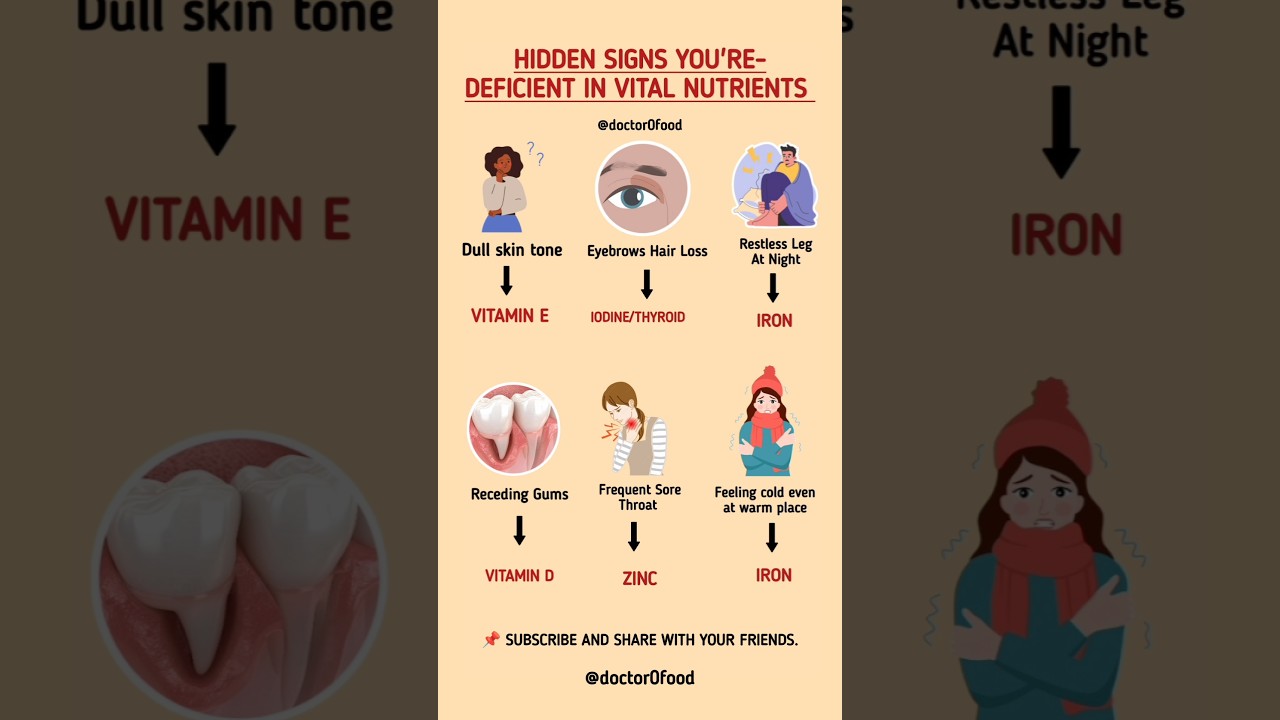
1. Dull Skin Tone → Vitamin E Deficiency
Vitamin E is a powerful antioxidant that protects your skin from oxidative damage and dryness.
When you don’t get enough Vitamin E, your skin can appear dull, dry, and uneven.
🔹 Foods rich in Vitamin E: almonds, sunflower seeds, spinach, avocado, and olive oil.
2. Eyebrow Hair Loss → Iodine/Thyroid Deficiency
Losing hair from the outer edges of your eyebrows is a classic sign of iodine deficiency or thyroid imbalance.
Iodine is essential for thyroid hormone production, which controls hair growth and metabolism.
🔹 Foods rich in Iodine: iodized salt, fish, dairy, and seaweed.
3. Restless Legs at Night → Iron Deficiency
If your legs feel uncomfortable or twitchy at night, you might be low in iron.
Iron deficiency affects dopamine production, leading to restless leg syndrome and poor sleep quality.
🔹 Foods rich in Iron: red meat, lentils, spinach, and fortified cereals.
4. Receding Gums → Vitamin D Deficiency
Weak or receding gums can be a subtle sign of Vitamin D deficiency, which weakens bone and tooth support.
Low Vitamin D levels also affect calcium absorption, leading to poor dental health.
🔹 Sources of Vitamin D: sunlight, fatty fish, eggs, and fortified milk.
5. Frequent Sore Throat → Zinc Deficiency
If you often suffer from sore throats or infections, it may be due to zinc deficiency, which weakens the immune system.
Zinc is vital for immune defense, wound healing, and cell repair.
🔹 Foods rich in Zinc: pumpkin seeds, chickpeas, meat, and nuts.
6. Feeling Cold Even in Warm Places → Iron Deficiency
Constantly feeling cold, even in a warm environment, could mean low iron levels.
Iron helps transport oxygen in your blood — without enough of it, your body struggles to stay warm.
🔹 Iron-rich foods: beef, tofu, beans, and leafy greens.
#VitaminDeficiency #HiddenSigns #NutritionTips #HealthAwareness #DietitianAdvice #IronDeficiency #VitaminDDeficiency #VitaminE #ZincDeficiency #IodineDeficiency #ThyroidHealth #HealthyLifestyle #SkinHealth #HairLoss #ImmuneSystem #NutritionFacts #EatHealthy #NaturalHealing #DeficiencySymptoms #NutrientDeficiency #HealthEducation #BodySigns #WellnessTips #HolisticHealth #FoodAsMedicine
vitamin deficiency symptoms, hidden signs of nutrient deficiency, iron deficiency signs, vitamin D deficiency, vitamin E for skin, zinc deficiency sore throat, iodine deficiency thyroid, nutrition tips for health, how to fix vitamin deficiency naturally, foods rich in vitamins and minerals, hair loss due to iodine deficiency, dull skin causes, natural ways to increase vitamin D, immune system booster foods, health and nutrition education, dietitian nutrition advice, signs of low iron in body, fatigue due to vitamin deficiency, nutrition facts for healthy living, how to know if you’re vitamin deficient, skin and hair health diet, natural remedies for deficiency, how to improve iron absorption, best sources of zinc and vitamin E