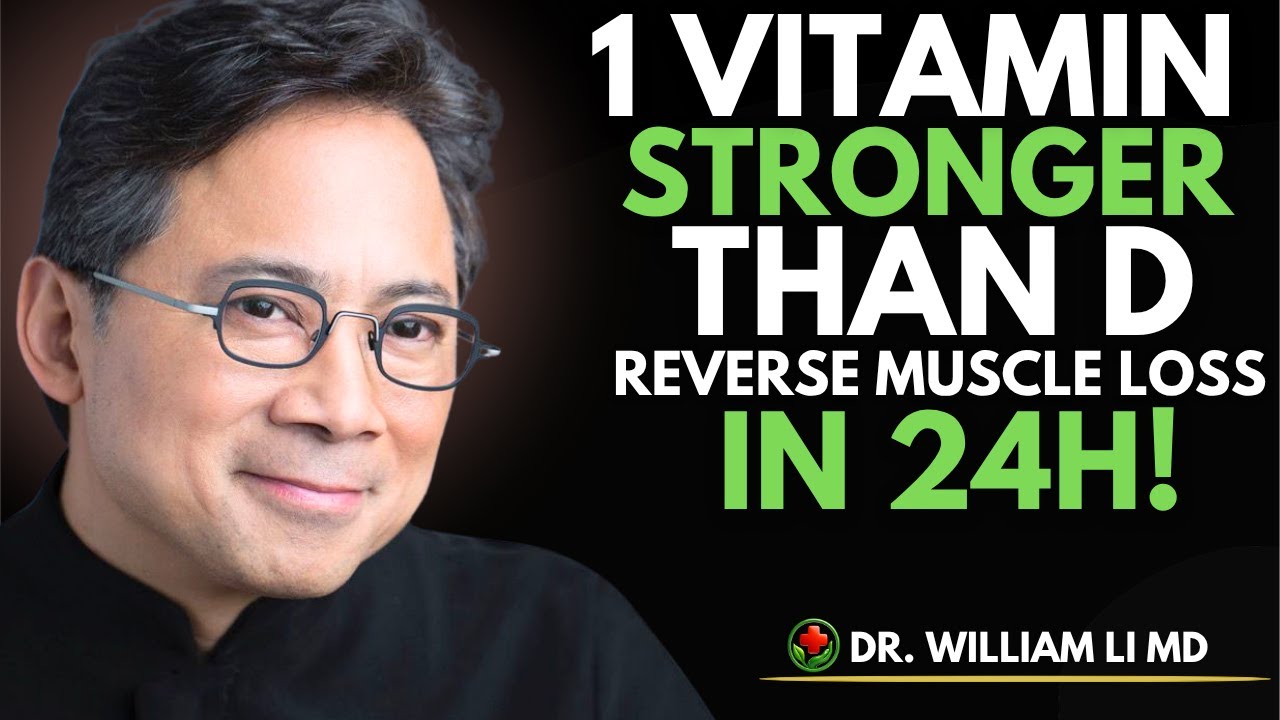
Start your day with more than just protein! In this video, Dr. William uncovers two surprisingly effective vitamins that outperform Vitamin D when it comes to building muscle fast. Whether you’re hitting the gym regularly or just beginning your fitness journey, these vitamins can make a huge difference in strength, recovery, and muscle growth.
✅ Learn what they are
✅ When to take them (spoiler: during breakfast!)
✅ Backed by science and Dr. William’s professional insight
If you’re tired of slow progress or stuck at a plateau, this video is your morning muscle breakthrough. Say goodbye to outdated advice and unlock your full potential now!
📌 Don’t forget to LIKE, COMMENT, and SUBSCRIBE for more fitness & health hacks!
youtube.com/channel/UCinLqVwnRw4Ku9hfCwgxl4A?sub_confirmation=1
#MuscleGrowth #FitnessTips #VitaminAdvice
Have you ever been told that taking your daily vitamins is the key to keeping your body strong as you age? For decades, most people have heard about calcium for bones, vitamin D for muscles, and maybe vitamin C for immunity. But there’s one nutrient, quiet, almost hidden, that might be even more critical for protecting your strength, your mobility, and even your independence. And chances are, no one ever told you about it. That nutrient is vitamin K2. Now, here’s where things get interesting. Ask almost anyone over 60 what vitamin they take for their bones or muscles, and you’ll hear the same answers. Oh, I take vitamin D every morning, or I make sure I get enough calcium. These are good, but here’s the shocking truth. Without vitamin K2, those other nutrients may not be doing the job you think they are. In fact, without K2, calcium can actually end up in the wrong places, stiffening your arteries, straining your heart, and leaving your bones and muscles weaker over time. Imagine trying to pour cement to build a house, but instead of hardening into the foundation, it spills out into the street, causing a dangerous mess. That’s exactly what happens when calcium doesn’t have K2 to guide it into your bones and muscle tissue. And here’s the part most people miss. Your muscles aren’t just about how strong your arms or legs feel. They’re living dynamic tissues that influence your blood sugar, your balance, even the sharpness of your mind. When muscle strength begins to fade, which often accelerates after 60, it isn’t simply old age. It’s a process called sarcopenia. Yo, and nutrients like vitamin K2 can determine whether that process speeds up or slows down dramatically. So, let me ask you, are you really giving your body what it needs each morning to stay strong, steady, and independent? Or have you been faithfully taking pills that are missing the most important player in the lineup? Stick with me because in the next few minutes, I’ll show you why vitamin K2 may be the overlooked secret that flips the switch. Not only keeping your bones hard and resilient, but also giving your muscles the support they need to fight off weakness, fatigue, and decline. Think of your body as a massive construction site. Every day, materials are being delivered. Calcium, protein, amino acids, all the raw ingredients that can either build you up or if mismanaged, slowly break you down. Now, picture dozens of workers on that site. They’ve got bricks in their hands, cement in the mixer, and steel rods piled high. But without a foreman to tell them where to put what, chaos breaks loose. Bricks end up in the wrong place. Cement hardens in useless spots and the building never gets finished. That’s exactly what happens inside your body without vitamin K2. Calcium is like those bricks. It can either be deposited where you need it, your bones and your muscles, or it can end up clogging your arteries, stiffening your joints, or even damaging delicate tissues. Vitamin K2 is the foreman on this construction site. It directs calcium to the right destination, making sure it strengthens your skeleton, supports muscle contraction, and protects your frame as you age. Here’s why this matters so much. After 60, as we get older, the body’s ability to manage calcium weakens. Left unchecked, calcium tends to drift into soft tissues, your arteries, your kidneys, sometimes even your brain. This is why older adults often face not just osteoporosis but also hardened arteries, kidney stones or stiffness that robs them of mobility. At the very same time, muscles begin losing mass through sarcopenia. Without K2 acting as a traffic controller, the raw material for strength is being misfiled, wasted, and in some cases turned against you. Science backs this up. Studies in nutrition journals have shown that people with higher vitamin K2 intake not only maintain stronger bones but also have significantly lower risk of cardiovascular disease. Why? Because K2 activates special proteins osteocalin and matrix GLA protein that guide calcium away from arteries and into bone and muscle where it belongs. Think of K2 as the difference between a construction site with workers milling around aimlessly and one where a skilled supervisor keeps everything flowing smoothly. Now, let’s connect this to sarcopenia. Muscle doesn’t just need protein. It needs a healthy environment to thrive. When calcium goes to the wrong place, blood vessels become less flexible, circulation weakens, and oxygen delivery to muscles is compromised. Over time, that contributes to the feeling of heaviness in your legs, slower recovery after activity, and the gradual loss of independence so many fear. But when vitamin K2 is present, calcium strengthens the scaffolding of your body, keeping your skeleton firm and providing muscles with the structural support they need to resist decline. Imagine two workers in their 70s. One has spent years taking only calcium and vitamin D. His arteries are stiff, his back feels fragile, and every step up the stairs is a chore. The other has made vitamin K2 part of his daily nutrition. His bones remain denser, his legs more stable, his heart vessels flexible enough to keep blood flowing strong. The difference isn’t luck, it’s biology. It’s the quiet power of having the right foreman on duty. This is why nutrition isn’t just about what you take, but about who’s directing the traffic inside your body. Vitamin K2 ensures that all the workers, the calcium, the protein, the amino acids are building in the right place at the right time. Without it, the project of staying strong after 60 gets delayed, derailed, or abandoned altogether. With it, you give your body the best chance to keep moving, lifting, and living with confidence. So, the next time you think about bone or muscle health, don’t just imagine piling more bricks onto the site. Ask yourself, do I have the right supervisor in place? Because without vitamin K2, the workers may be busy, but they’re building in all the wrong spots. Picture this. You sit in your car, turn the key in the ignition, and suddenly the engine roars to life. The lights on the dashboard glow, the fuel pump kicks in, and the whole machine is ready to move. Without that key, though, nothing happens. You can have a full tank of gas, the best tires, even brand new parts, but the car just sits there silent. That’s exactly what vitamin B12 is to your body. It’s the ignition key. You can eat plenty of protein, lift weights, even take other vitamins. But without B12, the signal never fully reaches your muscles. The raw materials are there. The workers are waiting, but the engine won’t start. So, what does B12 really do? At its core, B12 is essential for a process called methylation. One of the body’s most fundamental onoff switches for biochemical reactions. Through methylation, B12 helps produce red blood cells which carry oxygen to your muscles. It helps form myelin, the protective coating around your nerves, ensuring that the messages from your brain actually reach your muscle fibers. In short, B12 connects the dots between oxygen delivery, nerve activation, and protein synthesis, the three pillars of muscle function. When B12 is missing, all three of these systems begin to falter. You can feel it in subtle ways at first. Maybe you tire more quickly during a walk, or you feel lightaded after climbing stairs. Over time, the signs become harder to ignore. persistent fatigue, muscle weakness, even numbness or tingling in your hands and feet. Many older adults chalk these symptoms up to just aging, but often it’s the silent drain of a B12 deficiency. Clinical studies confirm this. Research published in the Journal of Nutrition found that individuals with low or borderline B12 levels showed reduced muscle strength and endurance even when they were eating enough protein. Another paper in Frontiers in Physiology revealed that B12 supplementation in older adults improved muscle performance and reduced fatigue, especially when paired with resistance training. In other words, B12 doesn’t just help you feel more energetic. It directly supports the way your muscles repair, grow, and function. Now, why does this matter so much after 60? As we age, our stomach acid production naturally decreases. That acid is needed to release B12 from food. On top of that, many common medications such as acid reflux drugs or diabetes medications like metformin further impair B12 absorption. This means that even if you’re eating foods with B12, your body may not be able to extract and use it efficiently. The result, a surprisingly large number of older adults end up with B12 levels that are far below optimal, often without realizing it until symptoms appear. Think about it this way. Protein is the fuel. Exercise is the accelerator pedal, but B12 is the key. Without the key, your car never moves, no matter how much fuel you pour in or how hard you press down. That’s why so many people work hard in the gym, eat what they think is a balanced diet, and still feel stuck because the ignition system isn’t firing. So, where do you actually get vitamin B12? The richest sources are animal-based foods. Grass-fed beef, wild caught salmon, sardines, pasture-raised eggs, and organic dairy. These foods provide B12 in forms your body can readily use. For plant-based eaters though, B12 is almost non-existent in natural plant foods. That’s why supplementation becomes critical. The most effective form is methylcobalamin which your body absorbs and uses more efficiently than the cheaper synthetic cyanocobalamin often found in generic supplements. Here’s a simple practical protocol. At breakfast, pair a proteinrich food like two or three eggs, Greek yogurt, or smoked salmon with either a natural B12 source or a high quality supplement. This way, the amino acids from the protein are matched with the ignition key of B12, flipping the switch for muscle protein synthesis. The result, your body shifts from breakdown mode into build mode, starting your day in a position of strength. Let me give you a picture you can hold on to. Imagine an older gentleman named Robert. He’s 72 and loves gardening, but lately he’s been too tired to spend more than an hour outside. His doctor finds his B12 levels are low. After just a few months of adjusting his diet, adding salmon twice a week, a B12 supplement each morning, and more protein at breakfast, Robert notices a change. His energy is steadier, his muscles don’t tire as quickly, and he feels confident enough to take on projects he had been putting off. That’s the power of the ignition key being turned. The bottom line is this. Vitamin B12 isn’t flashy. It doesn’t get the headlines that vitamin D or protein powders do. But without it, your muscle building system stalls. With it, you create the perfect environment for growth, recovery, and energy that lasts all day. If you want your body’s engine to start and to keep running smoothly into your 70s and 80s, B12 is the key you cannot afford to misplace. If vitamin B12 is the ignition key that starts your body’s engine, then vitamin B6 is the fleet of trucks that keeps the entire construction project moving. Picture that same building site we talked about earlier. The workers are there. The bricks are stacked high. And the foreman is giving clear instructions. But without trucks to haul the bricks to the right spots, the building still never goes up. The materials just sit there unused. That’s the role vitamin B6 plays in your body. It transports amino acids into place so that new muscle fibers can actually be assembled. Here’s the science behind it. Every time you eat protein, your digestive system breaks it down into amino acids, the bricks of muscle. But those amino acids can’t just float around waiting to be useful. They need to be converted and delivered to the exact pathways where muscle fibers are built. That conversion process is called transamination. And it doesn’t happen without vitamin B6. No B6, no transport. which means the protein you’re eating may pass right through your system underutilized instead of being built into strength. But B6’s role doesn’t stop there. It’s also central to glycogen metabolism. Glycogen is the stored form of carbohydrate in your muscles, the quick access energy you need for activity. When you walk briskly, climb stairs, or even lift your groceries, your muscles tap into glycogen first. Without B6, your body struggles to release that energy. That’s why people with low B6 often describe feeling sluggish, weak, or like their muscles simply won’t fire the way they used to. Their energy supply chain is broken. Now, here’s something that makes B6 especially fascinating. It also affects your mood and motivation. Vitamin B6 is required to produce neurotransmitters like serotonin and dopamine, the very chemicals that regulate happiness, focus, and drive. Without enough B6, not only does your body feel weaker, but your mind also struggles to stay motivated. Think about how many times you’ve skipped a workout or cut a walk short simply because you didn’t feel like it. Sometimes that lack of drive isn’t just about willpower, it’s about chemistry. With adequate B6, your brain produces the signals that keep you engaged and consistent. Science supports this. A study in the American Journal of Clinical Nutrition found that athletes with low B6 intake experienced reduced performance, slower recovery, and higher inflammation after exercise. Another paper in nutrients highlighted that B6 is essential for neurotransmitter synthesis, linking it directly to mood and cognitive sharpness. In other words, B6 isn’t just about fueling muscles. It’s also about fueling the willpower to use them. So, what does this mean for aging adults? After 60, sarcopenia and fatigue become pressing concerns. You may be eating protein and even taking B12, but without B6, your amino acids aren’t getting to the right places, and your glycogen isn’t being tapped efficiently. The result is a double hit. Your muscles aren’t rebuilding effectively, and your energy feels flat. Over time, that’s a recipe for weakness, imbalance, and loss of independence. But with enough B6, you give your body the trucks it needs to deliver fuel and materials exactly where they’re required. Let’s make it real with an example. Imagine Linda, a 68-year-old grandmother who tries to stay active by walking her dog every morning. She eats a decent diet and takes her vitamins, but lately she’s been feeling drained halfway through her walk. Her legs feel heavy and she often cuts it short. After reviewing her nutrition, she realizes she hasn’t been getting enough B6. She starts adding more B6 rich foods like chicken breast, tuna, bananas, and even fortified cereals into her breakfast. Within weeks, she notices a difference. Her walks no longer feel like a struggle. She has the steady energy to keep going and even her mood has lifted. It’s not magic. It’s simply giving her body the transport system it was missing. Here’s a practical protocol for you. Aim for around 2 milligrams of vitamin B6 daily. That’s achievable with a variety of foods. Poultry like chicken and turkey, fish like tuna and salmon, plus plant sources such as bananas, potatoes, and chickpeas. Nuts and seeds also provide smaller amounts that add up over time. If you prefer supplementation, look for puradoxal 5 phosphate, P5P, the active form that your body can use immediately. Take it at breakfast, ideally paired with protein, so the amino acids and the transport system arrive together. The bottom line is this. Vitamin B6 is not optional if you want to stay strong. It’s the transporter, the wiring system, and the energy manager allin one. Without it, protein sits idle, energy sputters, and motivation declines. With it, your muscles receive fuel, your brain receives balance, and your entire system runs smoother. Combine B6 with B12 and K2, and suddenly, you’re not just eating nutrients, you’re orchestrating a full construction project for strength, resilience, and longevity. Every morning when the sun rises, your body wakes up to its own rhythm, an internal clock scientists call the circadian rhythm. Uh, it’s more than just sleep and wake cycles. This rhythm controls your hormones, your metabolism, and even how well your muscles respond to nutrients. And here’s the key. Timing your nutrition with this rhythm can make the difference between losing strength and building it. Let’s start with cortisol. In the morning, your cortisol levels naturally spike. Cortisol is not your enemy. It’s the hormone that helps wake you up and release stored glucose to fuel your brain. But cortisol is also catabolic, meaning it breaks things down, including muscle protein. If you don’t counterbalance that catabolic push, you begin the day in breakdown mode. That’s one reason why so many people who skip breakfast feel weak, foggy, or drained before noon. Now, here’s the good news. By eating the right breakfast, one rich in protein, B12, B6, and K2, you can flip that catabolic switch into an anabolic one. Instead of muscle breakdown, you create the conditions for muscle building. Protein supplies the amino acids. B12 acts as the ignition key. B6 transports them into your muscle fibers and K2 directs calcium into bone and muscle where it’s needed most. Together, they transform your body’s morning chemistry from a state of loss into a state of growth. Science confirms this. A study in the journal of the International Society of Sports Nutrition found that individuals who consumed a high protein breakfast with sufficient B vitamins gained more lean muscle and recovered faster compared to those who delayed protein intake until later in the day. Another paper in Chronobiology International showed that aligning nutrient intake with the circadian rhythm amplified muscle protein synthesis and reduced muscle breakdown markers. In other words, the same nutrients taken at dinner can help, but taken at breakfast, they work two to three times more effectively. Think of your body like a factory that opens at 6 P.M. The workers all show up on time, but without raw materials and tools, they stand around idle. If you deliver protein B12, B6, and K2 right when the shift begins, the workers immediately get to work building, repairing, and strengthening. If you wait until the afternoon or evening, you’ve already lost half the workday. The output is smaller, weaker, and less reliable. So, what does this look like in real life? Here’s a simple daily pattern. 7:30 a.m. breakfast 2530 grams of protein like eggs or Greek yogurt paired with foods rich in B12 and B6 salmon banana or fortified cereal and a source of K2 cheese natto or a supplement if needed 12 to 4 p.m. Lunch another 2530 gram of protein balanced with vegetables healthy fats and whole grains 6 4 p.m. dinner, a lighter but still protein centered meal, maybe 20, 25 gram, focusing on easy digestion. This front loading of protein and micronutrients doesn’t just feed your muscles, it matches your body’s hormonal rhythm. You’re giving your system the materials and signals right when it’s primed to use them. For many older adults, this shift feels subtle at first. Steadier energy, less midm morning crash, fewer sugar cravings. But over weeks and months, the impact compounds better workouts, stronger legs, sharper balance, and ultimately more independence. The takeaway is simple. When you eat matters almost as much as what you eat. Breakfast is not just a meal. It’s the golden window where you decide whether your day begins in decline or in growth. By choosing protein B12, B6, and K2 first thing in the morning, you set the tone for strength, vitality, and confidence that lasts all day. Let me ask you this. Would you rather listen to one violin playing alone or sit in front of a full orchestra? The violin might sound pleasant, but it lacks depth, harmony, and power. That’s the difference between getting your nutrients from a single supplement pill versus getting them from whole foods. Supplements can play a role, but food brings the full orchestra. The vitamins, minerals, proteins, fats, and phytonutrients all working together in synergy. Take vitamin K2 for example. On its own, a capsule can help. But when you eat K2 rich foods like aged cheeses, egg yolks, grass-fed butter, or natto, you don’t just get K2. You also get calcium, healthy fats, and co-actors that help direct K2 exactly where it needs to go. The same is true for vitamin B12. A pill may deliver the molecule, but when you eat salmon, sardines, or pasture-raised eggs, you also provide your body with protein, omega-3s, and iron, all critical for building red blood cells, repairing nerves, and fueling muscles. And consider vitamin B6. Yes, you can buy it as pyrooxyl 5 phosphate, but chicken breast, turkey, bananas, and chickpeas give you not just B6, but also amino acids, potassium, fiber, and antioxidants that support the entire metabolic chain. Research backs this up. A review in advances in nutrition found that B vitamins from food sources were more strongly associated with improved muscle function than isolated supplements. Another study in nutrients highlighted that whole food dietary patterns rich in vitamins and minerals reduced inflammation and improved metabolic health more effectively than supplements alone. Does that mean supplements are useless? Not at all. Think of them as the backup musicians, important when you’re missing someone from the orchestra. For example, if you’re vegan, a B12 supplement is critical. If you can’t tolerate dairy or natto, then K2 supplements may be necessary, but the foundation should always be food. So, when building your plate at breakfast, think of it like composing a symphony. Pair eggs or yogurt for protein and B12 with leafy greens or bananas for B6, and add a slice of cheese or fermented soy for K2. Together, they create harmony, a rich, powerful performance your body can actually use to build strength and resilience. Now that you understand the science, let’s make it simple and practical. Here’s a morning protocol you can follow step by step. Something you can start tomorrow without confusion. Step one, hydrate first. Before coffee, start with a full glass of water. This wakes up your digestion and helps your body absorb the nutrients you’re about to give it. Step two, build your protein foundation. Aim for at least 2530 grams of high quality protein at breakfast. Think of this as the fuel that flips your muscle building switch. Step three, layer in vitamin B12. If you eat animal foods, salmon, sardines, or eggs are perfect. If you’re plant-based, take a high quality B12 supplement, methylcobalamin form, with your meal. Step four, add vitamin B6. include bananas, chickpeas, chicken, or turkey. These ensure the amino acids from your protein actually get transported into muscle fibers. Step five, don’t forget vitamin K2. This is your director. Making sure calcium strengthens your bones and muscles instead of building up in arteries. Foods like aged cheese, egg yolks, or natto are excellent options. Step six, support absorption with healthy fats. Avocado, nuts, or olive oil stabilize blood sugar, improve nutrient uptake, and keep you satisfied. Here are two sample breakfasts. Animal-based plate, three pasture-raised eggs scrambled with spinach, a slice of aged cheese for K2, half an avocado, and smoked salmon. Protein B12, B6, and K2 all-in-one. plantforward bowl, a smoothie with plant protein powder, almond milk, banana, chia seeds, and a side of natto or a B12 supplement. Rich in protein, B6, and K2 without animal products. The key isn’t perfection, it’s consistency. One great breakfast won’t change your life, but repeating this routine day after day builds momentum. Over weeks and months, your energy, muscle strength, and resilience will noticeably improve. Your first meal of the day is your golden opportunity. Treat it as an investment, not just a habit. And watch your body respond. Let’s bring this all together. We’ve seen that vitamin K2 is not the builder. It’s the director guiding calcium into your bones and muscles where it belongs. Vitamin B12 is the ignition key. Without it, the engine never starts, no matter how much fuel you pour in. And vitamin B6 is the transport system, carrying those building blocks to the exact place they’re needed so your muscles can actually grow and perform. The message is simple but powerful. Muscle is not just built in the gym. It’s built at your breakfast table. What you choose in the first hours of your day sets the tone for your strength, your energy, and even your independence as you age. So, here’s my challenge for you. Tomorrow morning, don’t reach for just coffee and toast. Try the protocol. Hydrate. Build your protein foundation. Add K2, B12, B6, and healthy fats. Then notice how you feel, not just in the morning, but throughout the whole day. If this video gave you clarity or sparked a new way of thinking about your health, I’d love to hear from you. Hit the like button, subscribe for more sciencebacked strategies, and share this with someone you care about. And most importantly, leave a comment below. Tell me what’s going to be your breakfast tomorrow. Remember, decline is not inevitable. You can choose growth. You can choose strength. And it starts with your very first meal.