Subscribe for more free nutrition and health tips: https://bit.ly/2toMJ9u
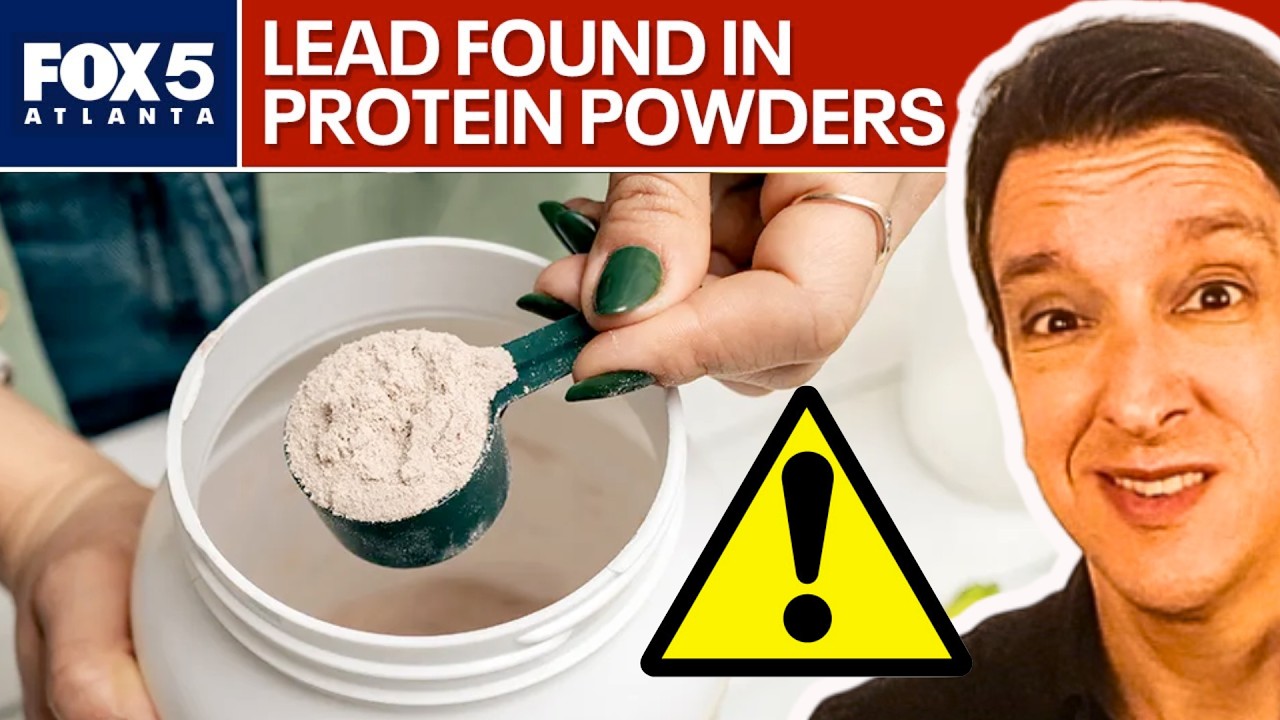
Consumer Reports found Lead contamination in most Protein Powders. Here´s what the media didn´t tell you.
Connect with me:
Facebook: https://www.facebook.com/DrGilCarvalho/
Twitter: https://twitter.com/NutritionMadeS3
Animations: Even Topland @toplandmedia
References & Resources:
Recent Consumer Reports Investigation:
https://www.consumerreports.org/lead/protein-powders-and-shakes-contain-high-levels-of-lead-a4206364640/
Larger Investigation (160 products):
https://cleanlabelproject.org/protein-study-2-0/
FDA cutoffs:
https://www.sciencedirect.com/science/article/pii/S0273230020300052
https://pubmed.ncbi.nlm.nih.gov/35690180/
Puori powder:
https://cleanlabelproject.org/transparency-project/pb-plant-protein-booster/
Other:
https://pmc.ncbi.nlm.nih.gov/articles/PMC7509468/pdf/main.pdf
Disclaimer: The contents of this video are for informational purposes only and are not intended to be medical advice, diagnosis, or treatment, nor to replace medical care. The information presented herein is accurate and conforms to the available scientific evidence to the best of the author’s knowledge as of the time of posting. Always seek the advice of your physician or other qualified health provider with any questions regarding any medical condition. Never disregard professional medical advice or delay seeking it because of information contained in Nutrition Made Simple!.
#NutritionMadeSimple #GilCarvalho
0:00 Shocking Investigation
1:05 Plant Protein is worse
3:07 Better powders
5:27 A larger investigation
6:38 Cutoff Controversy
9:20 Powders without heavy metals
10:29 Conclusion
11:13 What to do
Brand new investigation looked at protein powders and found that most brands contain detectable amounts of heavy metals including lead. And over twothirds of the products tested had an amount of lead that they considered concerning. So this made all the headlines last week. It was a media storm. NBC, CBS, NPR, New York Times, every journalist and his mom jumped on the story. So we’re going to look at what they found. the worst and the best protein powders out there and what this all means for us. We found information that pretty much nobody reported on and that substantially changes the picture. So, Consumer Reports tested 23 protein powders or protein supplement products, things like ready to drink shakes, protein supplements of other kinds, and this covered the gamut from plant-based to whey and beef based. And their conclusions basically had two bombshell claims. The first was that a lot of the products they tested contained heavy metals and specifically for lead. Many products contain more lead than the threshold they stipulated as being a concern. And the second was that plant protein tended to have more lead, nine times more in average than whey based powders and twice as much as beefbased powders. In fact, the two products that topped the list for lead content were plant-based. the Naked Nutrition vegan mass gainer with 7.7 micrograms of lead per serving. This was the highest in their investigation. And the Heil Black Edition, this is a meal replacement shake powder and it had 6.3 micrograms of lead per serving. And Consumer Reports stipulated a threshold of.5 micrograms of lead. So these products had more than 10 times that amount. So Consumer Reports categorized them as products to avoid. Just a quick note that we’re looking at the amount of lead per serving and the serving depending on the product can vary a lot. The amount in mass is very different product to product. For example, some of these products are mass gainers and those are sometimes 400 gram a serving and then protein powders tend to be around 40 grams a serving. So very different amount of the product, but they’re reporting the amount of heavy metals per serving of each product, which I I think is reasonable. So this was the highest category with the most lead. Then they had three other categories in descending order of lead content. The next was products to limit to once a week that included two products as well, both plant-based. Garden of Life Sport organic plant-based protein and Momentous 100% plant protein. Both had about 2 to three micrograms of lead per serving, which is about four to six times higher than that threshold they stipulated of.5 micrograms. Now, why do plant protein powders have more lead? This has to do with the soil that plants are grown on. Plants will absorb heavy metals if they’re present in the soil, but it also has to do with the manufacturing process. And as we’ll see a little later, this varies tremendously from brand to brand depending on all these factors. So, this plot does thicken. Okay. The next category on their list was okay to eat occasionally which included 12 products. Two mascaners, five ready to drink shake products and five protein powders. Four plant-based, one beef based. And these products all had between one and three times that stipulated threshold of lead per serving of.5 micrograms. One of the mass gainers in this category, the optimum nutrition serious mass was a bit of an outlier. It was actually high in arsenic. So this was the only product on the list that had a higher risk coming from arsenic than lead. And two other products in this category were considered high in lead but also high in cadmium which is another heavy metal. By the way, as we’re going through these products one by one and naming names. This is the beauty of not having sponsors of turning down every sponsor since day one on this channel or any any commercial affiliation because I just don’t care which brands look good or bad. We can look at things objectively and all I care about is facts, my safety and yours. End of story. And then the last category, the category with the lowest content of lead was the better for daily consumption category which included seven products, three mass gainers, one ready to consume protein shake and three protein powders, all from whey. And all of the products in this category are under that cut off of.5 micrograms of lead per serving. The lowest of all of them was the Muscle Tech 100% mass gainer. You got to love these marketing names. So gimmicky. And lead was actually undetectable in this one. This was the only product in the entire list that had undetectable levels of lead. Now, this is a mass gainer. The lowest protein powder as far as lead content was the Momentous Whey protein isolate, which had about 30% of that cut off that they established. Although apparently this product has been discontinued. The next lowest was the BSN Synthesics protein powder with 46% of their cutoff. And the lowest of the plant-based powders was the KOS organic superfood plant protein at just over their threshold, 112% of their cut off. Okay, so those were their findings in a nutshell. Now, this leaves open a number of questions that could change everything and that actually weren’t reported in most of the media pieces that I saw. First, we have to ask if these measurements are legit or if they’re a one-off. Is there something wrong with their measurements? There was another investigation by a different organization that was released earlier this year, much larger. They actually looked at 160 products and they also found detectable heavy metals in the vast majority of products tested. And using that same cut off of.5 micrograms per serving, they reported that about half of the products they looked at were over that threshold. They also found that plant-based proteins tended to have more heavy metals, more lead than whey based. And organic products and chocolate flavored products, for some reason, also tended to have more heavy metals in lead. And it’s interesting that this investigation was a lot larger, gives us more information, but they got a lot less press than this recent one. I guess their PR team isn’t as good as these guys, but overall the findings point in the same general direction. So that first investigation because it was much larger, looked at 160 products, it gives us a lot more information and they found dozens of products that fell under that cut off of.5 micrograms per serving, both whey based and plant-based. So we’re going to look at specific examples. We’re going to name names. Just a quick note that this cut off of.5 micrograms per serving is highly highly disputed. And this is because lead is a naturally occurring element. We’re all exposed to lead. It’s in foods. It’s an unprocessed natural foods. The question is how much lead is too much? And this cut off of.5 micrograms comes from something called Proposition 65 or Prop 65, which is a law in California that stipulates that above a certain range of heavy metals, products have to carry a label that warns the consumer, warns the buyer. And I remember seeing these when I lived in LA for many years. Sometimes you’d go to a store and there’d be a label on something saying Prop 65. And for lead, that cut off is an exposure of 0.5 micrograms of lead per day. But this cut off from the California law is a threshold for labeling. It’s not a safety limit. It doesn’t mean that above that you start to have health issues. In fact, the way they calculate this is to look at where health issues start to appear and divide that by a thousand to give it a huge margin of safety. So, it’s an extremely conservative level to guarantee notification to the public even for trace levels of exposure that don’t necessarily result in any health issue. Some health organizations issue their own guidelines of thresholds based on actual data for harm. So the FDA, for example, has a threshold for vulnerable populations like children or women of childbearing age who might get pregnant and that used to be 12.5 micrograms a day exposure. And recently they tightened it more to 8.8 micrograms a day for women of childbearing age and 2.2 micrograms a day for children. So that’s several times higher than that Prop 65 cutoff. In Europe, the cut offs are much higher still. So for supplements like protein powders, the cut off for lead, the acceptable level of lead is something like 10 or 20 times higher than these FDA uh proposed thresholds for vulnerable populations and something like a 100 or 200 times higher than the Prop 65 cut off. And every single product on these lists on the these investigations would fall far below these thresholds in Europe. Now you can tell this isn’t black and white. There’s a level of uncertainty here because the cut offs are so different for different organizations. So these are estimates, but just to understand the cutoff for the prop 65 is extremely conservative. And yet that first investigation we talked about with 160 products, they found dozens of protein powders that fell below even this very strict cutoff. They even found 16 protein powders with undetectable levels of heavy metals. I’ll link all of this information below in the description, but just to take a quick look, most of these are whey based. Bunch of brands. So, well-being nutrition, pori, isopure, bulk supplements, optimum nutrition, just a bunch of brands. Only two exceptions are not whey based. One is a collagen peptide supplement from Vital Proteins, and this is from boine sources. And one is plant-based. This ritual essential protein pregnancy and postpartum is a pe proteinbased supplement. All the rest are from whey. Now these were the supplements that had undetectable levels of heavy metals. Then they had dozens of others that were detectable by these very sensitive assays but were below even the the strictest cutoffs of the Prop 65 that.5 microgram per serving and far below the FDA cutoff. Not to mention the European cutoff. The organization that carried out that larger investigation they have a brand that they certify themselves. Pori I’d never heard of it but apparently they have both a whey and a plant protein product. Both were tested and fell under the strictest cut off of.5 micrograms per serving. And I’ll link all of this information below. Okay. So, what’s the take-home message from all of this? I think these investigations are shining a light on a legitimate problem, which is in general, the supplement industry is almost completely unregulated. They can get away with almost anything. They can sell products direct to consumer that hasn’t been demonstrated safe. And this is because one, legislation is extremely lax for supplements. Number two, the public perception is that supplements are natural and should be safe, but there’s lots of cases where that’s not true. We have lots of adverse effects, sometimes serious. So, I think the laws have to change for supplements. Now, does that mean we should all panic and never touch protein powder ever again, like it’s radioactive? No. We’ve talked about the enormous diversity among these products. Even in these investigations, they show that a lot of different products fall below even the strictest cutoffs, even below that 65 cutoff, which is probably unreasonable, maybe too strict. Several products were even undetectable for heavy metals, and even the plant-based protein powders, which in average were much worse. Even there, they found a number of products that fell under even the strictest cut offs, and even one that was undetectable. So, it’s less about panicking and more about informing ourselves and making smart choices, looking for brands that have been tested or that have been third party certified, especially if you consume these products with a lot of frequency or if you belong to one of these vulnerable groups, children, someone who might get pregnant or breastfeed. How much protein do we need anyway? Do we even need these protein powders in our diet? We covered all of that in this video. So, check it out. I’ll see you in there.